REVIEW · AMSTERDAM
Anne Frank and Jewish Quarter Amsterdam Private Walking Tour
Book on Viator →Operated by 360 Amsterdam Tours · Bookable on Viator
Anne Frank starts here, in the Jewish Quarter. This private walking tour gives you a focused, on-foot way to understand Amsterdam’s Jewish story, with stops that connect community, remembrance, and place.
I especially like the private guide format, because it means you can ask questions and keep your pace comfortable. I also like the very clear start and finish points, with the tour meeting in front of the Jewish Historical Museum and ending at the Anne Frank House area outside.
One consideration: this walk finishes outside Anne Frank House, and tickets to enter are not included, so you’ll want to plan a separate visit if you want to go inside.
In This Review
- Key things to look forward to
- Private Jewish Quarter walking tour: what makes it worth your time
- Where the tour starts: the 360 orange umbrella at the Jewish Historical Museum
- The Jewish Quarter intro by the Portuguese Synagogue: putting names to streets
- Holocaust memorial park stop: what you’ll see and how to prepare
- Passing Rembrandt: how the guide connects Jewish life to Amsterdam itself
- National Monument and commemoration: the story behind a public space
- Ending outside Anne Frank House: manage expectations (and plan tickets if you want entry)
- How the guide style shapes your experience (and why it’s a big deal here)
- Price and value: what you’re paying for at $157.21 per person
- What to wear, how to pace yourself, and who it fits best
- Should you book this private Anne Frank and Jewish Quarter tour?
- FAQ
- How long is the Anne Frank and Jewish Quarter Amsterdam Private Walking Tour?
- Where do I meet the guide?
- Where does the tour end?
- Is admission to Anne Frank House included?
- What language is the tour offered in?
- Is this a private tour?
- What happens if the weather is bad?
Key things to look forward to
- Meet your guide by the Jewish Historical Museum with the 360 orange umbrella
- Portuguese Synagogue area orientation so the Quarter makes sense fast
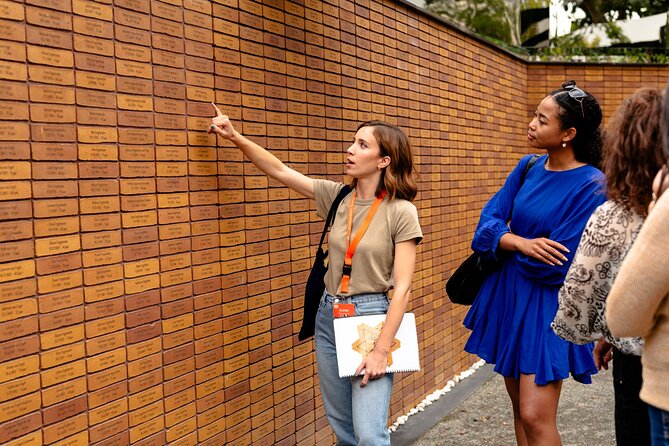
- Holocaust memorial park stop with memorial bricks for 102,000 Jews who died
- Rembrandt area pass-by that shows how the city’s stories overlap
- National Monument square + commemoration story to frame public memory
- End outside Anne Frank House (no entry ticket included)
Private Jewish Quarter walking tour: what makes it worth your time
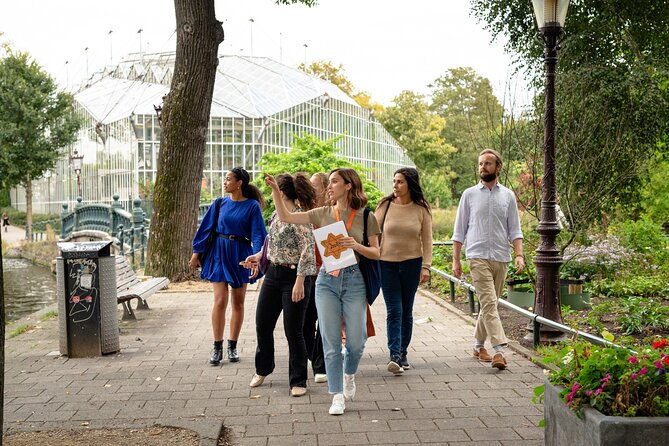
Amsterdam is packed with history, but it’s easy to walk past meaning. This tour is built to fix that problem. In about two hours on foot, you get a guided route through the Jewish Quarter that ties together major landmarks and the story behind them.
What you’re really paying for is attention. This is a private tour, meaning only your group goes along. You’re not sharing your guide with a bigger crowd that keeps moving. That small detail matters when the topic is personal and heavy, like the Holocaust memorial stop. You can ask questions without feeling rushed.
You also get a practical advantage: the route is walkable and the tour is timed in a way that works with multiple start times throughout the day. That flexibility helps if you’re trying to fit Amsterdam’s top sights into a busy itinerary without a “one-size-fits-all” schedule.
The other big value point is the ending. You finish near Anne Frank House, but you don’t force the visit inside during the tour. It gives you a clean handoff: you understand what you saw, and then you decide whether to buy entry tickets for Anne Frank House separately.
You can also read our reviews of more walking tours in Amsterdam



Where the tour starts: the 360 orange umbrella at the Jewish Historical Museum

Your day begins at Nieuwe Amstelstraat 1, right by the Jewish Historical Museum. The meeting point is specific: look for your guide with the 360 orange umbrella.
That might sound like a small thing, but it’s the difference between starting smoothly and wasting time circling the same block. If you’re arriving on foot or by tram, you’ll appreciate a clear “go here first” instruction. You’re also near public transportation, so you shouldn’t feel stuck.
From there, you move into the Quarter with your guide setting context early. This matters because Amsterdam’s streets can look similar if you’re not sure what you’re looking for. Getting oriented at the start helps your later stops land with more impact.
The Jewish Quarter intro by the Portuguese Synagogue: putting names to streets
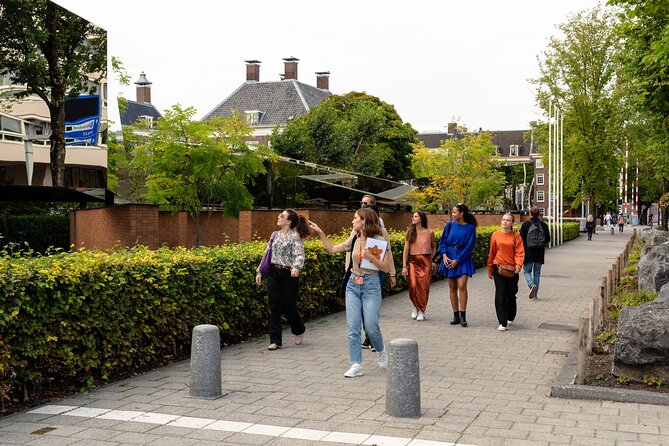
One of the first major moments happens outside the Portuguese Synagogue area. This is where your guide lays out the Jewish Quarter’s background and the way the community developed over time.
The best part about starting with a landmark like this is how it changes your walk. Suddenly you’re not just seeing buildings—you’re seeing a reason. You start to connect geography (where things were located) with history (why those places mattered).
A private guide is especially helpful here. If you’re the type who wants to understand terms as they come up—names, dates, community structures—this format gives you space to ask. And if you’re the type who needs a calmer pace, that’s doable too. The tour isn’t described as a sprint, and the guides you’ll be matched with are used to explaining at a human speed.
Holocaust memorial park stop: what you’ll see and how to prepare
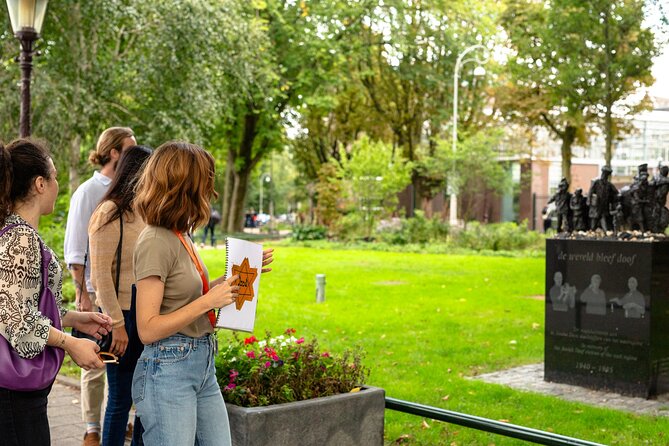
The emotional center of the tour is the park with the Holocaust memorial. This is the stop where the story becomes impossible to treat like “just another attraction.”
You’ll see memorial elements tied to the lives lost—one highlight mentioned is the bricks for 102,000 Jews who died. In a city full of monuments, memorial materials like these can hit harder than a plaque because they feel physical and close to the ground. Expect that shift in tone.
Practical tip: wear shoes that let you stand comfortably if you need a moment. Even on a walking tour, you’ll likely slow down at memorials. If you’re traveling with kids or with someone who gets overwhelmed easily, you can use your private-guide advantage and set the pace together.
Is this the kind of stop that’s hard? Yes. But it’s also one of the most valuable parts of the tour because it anchors everything else you’ll see. After this, the rest of the walk feels less like a set of sights and more like a path through how a city remembers.
Passing Rembrandt: how the guide connects Jewish life to Amsterdam itself
After the memorial park, the tour continues with a pass-by of the famous Cas/museum of the artist Rembrandt. The point here isn’t to turn this into an art tour. It’s to show you how the city’s layers overlap.
Amsterdam is famous for its canals and its art, but it’s also a place where communities changed the urban fabric. When your guide ties the Jewish Quarter story to the broader neighborhood, you start noticing connections you’d miss on your own—like how different eras and cultures can share the same streets.
This is also a good time to ask questions about what you’ve just learned. The walking pace makes it easier to keep your focus. You’re not sitting in a museum for hours; you’re carrying the meaning with you as you go.
If you’re a visual person, you’ll likely like this segment because it uses familiar city landmarks to help your brain organize the story. That can reduce the feeling of information overload.
You can also read our reviews of more private tours in Amsterdam





National Monument and commemoration: the story behind a public space
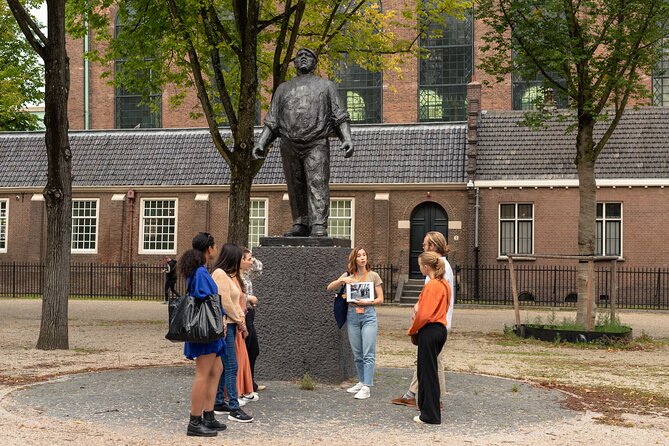
In the main square, you’ll spend time at the National Monument and hear how commemoration is carried out. This stop is valuable for a different reason than Anne Frank House or a synagogue. It’s about memory in the public sphere.
Monuments can feel abstract until someone gives you the “why.” Your guide explains the background so the monument isn’t just a photo spot. You start to understand what gets remembered, how, and why certain forms of remembrance become part of civic life.
This is also a good place to slow down and look around. Notice the square layout, the flow of pedestrian space, and where people pause. Your guide’s explanation helps you see that commemorative spaces have a design and a function, not just a name.
Ending outside Anne Frank House: manage expectations (and plan tickets if you want entry)
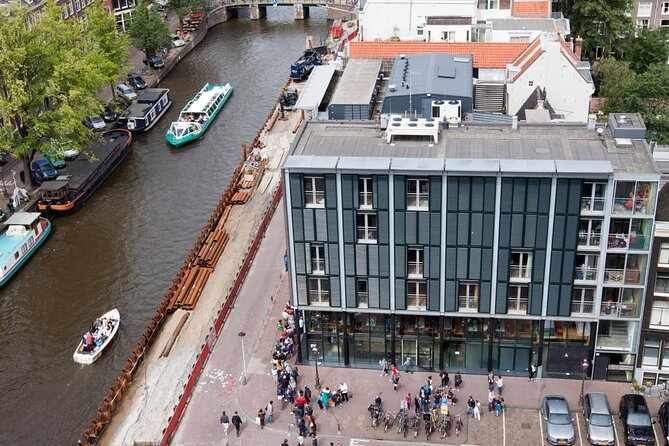
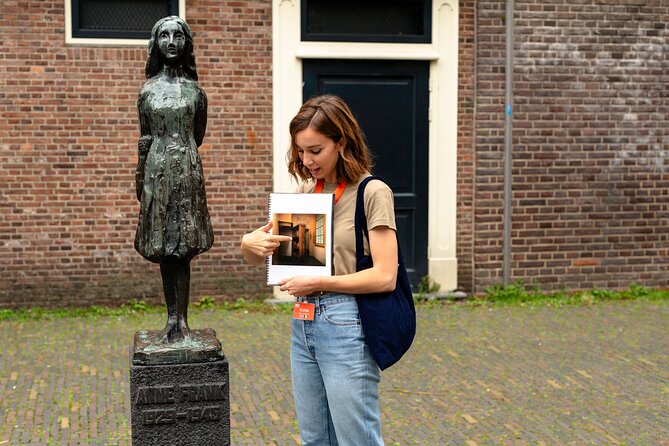
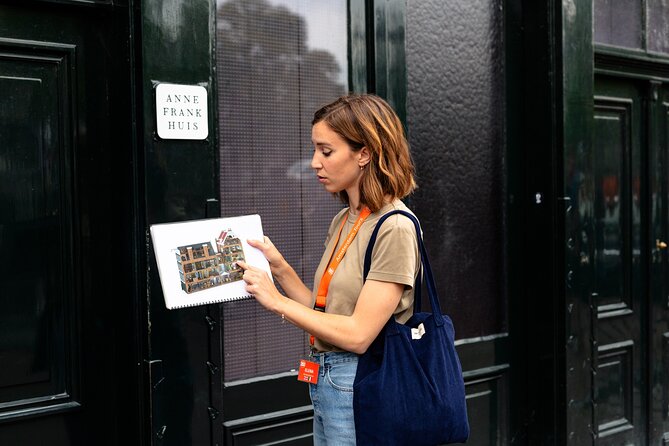
The tour finishes at Anne Frank House, Westermarkt 20, ending outside. This is a key detail: the experience does not include admission, and the tour does not grant you access or allow you to enter.
So think of this as a thoughtful arrival, not a ticketed visit. You’ll leave with context that makes the outside of the house mean more than it would otherwise. And then you can decide what you want next.
If you want to go inside, you’ll need to arrange entry separately. The upside is that you’re not forced into a rush before you’re ready. The story is already framed, so the visit inside (if you book it) will make more sense.
If you’re on a tight schedule, finishing outside can also be a benefit. You get a strong ending point without committing to a specific timed entry window during the same two hours.
How the guide style shapes your experience (and why it’s a big deal here)
In the feedback you’ll see names like Josephine and Arthur tied to excellent guide moments. A recurring theme is that the guides are friendly and ready with clear explanations, and they keep things from becoming fast-paced.
For you, that means two things. First, you can ask follow-up questions when something doesn’t click. Second, you’re more likely to feel grounded during emotional moments because your guide isn’t rushing you to move on.
A private format helps you take control of your learning style. If you want more detail about a stop, you can ask. If you’d rather keep moving and take it in at your own speed, your guide can usually meet that need better than a large-group tour.
One more practical point: the guide meets you in a specific spot with a visible marker (the orange umbrella). That reduces stress early in the tour. On tours about heavy history, stress is the last thing you want.
Price and value: what you’re paying for at $157.21 per person
At $157.21 per person for an approximately two-hour private walking tour, the price sits in the “premium but not outrageous” category for Amsterdam. Here’s what justifies it.
You’re paying for:
- a professional guide
- a true private experience (only your group)
- taxes and fees included
- a focused route with meaningful stops, not a generic walk-through
You’re not paying for Anne Frank House entry, and that’s important. Because admission is extra and the tour ends outside, your total cost for a full Anne Frank House day will depend on whether you add entry.
But in terms of value-per-minute, this tour is smart. It compresses orientation, key landmarks, and commemorative context into a tight route. If you’re the kind of traveler who reads signs but still wants someone to explain what they mean, this is a good fit.
If you’re traveling as a group, private tours can also feel less expensive on a per-person basis than you might expect, because you’re not splitting a guide across strangers in the same way as public group tours.
What to wear, how to pace yourself, and who it fits best
This is a walking tour with a moderate physical fitness level requirement. It lasts about two hours, so plan for regular city walking time and a few moments to pause at stops.
I suggest:
- comfortable shoes
- layers for Amsterdam weather shifts
- a quick snack beforehand if you’ll feel hungry (food isn’t included)
Good weather is required, so if rain is in the forecast, keep an eye on it. The experience may be rescheduled or refunded if canceled due to poor weather.
Who it suits best:
- You want a guided story through the Jewish Quarter, not just photos
- You prefer a calm pace and room for questions
- You’re planning a separate Anne Frank House visit and want context first
It’s also fine for families as long as children are with an adult, and you’re ready for emotionally serious stops.
Should you book this private Anne Frank and Jewish Quarter tour?
If your goal is to understand what you’re seeing—before you take photos or buy tickets—this is a strong choice. The private guide format and the specific, structured stops help you make sense of Amsterdam’s Jewish story in a short time. I also like that the ending is outside Anne Frank House, so you can plan entry on your own timeline instead of getting pulled into a tight schedule.
Book it if:
- you want a slower, question-friendly walk
- you care about memorial context and commemoration
- you want a guide-based route that’s easier to follow than self-guided wandering
Skip it or pair it differently if:
- you mainly want to enter Anne Frank House itself during the tour (this one doesn’t include access)
- you’re looking for a casual sightseeing stroll with no heavy moments
If you do book it, I’d pair it with an Anne Frank House entry right after (or earlier on another day) so the story you hear on the walk has a direct payoff.
FAQ
How long is the Anne Frank and Jewish Quarter Amsterdam Private Walking Tour?
It runs for about 2 hours.
Where do I meet the guide?
Meet at the Jewish Historical Museum, Nieuwe Amstelstraat 1, 1011 RH Amsterdam. Look for the guide with the 360 orange umbrella.
Where does the tour end?
The tour ends at Anne Frank House area outside, Westermarkt 20, 1016 GV Amsterdam.
Is admission to Anne Frank House included?
No. The tour does not include admission, and it does not grant entry into Anne Frank House.
What language is the tour offered in?
The tour is offered in English.
Is this a private tour?
Yes. It is a private tour/activity, and only your group participates.
What happens if the weather is bad?
This experience requires good weather. If it’s canceled due to poor weather, you’ll be offered a different date or a full refund.