REVIEW · AMSTERDAM
Absolutely Amsterdam – the Essential Introductory Walking Tour
Book on Viator →Operated by FreeDam Tours · Bookable on Viator
First walk, best bearings. This 2.5-hour stroll through Amsterdam’s UNESCO-listed center gives you a clear storyline for what you’re seeing. I love the small group size and how each stop stays focused, usually with admission-free viewing so your money goes toward tipping and repeat visits. The one drawback: you’re outside and walking the whole time, so weather and crowding can affect comfort.
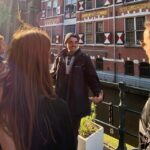
I also like how the tour doesn’t just name buildings. Guides like Gianni, Jaap, Raymond, Esi, and Sergio are praised for keeping the pace steady and explaining details with maps or visual aids. That makes the city feel easier to read right away, not like a random mash of canals and facades.
A final thing to consider: a few stops have admission tickets not included (Ons’ Lieve Heer op Solder, the Waag, and Royal Palace Amsterdam). And at Ons’ Lieve Heer op Solder, you don’t go inside the hidden church—you see it from outside with pictures of the interior—so manage expectations if you’re hoping for a full visit.
In This Review
- Key Things That Make This Tour Work
- Amsterdam in One Easy Stroll: What You Actually Get in 2.5 Hours
- Meeting at Beursplein 5: Small Group, Central Start
- Beurs van Berlage: Where Amsterdam’s Water Meets Finance
- Damrak and the Red-Light Origins: Church, Profit, and Legal Reality
- Ons’ Lieve Heer op Solder: Tolerance Under Strict Conditions (From the Outside)
- Chinatown and Dutch Drug Policy: How Coffeeshops Began
- The Waag and Rembrandt: Portrait-Making Origins
- Oostindisch Huis Courtyard: The Golden Age With a Cost
- Waterlooplein Market: WWII, Survival, and the Hunger Winter
- The Amstel and Canal House Details: Skinny, Leaning, Hooks, Open Curtains
- Oudemanhuispoort: A Hard-to-Find Monastery Turned University Space
- Royal Palace Area Finale: From Republic to Monarchy (Dam Square Wrap-Up)
- Pacing, Visual Aids, and How to Make the Tour Pay Off
- Should You Book This Intro Tour?
- FAQ
- How long is the Absolutely Amsterdam – the Essential Introductory Walking Tour?
- What language is the tour offered in?
- What does the tour cost?
- How large is the group?
- Where does the tour start and end?
- Are admission tickets included?
- Do you enter Ons’ Lieve Heer op Solder?
- Are service animals allowed?
- What’s the cancellation policy?
Key Things That Make This Tour Work

- A tight 2.5-hour route that hits major landmarks without long detours
- Short, story-driven stops where you learn why each place matters
- Mostly free admissions along the way, so it’s great value for first-timers
- Canals, money, religion, and drugs covered in one coherent walk
- Guides with humor and visual aids (Gianni, Jaap, Raymond, Esi, Sergio get named often)
- A manageable group of up to 15 people, which helps your questions stay relevant
Amsterdam in One Easy Stroll: What You Actually Get in 2.5 Hours
Think of this as your quick translator for Amsterdam. In about 2 hours 30 minutes, you walk through a string of key sights while your guide connects the dots: water turned into canals, canals supported trade, trade funded power, and power shaped everything from religion to laws to neighborhoods.
This tour is budget-priced at $5.93 per person. That’s not just a number—what makes it good value is that most stops are admission ticket free, and the guide is the main “ticket.” You’re also allowed to tip as much as you want, so if the guide connects with you, you can reward that.
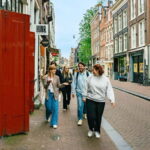
Because the route stays central and on foot, it’s ideal for orientation. If you’re the kind of person who likes walking first and planning second, this tour gives you vocabulary for the city. After, you’ll know what to look for when you wander on your own.
You can also read our reviews of more walking tours in Amsterdam

Meeting at Beursplein 5: Small Group, Central Start
You meet at Freedam Tours at Beursplein 5 (1012 GZ). It’s right in the middle of the action, and the start point is near public transportation, so you’re not stuck with a long “get there” slog.
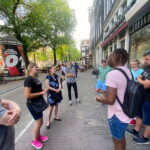
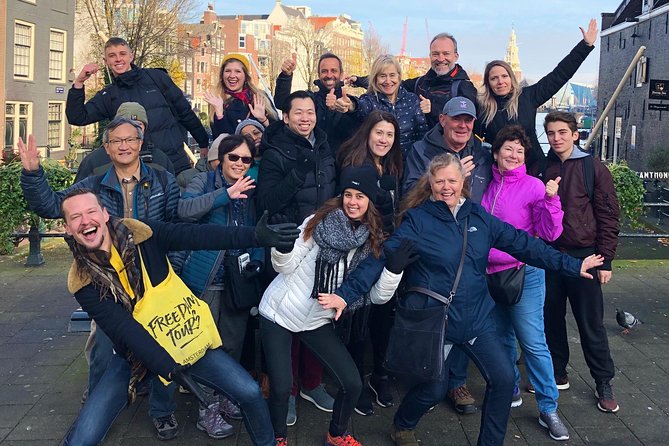
The group size is capped at 15 people. That matters more than you might think. With a small group, the guide can slow down when the group needs it—especially in Amsterdam, where bicycles and pedestrians share the same narrow spaces.
If you’re doing this early in your trip, you’ll appreciate how the tour ends back at the meeting area. That makes it easy to pivot to lunch, a museum, or another walk without hunting for transit.
Beurs van Berlage: Where Amsterdam’s Water Meets Finance
Your first stop is Beurs van Berlage, the stock- and commodities exchange building area. The key idea your guide brings is simple: Amsterdam wasn’t built in a vacuum. You learn how the exchange connects to the city’s origins, including the fact that this location sits where the Amstel River once flowed (the tour frames the story around water shaping Amsterdam’s rise).
This stop runs about 20 minutes and is admission ticket free. That’s a great match for the “intro” style of the tour. You get a base theme—money and water—and it keeps echoing in later stops.
If you’re someone who tends to photograph architecture but misses the logic behind it, this is the one that helps most. Skinny canal houses later make more sense when you understand the trade-and-funding engine earlier.
Damrak and the Red-Light Origins: Church, Profit, and Legal Reality
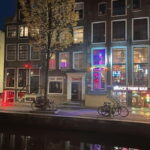
Next comes Damrak, near the old harbor. Here the tone gets more real and more complicated. You’ll hear how the origins of the Red Light District connect with the role of the Church and how the holy and the profane managed to coexist in ways that were profitable over time.
The tour also gets into the evolution of prostitution through the 20th and 21st centuries: how and why it became a legal profession, how the neighborhood changed, and what challenges exist now for this most infamous Amsterdam area.
This stop is about 15 minutes and admission ticket free. It’s not a museum visit. It’s a guided street-level discussion, so come prepared for it to feel conversational and direct rather than quiet.
One consideration: because this area is popular and streets can get busy, you may want comfortable shoes and patience. Even with a small group, you’re sharing sidewalks.
Ons’ Lieve Heer op Solder: Tolerance Under Strict Conditions (From the Outside)
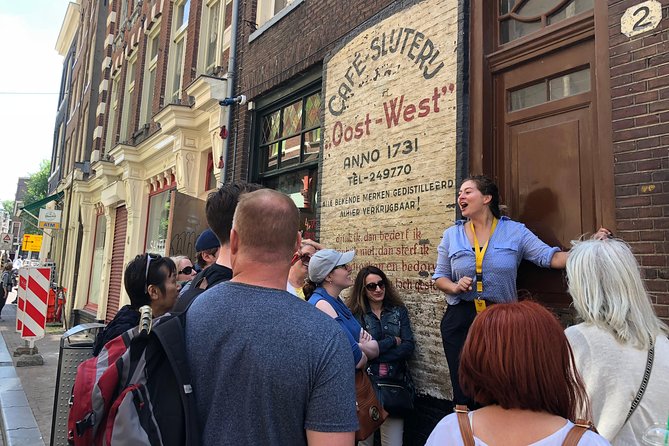
Stop 3 takes you to Our Lord in the Attic Museum: Ons’ Lieve Heer op Solder. The tour frames it around religious tolerance in practice.
Here’s the twist that shapes the whole stop: you don’t actually enter the hidden church. You’ll see it from outside, and you’ll get pictures of the interior. The discussion focuses on what changed when Catholicism became illegal in the 17th century—but was still tolerated under peculiar conditions.
Then your guide draws a line to modern life: what tolerance looks like when it has rules, and how those rules affect real people.
This stop is about 15 minutes, and the admission ticket is not included. That means you should treat it as a guided exterior viewpoint plus story, not a full internal visit.
If you love history that connects to today, this is one of the most thoughtful stops. It’s also a good “breather” in the sense that you’re not constantly scanning facades for meaning—you’re getting a clear lesson about why people hid, negotiated, and survived.




Chinatown and Dutch Drug Policy: How Coffeeshops Began
Chinatown is Stop 4, and the tour uses it to explain Dutch drug policy. You learn how this area became a no-go zone in the 1970s, and how that sparked the creation of the coffeeshops—places dedicated to selling marijuana.
This stop lasts about 15 minutes and is admission ticket free. The value here is context. If all you’ve heard about Amsterdam is the headlines, this kind of neighborhood-level explanation helps you understand why the city shaped laws the way it did—and why that reshaped the map.
Note: the tour stays focused on policy and neighborhood change, not on a “how to buy” vibe. If you’re curious about the human impact of laws, this stop delivers that.
The Waag and Rembrandt: Portrait-Making Origins
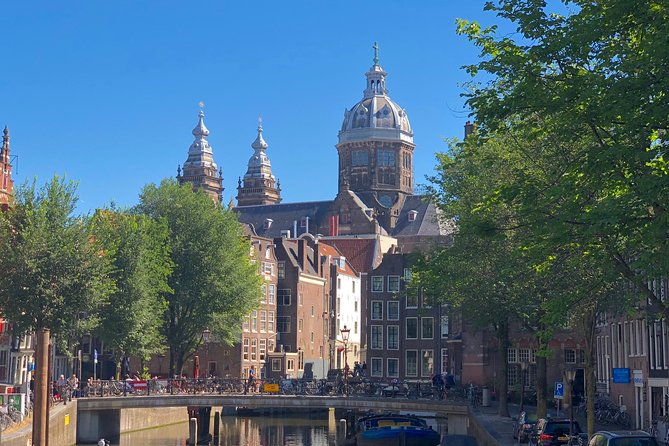
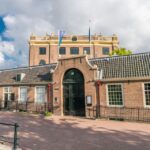
Stop 5 is the Waag. The guide’s angle is art and one specific claim: you learn where Rembrandt painted his first major work, and how that work helped revolutionize portrait making. Your guide also uses a copy of the painting to show details.
This stop is short—about 10 minutes—and admission ticket is not included. Even so, it’s an effective pause in the route because it shifts from social history and policy into a visual, “look at this” moment.
If you’re the type who likes learning how famous art connects to real locations, you’ll enjoy the reminder that Amsterdam isn’t just museums. It’s also streets where important artistic shifts took place.
Oostindisch Huis Courtyard: The Golden Age With a Cost
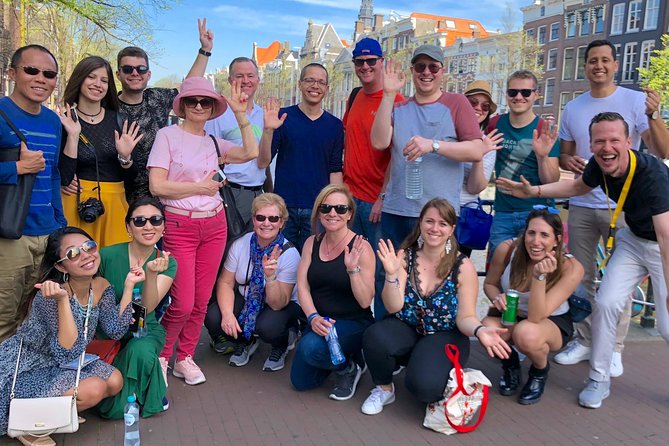
Stop 6 is Oostindisch Huis, a 17th-century building with a courtyard that’s hidden in plain sight. You’ll learn how Amsterdam became the center of a global trading empire, helping make the city the richest on the planet in the 17th century, often called the Golden Age.
Then the tour doesn’t sanitize the story. You also learn about the darker legacy tied to that period. It’s not “feel-good” history. It’s history that forces you to hold two truths at once.
This stop is about 15 minutes and admission ticket free. There’s also a practical detail you should plan around: the courtyard is only accessible during weekdays. So if your tour date falls on a weekend, you might not get the same courtyard access angle.
Waterlooplein Market: WWII, Survival, and the Hunger Winter
Stop 7 takes you to Waterlooplein Market, described as Amsterdam’s oldest market, and tied to the former Jewish Quarter. The tour explains how that area was almost completely destroyed at the end of World War II—then addresses an important point: not why you might assume.
You’ll hear about the disastrous consequences of Nazi occupation, which decimated Jewish populations across Europe who once had come to Amsterdam seeking safety. The tour also touches on the last hunger winter of the war and what Amsterdammers had to do to survive.
This stop is about 15 minutes and admission ticket free.
If you’re sensitive to heavy topics, it helps to know this stop is one of the more serious ones. The structure keeps it manageable, but the subject matter is real. For many people, that seriousness is exactly what makes the tour memorable.
The Amstel and Canal House Details: Skinny, Leaning, Hooks, Open Curtains
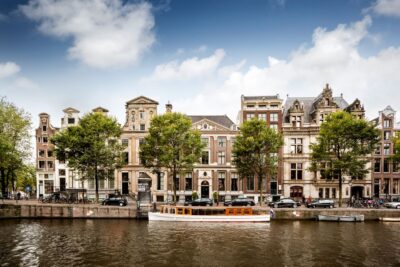
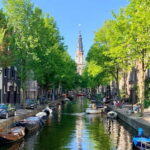
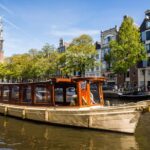
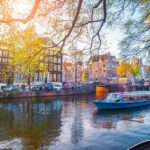
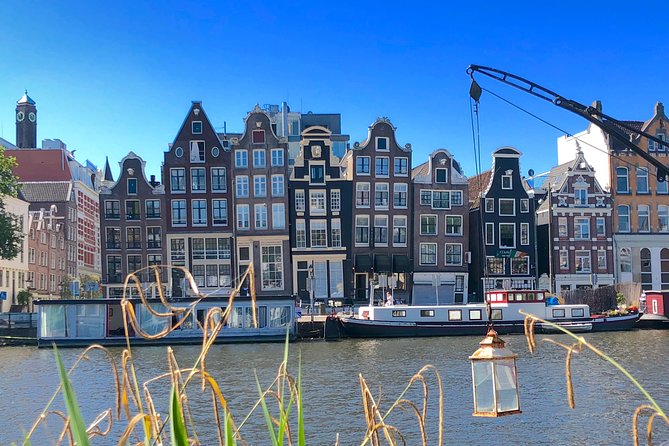
Stop 8 shifts the mood to design. At the Amstel (or sometimes another canal depending on weather and the guide), you learn why Amsterdam has canals and how the famous canal houses were shaped.
This is where you get practical “why” questions answered:
- why canal houses are so skinny
- why buildings lean in different directions (some of it is on purpose)
- why many houses have a hook
- why Dutch people keep curtains open so often
This stop runs about 15 minutes and is admission ticket free.
The payoff is how much easier your self-guided walking becomes after. Once you know what to look for, you stop seeing “cool old buildings” and start seeing engineering, economics, and daily life in the details.
Oudemanhuispoort: A Hard-to-Find Monastery Turned University Space
Stop 9 is Oudemanhuispoort, a beautiful former monastery that later became a hospital and is now part of the University of Amsterdam. The story you hear focuses on bike culture.
You’ll get answers to why Amsterdam has more bikes than people. You’ll also hear why, in a city full of pride about cycling, a lot of bikes look… a bit ugly.
This stop is about 10 minutes and admission ticket free. It’s a fun reset after the heavier material earlier. You get a local cultural insight that’s playful but still grounded in how the city functions.
One practical note: biking is everywhere. During the tour you’ll be stepping carefully around cycle lanes and locks, so keep your head up.
Royal Palace Area Finale: From Republic to Monarchy (Dam Square Wrap-Up)
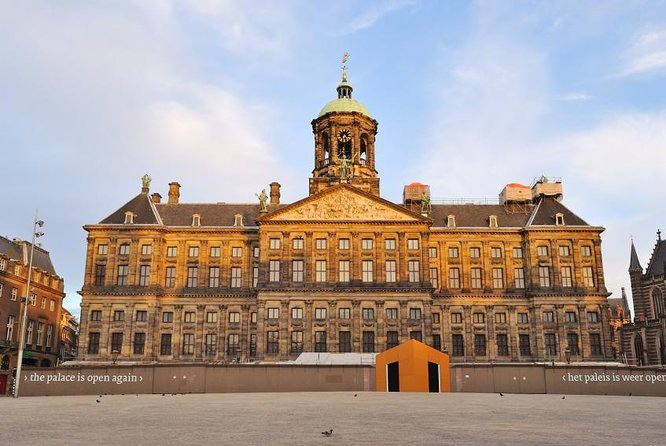
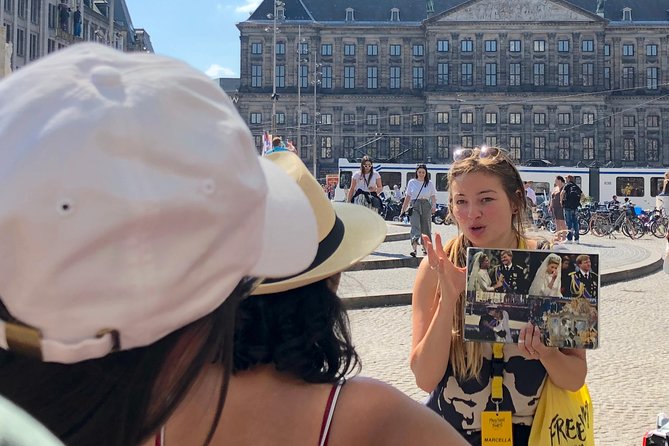
Stop 10 is the Royal Palace Amsterdam area. You’ll learn the peculiar history behind it—especially why and how the transition happened from a republic to a monarchy. You also meet the current royal family via pictures, and you get updated royal gossip framed in the tour’s tone.
This is about 15 minutes and admission ticket is not included. The tour ends at Dam Square, and then you come back to the meeting point at the end of the activity.
If you want a clean finish after all the politics, religion, and commerce, this works. It gives you one more “power structure” story and then hands you back to Amsterdam with a fresh lens.
Pacing, Visual Aids, and How to Make the Tour Pay Off
The most repeated praise for this kind of walking tour is simple: you learn a lot without feeling dragged along. The scheduled stops are short, the group is small, and the route is compact enough that the walk stays comfortable for most people.
Guides are often credited for:
- explaining in a way that clicks
- using maps and visual aids
- mixing humor with facts
- keeping the pace manageable
You’ll also do better if you show up with the right setup:
- Wear comfortable walking shoes. Amsterdam sidewalks are charming, but the pace adds up.
- Bring a light layer. You’re outside for about 2.5 hours.
- Take your best photos, then turn your head back to the guide. The stories make the buildings more meaningful.
If you’re deciding what to do next after the tour, use your new “mental labels.” For example, when you see a canal house, think about trade funding and housing shape. When you pass a neighborhood edge, think about policy and how it reshaped street life.
Should You Book This Intro Tour?
Book it if you’re in Amsterdam for a short time and want an ordered way to see the city. At $5.93, the value is excellent—especially because so many stops are admission-free and the guide’s explanations do the heavy lifting.
Skip it or adjust expectations if you want only museums you physically enter. A few stops have admission not included, and Ons’ Lieve Heer op Solder is an outside viewpoint with photos rather than a full hidden-church visit.
FAQ
How long is the Absolutely Amsterdam – the Essential Introductory Walking Tour?
It runs about 2 hours 30 minutes.
What language is the tour offered in?
The tour is offered in English.
What does the tour cost?
The price is listed as $5.93 per person.
How large is the group?
The tour has a maximum of 15 people.
Where does the tour start and end?
It starts at Freedam Tours, Beursplein 5, 1012 GZ Amsterdam. It ends back at the meeting point.
Are admission tickets included?
Some stops are admission ticket free. The stops with admission ticket not included are Our Lord in the Attic Museum Ons’ Lieve Heer op Solder, The Waag, and Royal Palace Amsterdam.
Do you enter Ons’ Lieve Heer op Solder?
No. The tour notes that you don’t actually enter the hidden church. You’ll see it from the outside and view pictures of the interior.
Are service animals allowed?
Yes, service animals are allowed.
What’s the cancellation policy?
Free cancellation is available up to 24 hours in advance for a full refund. If you cancel within 24 hours of the start time, the amount paid is not refunded.