REVIEW · AMSTERDAM
Amsterdam: Anne Frank Walking Tour – Guided in EN/DE/IT/ES
Book on GetYourGuide →Operated by Amsterdamliebe · Bookable on GetYourGuide
One street can hold a whole century of heartbreak. This guided Anne Frank–themed walk through Amsterdam’s Jewish Quarter connects the pre-war Jodenbuurt, the Nazi occupation, and the legacy today, using passages from Anne Frank’s diary. I like that it stays human and specific, not just dates and names. I also like that your guide reads excerpts in the language you booked, which keeps the story grounded. One heads-up: this is heavy WWII material, so it’s not an easy “walk and relax” experience.
I’m especially drawn to the way the tour links everyday city life to what changed under persecution. You’ll hear about the Jewish community’s role in shaping Amsterdam after the Spanish Inquisition, plus the reality of discrimination and the Holocaust. In guides like Sarah, Emilia, Valentina, Josh, and Deborah (all mentioned in feedback), the pacing and storytelling show up as a big part of the value.
The main consideration is logistics: it’s a 2-hour walk over about 2–3 kilometers with indoor stops kept short (and there’s no Anne Frank House visit). If you want a long museum day or quiet time at one site, plan something else alongside this tour.
In This Review
- Key things I think you’ll care about
- What This Anne Frank Jewish Quarter Walk Is Really About
- Getting Oriented at De Waag in Nieuwmarkt
- Jodenbuurt Roots: From Spanish Inquisition Refugees to a Shaped City
- Zuiderkerk, Huis de Pinto, and the Street-Level Clues of a Neighborhood
- Rembrandt House: When the Jewish Quarter Wasn’t Only Jewish
- Sint Antoniesluis: A Place in the Story of Trade, Movement, and Change
- The Portuguese Synagogue and Photo Stop Moments
- Jewish Historical Museum: Short Stop, Big Context
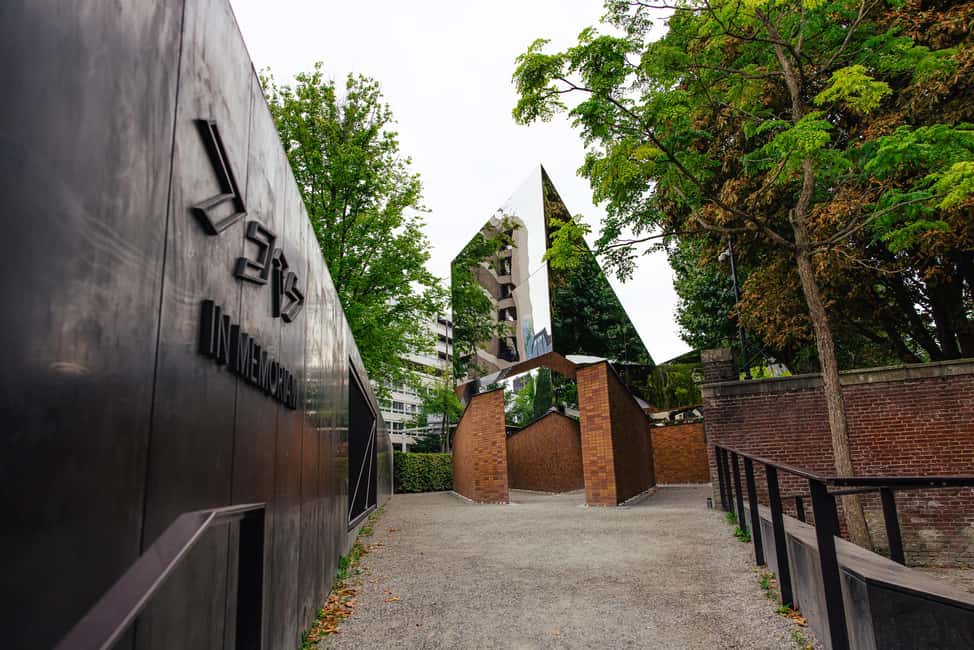
- Auschwitz Monument Amsterdam and The Dokwerker: Remembering in Public Space
- National Holocaust Names Monument: The Emotional Finish
- Price and Value: Why US$28 Can Make Sense
- Who This Walk Fits Best (and Who Might Want Another Plan)
- How Long, How Much Walking, and What to Bring
- A Quick Note on the Guides: What Makes People Come Back
- Should You Book This Anne Frank Walking Tour?
- FAQ
- FAQ
- What languages are available for this tour?
- How long is the walking tour?
- Does the tour include admission to the Anne Frank House?
- How much walking is involved?
- What’s the meeting point?
- Can I visit the sights without paying admission fees?
- What should I bring?
- Does the tour run in bad weather?
- Is wheelchair access available?
- Is a private group option available?
- How do cancellation and flexible booking work?
Key things I think you’ll care about
- Diary excerpts in your booked language (English, German, Italian, or Spanish), with guides praised for respectful, clear reading
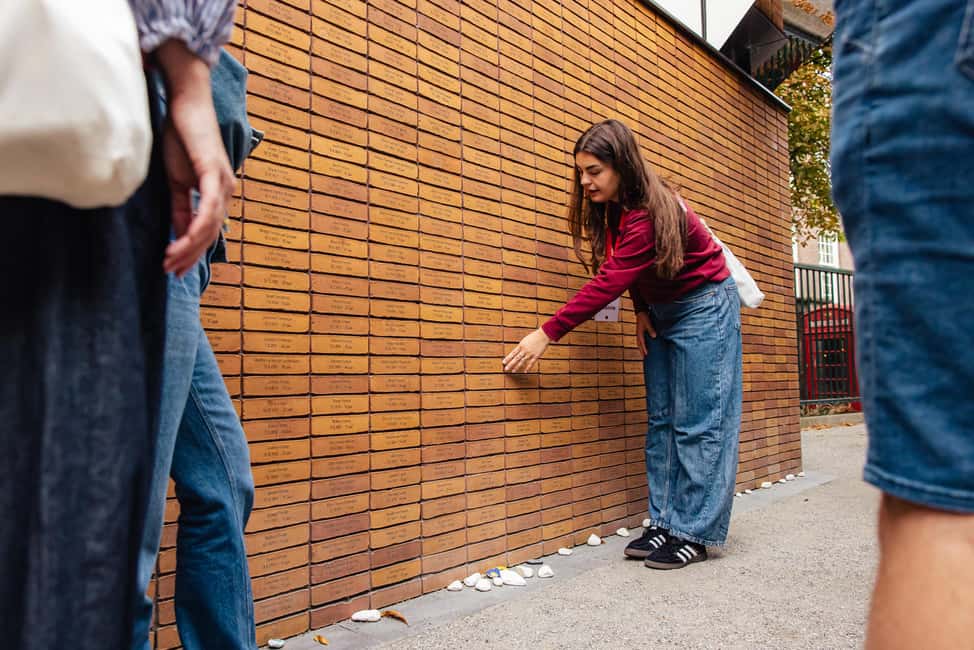
- Real memorials you can see and stand with, including Auschwitz Monument, The Dokwerker, and the National Holocaust Names Monument
- Stolpersteine and street-level remembrance, plus synagogue and cemetery-adjacent history
- Resistance story includes Jews and non-Jews, not just victims and dates
- A focused route that’s short enough to fit in but still hits the key emotional beats
- No Anne Frank House stop, so your time is spent on the wider Jewish Quarter context
What This Anne Frank Jewish Quarter Walk Is Really About

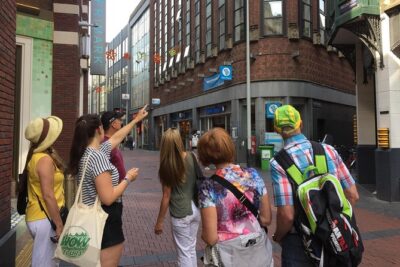
This tour works because it treats Amsterdam as more than a backdrop. The walk starts in the Nieuwmarkt area and moves through the Jewish Quarter with a clear arc: how the neighborhood formed, what daily life looked like, how persecution arrived, and how resistance and remembrance took shape.
The guide’s job is not just to point at sites. You’ll hear context for why this neighborhood mattered—politically, economically, and culturally—then you’ll get the WWII pivot: deportation, hiding, and Anne Frank’s diary as a personal witness. The tone is important here. Even when the subject is brutal, the tour aims to explain rather than shock.
I like that it gives you both the past and the present. There’s coverage of current Jewish community life in multicultural Amsterdam, so you’re not left with only ruins and names. And because this walk is led by a German- or English-speaking guide (or a guide in other listed languages), you get a human narrator tying the stops together.
You can also read our reviews of more walking tours in Amsterdam


Getting Oriented at De Waag in Nieuwmarkt
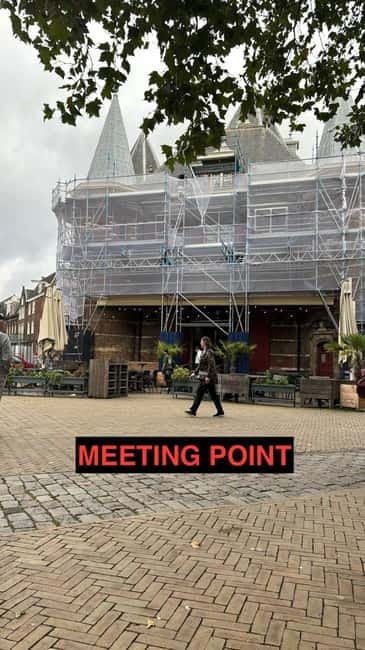
The meeting point is De Waag at the entrance to the restaurant De Waag, in the middle of Nieuwmarkt. Your guide wears a red name tag. If you use Google Maps, take an extra second: sometimes it steers you to the back side of the building.
Here’s a practical tip that can save you time: if you spot the coffeeshop Jolly Joker, you’re on the wrong side. Walk around the “castle-like” Waag building to reach the correct entrance. This matters because a tour like this runs on a tight schedule—miss the start and you lose momentum.
Why this starting point works: Nieuwmarkt is visually recognizable, and it’s a good anchor for transitioning from modern Amsterdam streets into the layered history of the Jewish Quarter.
Jodenbuurt Roots: From Spanish Inquisition Refugees to a Shaped City
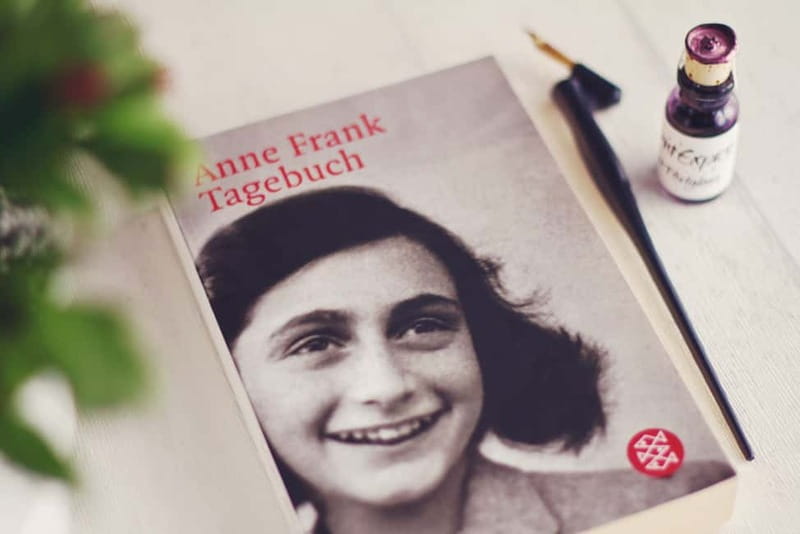
One of the strongest threads in the story is how Amsterdam became what it became. You’ll learn that Jews expelled by the Spanish Inquisition helped transform Amsterdam into one of Europe’s wealthiest commercial cities, with a lasting impact on the cityscape. That’s part of why the Jodenbuurt was founded, and why the Jewish Triangle is such a well-known section of the area.
At Nieuwmarkt Square, you get a quick orientation. It’s a natural place to set context because it sits right where the neighborhood’s identity is easiest to feel in today’s city. The guide then keeps building the picture as you move toward the next landmark.
A key point you should hold onto: this tour doesn’t treat the Jewish Quarter as only a WWII setting. It explains that the neighborhood had ambition, community life, and cultural influence long before the occupation tightened everything.
Zuiderkerk, Huis de Pinto, and the Street-Level Clues of a Neighborhood
The stops between Nieuwmarkt and the more famous addresses help the story breathe. At Zuiderkerk, you’ll get a guided stop that frames what you’re seeing in human terms—architecture and neighborhood geography in service of the narrative. Then you’ll pass Huis de Pinto, a short stop that adds texture.
I like these in-between moments because they prevent the tour from becoming only “look at this memorial, feel sad, move on.” You’re still walking in real Amsterdam, and the guide is helping you read the place.
Even if you don’t care about buildings as much, these small stops matter. They make the WWII shift feel more believable, because you can recognize that this was a real neighborhood with real routines before everything was broken.
Rembrandt House: When the Jewish Quarter Wasn’t Only Jewish
At Rembrandt House, the tour highlights an often-missed angle: the Jewish Quarter wasn’t exclusively Jewish. Non-Jews also lived there, and Rembrandt van Rijn is specifically mentioned as one of the people with a domicile in the area.
This is valuable because it corrects a common mental image. When you understand the neighborhood as shared space, the later story of segregation and persecution hits harder. You’re not just picturing a community behind walls; you’re picturing neighbors, coworkers, and city life that got violently rearranged.
The guide also typically keeps the pacing moving—there’s a longer guided segment here (about 15 minutes), which usually signals a key interpretive stop. It’s a good moment to ask questions if anything feels unclear. The guides are repeatedly praised for engaging and answering, and people mention discussion time and a pace that doesn’t feel rushed.
You can also read our reviews of more guided tours in Amsterdam





Sint Antoniesluis: A Place in the Story of Trade, Movement, and Change
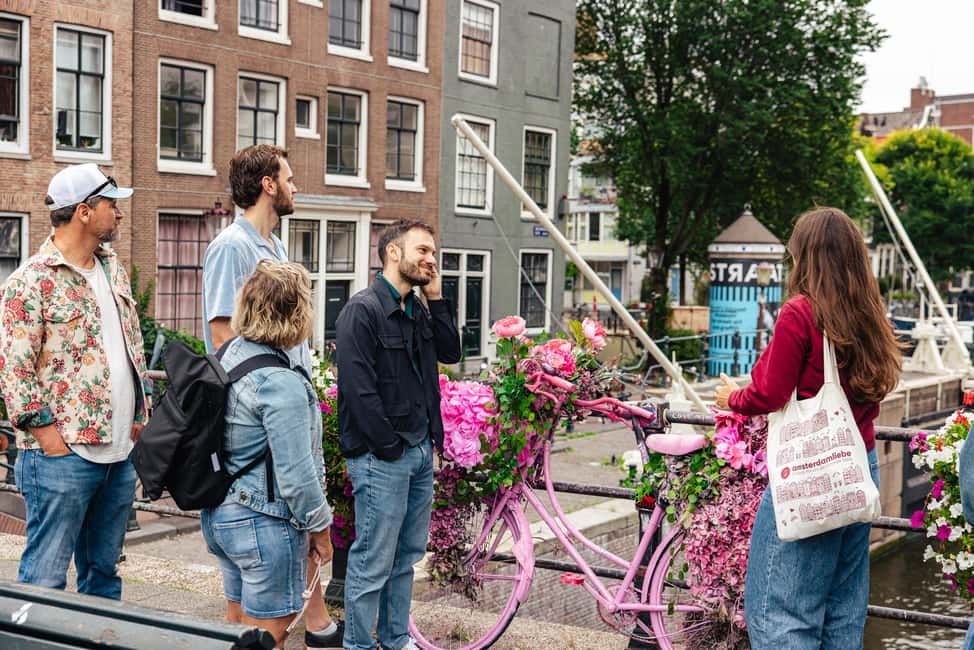
Sint Antoniesluis is another guided stop, about 10 minutes. You’re still in the walking rhythm, and the guide is using this part of the route to connect the neighborhood’s physical layout to how people moved, lived, and organized.
Even without extra “museum time,” stops like this help you understand why this place was attractive to communities and also why it could become vulnerable under Nazi control. Neighborhood geography shows up in history more often than people realize.
The Portuguese Synagogue and Photo Stop Moments
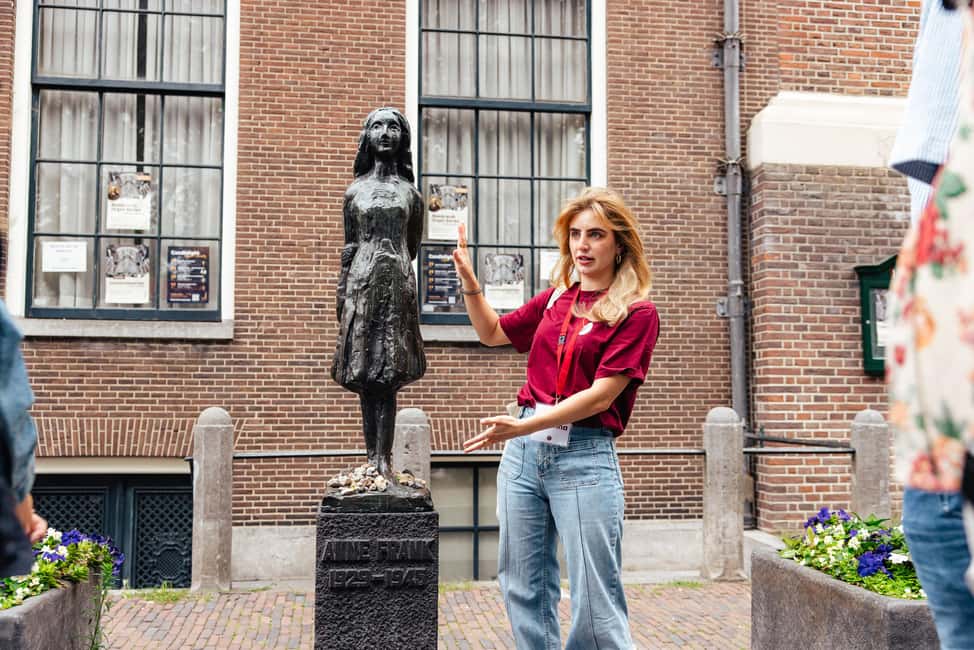
One of the most important landmarks on the route is the Portuguese Synagogue. You’ll have a photo stop plus guided time (about 10 minutes total). The tour uses this moment to anchor religious and communal identity in a very specific Amsterdam setting.
This stop is likely to be emotional, but it’s also educational. You’ll connect it to what came before (community formation and cultural presence) and what came after (persecution and deportation).
Why photo stops are worth paying attention to: they’re not just “take a picture and move.” Here, the photo time gives you a chance to look closely while the guide explains what you’re seeing—so your photos end up meaning something.
Jewish Historical Museum: Short Stop, Big Context
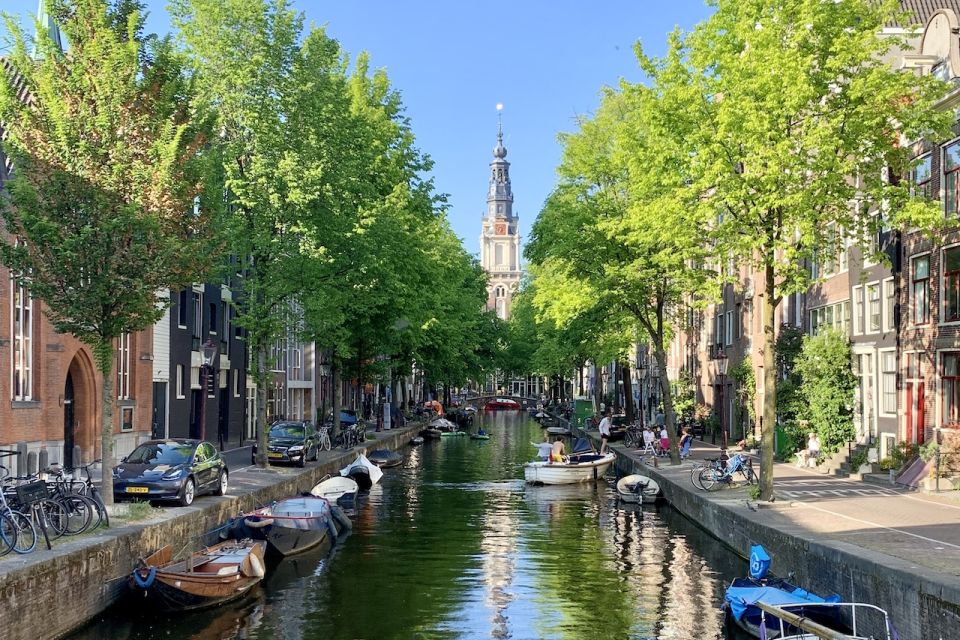
Next comes the Jewish Historical Museum, with a shorter guided visit (about 5 minutes). The tour doesn’t try to turn this into a long museum session. Instead, it uses the proximity to reinforce themes: community life, history, and how the story is preserved.
If you’re someone who wants “more time in museums,” you might decide to come back later for a longer visit. But for this tour’s purpose—linking multiple memorial sites with WWII narrative—the short stop keeps you on track.
Auschwitz Monument Amsterdam and The Dokwerker: Remembering in Public Space
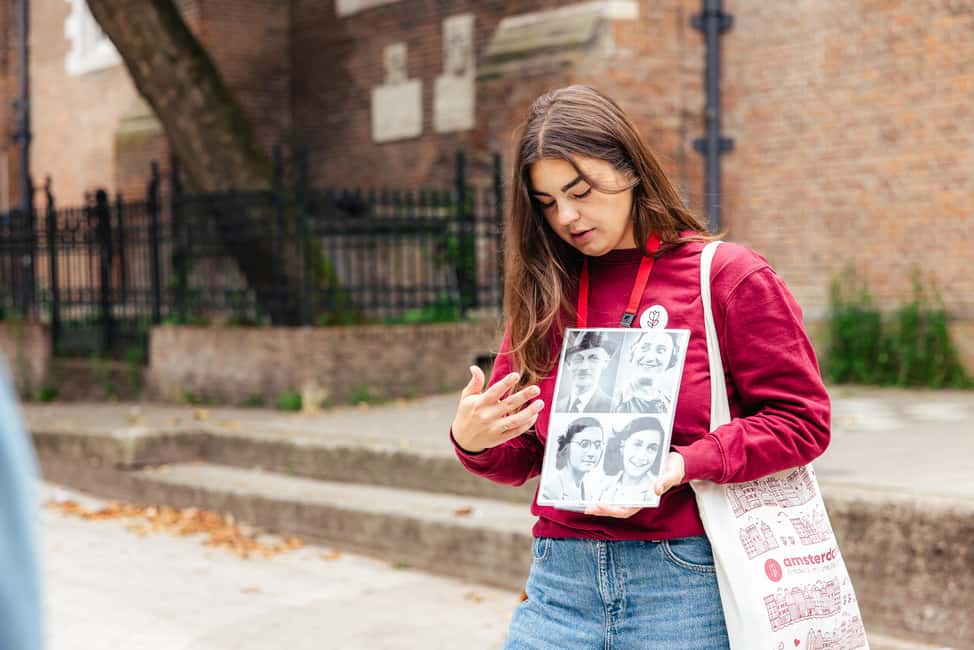
Then the walk turns sharply toward WWII remembrance with Auschwitz Monument, Amsterdam (about 10 minutes guided). This is one of those sites where the point isn’t entertainment. It’s recognition—of what happened, and of the specific fact that the Holocaust reached Amsterdam, not just “somewhere far away.”
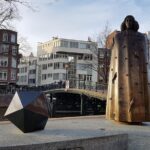
Following that, you pass The Dokwerker (about 5 minutes guided). The guide connects this to the broader picture of how the Nazi regime reshaped lives, and how people responded. The tour’s narrative includes not only the suffering but also resistance.
And resistance is a theme you should expect to hear clearly. The tour covers the February Strike in 1941, and it emphasizes courageous actions by Jews and non-Jews who saved lives while endangering themselves. That part of the story matters because it breaks the pattern of only focusing on helplessness.
National Holocaust Names Monument: The Emotional Finish
The final stop is the National Holocaust Names Monument, with a guided segment about 15 minutes plus a photo stop. This ending works because it shifts from “here’s what happened” into “here’s what remains.” You’re placed near names and remembrance, which can stay with you longer than a single fact list.
The tour ends here, and the route structure makes the emotional build-up feel intentional rather than random. You’re likely to leave with a stronger sense of place: not only where events happened, but what the city chose to remember publicly.
Price and Value: Why US$28 Can Make Sense
At $28 per person for a 2-hour guided walking tour, the value depends on what you want from Amsterdam.
If your goal is to see the Jewish Quarter quickly and understand it, this is a strong deal. Guides are doing the heavy lifting: connecting the pre-war Jodenbuurt story (including the Spanish Inquisition refugee impact) to WWII deportation and Anne Frank’s diary excerpts, then bringing you to major memorial sites.
A big value point: the tour notes that there are no admission fees you need to pay for during the walk because sights can be visited for free. So you’re mostly paying for guidance and time, not ticket costs.
Also, the language options matter. The tour is offered in English, German, Italian, or Spanish, and it’s not bilingual—so you’ll get consistent delivery in the language you choose. When that matches your needs, $28 feels more justified.
Who This Walk Fits Best (and Who Might Want Another Plan)
This tour fits you best if you:
- want WWII history anchored to Amsterdam street-level places
- want Anne Frank’s diary passages read aloud in your booked language
- like a guided route that hits multiple memorials without turning into an all-day schedule
- prefer walking with a guide who can answer questions and keep a respectful tone (many guides are praised for this)
You might consider a different format if you:
- want to spend lots of time inside a museum or indoors
- need a lighter emotional experience
- are only interested in the Anne Frank House itself (this tour explicitly does not visit or even include it)
How Long, How Much Walking, and What to Bring
Plan for about 2 hours. The route covers roughly 2–3 kilometers, so comfortable shoes are not optional. The tour happens in all weather, so bring weather-appropriate clothing. In rain, bring an umbrella.
For comfort, I’d also bring water, because even a “short” walk of a couple kilometers can feel longer when you’re stopping often and absorbing heavy history.
A Quick Note on the Guides: What Makes People Come Back
The repeated praise isn’t just about having information. It’s about how the story is delivered.
You’ll see feedback highlighting guides like Emilia and Valentina for detailed explanations and diary extracts read along the route. Others like Josh are praised for patience, sharing pictures or adding personal insights, and keeping the walk interesting while answering questions. Deborah and David are mentioned for historical background that helps you understand the rest of your trip, not just the tour route itself. Bianca and Amelia come up for friendly, emotionally respectful storytelling and a pace that works for the group.
One practical implication for you: arrive on time, listen to your guide’s cues, and don’t be shy about questions at stops. When the guide invites discussion, that’s where you often get the most value—especially with a topic as layered as this.
Should You Book This Anne Frank Walking Tour?
If you want an honest, guided way to understand Amsterdam’s Jewish Quarter story—before and during WWII—this is an excellent choice. It connects formation, persecution, the Holocaust, and resistance, and it uses Anne Frank’s diary excerpts to keep the human scale in focus. At $28 for about two hours, with sites accessible without extra admissions, it’s a practical value.
I’d say book it if you’re the type who likes walking + meaning, and you can handle emotionally serious history. Skip it if you’re only chasing one specific attraction or if you need a lighter day plan.
FAQ
FAQ
What languages are available for this tour?
The tour is available in German, English, Spanish, or Italian. It is not bilingual, so you should choose the right language option when booking.
How long is the walking tour?
It lasts about 2 hours (and starting times vary, so check availability).
Does the tour include admission to the Anne Frank House?
No. This tour does not visit the Anne Frank House or even see it.
How much walking is involved?
It’s a walking tour of about 2–3 kilometers, so you’ll want comfortable shoes.
What’s the meeting point?
Meet your guide at the entrance to the restaurant De Waag in the middle of Nieuwmarkt. The guide wears a red name tag.
Can I visit the sights without paying admission fees?
The tour indicates you won’t need to pay admission fees during the tour because all sights can be visited for free.
What should I bring?
Bring comfortable shoes, water, and weather-appropriate clothing. An umbrella is recommended if rain is expected.
Does the tour run in bad weather?
Yes. It takes place in all weather conditions.
Is wheelchair access available?
Yes, the tour is listed as wheelchair accessible.
Is a private group option available?
Yes, private group availability is offered.
How do cancellation and flexible booking work?
Free cancellation is available up to 24 hours in advance for a full refund. There’s also a reserve now, pay later option.