REVIEW · AMSTERDAM
Amsterdam: World War II Private Walking Tour
Book on Viator →Operated by Slagveldreizen.nl · Bookable on Viator
WWII in Amsterdam hits differently on foot. This private walk traces the Nazi occupation through memorials and street corners tied to Jewish resistance, with Ben de Jong and Peter Schaapman guiding you in English or German. You’ll start on the canals around Prinsengracht and finish at the National Holocaust Names Monument, with a focus on meaning—not just dates.
I especially like the private, small-group feel (up to 4), because you can ask questions without tuning out other people’s conversations. I also like that the tour is built around the Monument to Jewish Resistance, where the learning stays grounded in place and in what it meant for people living here. One thing to note up front: you do not visit the Anne Frank House, the Resistance Museum, or Hollandsche Schouwburg, so if those are must-sees for you, you’ll need to pair this with something else.
In This Review
- Key things to know before you go
- How a private WWII walking tour in Amsterdam actually feels
- From Prinsengracht to the National Holocaust Names Monument
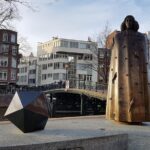
- Monument to Jewish Resistance: the main stop and why it’s the heart of the story
- What you’ll cover beyond the main monument (without a museum overload)
- The tour does not include Anne Frank House, the Resistance Museum, or Hollandsche Schouwburg
- Pacing, age fit, and how the emotional tone is handled
- Value check: is $180.04 per group worth it?
- Practical tips to make the walk work for you
- Should you book this Amsterdam Jewish Resistance WWII walking tour?
- FAQ
- How long is the Amsterdam WWII private walking tour?
- Is this a private tour?
- What languages are offered?
- What’s the main place you visit during the tour?
- Do you visit the Anne Frank House or the Resistance Museum?
- Where does the tour start and end?
- Is coffee included?
Key things to know before you go
- Private tour for up to 4: your group stays the only group on the walk.
- Jewish Resistance focus: the core stop is the Monument to Jewish Resistance.
- Guides matter here: Ben de Jong and Peter Schaapman lead the experience.
- 3 hours with a mid-walk break: a short coffee/restroom pause happens halfway.
- No Anne Frank House or other specific sites: you’ll visit other Nazi-occupation-related memorial locations instead.
- Admission is covered, extra isn’t: included fees are in the price, but coffee and any museum tickets are not.
How a private WWII walking tour in Amsterdam actually feels
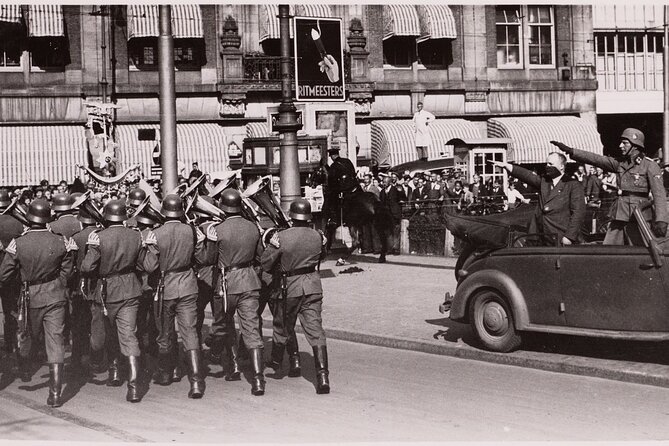
A World War II tour can turn into a checklist. This one tries to do the opposite. You walk a set path of memorial sites and meaningful corners tied to the 1940–45 Nazi occupation of Amsterdam, and the guiding is meant to help you read what you’re seeing with your full attention.
The tour runs about 2.5–3 hours. That’s long enough for real context, but short enough that you don’t end up rushing through heavy material. It’s also priced at $180.04 per group (up to 4), which is where the value comes in. For one person, it’s pricey. For a family or a small group, the per-person cost drops fast, and you also get the advantage of a true dialogue with your guide.
You’ll want to arrive ready to walk. The experience assumes moderate physical fitness, and you’ll be moving through Amsterdam’s streets for the full session. If you like tours where the guide can slow down when questions pop up, this format will suit you.
You can also read our reviews of more walking tours in Amsterdam



From Prinsengracht to the National Holocaust Names Monument
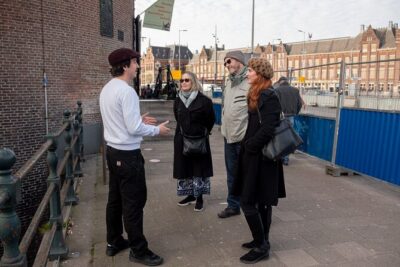
You meet at Prinsengracht 263, 1016 GV Amsterdam at 9:30 am, then the walk ends at the National Holocaust Names Monument in 1018 DP Amsterdam. That canal-side start matters. It places you in the everyday geography of the city, not some remote museum complex. You’re learning by moving through the city’s bones—its alleys, lanes, and memorial placements—rather than hovering in one single exhibit hall.
The ending at the National Holocaust Names Monument is also a strong choice. It’s the kind of site that makes you sit with what you’ve heard during the walk. By the time you reach the finish, you’re not just learning history for the test. You’re processing it.
The tour is described as ideal if you like going a bit off the beaten path. That lines up with what you’re likely to feel in Amsterdam: the city’s famous canals are beautiful, but WWII memory lives in smaller spaces too—places you’d normally pass without understanding why they matter.
Monument to Jewish Resistance: the main stop and why it’s the heart of the story
The tour’s anchor point is the Monument to Jewish Resistance. This is where the visit earns its name. Instead of only talking about occupation in general terms, the walk is built around specific sites and monuments tied to the period when Amsterdam was under Nazi control.
What I like about a focus like this is that it prevents the story from becoming one long list of tragedy. You still face the brutal reality of what happened, but your guide can help you understand resistance as something that existed in daily life—people making choices under impossible pressure.
The guide approach here is also practical. You get “Let us be your guides” energy, meaning you’re not left alone with a brochure. You’re guided through what you’re looking at and how it connects to the broader WWII picture for Amsterdam. That matters because memorials can be confusing if you don’t know what to notice—symbol placement, wording, and the way the site relates to the city around it.
From the provided details, this walk is intended for people who want to grasp this chapter as part of the city’s ongoing memory. The tour also highlights the legacy of the Second World War—so you leave with an understanding of how the past keeps shaping public space and public conscience.
What you’ll cover beyond the main monument (without a museum overload)
You’re not stuck in one spot. The experience is described as visiting important sites and monuments related to the Nazi occupation of Amsterdam (1940–45). That typically means multiple stops where the guide can connect each location to a piece of the story—how occupation changed lives, how resistance formed, and what the city had to carry afterward.
This is a big deal for travelers who hate “museum marathon” days. Not because museums are bad—they’re great—but because walking memorials can feel more immediate. You get the advantage of context that doesn’t require buying timed tickets or switching gears from history to architecture to gift shops.
Also, you’ll be in the streets. You’ll get to see how the memorials sit inside real neighborhoods, not just curated exhibit spaces. That helps the material sink in, because you’re connecting names and events to places you could literally stand in.
The tour does not include Anne Frank House, the Resistance Museum, or Hollandsche Schouwburg
This is the key expectation-setting point for planning your day.
The experience explicitly does not visit:
- the Anne Frank House
- the Resistance Museum
- Hollandsche Schouwburg (the deportation center)
It also notes that tickets for museums aren’t included. And drinks aren’t included either (coffee/restroom is covered as a rest stop, but coffee or tea costs aren’t part of the included price).
So think of this tour as its own lane. It’s not trying to be your one-stop WWII package. It’s focused on Jewish resistance sites and the way those memories connect to the broader WWII story in Amsterdam.
If you’re the type of visitor who wants to tick those three sites off in one go, you’ll likely want to schedule this walk on a separate day—or pair it with another timed-entry experience afterward.
You can also read our reviews of more private tours in Amsterdam





Pacing, age fit, and how the emotional tone is handled
This tour is 3 hours in total, and the schedule includes a short break halfway through for coffee and/or a restroom stop. That’s more than just convenience. With WWII material, your brain can run hot. A quick break helps you reset so you don’t end up hearing the important parts while mentally multitasking.
There’s also a suggested minimum age of 13, likely because of the content. If you’re traveling with teens, it’s a reasonable option to consider, but you’ll want to judge based on your group’s comfort level.
You’re also told to have a moderate physical fitness level. Amsterdam walking is not always “athletic,” but it does mean steady movement on city sidewalks, turns, and changing pavement.
One more practical note: service animals are allowed, and the meeting area is near public transportation. So if you’re combining this with other Amsterdam plans, it should fit without the logistics headache.
Value check: is $180.04 per group worth it?
Let’s talk math and meaning, not just numbers.
At $180.04 per group (up to 4), the tour pricing makes most sense when you’re traveling with others. If you’re a pair, it can feel like a reasonable way to get tailored guidance on a theme that many general tours only touch briefly. If you’re solo, it’s a splurge—but you are paying for privacy, not just a lesson.
A big part of the value is that it’s a private activity. You aren’t waiting for other groups to finish. You aren’t competing for the guide’s attention. The guide can adjust pace to your questions, which is exactly what you want for sensitive WWII topics.
The price also includes all fees and taxes, and the tour indicates admission ticket free. Just keep in mind: that doesn’t cover additional museum admissions you might wish to add elsewhere, and it doesn’t cover coffee and/or tea during the break.
In plain terms: this is worth it if you want a guided, place-based WWII experience with your own time and your own pace. If you’re happy with a broad overview from a larger group, you may find better value elsewhere.
Practical tips to make the walk work for you
Here are a few things that will help you get more out of the day:
- Wear shoes you trust. You’re walking for roughly 2.5–3 hours with city turns and uneven spots typical of Amsterdam.
- Plan your energy. This is WWII content about Nazi occupation and Jewish resistance, so give yourself a calm buffer after the tour instead of stacking loud activities immediately afterward.
- Bring questions. If there’s a gap you keep feeling in the story—how resistance worked, what life looked like under control—your guide is set up to answer.
- Don’t assume “famous sites.” Since the Anne Frank House and other specific stops are not included, decide ahead of time whether you want those experiences on a different schedule.
If you do those simple things, the tour usually lands better, because you’re not scrambling or feeling unprepared when you reach the memorial sites.
Should you book this Amsterdam Jewish Resistance WWII walking tour?
Book it if you want a private, guide-led WWII experience that focuses on Jewish resistance sites and the legacy of the Second World War in Amsterdam. It’s a strong choice if you like walking tours that take you into the parts of the city you would otherwise skip—and if you want to understand what you’re looking at, not just pass it by.
Skip it or pair it differently if you specifically want the Anne Frank House, the Resistance Museum, or Hollandsche Schouwburg as part of your day. This tour doesn’t cover those stops, and trying to treat it like a complete WWII Amsterdam checklist will leave you disappointed.
One last practical nudge: it’s an experience that’s commonly booked about 54 days in advance. If you’re traveling in peak season or with a tight schedule, it’s smart to reserve early so your preferred day works.
FAQ
How long is the Amsterdam WWII private walking tour?
The tour lasts about 3 hours, with the walk time listed as approximately 2.5–3 hours.
Is this a private tour?
Yes. It’s private, restricted to your own group (up to 4 people).
What languages are offered?
The experience is offered in English and German.
What’s the main place you visit during the tour?
The tour includes a visit to the Monument to Jewish Resistance and other important sites and monuments connected to the Nazi occupation of Amsterdam.
Do you visit the Anne Frank House or the Resistance Museum?
No. The tour explicitly does not visit the Anne Frank House, the Resistance Museum, or Hollandsche Schouwburg.
Where does the tour start and end?
It starts at Prinsengracht 263, 1016 GV Amsterdam and ends at the National Holocaust Names Monument, 1018 DP Amsterdam.
Is coffee included?
Coffee and/or tea are not included. A short break halfway through includes time for coffee and/or a restroom visit.