REVIEW · AMSTERDAM
Van Gogh Museum Amsterdam Small Group Guided Tour
Book on Viator →Operated by 360 Amsterdam Tours · Bookable on Viator
Van Gogh in two hours, done right. This small-group tour helps you connect paintings to the life behind them, and it’s built for clarity, not cramming, with a wireless headphone system so you don’t miss the guide’s details.
I like how you get a guided path through major periods rather than a random museum walk, and you also get museum admission included for the timed stops.
The main trade-off is pace: you’ll spend only about 15–20 minutes at each highlight, so if you love slowing down for one favorite work, you’ll need to plan extra time after the tour.
In This Review
- Key things that make this tour worth your time
- Why This 2-Hour Van Gogh Tour Works
- Price and Logistics: What $77.43 Buys You
- Headphones That Make a Difference in a Crowded Museum
- Start Point to End Point: Where You Meet and Finish
- The Two-Hour Route: A Timeline You Can Actually Follow
- Stop 1: Self-Portraits and the Starting Line
- Stop 2: The First Floor Foyer and Peasant Life Works
- Stop 3: Paris, 1886 to 1888
- Stop 4: Arles and the South of France (1888)
- Stop 5: Level 3—Saint-Rémy-de-Provence
- Stop 6: Auvers Room on Level 3—Roots and Crows
- How Guides Make the Paintings Click
- Who This Tour Is Best For (and Who Should Consider DIY)
- Tips to Get More Out of Your Visit
- Should You Book This Van Gogh Museum Small-Group Tour?
- FAQ
- How long is the Van Gogh Museum small-group guided tour?
- What’s the price per person?
- Is admission included?
- What language is the tour offered in?
- Are headphones provided?
- How large is the group?
- Is the tour only for adults?
- Can I cancel for a refund?
Key things that make this tour worth your time
- Wireless whisper-style headsets: you can hear the guide clearly even in a crowded museum.
- Small group (max 14): more chances to ask questions and get pointed guidance.
- Admissions included for the guided stops: you pay for the tour and get the ticket value built in.
- A clear timeline from Paris to Arles to Provence: you see how his style shifts by period.
- You end inside the museum: you can stay after the tour and return to whatever caught your eye.
Why This 2-Hour Van Gogh Tour Works
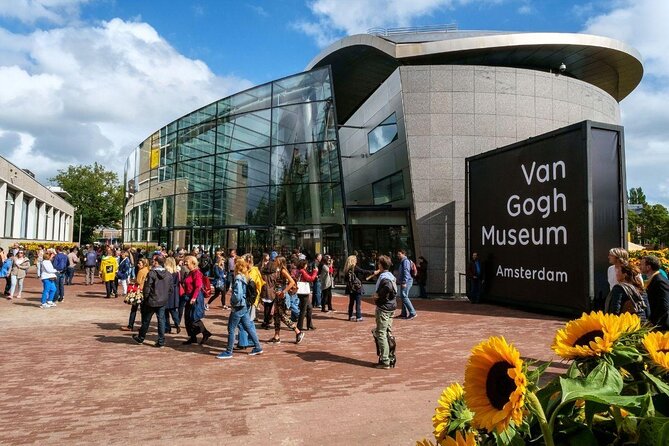
The Van Gogh Museum can feel like a lot at first. There are big walls, big emotions, and plenty of people craning their necks. This tour turns that into a guided timeline, so you’re not just looking at famous paintings—you’re learning why they changed.
What I like most is the combination of structure and hearing support. A wireless headset system means you can track the story without turning your head every time someone speaks. And because the group stays small, the guide can keep the pace controlled instead of herding you like a school bus.
The best part for art fans is that you leave with a sense of progression. You don’t just see works from the most famous years—you see how his themes and techniques evolve as he moves through different locations and relationships. In past departures, guides such as Martina S and Clare have been singled out for tying the life story to what you’re actually seeing on the wall.
You can also read our reviews of more guided tours in Amsterdam



Price and Logistics: What $77.43 Buys You
At $77.43 per person for about two hours, you’re paying for more than a seat in the museum. You’re paying for a live guide in English, a wireless headphone system, and the timed museum admission tied to the tour stops.
That can be good value if you’d otherwise do two separate things: buy admission and then spend time trying to figure out what you’re looking at. It’s also a smart pick if you want a clear plan. The museum is popular, and a guided route helps you avoid the awkward start where you’re standing in the wrong corridor, wondering where the best works are.
One practical consideration: because the tour is adult-only (18+), it’s also calmer than family-focused options. And with a maximum of 14 people, you’re less likely to feel surrounded.
Also, this tour is often booked in advance (about 26 days on average). If you have a specific morning or afternoon preference, book earlier rather than later.
Headphones That Make a Difference in a Crowded Museum
The wireless headphone system is not just a nice extra. In a museum like this, sound issues are real. People cluster. Staff and other groups talk nearby. If you’re relying on natural hearing, you’ll miss parts of the explanation.
With the whisper-style setup, you can focus on details: color choices, composition, and how the paintings relate to his next steps. Even in busy moments, guides can keep talking and you can keep listening without craning your neck.
This is one reason the tour tends to satisfy people who wear hearing aids or who simply don’t want to strain. It’s also why the guide can give short, specific context at each stop instead of repeating themselves to the whole group.
Start Point to End Point: Where You Meet and Finish
You meet at Cobra Café, Hobbemastraat 18, 1071 ZB Amsterdam. From there, your guide brings you into the Van Gogh Museum experience with a set route and set stop times.
The tour ends inside the museum at the Museumplein 6 area (you stay within the museum). That matters. It means you’re not forced to rush back out right after the last explanation. You can keep going at your own pace until closing time, which is perfect for returning to one painting, one room, or one theme you want to see again.
Tip: If you have one “must-see” work, note it before you arrive. After the tour, return to it first while your attention is sharp.
The Two-Hour Route: A Timeline You Can Actually Follow
This is not a museum marathon. The tour is broken into timed blocks—usually about 20 minutes per main area, with the final Auvers room slightly shorter. That’s a feature: each stop is long enough to learn something useful, but short enough to keep momentum.
Here’s how the route builds from early work to the later years, and why the stop order helps.
You can also read our reviews of more museum experiences in Amsterdam





Stop 1: Self-Portraits and the Starting Line
You begin with Van Gogh’s self portraits. You’re not just looking at faces. You’re seeing a way of watching himself, experimenting with how identity shows up in paint.
At this early stage, the guide typically sets the tone: how to look for clues in brushwork and expression. It’s a great entry because it teaches you how to read him before you hit the bigger room full of paintings from different periods.
Possible drawback to consider: some people want more time on self-portraits and less on transitions. If that’s you, plan extra viewing after the tour.
Stop 2: The First Floor Foyer and Peasant Life Works
Next comes the first-floor foyer, centered on paintings connected to influences and everyday life. You’ll see works like Woman Lifting Potatoes and The Potato Eaters, plus a grouping focused on portraits of rural people such as the wall of faces often described as a portrait display of peasant women.
You’ll also see references to Millet and Jules Breton through that room’s selection. The value here is context. You’re learning what Van Gogh responded to in the art around him—especially the focus on ordinary people and the use of strong visual structure to make a scene feel solid and real.
This stop is where the tour starts teaching you how to compare. It nudges you to ask: what is Van Gogh taking from earlier styles, and what is he changing?
Stop 3: Paris, 1886 to 1888
Then the route turns to his move toward Paris, roughly between 1886 and 1888. Here you’ll focus on standout works including:
- Self Portrait with Felt Hat
- Still Life with Absinthe
- In the Café: Agostina Segatori in Le Tambourin
- Garden with Courting Couples
This part matters because it’s where you can see a shift in atmosphere. Paris brings energy, social scenes, and a sense of modern life in his subject matter. The café and garden scenes give you faces and movement—perfect for noticing how he handles light and composition.
This is also a good stop for asking questions, because the guide can usually connect what you’re seeing to the next geographic shift, instead of leaving you with a list of titles.
Stop 4: Arles and the South of France (1888)
Next is Arles and the south, covering the period when you can feel the heat in the palette. Key highlights include:
- Sunflowers
- Almond Blossoms
- The Bedroom
- Japanese paintings (copies from prints)
- The Yellow House
This is where the tour becomes visually satisfying fast. Sunflowers gives you the boldness you expect, but you also get help noticing technique and structure—how the painting builds its impact.
Then The Bedroom is a different kind of lesson. It’s intimate, interior-focused, and it teaches you how color and shape can create a strong sense of space.
You’ll also encounter the Japanese influence through copies from prints. Even if you’ve seen Japanese art referenced before, the way it’s presented here helps you understand why it mattered to him: not as a random style grab, but as a clear route to new ways of framing and patterning.
Stop 5: Level 3—Saint-Rémy-de-Provence
Now the tour moves to Level 3 and the Saint-Rémy-de-Provence period. Here you’ll see:
- Almond Blossoms
- Wheatfield with a Reaper
- Iris
- Pietà (After Delacroix)
This stop is especially useful if you want to understand why certain works feel both calm and tense at the same time. Almond Blossoms and Iris lean into color and form, while the wheatfield scene brings a strong sense of nature and rhythm.
The Pietà (After Delacroix) detail is a smart inclusion for context. It gives you a way to think about translation: how a famous composition can become something different when filtered through his own style and perspective.
Stop 6: Auvers Room on Level 3—Roots and Crows
The final stop is the Auvers Room, where the tour focuses on:
- Tree Roots
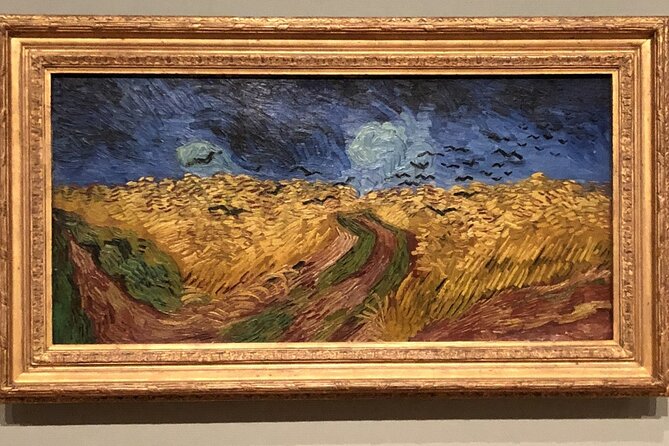
- Wheatfield with Crows
This is a closing act that feels sharper. The room highlights the late style that many people come to the museum for in the first place. It’s a great last stop because it gives you a final set of images to compare against earlier works—especially in how subject and mood sit inside the brushwork.
The stop is a bit shorter (about 15 minutes), but that often works. You don’t want to wear out your eyes before you’re free to wander on your own.
How Guides Make the Paintings Click
A good guide here isn’t just reciting facts. The best explanations connect choices you can spot—color, line, texture—to the story around them. That’s why names like Martina S, Roland, Marlene, and Kawika show up as favorites in the feedback. People tend to love guides who can connect life experiences to technique without turning the whole thing into a lecture.
In practical terms, here’s what you can expect from a strong guide on this route:
- They point out small details you’d likely miss on your own.
- They keep the pace tight enough to finish the timeline.
- They help you compare paintings across years, not just admire them one by one.
- They answer questions and make it feel like the group can participate.
If you’re the type who reads labels slowly, this tour still helps. You’re getting a roadmap first, then you can use that understanding to read the museum more effectively afterward.
Who This Tour Is Best For (and Who Should Consider DIY)
This tour is ideal if you:
- want a structured path through the museum in about two hours
- care about how Van Gogh changed over time, not only the most famous pieces
- prefer a guide that explains technique and subject matter together
- dislike missing audio details in crowded rooms (the headset system helps a lot)
It may not be perfect for you if:
- you want to linger for long stretches on a single painting
- you don’t like group pacing and prefer to wander at your own speed
If you’re unsure, a simple rule works: if you tend to Google before a museum visit, you’ll likely enjoy the guided method here. If you prefer to show up and follow your feet, you might be just as happy with a self-guided day.
Tips to Get More Out of Your Visit
Here are a few practical moves that make the tour work even better for you:
- Pick one period you’re most curious about (Paris, Arles, or Provence). After the tour, return to that section first.
- When the guide invites you closer, take the offer. Some details only make sense at near viewing distance.
- Use the final free time to re-check one painting you couldn’t fully absorb during the short stop.
- If you’re sensitive to crowds, choose your moment: morning or afternoon can feel different depending on the day, and booking ahead helps you lock in the slot you want.
The tour ends inside the museum, which is your cue: don’t treat this as only two hours. Use those two hours to learn the map, then spend the rest of your time following your personal interests.
Should You Book This Van Gogh Museum Small-Group Tour?
If your goal is to understand Van Gogh’s development—how his art changes as his life changes—this tour is a strong pick. The wireless headphone system, the small group size, and the way the route follows major periods make the museum feel manageable and meaningful in a short visit.
Book it if you’re the kind of visitor who wants context fast and wants to get more out of the paintings than title + year. Consider another approach if you want long, silent time with a few favorites, because the scheduled stops keep you moving.
Either way, going in with a plan helps. And this one gives you a plan that still leaves room for your own favorites afterward.
FAQ
How long is the Van Gogh Museum small-group guided tour?
It lasts about 2 hours.
What’s the price per person?
The price is $77.43 per person.
Is admission included?
Yes. Admission tickets are included for the museum stops covered during the tour. Special exhibitions are not included and can be visited later on your own pace.
What language is the tour offered in?
The tour is offered in English.
Are headphones provided?
Yes. A wireless whisper system is included, which helps you hear the guide.
How large is the group?
The tour has a maximum of 14 travelers.
Is the tour only for adults?
Yes, it is only available for adults age 18 and older.
Can I cancel for a refund?
Yes. You can cancel for a full refund up to 24 hours before the experience start time. Cancellation within 24 hours is not refunded.