REVIEW · AMSTERDAM
Amsterdam: Anne Frank and Jewish Quarter Guided Walking Tour
Book on GetYourGuide →Operated by Silver Tours · Bookable on GetYourGuide
Amsterdam’s Jewish Quarter hits fast and stays with you. This 2-hour walk gives you a clear path through the neighborhood where stories of community life, persecution, and survival still shape the streets. I like the focus on context: you don’t just hear names, you connect them to places like the Portuguese Synagogue and memorials.
Two things I really like here. First, you learn Anne Frank’s story in a way that explains the Secret Annex and why the diary mattered, without rushing past the human side. Second, guides such as James and Aaron are praised for knowing the topic well and sharing it in a way that sticks, even when the group is small.
One drawback to keep in mind: the tour does not go inside the Anne Frank House, so if that’s your main goal, you’ll need a separate ticket plan.
In This Review
- Key takeaways from the Jewish Quarter walk
- Meeting at H’ART Museum: where your walk actually starts
- Walking the Jewish Quarter with a guide who connects places to people
- The Portuguese Synagogue stop: a real anchor for community memory
- Anne Frank, the Secret Annex, and the diary story you can actually carry
- How World War II reshaped Amsterdam’s Jewish community
- Finding remembrance: memorials and the Anne Frank statue
- Price and value: is $30 for a 2-hour walk worth it?
- Group energy and guide quality: James and Aaron stand out
- What I’d plan around this tour in your Amsterdam day
- Who should book, and who might want a different option
- Booking decision: should you go?
- FAQ
- Does this tour include tickets to the Anne Frank House?
- How long is the walking tour?
- Where do I meet my guide?
- Is the tour offered in English?
- What’s the main focus of the tour?
- What does the tour include?
- Is there a cancellation policy?
- Can I book without paying right away?
- What kind of experience is it: sightseeing, walking, or museum-style?
- Are synagogues and memorial sites part of the route?
Key takeaways from the Jewish Quarter walk

- Portuguese Synagogue stops you with real landmarks tied to Jewish community life in Amsterdam
- Anne Frank focus explains the Secret Annex and how her diary reached the public
- World War II impact connects Amsterdam’s changing reality to what happened to its Jewish community
- Memorial and commemorations help you understand why remembrance is built into the neighborhood
- Small-group feel can make the walk more personal when you get a smaller group size
Meeting at H’ART Museum: where your walk actually starts
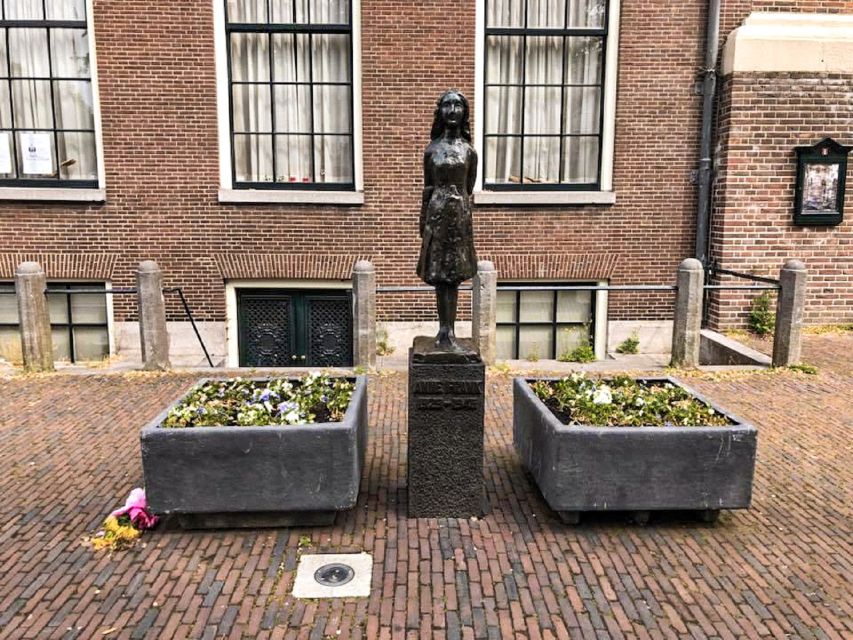
This tour is built for an easy walking pace through the old streets of Amsterdam’s Jewish Quarter. You meet your guide at the boat platform in front of the entrance of the H’ART Museum. It’s a good meeting point because it’s anchored to something you can recognize quickly while you’re orienting yourself around the canals.
The tour runs for 2 hours with a live English-speaking guide. That time window matters. It’s long enough to cover key sites and stories, but short enough that you can still do other Amsterdam classics the same day. If you’re pairing this with a museum visit later, you’ll want this tour earlier in the day so you’re not running between landmarks with your brain half-done.
You can also read our reviews of more walking tours in Amsterdam



Walking the Jewish Quarter with a guide who connects places to people
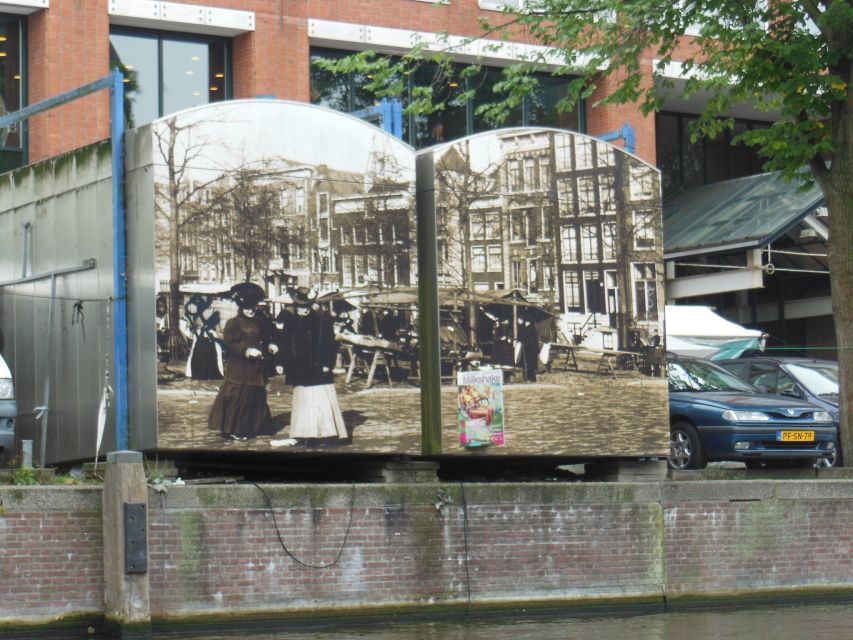
The heart of the experience is the guided walk through what was once the center of Amsterdam’s Jewish life. Expect a mix of street-level storytelling and stop-based learning. Your guide points out significant sites that shaped Jewish experience in Amsterdam, from synagogues to memorials.
Why this matters: Jewish history in Amsterdam can feel abstract if you only read about it. On a walking tour, the past gets physical. A street corner, a building frontage, or a memorial makes it harder to treat the events as something far away.
Also, the tour’s structure is built around cause and effect. You hear about challenges, triumphs, and contributions of the Jewish community, then you see how World War II changed daily life. The point isn’t to overwhelm you with dates. It’s to give you a clear mental map of what life was like before the rupture, and what came after.
The Portuguese Synagogue stop: a real anchor for community memory
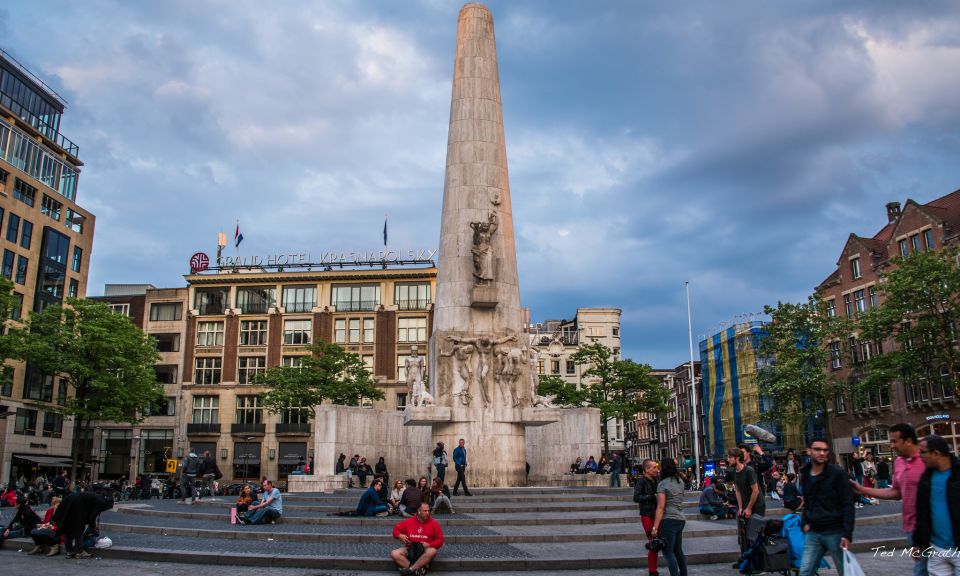
One of the most concrete, unforgettable parts is seeing the Portuguese Synagogue. Even if you’ve studied Jewish history before, seeing this kind of landmark in the context of the neighborhood changes how you understand it.
Synagogues aren’t only religious sites. They’re also community centers, social hubs, and places where identity becomes visible in architecture and routine. When your guide connects the Portuguese Synagogue to broader community history, you’re learning why the neighborhood mattered, not just what happened there.
A practical note: building-front viewing is different from museum visiting. So don’t expect the same kind of inside-the-room detail you’d get with a separate synagogue visit. Instead, use the stop to get your bearings and then listen for what your guide tells you about the wider story.
Anne Frank, the Secret Annex, and the diary story you can actually carry
Anne Frank is the emotional center of the tour, and the guide keeps the focus on her time of hiding. You’ll learn about where she and her family sought refuge during World War II and how her famous diary was later published.
The value here is balance. You’re not only hearing a dramatic story. You’re also hearing why it mattered that she recorded daily life—hope, fear, routine, and the normal parts of living that people keep doing even when the world has gone abnormal.
The Secret Annex part also gives you a framework before you ever think about visiting other Anne Frank-related sites. When you later read or watch anything about the story, you’ll already have the basic timeline in your head, tied to Amsterdam rather than floating on a page.
Just be clear on the limits: the tour does not go inside the Anne Frank House. That’s not a problem if you’re treating this as the neighborhood orientation. It’s a deal-breaker only if you specifically want the interior experience of the House in this exact visit.
How World War II reshaped Amsterdam’s Jewish community
The tour doesn’t treat World War II like a background chapter. You learn what impact the war had on Amsterdam’s Jewish community, and you watch the story change as you move from everyday landmarks to commemorations.
This is where a good guide earns their pay. The best explanation style here is straightforward and human: what changed, what was lost, and how people tried to endure. The goal is understanding, not just sadness.
I also like that the tour doesn’t frame the neighborhood as only victimhood. It gives you contributions and triumphs first, then shows how the tragedy broke that continuity. That makes the memorial stops feel less like a sudden mood shift and more like a continuation of the story.
You can also read our reviews of more guided tours in Amsterdam





Finding remembrance: memorials and the Anne Frank statue
As you continue through the streets of the former Jewish Quarter, you’ll see places meant for memory and commemoration. This includes a dedicated spot honoring Anne Frank at her statue.
These moments work because they’re placed in the lived-in geography of the city. You’re not in a sealed exhibit space; you’re in Amsterdam. That changes the way you absorb the message. You understand that remembrance isn’t only something visitors do on a trip. It’s something the city keeps present in daily movement.
If you’re someone who gets emotional at memorials, this stop is often the moment it hits hardest. Give yourself a second. Stand, look, and let the explanation settle rather than rushing your photos.
Price and value: is $30 for a 2-hour walk worth it?
At about $30 per person for a 2-hour walking tour with a local guide, the main value is interpretation. You’re paying for a guided connection between history and street-level reality—Portuguese Synagogue context, Anne Frank’s hiding period explained in plain terms, and the WWII impact on the Jewish community.
If you’re the type of traveler who can read a plaque and move on, you might feel $30 is high. If you like hearing stories organized into a narrative, this is the price where it starts to make sense. You’re basically buying someone’s ability to take complex history and make it workable in real time.
Also, you’re not paying for Anne Frank House admission because tickets aren’t included, and the tour doesn’t enter the House. So think of this as the guided preface that helps you decide what to do next.
Group energy and guide quality: James and Aaron stand out
The overall rating is around 4.2 based on 22 reviews, and the pattern is clear: when the guide is strong, the tour feels personal and worth repeating in your mind later.
Guide names that come up include James, praised for both deep knowledge and a real enjoyment of sharing with the group. Another guide mentioned is Aaron, who earned strong marks as well. On at least one occasion, the group was very small, around three people plus the guide, which tends to make the pace feel less like a lecture and more like a conversation in motion.
That small-group possibility is a real advantage. You can ask quick questions, and your guide can tailor explanations when your attention points in different directions. If you care about interaction, this is where you’ll feel the difference most.
What I’d plan around this tour in your Amsterdam day
Because this is 2 hours of guided walking, you’ll want to schedule it when you’re not already exhausted. Mid-morning or early afternoon is usually best so you can still enjoy other sights afterward without your feet feeling like a separate itinerary.
This tour is also ideal as a history starter. If you plan to visit the Anne Frank House afterward, this guide gives you a framework that makes the interior experience easier to process. If you’re skipping the House, you still get the Secret Annex story and the diary publication explained, plus the neighborhood landmarks that carry meaning beyond one site.
Who should book, and who might want a different option
This walking tour is a great fit if you want:
- A structured, easy-to-follow explanation of Amsterdam’s Jewish Quarter
- Anne Frank context that focuses on the Secret Annex and the diary
- WWII impact explained in a way you can remember after you leave
You might consider a different option (or add another activity) if:
- Your main goal is specifically entering the Anne Frank House, since this tour does not include it
- You prefer purely self-guided museum-style visiting without a walking component
Booking decision: should you go?
Yes, I’d book it if you want a guided route through the Jewish Quarter that turns history into something you can see and understand. The $30 price is reasonable for a 2-hour walk when you factor in live interpretation and the anchor stops like the Portuguese Synagogue and the Anne Frank statue.
The one caution is to know what this is and what it isn’t: it’s not an Anne Frank House interior visit. Treat it as neighborhood context, then decide separately if you want the House experience.
FAQ
Does this tour include tickets to the Anne Frank House?
No. Tickets to the Anne Frank House are not included, and the tour does not go inside the House.
How long is the walking tour?
The tour lasts 2 hours.
Where do I meet my guide?
Meet your guide at the boat platform in front of the entrance of the H’ART Museum.
Is the tour offered in English?
Yes, it’s a live tour guide in English.
What’s the main focus of the tour?
The tour focuses on Amsterdam’s Jewish Quarter, including Anne Frank’s story and the impact of World War II on the Jewish community.
What does the tour include?
It includes the walking tour and a local guide.
Is there a cancellation policy?
There is free cancellation, with full refund available if you cancel up to 24 hours in advance.
Can I book without paying right away?
Yes. It offers a reserve now & pay later option.
What kind of experience is it: sightseeing, walking, or museum-style?
It’s a guided walking experience with stops at historic and commemorative sites. It’s not a museum-entry tour.
Are synagogues and memorial sites part of the route?
Yes. The tour includes significant sites tied to the Jewish experience in Amsterdam, including the Portuguese Synagogue and memorial-related stops.