REVIEW · AMSTERDAM
Amsterdam: Private Pedicab Historical Sightseeing Tour
Book on GetYourGuide →Operated by Bram de Haan Events · Bookable on GetYourGuide
Amsterdam’s streets are narrow. Your view shouldn’t be.
This private pedicab historical tour strings together the old centre, the 17th-century canal belt, and the city’s Jewish and museum areas into one easy ride, guided by a local Amsterdam storyteller. I especially like how it pairs landmark stops with street-level context, so you’re not just seeing places—you’re understanding why they’re there.
You’ll start at Dam Square and roll through a route packed with shape, bridges, and neighborhoods that feel distinctly Amsterdam. The second thing I like: the guide brings history to life with maps and visuals, which makes the timeline click fast. One drawback to keep in mind: it’s a 2-hour loop with set stops, so if you want long, slow wandering in one spot, you’ll probably wish you’d booked more time.
In This Review
- Why a private pedicab makes Amsterdam feel instantly manageable
- Dam Square to Zeedijk: the city’s origin and its early defenses
- Nieuwmarkt and the city gate: history right in the middle of the street
- Montelbaanstoren and the Oude Waal: where views turn into context
- The Jewish quarter: synagogues, memory, and a diamond district story
- Hermitage and the Skinny Bridge: canal-side Amsterdam at picture level
- The 17th-century canal district: half-moons of wealth and control
- Museumsquare and the Rijksmuseum tunnel stop: a clean finish with big-name context
- Comfort, cold weather gear, and the small details that matter
- What’s included—and what you’ll need to plan yourself
- Who this tour is best for (and who might want something different)
- Booking smart: how to get the most out of your 2 hours
- Should you book this Amsterdam private pedicab historical tour?
- FAQ
- Where does the pedicab tour start?
- How long is the tour?
- What parts of Amsterdam does the route cover?
- What’s included in the price?
- Are meals or drinks included?
- What languages does the live guide speak?
- Is there a weight limit?
- Can I customize where the tour ends?
- What’s the cancellation policy?
Why a private pedicab makes Amsterdam feel instantly manageable
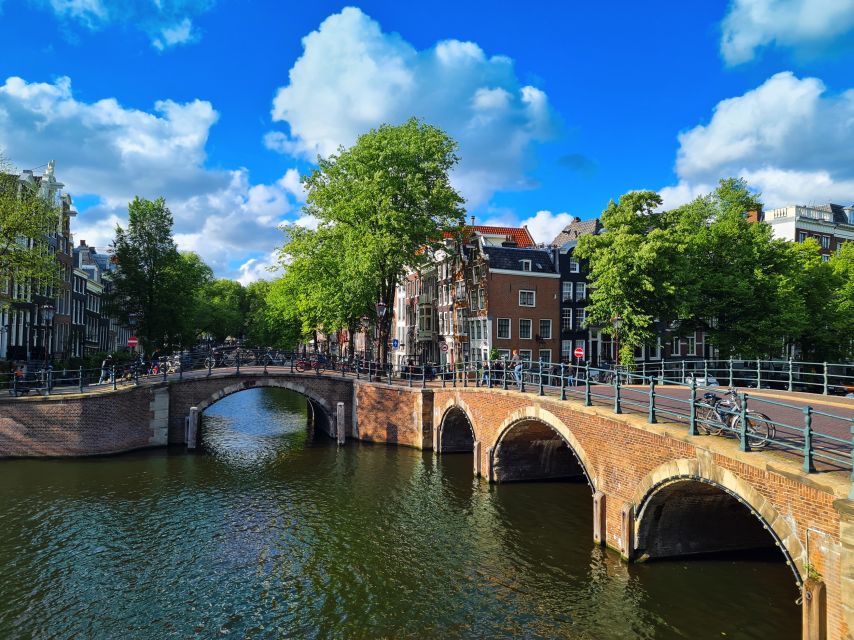
Amsterdam can overwhelm fast: canals everywhere, streets that don’t follow logic, and lots of walking just to cover basic highlights. A pedicab changes the rhythm. You glide through the city at a human pace, without the hassle of crowds, parking, or constant route math.
This is also a smart way to enjoy Amsterdam’s history. The city isn’t one museum—it’s a living patchwork of older neighborhoods, rebuilt stories, and architecture that still lines the water. From the canal district to the Jewish quarter, the route is built so you can connect sights that would otherwise feel scattered across a map.
Dam Square to Zeedijk: the city’s origin and its early defenses
The tour begins at Dam Square, the ceremonial heart of the old centre and the place where Amsterdam’s story started to take shape. Here you’ll orient quickly. The Royal Palace, the New Church, and the National Monument help explain how this square became the city’s public stage—religion, power, and national identity stacked in one view.
Next comes Zeedijk. Today it’s a busy street, but you’ll hear how it once functioned as part of the city’s defensive water systems—protecting the older urban core with dikes. It’s a small detail, but it matters: it gives you a lens for why Amsterdam’s geography and water management shaped everything that followed.
As you move down Zeedijk, you’ll see the oldest café still standing, including its original interior. That’s the kind of stop that feels more real than a statue. You also catch a glimpse of what’s nearby—down the street you’ll get an early taste of the Chinatown area—so the route starts showing how Amsterdam’s neighborhoods overlap rather than staying in neat boxes.
You can also read our reviews of more private tours in Amsterdam


Nieuwmarkt and the city gate: history right in the middle of the street
A short ride later, you’ll reach Nieuwmarkt. This is one of those places that looks simple until you learn what’s underneath. The star attraction is the 15th-century city gate standing right in the square. It’s not an isolated artifact behind ropes—it’s woven into the urban scene.
The value here is the way the guide helps you read the place. A city gate isn’t just a gate; it’s a boundary, a checkpoint, and a statement about safety and trade. Once you understand that, the square starts making sense as a working part of old Amsterdam, not a frozen postcard.
You’ll also feel how the tour is paced: you get landmark time, then move on before your attention fades. That keeps the narrative tight.
Montelbaanstoren and the Oude Waal: where views turn into context
From Nieuwmarkt, the route heads to Montelbaanstoren, an old watch and defense tower tied to the city’s early-16th-century expanded defensive line. Even if you’ve never studied Amsterdam’s fortifications, the tower gives you something concrete to picture—watchpoints weren’t random. They were positioned to cover movement along waterways and approaches into the city.
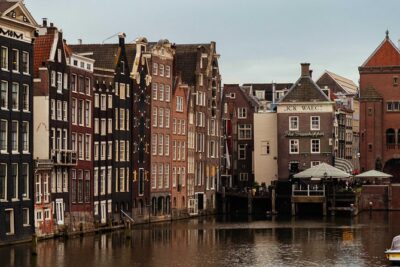
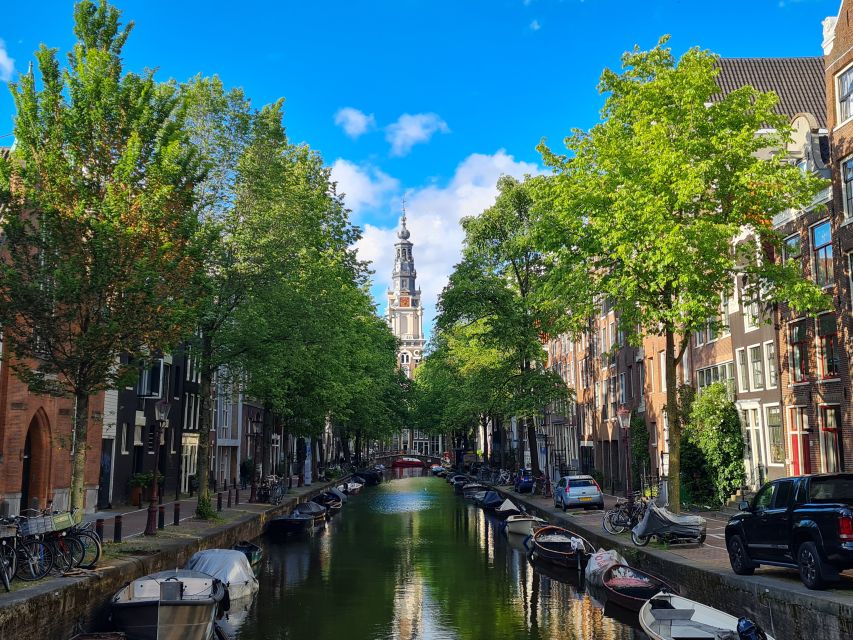
What really sells this stop is the lookout connection. From the area, you can see the Oude Waal, with houseboats lined up against the backdrop of 17th-century canal houses. This is where Amsterdam’s “water city” identity becomes visible at once. The architecture looks like it was designed for the canal—stepping down to the water, built around trade and living, not just scenery.
Practical note: the view stops are great for photos, but keep your timing in mind. If you’re traveling with a tight schedule or you want lots of time at one corner, you’ll likely need to ask for extra time at that specific stop.
The Jewish quarter: synagogues, memory, and a diamond district story
Next is the Jewish quarter, one of the most meaningful parts of the route. You’ll see the first synagogue Jewish people were allowed to build in Western Europe more than 350 years ago—often referred to as the Big Synagogue. Across the street you’ll also spot the Portuguese synagogue.
This section works because the guide ties buildings to real community life. It’s not only about architecture; it’s about permissions, identity, and the rules that shaped who could worship where.
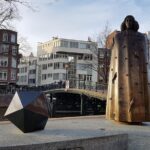
You’ll then reach the Holocaust name monument, made of 102,000 bricks listing the names of Dutch Jewish victims from World War II. It’s heavy subject matter, but it’s also a clear reason the quarter is worth visiting: Amsterdam’s history includes both achievement and tragedy, and this memorial forces the connection.
Right nearby, the route points out a row of beautiful 17th-century canal houses tied to Jewish Sephardic immigrants who found success in the diamond business. That detail gives the neighborhood a second layer beyond memorial space—trade, wealth, migration, and the ways communities rebuilt lives.
Hermitage and the Skinny Bridge: canal-side Amsterdam at picture level
After the Jewish quarter, you’ll pass by the Hermitage. The building itself matters: it was originally a 17th-century widowhouse, and today it hosts the Hermitage Museum. That kind of reuse is common in Amsterdam, but it still feels special when you know the building’s original purpose.
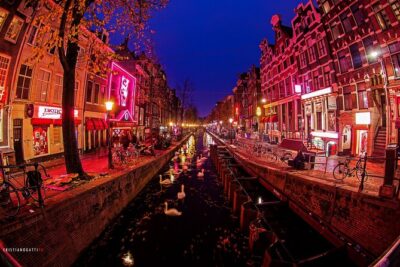
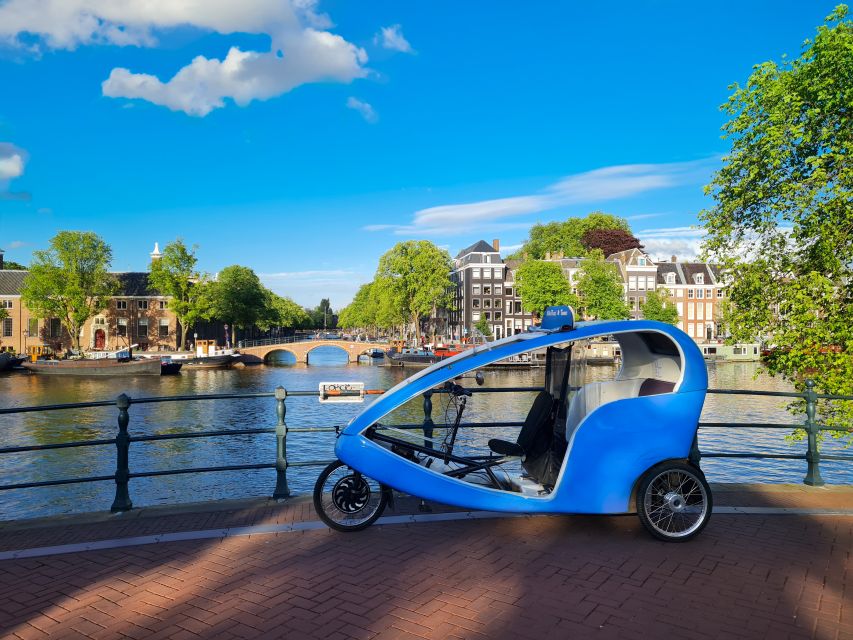
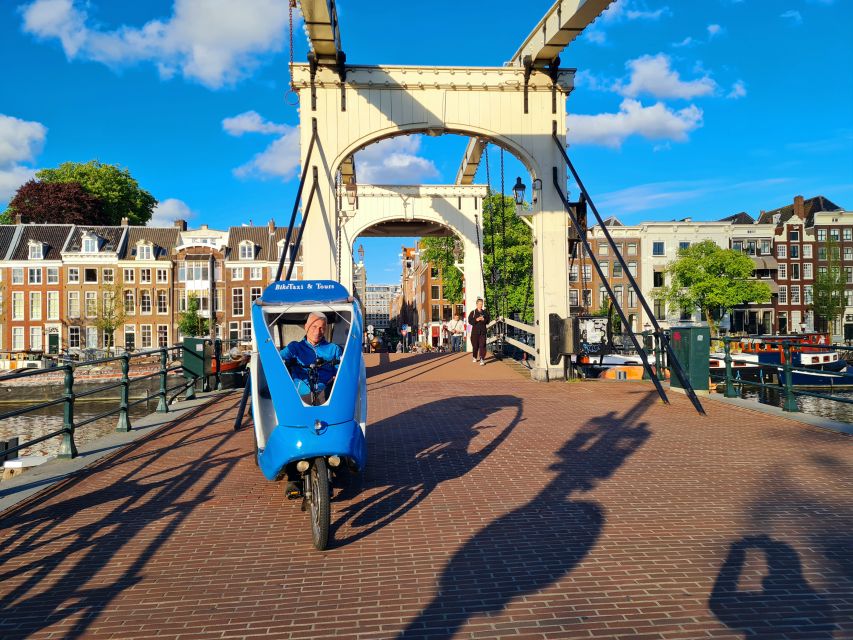
Then the route highlights the Skinny Bridge, one of Amsterdam’s most recognizable bridges—especially at night, when hundreds of bulbs accent the slender design. Even during daylight, it’s a useful anchor point for understanding how Amsterdam frames movement with water and light.
From the Skinny Bridge area, you get a panoramic view of the Amstel River, described as the main and widest canal in Amsterdam. This is a photo moment that doesn’t require you to race around. You’re riding, you stop, and suddenly the waterway becomes the composition—wide canal, bridge lines, and canal houses shaping the scene.
You can also read our reviews of more historical tours in Amsterdam






The 17th-century canal district: half-moons of wealth and control
The tour continues through the 17th-century canal district, the canal belt that wraps around the old centre in half-circle shapes on many maps. It’s one of the easiest ways to “see” city planning history. You’ll learn that these neighborhoods weren’t just built for decoration—they were built for merchants, power, and prosperity.
You’ll also understand why each canal house looks slightly different. Even though you’ll notice similarities in typical design, the individual houses vary. That contrast helps you spot building eras and social function without needing to be an architectural expert.
For me, this section is the strongest example of what makes a guided pedicab tour better than self-guided hopping. When you know what to look for—alignment, canal structure, the logic of the belt—you start reading the city like a map.
Museumsquare and the Rijksmuseum tunnel stop: a clean finish with big-name context
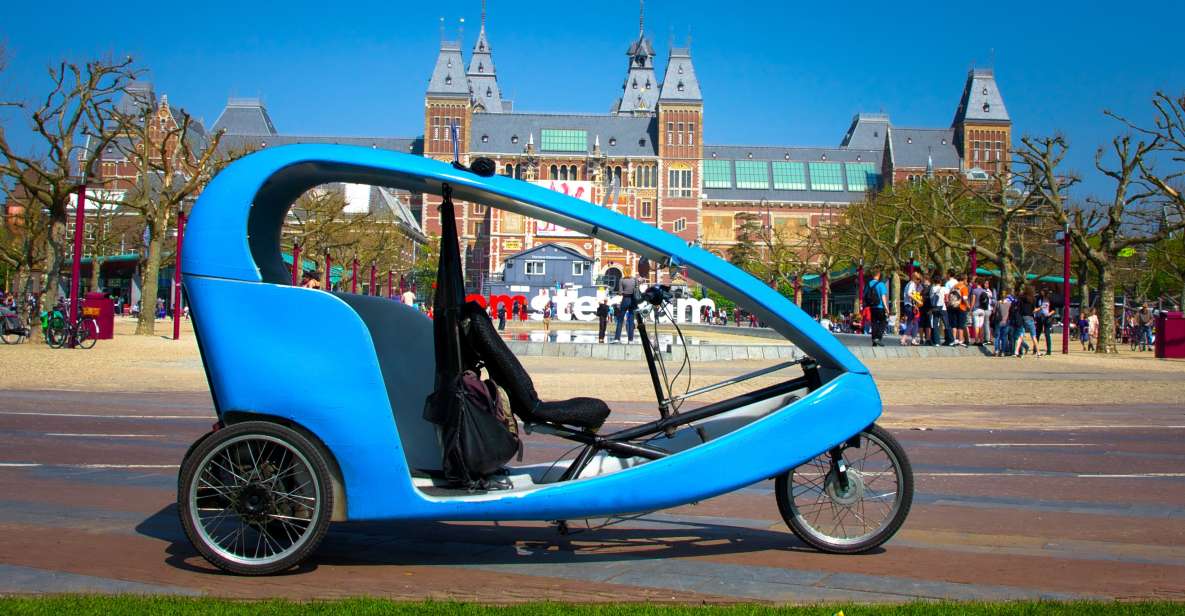
Before heading back, the tour reaches Museumsquare, a large green open square from the 19th century. It’s home to the Rijksmuseum and the Van Gogh Museum, and it works as a final chapter because it connects Amsterdam’s older wealth to its museum era.
The route includes a moment you’ll likely remember: driving through the tunnel of the Rijksmuseum and then stopping in the middle of the square. Even if you don’t go inside any museum, this gives you a sense of Amsterdam’s cultural gravity and how museum landmarks sit in real city space.
One extra convenience: you can set your desired finish location ahead of time, so you’re not forced into an identical end point. That’s useful if you want to continue on foot, grab coffee, or reposition for your next stop.
Comfort, cold weather gear, and the small details that matter
At a price point like $230 per group (up to 2 people) for about 2 hours, you’re paying for the convenience of door-to-door pickup and a focused route rather than a long public-street day. If you’re traveling with one other person, it can feel like good value, especially when you want to cover multiple neighborhoods without spending hours planning routes and walking.
Here’s what to expect for comfort:
- Pickup and drop-off from your hotel means you’re not losing time navigating at the start.
- A blanket is included for cold weather, which comes in handy on breezy canal days.
- You’ll want warm clothing, because a pedicab ride may still feel cool depending on wind and weather.
About mobility: the experience is designed around a ride first, stops second. Reviews in your dataset include people with limited walking ability finding this workable. That said, you’ll still have times when you stop at points of interest and move in and out of the pedicab—so think about what “easy” means for you personally.
Also pay attention to the weight guidance: the maximum combined passenger weight is 200 kg. It’s not suitable for people over 220 lbs (100 kg). If you’re close to those limits, it’s worth checking carefully before booking.
What’s included—and what you’ll need to plan yourself
Included:
- Hotel pickup and drop-off
- Blanket for cold weather
- In-depth explanation about the sights
- Live guide in English, Dutch, or German
Not included:
- Food and drinks
That means you’ll want to time your tour around meals. If you’re coming straight from sightseeing, plan a snack break afterward so you don’t end your day hungry and rushed.
Who this tour is best for (and who might want something different)
This private pedicab tour is a great match if you want:
- A first-time orientation to Amsterdam’s old centre and canal belt
- A way to cover multiple neighborhoods in a short window
- A guided history experience that goes beyond surface-level facts
- A lower-walking option than standard city wandering
It may be less perfect if you want:
- Long museum time in one location
- Unstructured, hour-by-hour freedom to wander randomly
- Very deep study of one single site (this route favors breadth)
Booking smart: how to get the most out of your 2 hours
To make the most of the time, think about your priorities before pickup:
- If you care most about the canal district, keep your camera ready around the stops that frame the water (Oude Waal and the Amstel viewpoints).
- If you’re interested in cultural and memorial history, give the Jewish quarter section your full attention—this part carries real weight.
- If you want more photo time, ask early. Pedicabs work best when you coordinate quickly at each stop.
One more small tip: bring warm layers. Even with a blanket included, you’ll enjoy the ride more when you’re not fighting cold.
Should you book this Amsterdam private pedicab historical tour?
I’d book it if you want a focused, guided overview that hits the major districts without turning your day into a marathon of walking. The route makes strong sense: starting at Dam Square, moving through defensive-city context, then into the Jewish quarter, and finally landing at Museumsquare with a standout photo stop by the river.
Skip it if you already have a very specific plan—like spending most of your time inside one museum—or if you prefer to wander at your own pace with no fixed stops.
If you fall somewhere in the middle—wanting highlights, context, and a fun Amsterdam transport twist—this private pedicab option is a solid bet.
FAQ
Where does the pedicab tour start?
The tour starts at Dam Square and uses hotel pickup. You’ll be picked up outside your hotel and then driven back at the end.
How long is the tour?
The tour duration is 2 hours.
What parts of Amsterdam does the route cover?
You’ll see highlights across the historical old centre, the 17th-century canal district, the Jewish quarter, a glimpse of the Chinatown area, and the museum area around Museumsquare.
What’s included in the price?
Included are hotel pickup and drop-off, a blanket for cold weather, and in-depth explanations by the live guide.
Are meals or drinks included?
No. Food and drinks are not included.
What languages does the live guide speak?
The live guide is available in English, Dutch, and German.
Is there a weight limit?
Yes. The maximum combined passenger weight is 200 kg, and the tour is not suitable for people over 220 lbs (100 kg).
Can I customize where the tour ends?
Yes. You can set a desired location to finish the tour before you go.
What’s the cancellation policy?
You can cancel up to 24 hours in advance for a full refund.