REVIEW · AMSTERDAM
Anne Frank and the Jewish History of Amsterdam Private Tour
Book on Viator →Operated by Bespoke Amsterdam Experiences · Bookable on Viator
Amsterdam’s Jewish story is written in streets.
This private, guided walk strings together synagogues, resistance sites, and Holocaust memorials in a way that makes the city feel personal, not like a worksheet. I especially like the Anne Frank House ticket support (and the built-in virtual reality option if timed tickets sell out) and the chance to see Amsterdam’s Jewish landmarks in a smooth, human-paced loop from the Portuguese Synagogue area to the Westerkerk and Anne Frank House area.
One thing to keep in mind: it’s a lot of meaning packed into a compact format. You’ll walk about 2 kilometers (1.5 miles) and many stops are outside, so wear good shoes and plan for standing time.
In This Review
- Key highlights you’ll feel right away
- Portugal Synagogue to Jewish Museum: where the story has roots
- Dokwerker and the February Strike: history that isn’t far away
- Hortus Botanicus and Wertheimpark: calm gardens, hard steps
- Plantage and the East: canals, neighborhoods, and survival context
- Amsterdam Zoo connections: hiding places and risky decisions
- Namenmonument to Dam Square: reading names, then refocusing the city
- Westerkerk and the carillon: seeing the city as Anne did
- Anne Frank House: what you’ll see outside, then inside (with a Plan B)
- Walking, time, and the optional tram ride: how the pace feels
- Price and value: what $95.58 buys you (and what costs extra)
- Who should book this tour (and who might want something else)
- Final call: should you book this Anne Frank and Jewish History tour?
Key highlights you’ll feel right away
- Start at the Portuguese Synagogue, one of Amsterdam’s most striking Jewish landmarks still used by the community
- See multiple synagogues in one place at the Jewish Historical Museum complex
- Resistance history at Dokwerker, tied to the February strike in 1941
- A powerful memorial sequence across Wertheimpark and the names at the Holocaust Namenmonument
- Anne Frank’s Amsterdam viewpoint, including the Westerkerk tower she could see from the Secret Annex
- A guided “arrival” at the Anne Frank House plus an included alternative if timed entry isn’t available
Portugal Synagogue to Jewish Museum: where the story has roots
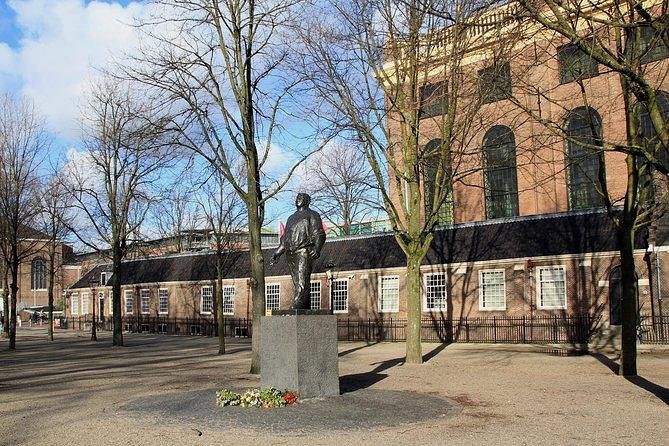
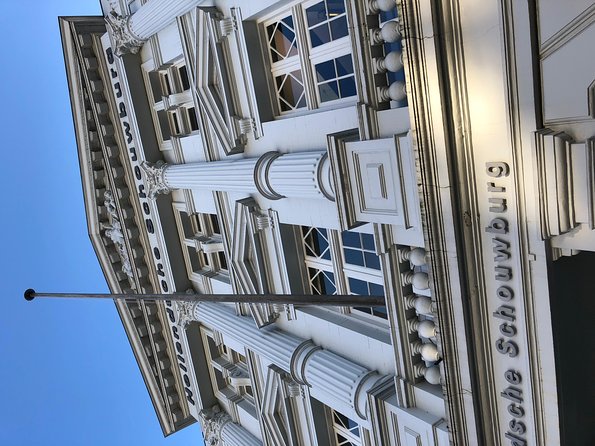
The tour begins right by the Portuguese Synagogue at Mr. Visserplein. It’s one of those buildings you can’t ignore: ornate, monumental, and very much alive as a place connected to Amsterdam’s Jewish community. The guide sets the scene by explaining what this synagogue represents and why it matters that it still functions today, not just as a preserved monument.
After that, you head to the area near the Jewish Historical Museum, where you can see four synagogues housed inside the museum complex. This is a smart move for first-timers: you get a concentrated look at Jewish religious architecture and community history without needing to chase multiple sites on your own. It also helps your brain organize what comes next—because later you’ll be standing near places tied to persecution and survival.
Two practical notes. First, the Portuguese Synagogue and the Jewish Historical Museum entrance are listed as not included, so you should be prepared for the possibility of paying extra if the guide encourages you to step inside portions that require tickets. Second, this early stage works best if you’re mentally ready for context—because the tour doesn’t jump straight to Anne Frank. It builds the foundation first.
You can also read our reviews of more private tours in Amsterdam

Dokwerker and the February Strike: history that isn’t far away

Next comes Dokwerker, a spot where the guide tells the story behind the February strike against the Nazi occupation in 1941. This part is powerful because it takes you from buildings and religious life into action—into what Amsterdam residents did when the occupation tightened.
The site itself is straightforward, but the guide’s job here is to connect the dots: why strikes mattered, how occupation changed daily life, and how resistance could take shape in the places where people worked. Even when you’re just standing there for about 10 minutes, you end up feeling the geography—like you’re walking through a timeline, not just a walking route.
Hortus Botanicus and Wertheimpark: calm gardens, hard steps
Between heavier moments, the tour passes Hortus Botanicus, Amsterdam’s older botanical garden. You don’t linger long, but it’s a useful pause in tone. A garden is a reminder that life existed in layers: culture, learning, and everyday beauty alongside the tragedy you’ll face later.
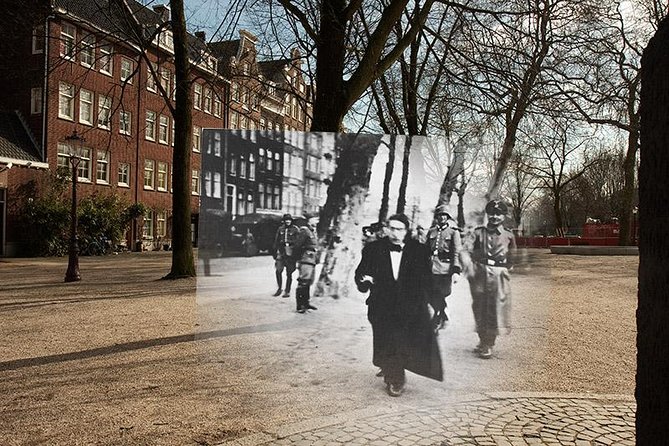
Then the mood shifts again at the Holocaust Memorial Walk in Wertheimpark, including the Auschwitz Memorial area. This stop is short, but it lands. The guide keeps it anchored to what the memorial is trying to communicate, and you get a chance to slow your thoughts instead of rushing to the next “must-see.”
If you’re the kind of person who likes to take photos, this is where you’ll want to put the camera away for a minute and just absorb what you’re reading. The design of these memorial spaces is meant for stillness.
Plantage and the East: canals, neighborhoods, and survival context
After Wertheimpark, you wander through Plantage and the East. The tour gives this neighborhood time—around 30 minutes—and it’s not just for scenery. The guide uses the area to explain how Amsterdam’s communities were structured and why neighborhoods mattered under occupation.
This is also where you’ll feel the tour doing something many “history quickies” fail to do: it places events inside real streets and real daily routes. You’re walking through the part of town often associated with canals nearby, and the guide’s narration helps you understand how ordinary spaces can become part of extraordinary—and devastating—stories.
Amsterdam Zoo connections: hiding places and risky decisions
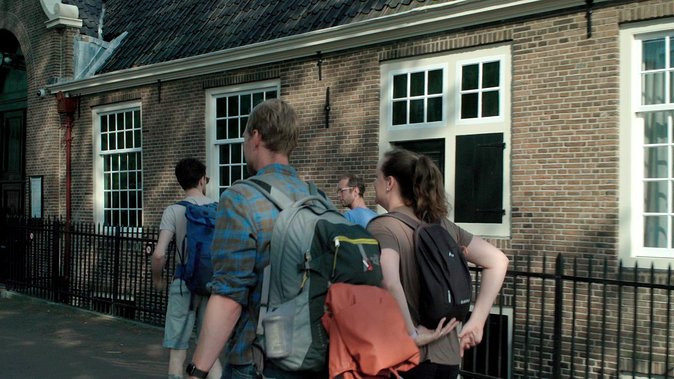
You’ll then reach ARTIS Amsterdam Royal Zoo area. The guide shares the story of people hiding in the Amsterdam Zoo, which is the kind of detail that makes your view of the city change overnight. It’s not random trivia—it’s a way to show how survival sometimes depended on community networks and opportunistic shelter.
The zoo entrance is listed as not included, so plan on this being more of a focused exterior/area story rather than a full visit ticketed like a regular day at ARTIS. Still, the guide’s framing makes the site feel like part of the larger picture of how people resisted and endured.
You can also read our reviews of more historical tours in Amsterdam






Namenmonument to Dam Square: reading names, then refocusing the city
One of the most moving stops comes next: the Holocaust Namenmonument. This one is different because it’s not just a general memorial. You actually enter the memorial space, where you can see over 100,000 Jewish names written on the walls of the monument.
This is a stop that often changes people. Expect it to take a bit of your energy, even if the scheduled time is about 10 minutes. If you’re traveling with kids, this is also the point where the guide’s tone and pacing really matter—luckily, this tour is designed for groups that can handle serious content (kids join from age 10 and older).
After that, you head toward Dam Square, where you walk past major landmarks like the Royal Palace and the Nieuwe Kerk. It’s a relief in a strange way. The city snaps back into view. You’re reminded that Amsterdam didn’t stop—life continued around the trauma, and the guide helps you hold both realities at once.
Westerkerk and the carillon: seeing the city as Anne did
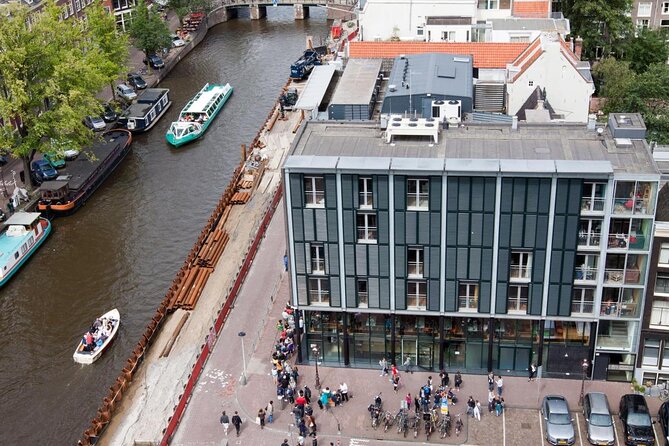
Then the tour circles around the Westerkerk. This stop is a favorite for many people because it connects the physical city to Anne Frank’s experience. The guide explains the relationship between the Secret Annex, the nearby neighborhood, and this church tower—the same type of view Anne could have seen from her hiding place.
There’s even a small timing detail that can make this moment extra memorable: the carillon plays every 15 minutes. If you arrive near the music schedule, you’ll hear it as part of your walk around the church and tower. If not, the guide still builds the moment around the idea of sound and sight in that time period.
The church entrance is listed as not included, so you’re mainly there to look and listen from the outside while your guide stitches together the story and the surroundings.
Anne Frank House: what you’ll see outside, then inside (with a Plan B)
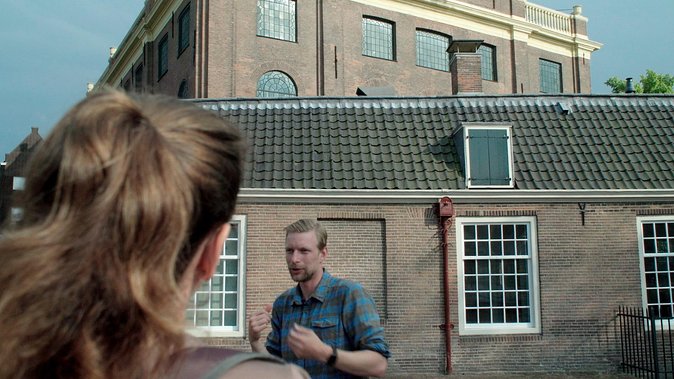
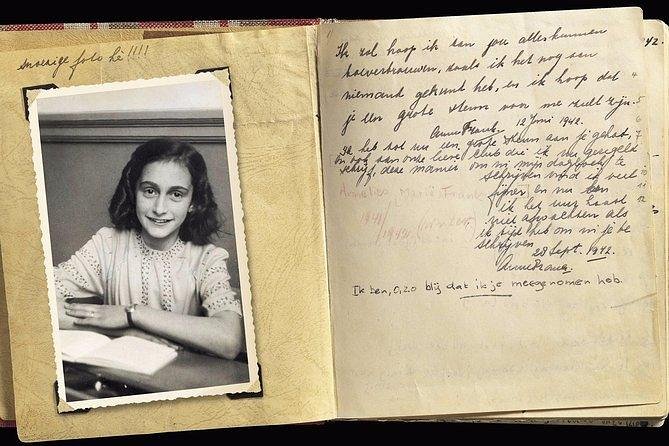
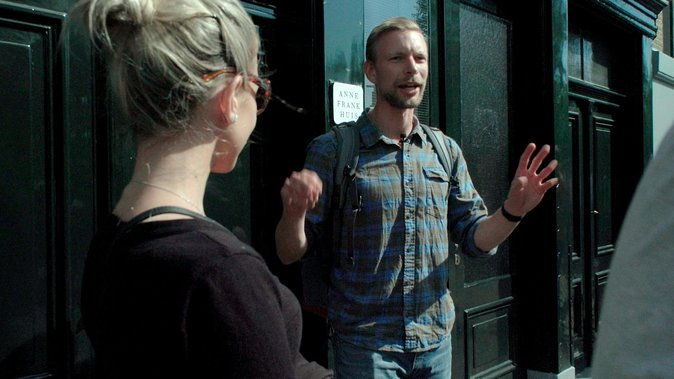
Finally, you reach the Anne Frank House area at Westermarkt 20. The guide brings you there, and you get an on-the-ground orientation from the outside. This helps you understand how the Secret Annex connects to the neighborhood and why the nearby Westerkerk is part of that visual story.
Then comes the ticket piece—this matters because Anne Frank House entry is famously timed and can be hard to secure. Here’s what the tour does for you:
- If you book 7 weeks or more in advance, you have tickets to visit the house included as part of the experience.
- If those tickets are no longer available, the tour includes an on-site virtual reality simulation alternative instead.
Either way, the Anne Frank House component is built into the price. That’s the practical advantage: you’re not stuck trying to refresh ticket pages on your own while your day gets swallowed by planning.
Also note the guide’s role doesn’t end at the door. The tour structure is designed so you understand what you’re walking toward. That makes the inside visit—whether in-person or via the included VR alternative—less like a museum ticket and more like a guided understanding of why these rooms mattered.
Walking, time, and the optional tram ride: how the pace feels
The tour lasts about 3 hours and covers roughly 2 kilometers (1.5 miles). That’s not far, but the topic is heavy, and many stops include standing and reading. The guide also makes room for questions, which can lengthen a few moments and speed up others.
A tram ride is optional and included in the experience. That’s useful if you want to shave off a bit of transit time or keep energy up when the weather turns.
One more practical point: the tour is described as mostly outside and standing at various stops. If you’re coming in colder months, plan layers. Some guides also use short café stops as warm-ups, and it’s exactly the kind of small comfort that makes a long, serious narrative more bearable.
Price and value: what $95.58 buys you (and what costs extra)
At $95.58 per person, this private tour isn’t cheap, but it can be good value if you want both (1) strong guidance and (2) support for the hardest ticket on the list.
Here’s what’s included:
- A private walking tour with a guide
- One of Amsterdam’s best apple pies with coffee or tea
- Tram ride (optional)
- Anne Frank House ticket assistance, plus the VR alternative if tickets are sold out
- A mobile ticket for the tour itself
What’s not included:
- Entrance for Portuguese Synagogue (listed as not included)
- Entrance for Jewish Historical Museum (listed as not included)
- Entrance for ARTIS Amsterdam Royal Zoo (listed as not included)
- Some other stops are listed as free, including key memorial and exterior-area moments
The best value angle is the Anne Frank House part. If you’ve tried to plan that on your own, you already know how much time and stress it can take. This tour reduces that uncertainty and hands you a guide who can explain what you’re seeing instead of sending you in blind.
One note for planning your budget: if you end up paying separate admissions for the Portuguese Synagogue, Jewish Historical Museum, or ARTIS, your total day cost will be higher than the tour price alone. If you’re trying to keep things simple, focus on letting the guide decide what’s essential in each area.
Who should book this tour (and who might want something else)
This is a great match if you want a guided walk that:
- connects Jewish Amsterdam to WWII and occupation
- balances architecture, memorials, and neighborhood context
- gives you a clear path to the Anne Frank House
It also fits well for families who can handle serious content, since kids join from age 10 and older. And because it’s private, you can usually count on a calmer experience than a big group shuffle.
You might choose a different option if you want a mostly museum-heavy day with minimal walking. This tour is built for walking and storytelling, not for long timed museum sessions throughout.
Final call: should you book this Anne Frank and Jewish History tour?
If Anne Frank House is a top priority for you, I’d book this. The combination of serious context, a tight walking route through key landmarks, and the Plan B (VR) for timed entry makes it feel practical, not just emotional.
Go in with two expectations: you’ll learn a lot about how Amsterdam’s Jewish community lived, and you’ll also spend real time in places built to remember. Bring good shoes, give yourself a moment to be quiet at the memorials, and you’ll leave with a city that makes more sense than when you arrived.