REVIEW · AMSTERDAM
Amsterdam: Historic City Sightseeing Canal Cruise
Book on Viator →Operated by Amsterdam Circle Line · Bookable on Viator
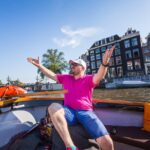
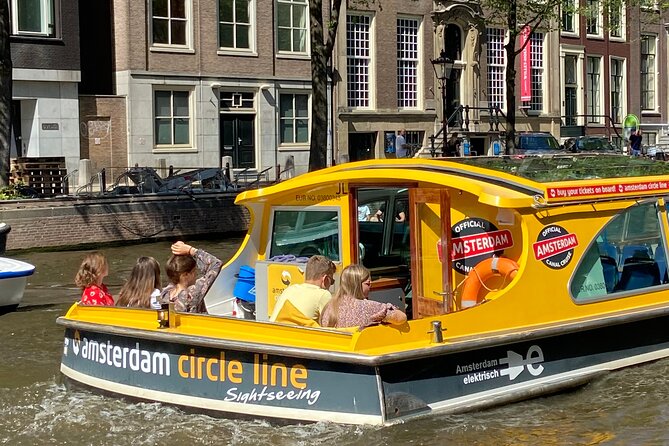
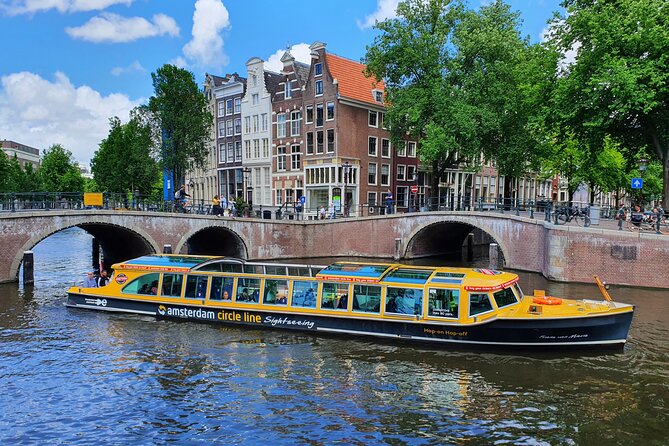
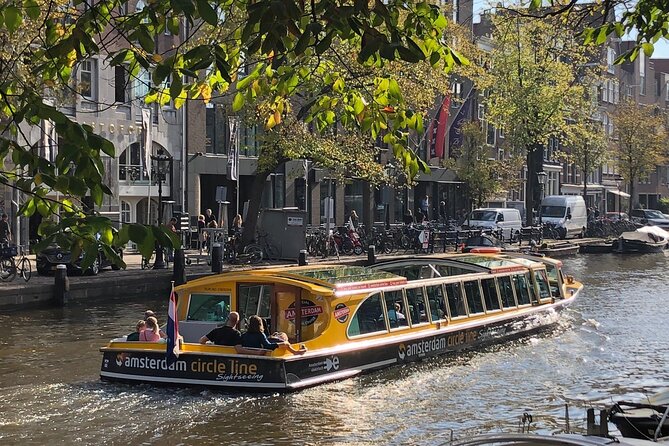
Amsterdam’s canals, in one hour. This short boat ride is built for fast orientation, starting right in front of the Anne Frank House and then sliding you along the UNESCO-listed Canal Ring. It’s an easy way to see a lot without turning your day into a museum-and-footwear marathon.
What I like most is the practicality: it’s a simple canal cruise format with a route packed with big names and landmark architecture. And the other plus is how the narration ties places together fast, so even if you only have a little time, you still get context. One drawback to think about: the onboard audio is recorded/played through a system, and you may not hear it equally well depending on where you sit.
In This Review
- Why This 1-Hour Cruise Works (Especially If You’re Short on Time)
- Meeting Right by Anne Frank House: The Easiest Start in Central Amsterdam
- UNESCO Canal Ring Views: Float Past Centuries of Dutch Design
- The Route Highlights: What You See As You Glide Along
- Museum of the Canals to Anne Frank House: Two Ways of Understanding Amsterdam
- Westerkerk and the Jordaan Edge: Church Architecture, Reformed Faith, and Location
- Houseboat Museum: Seeing Everyday Living on the Canal
- Leidsegracht and De Beulingsloot: The Small Canals That Explain the Big City
- Bartolotti House and Canal Houses: Power, Wealth, and Details You Can Actually See
- Melkmeisjesbrug: A Bridge With Centuries of Maps and a Milk Market Name
- Brouwersgracht: Street Beauty, Canal Borders, and a Voting Moment
- Posthoornkerk and Amsterdam’s Church-to-Concert Evolution
- Amsterdam Centraal and the IJ Waterfront: The City’s Modern Face
- EYE Filmmuseum and Stopera: Contemporary Buildings With Real Purpose
- Amstel River and Hermitage Amsterdam: How the Waterway Changes the Tone
- Price and Value: Is $18.71 Worth It?
- Audio and Seating: One Key Thing to Get Right
- Timing Tips: Daylight, Sunset Lights, and Less Stress
- Who This Tour Fits Best
- Should You Book This Amsterdam Canal Cruise?
- FAQ
- How long is the Amsterdam Historic City Sightseeing Canal Cruise?
- Where is the meeting point?
- What is the price per person?
- Is there a mobile ticket?
- What language is the tour offered in?
- How far in advance do people usually book it?
- How big are the groups?
- What is the cancellation policy?
- Are service animals allowed?
Why This 1-Hour Cruise Works (Especially If You’re Short on Time)
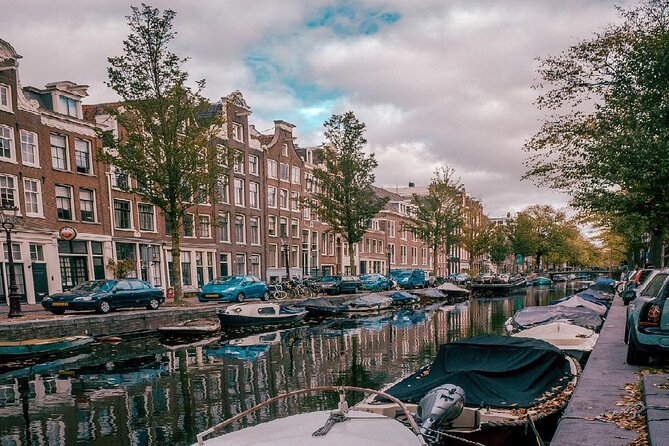
This is the kind of Amsterdam outing you book when you want your bearings quickly. Amsterdam can feel like a maze on land, but from the water the canal layout becomes obvious: the canal belt, the bridges, the grand houses, the churches, and the modern waterfront all line up in a way your photos actually make sense.
At about 1 hour, it’s also a nice reset. You can do it after a museum visit, before dinner, or as a low-effort way to balance out a day packed with walking. There’s enough time to see the main areas the narration highlights, not so much time that you start looking at your watch.
Meeting Right by Anne Frank House: The Easiest Start in Central Amsterdam
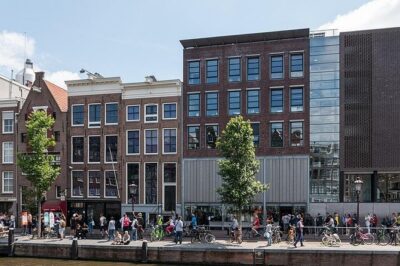
The meeting point is set up to be easy: you’ll find the boats in front of the Anne Frank House. If you’re staying central (or you’re visiting the museum anyway), this saves real time versus hunting for a pier across town.
I like that the tour immediately “places you.” You’re not boarding in some random harbor. You’re right where the story is already in the air, on Prinsengracht, one of the city’s best-known canals. Even before the narration really gets rolling, the setting helps you understand why this part of Amsterdam matters.
You can also read our reviews of more boat tours in Amsterdam
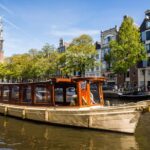
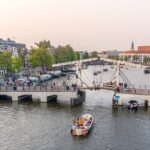
UNESCO Canal Ring Views: Float Past Centuries of Dutch Design
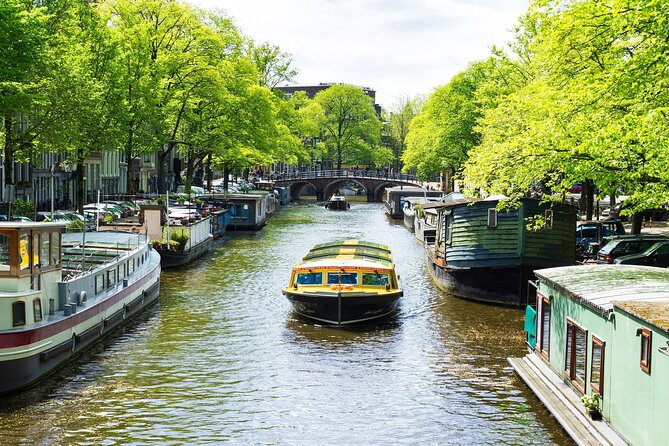
The headline is seeing Amsterdam’s famed canal belt—the UNESCO-listed Grachtengordel—from a moving viewpoint. From the boat, you get that signature canal look from the waterline: tall canal houses with narrow facades, ornate stonework, and bridges that feel almost like stage props.
Because the cruise is short, you’ll notice the biggest features rather than getting lost in tiny details. That’s a good thing for most people. This is a “get the city’s shape” ride—then you can walk back later to the spots that hook you most.
The Route Highlights: What You See As You Glide Along
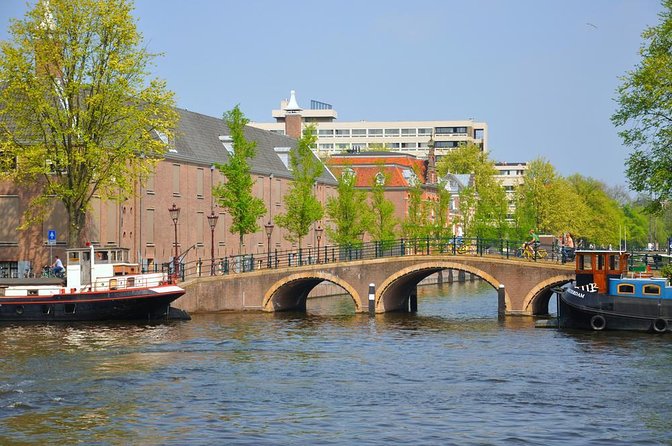
You pass a set of named canals, churches, and landmark buildings, and the narration ties each one to a reason it exists. The vibe is practical: lots of windows, and you can usually choose to stay inside or outside depending on weather.
Here’s what the major stops add to your overall picture.
Museum of the Canals to Anne Frank House: Two Ways of Understanding Amsterdam
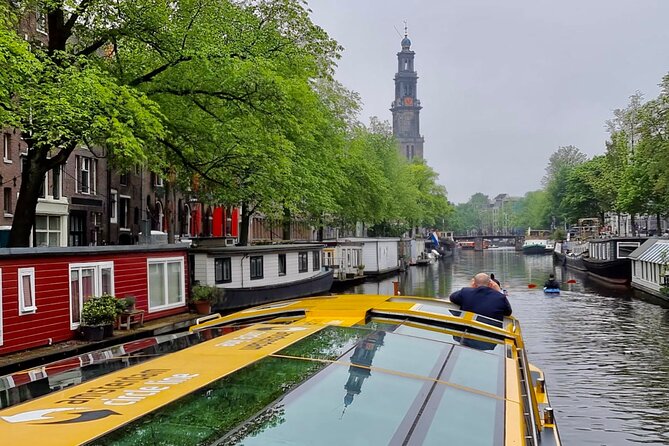
The tour “kicks you off” with the idea of time travel. The narration starts by pointing you back about 400 years through the city’s canal story, then keeps steering you toward the landmarks that made this neighborhood famous.
Then you reach the obvious emotional anchor: Anne Frank House (Anne Frank Huis) on Prinsengracht near Westerkerk. The building is described as a writer’s house and biographical museum dedicated to Anne Frank, including the wartime Secret Annex (Achterhuis) where she and her family hid. The narration also covers how the diary was published in 1947 and how the Anne Frank Foundation later protected the property from developers.
Even if you don’t plan to go inside the museum during this same trip, this canal-side approach gives you context for why the buildings and the streets feel so charged. You’re not just sightseeing—you’re seeing why certain addresses matter.
Westerkerk and the Jordaan Edge: Church Architecture, Reformed Faith, and Location
Next up, you get a clear view of Westerkerk, a Reformed church linked to Dutch Protestant Calvinism. It sits in central Amsterdam in the Grachtengordel area, in the western part of the neighborhood called Jordaan, between Prinsengracht and Keizersgracht.
Why this stop works on a boat: churches like this are hard to appreciate fully from street level when you’re surrounded by crowds and bicycles. From the water, you see the massing and the way the church fits into the canal belt geometry.
You can also read our reviews of more city tours in Amsterdam


Houseboat Museum: Seeing Everyday Living on the Canal
One of the more unusual moments on the route is the Houseboat Museum. You get a sense of what life looks like when you don’t just view Amsterdam from a distance—you actually live with the water right there.
This museum is in the former cargo ship Hendrika Maria, built in 1914. The cargo hold is now a cozy living space with surprising comfort and room. Even from outside, this stop gives you a different angle on Amsterdam’s canal culture: not only grand homes and churches, but also practical, imaginative living.
Leidsegracht and De Beulingsloot: The Small Canals That Explain the Big City
As you glide past Leidsegracht, the narration connects it to the wider canal system. Leidsegracht is a cross-canal that links Herengracht, Keizersgracht, Prinsengracht, and Lijnbaansgracht, then feeds into the Singelgracht at Marnixstraat.
Then comes De Beulingsloot, one of the oldest and shortest canals in the center. It’s a reminder that Amsterdam’s canal belt isn’t only about the famous main waterways—it’s also about the tight, older branches that shape how neighborhoods connect.
Bartolotti House and Canal Houses: Power, Wealth, and Details You Can Actually See
You also pass classic canal houses like the Bartolotti House at Herengracht 170-172. The tour notes it was built around 1617 for Willem van den Heuvel tot Beichlingen, one of the richest Amsterdammers at the time, with inheritance ties to Giovanni Battista Bartolotti, a Bologna merchant.
A canal cruise is a smart way to “read” buildings like this. From the water, you can see the vertical proportions and the way these homes lined the canals as prestige addresses. It’s easier to take in than trying to reconstruct everything from street corners.
Melkmeisjesbrug: A Bridge With Centuries of Maps and a Milk Market Name
Bridges are a big part of Amsterdam’s look, and this one has extra story.
The Melkmeisjesbrug is a fixed bridge, but the area has had a bridge for centuries. Map makers such as Balthasar Florisz. van Berckenrode (1625), Joan Blaeu (1649), and Daniël Stalpaert (1662) reportedly signed it on their maps. The modern bridge story starts in 1883, when a pedestrian drawbridge was replaced by a permanent one, then renewed in 1903 with a so-called paraboolligger bridge using iron sickle girders. In 1966, a steel version continued the same slender look.
The bridge name comes from the old milk market held nearby, and later a catering spot used a milkmaid image as a sign. The narration even suggests it may be the spot where the first type of Amsterdammertje was placed.
On a boat, you’ll understand why this kind of bridge detail matters. It’s not just a crossing—it’s part of the neighborhood identity.
Brouwersgracht: Street Beauty, Canal Borders, and a Voting Moment
The route also includes Brouwersgracht, a canal that connects the Singel with the Singelgracht. It marks the northwest border of the Grachtengordel and forms the northern border of the Jordaan neighborhood between Prinsengracht and Singelgracht.
The tour notes that house numbers for several major canals start counting from Brouwersgracht. It also includes a fun fact: in 2007, Brouwersgracht was voted the most beautiful street in Amsterdam by readers of Het Parool out of 150 nominations.
That’s a nice reminder for you while you’re there: Amsterdam’s “famous” canals are famous for a reason, but some of the beauty comes from the exact borders and street rhythm you only fully appreciate when you see the canal map in motion.
Posthoornkerk and Amsterdam’s Church-to-Concert Evolution
You’ll also pass Posthoornkerk, designed by P.J.H. Cuypers. It replaced a hidden church called De Posthoorn on the Prinsengracht, and the name was taken from that earlier site.
The construction happened in phases: choir, transept, crossing tower, and nave built between 1860–1863, with the two-tower front added later between 1887–1889. The church had to be extra high because it couldn’t be built free-standing, and galleries were built above the side aisles to use the limited space efficiently. The exterior is neo-Gothic, while the interior is modeled on the late Romanesque Munsterkerk in Roermond.
From the canal, religious buildings like this can be hard to interpret on foot because they’re partially blocked by canal houses. On water, you can actually see the relationship between church height and the canal belt.
Amsterdam Centraal and the IJ Waterfront: The City’s Modern Face
As your cruise expands into other viewpoints, the narration hits places that shift the mood from historic to modern.
Amsterdam Centraal was designed by Pierre Cuypers, also known for the Rijksmuseum. The note here is that Cuypers is believed to have focused mainly on decoration while engineers handled the structural design. Then the cruise moves to the IJ, a body of water that used to be a bay and is now Amsterdam’s waterfront.
If you’re the type who thinks Amsterdam is only canals and old stone, this section corrects that. You see how the city’s water edge connects to modern institutions.
EYE Filmmuseum and Stopera: Contemporary Buildings With Real Purpose
Next comes EYE Filmmuseum, designed by Delugan Meissl Associated Architects. The building includes two gallery exhibition spaces and several cinema options, including a 300-seat cinema, two 127-seat cinemas, and a smaller 67-seat intimate cinema.
You’ll also see the Stopera, home of both the city hall and the Dutch National Opera and Ballet. The tour explains the name comes from the protest slogan Stop the Opera, not a mix of words for city hall and opera. That makes the building’s origin feel more grounded: it’s tied to public reaction, not just a design label.
From the boat, these modern structures look like they belong to a new chapter of Amsterdam—one that’s still anchored to the waterfront.
Amstel River and Hermitage Amsterdam: How the Waterway Changes the Tone
The cruise doesn’t only treat water like a scenic backdrop. It also shifts to other water identities, including the Amstel. The Amstel is described as a river that flows north toward the IJ, passing areas like Uithoorn, Amstelveen, and Ouderkerk aan de Amstel. It also hosts events like the Liberation Day concert, the Head of the River Amstel rowing match, and the Amsterdam Gay Pride boat parade.
The river was formed around 1050 BC when freshwater cut into a tidal channel of the IJ (the Damrak and Rokin areas). That’s the kind of fact that sounds academic until you see the city along the water and realize it’s still shaping events today.
Along the Amstel banks sits Hermitage Amsterdam, a branch museum of the Hermitage in Saint Petersburg. It’s in the former Amstelhof, a classical building from 1681. The narration also notes smaller exhibitions ran in the adjacent Neerlandia Building from 2004 until the main museum opened in 2009.
Price and Value: Is $18.71 Worth It?
At $18.71 per person for about 1 hour, the value depends on what you want from Amsterdam.
If your goal is getting a quick, coherent overview—canal layout, landmark facades, bridge rhythm, and quick context—this price is easy to justify. You’re buying time and orientation. For most people, that’s the smartest use of an hour.
If you want deep, stop-by-stop history with a full guided lecture, you might want something longer. This cruise is designed to cover a lot, fast, with an audio track doing much of the talking rather than a long Q&A format.
Audio and Seating: One Key Thing to Get Right
This outing is simple. What can change your experience is your ears.
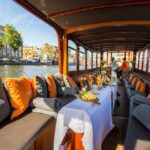
The narration is delivered via an onboard voice system, and some departures can be hard to hear clearly. Also, the rear seating area is mentioned as having limited ability to hear the narration. My practical advice: aim for seats where you can clearly hear the playback, especially if it’s a windy day.
If you care about audio accuracy, don’t plan to sit with your back to the sound system and expect miracles. Amsterdam winds can swallow sound fast.
Timing Tips: Daylight, Sunset Lights, and Less Stress
You can make this cruise feel extra special by timing. When the weather cooperates, the boat ride can be a smooth way to see landmarks in daylight and then get that light-on-stone effect when the city shifts toward evening.
Even if you’re not chasing sunset, keep the pace in mind. This is an hour. If you’re late, you risk missing boarding windows, and you’ll lose the chance to relax into the route.
Who This Tour Fits Best
This cruise is a strong match if you:
- want a quick Amsterdam overview without a long walking day
- are visiting the Anne Frank area and want an easy second experience nearby
- like architecture and canals, and you prefer seeing many sights quickly
- want something simple for a mixed group, including people who don’t want another museum stop
It may not be ideal if you:
- need clear live explanations at every stop
- rely on audio for most of your enjoyment and you hate when audio is muffled
- are hoping for lots of interaction or deep stop-by-stop detail
Should You Book This Amsterdam Canal Cruise?
I’d book this if you’re trying to get your bearings fast and want a satisfying, time-efficient way to see both the classic canal belt and Amsterdam’s modern waterfront. The location by the Anne Frank House is a big convenience win, and the route includes enough variety—from churches to houseboats to contemporary landmarks—to keep your hour from feeling repetitive.
I’d think twice if hearing the narration clearly is non-negotiable for you. Sit where you can hear, plan for the weather, and treat it as an overview ride, not a full lecture.
If you match those expectations, this is one of the most straightforward ways to experience Amsterdam’s canals without burning the day.
FAQ
How long is the Amsterdam Historic City Sightseeing Canal Cruise?
It runs for about 1 hour.
Where is the meeting point?
The meeting point is easy to find in front of the Anne Frank House.
What is the price per person?
The price is $18.71 per person.
Is there a mobile ticket?
Yes, the tour includes a mobile ticket.
What language is the tour offered in?
The cruise is offered in English.
How far in advance do people usually book it?
On average, it’s booked 14 days in advance.
How big are the groups?
The cruise has a maximum of 68 travelers.
What is the cancellation policy?
You can cancel for a full refund if you cancel up to 24 hours in advance of the experience start time.
Are service animals allowed?
Yes, service animals are allowed.