REVIEW · AMSTERDAM
Amsterdam High-End Dutch Food & History Tour – Up to 8 guests
Book on Viator →Operated by Amsterdam Food Tours · Bookable on Viator
Food in Amsterdam is usually a warm-up. This tour is the main course. It mixes Dutch classics with the country’s colonial ties and teaches you why each bite exists in Amsterdam. You also get extra attention thanks to a max group size of 8.
I like that the route feels designed for real taste buds, not just checkboxes: homemade Dutch apple pie in a famous brown café, plus a proper Dutch wine tasting paired with cheese in a private speakeasy-style room. I also like the variety across the week, including Indonesian satay/spekkoek, Dutch grillworst/ossenworst, and a serious fish stop.
One thing to consider: it is not vegan. And if you need frequent long sits, you’ll want to plan around the fact that the tour involves walking and standing in chunks of up to about 20 minutes.
In This Review
- Key highlights at a glance
- A 4-hour walk that feels like a private dinner plan
- Your guide matters more than you think
- Apple pie, brown cafés, and why that first bite works
- Saturdays: satay-market flavor, cheese pairing, and West India bitterballen
- Sundays and Mondays: grillworst crunch, a famous croquette, and Indonesian spekkoek
- Tuesday to Friday: butcher history, speakeasy wine, and seafood finale
- Drinking on the tour: craft beer or Dutch wine, and flexible options
- How much walking is involved, and who this fits best
- Diets and real-world expectations
- Value check: is $157.21 worth it?
- Where you start and end (and how to plug it into your day)
- Should you book this Amsterdam Dutch food-and-history tour?
- FAQ
- How long is the Amsterdam High-End Dutch Food & History Tour?
- What’s included in the tastings?
- Is craft beer or wine included?
- What is the group size?
- Is the tour suitable for vegans?
- Where does the tour start and end?
Key highlights at a glance
- Brown-café apple pie to start, with a classic Amsterdam vibe right away
- Dutch wine + cheese pairing in a private speakeasy room, with beer or non-alcohol options
- Colonial-history food stops like Indonesian satay and spekkoek woven into the route
- A serious fish shop tasting such as Dutch herring, fried cod, and smoked eel
- Group size capped at 8, so your guide can actually talk to you, not just the whole street
A 4-hour walk that feels like a private dinner plan
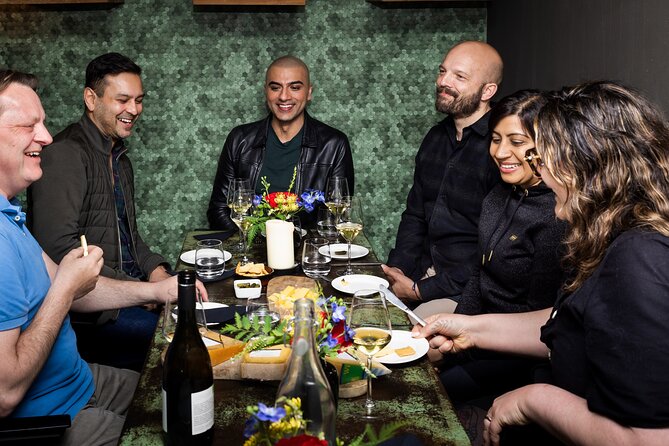
Amsterdam food tours often fall into two buckets: quick bites with big crowds, or themed stops that never really connect to the city. This one does both better. You walk through central neighborhoods and hit a run of small, well-chosen specialty shops and eateries. Then you get short, focused history explanations that make the food make sense.
The timing is practical. Plan on about 4 hours, with the pacing set by a small group. You’ll still be walking, but the tour is built around frequent tasting moments, so it doesn’t feel like endless museum corridors. If weather turns, the walking between stops can be shortened and the tastings stay indoors.
And yes, the price is not cheap. At $157.21 per person, you’re paying for access to boutique places, multiple organized tastings, and at least some included drinks (Dutch wine/beer options at specific stops). If you’re the type who hates deciding what to eat for hours, this can actually save you time and stress.
You can also read our reviews of more food & drink experiences in Amsterdam

Your guide matters more than you think
Most tours say small group, but you still end up talking to your feet. Here, the guide is part of the value. I’d book this with an eye for conversation and context, not just eating.
The guides who pop up in the experience include people like Rudolph, Katrina, Jan, David, Mark, Jelte van Koperen, Caroline, Catharina, Dirk, and Bo. You’ll notice a pattern: guests repeatedly point to guides who keep things fun and on-topic, and who build a friendly rhythm with the group. That matters because Amsterdam’s food scene is more than flavors. It’s neighborhoods, trade routes, and immigrant communities layered over centuries.
If you’re sensitive to group chemistry, a tip is simple: go in ready to meet people, and choose days when you want the social vibe. With a max of 8, it’s manageable either way.
Apple pie, brown cafés, and why that first bite works
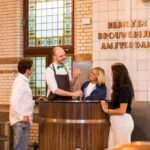
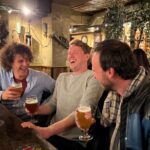
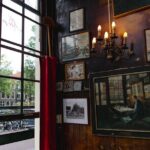
Every day starts the same way: with homemade Dutch apple pie in one of Amsterdam’s famous brown cafés. Brown cafés are the classic wood-and-brass Amsterdam drinking rooms—low-key, old-school, and very “you’ve arrived in the right place.”
Starting with pie is smart for two reasons. First, it instantly gives you a Dutch comfort-food anchor. Second, pie works as a warm-up for what’s coming next: cheeses, sausages, fish, and drinks. By the time you hit the savory stops, your palate isn’t confused.
If you’re tempted to save room at the beginning, don’t. This tour expects you to eat. One of the common themes here is that there is more food than you think you booked.
Saturdays: satay-market flavor, cheese pairing, and West India bitterballen
On Saturday, the route leans hard into Amsterdam’s food crossroads.
- Saturday Lindengracht market satay: You’ll try satay with sides, tied to the Netherlands’ former colonial connection to Indonesia. It’s not just “spicy meat.” It’s a history lesson you taste.
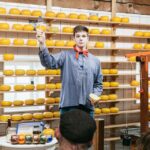
- Farmhouse cheese at a boutique deli: You pick up a selection of three farmhouse cheeses. Expect variety, not just one safe wheel.
- Dutch wine tasting in a private speakeasy room: The cheeses get paired in a controlled setting—plus you have options if you don’t drink alcohol (non-alcoholic or beer options are available).
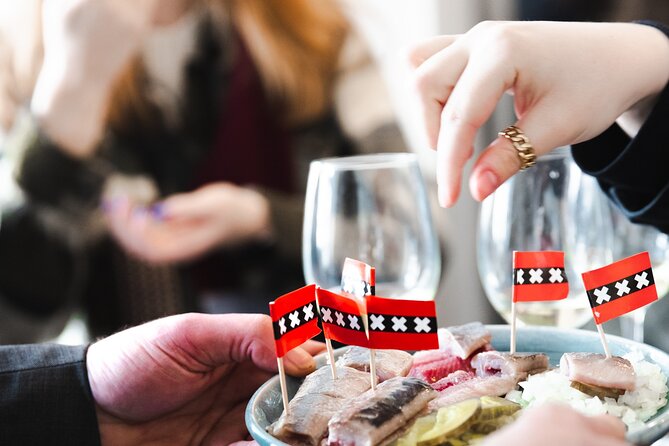
- Fish shop tasting: This is a highlight type stop for many food lovers—Dutch herring, fried cod, and smoked eel. If you like seafood but don’t always know what to order in Amsterdam, this gives you a guided sampler.
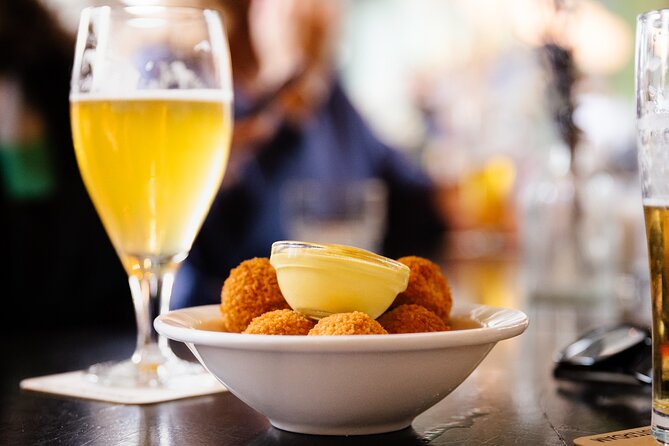
- Finish at the former Dutch West India Company headquarters: This matters for the story. The building is linked to the area’s 17th-century trade era and the connections that helped shape New York’s early history. Today, it’s a fun spot where you can land with classic bitterballen.
What I like about the Saturday flow is the balance. Sweet pie first. Then savory market food. Then cheese and wine. Then the “Amsterdam eats” fish step. That arc keeps your taste buds awake.
Possible drawback: if you’re not a fan of fish, you might feel like a chunk of the tour is aimed at someone else. The rest of the tour is still strong, but the fish stop is a big part of the day’s identity.
Sundays and Mondays: grillworst crunch, a famous croquette, and Indonesian spekkoek
On Sunday and Monday, the menu shifts toward bakery-and-deli comfort with a second Indonesian spotlight.
You’ll start again with the apple pie. Then it’s savory and snacky in a way that feels very Amsterdam.
- Baguette topped with Dutch grillworst: Served with honey-mustard sauce, mayonnaise, pine nuts, and rocket salad. This is not light lunch food. It’s built for flavor layering.
- Dutch shrimp croquette from Patisserie Holtkamp: Holtkamp is the name people associate with a certain kind of Amsterdam pastry-and-snack credibility. The croquette form is perfect for a tour because it’s portable, rich, and instantly satisfying.
- Javanese chicken satay with peanut sauce: Plus cassava kroepoek and sambal. You get sweetness, heat, and crunch in one bite.
- Handmade Indonesian spekkoek: This layered cinnamon cake shows up after the satay, so you’re switching from savory intensity to spiced sweetness without losing momentum.
- Cheeses, crackers, quince pear, and ossenworst: You’ll round it out with a three-cheese tasting plus ossenworst (smoked beef sausage) served with pickles and mustard.
This day is a great fit if you want the tour to feel like a sequence of snack plates rather than a heavy meal. It’s also a solid option if you want Dutch-and-Indonesian flavor without centering on the fish stop.
One consideration: the Sunday/Monday spread is more pork/sausage and croquette-forward. If you are picky about textures (croquettes, layered cakes), you’ll still have options, but your enjoyment will depend on whether those styles land for you.
You can also read our reviews of more tours and experiences in Amsterdam



Tuesday to Friday: butcher history, speakeasy wine, and seafood finale
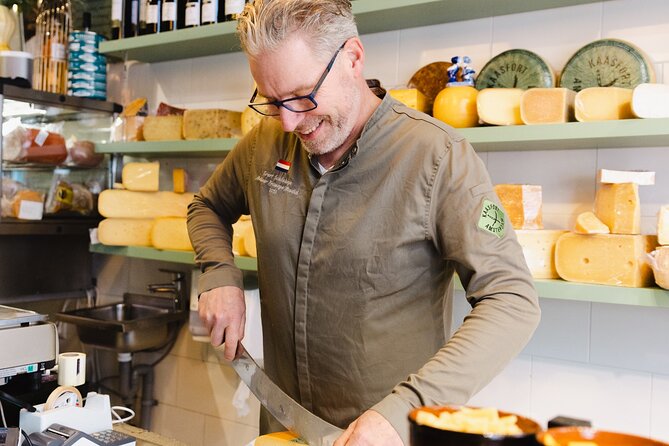
From Tuesday to Friday, the backbone of the tour changes again, with a butcher stop early.
- Ossenworst and grillworst at a 130-year-old family butcher shop: This adds real age-and-tradition energy to the tasting. Smoked beef sausage (ossenworst) and flavored pork sausage (grillworst) are classic Dutch comfort foods, and the butcher setting makes them feel earned, not packaged.
- Another three-cheese selection from a boutique deli: Again, the tour keeps cheese as a core theme, not a side quest.
- Dutch wine tasting in the private speakeasy room paired with the cheeses: This is the repeated pairing moment across the week. It’s one of the most “high-end” parts of the tour because you’re tasting with intent—salt, fat, acidity, and spice all meeting in a planned setting.
- Fish shop tasting: Dutch herring, fried cod, and smoked eel, so you get that Amsterdam seafood identity again.
- Finish at the Dutch West India Company headquarters: And yes, it ends with bitterballen, the fried, friendly Dutch snack people can’t stop talking about once they taste it.
If you like the idea of learning the city through food traditions, the Tuesday-to-Friday route has a clear storyline: smoked meats and cheese first, then wine pairing, then the fish stop, then a final historical landing.
Drinking on the tour: craft beer or Dutch wine, and flexible options
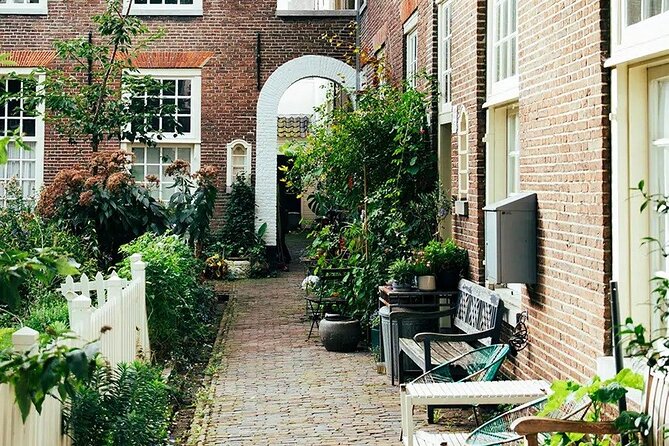
The tour includes complimentary craft beer or wine at some stops, and the big dedicated drink moment is the Dutch wine tasting in that private speakeasy room. If you don’t want alcohol, non-alcoholic options or beer alternatives are available there.
What this means for you: you can treat the drinks as part of the flavor lesson without needing to commit to heavy alcohol. Also, alcohol is not the whole point. It’s usually paired to help you taste better—especially with the cheese.
How much walking is involved, and who this fits best
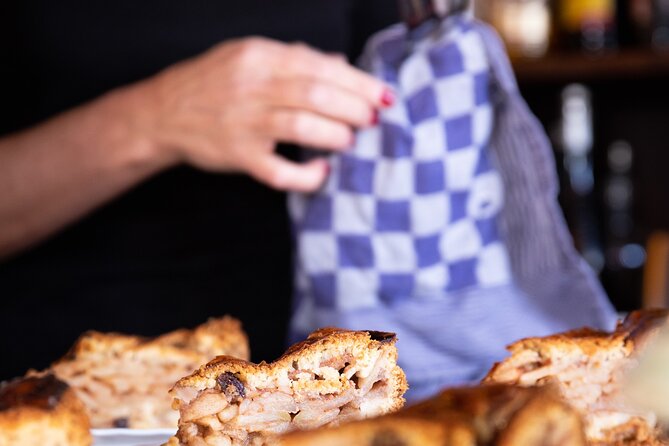
You need normal mobility and the ability to walk and stand for up to about 20 minutes at a time. The route is short enough to handle, but it isn’t the kind of tour where you barely move.
Good news: three out of the six food stops have reserved seats and bathrooms available. That’s not always the case on Amsterdam tours, so it helps a lot with comfort.
If you have mobility issues beyond standing-walking limits, you should treat this as a “maybe.” The tour can shorten walking in bad weather, but the overall structure still involves moving between neighborhoods.
Diets and real-world expectations
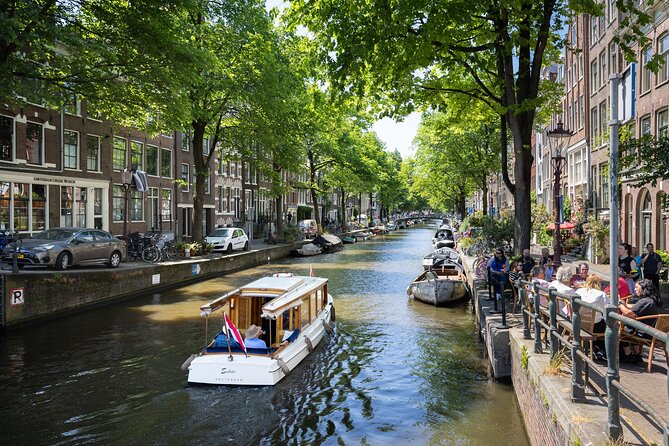
This tour is not suitable for vegan. That’s the one clear hard line.
For other restrictions, you should specify them when booking. The information available also suggests the tour includes vegetarian-friendly tastings even when the menu shifts by day (and the Indonesian stop is part of the route’s variety). But because the tour has meat and fish options on many days, you should plan around what you can safely eat rather than hoping everything can be swapped at the last minute.
If you’re gluten-free or have allergies, communicate early and clearly. This kind of boutique sampling depends on how a shop can adapt.
Value check: is $157.21 worth it?
Here’s how I’d judge the value.
You get:
- Multiple organized food stops (more than a quick “taste here, taste there” tour)
- High-end shop access, including a private wine tasting setup
- Craft beer or wine at some points
- Small group attention (up to 8)
You pay for coordination and access. If you were to recreate this on your own, you’d spend time hunting for the right shops, and you wouldn’t get the built-in pairing of cheeses with Dutch wine in that speakeasy-style setting. Plus, you’d miss the history framing that ties Indonesian colonial food and Dutch trading-era sites to what you’re eating.
Where the value can feel weaker:
- If you hate fish or sausage, a chunk of the week’s menu may not be for you.
- If you came expecting a bargain snack crawl, this is priced as a boutique experience.
Where you start and end (and how to plug it into your day)
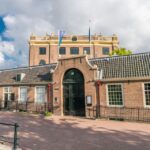
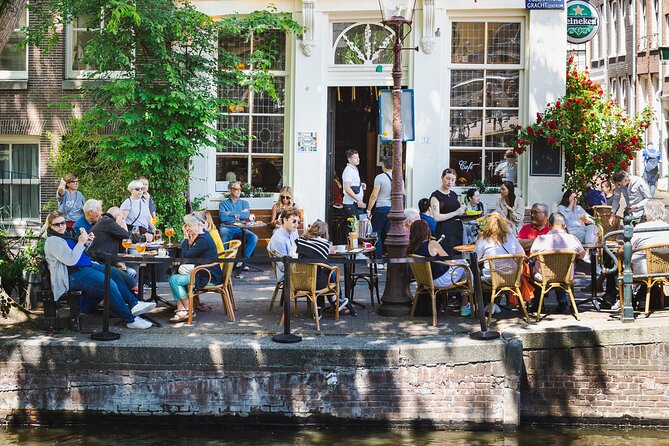
The tour starts at Papeneiland, Prinsengracht 2 and ends at Café Nieuw Amsterdam, Haarlemmerstraat 75. Both are in walkable, central areas near public transportation, so it’s easier to connect to museums, canal wandering, or dinner after.
If you like to keep your afternoons open, schedule it earlier. You’ll be full for a while, and it’s easier to choose a light meal after the tour than it is to try to eat normally beforehand.
Should you book this Amsterdam Dutch food-and-history tour?
If you want Amsterdam through your stomach—pie, cheese, sausage, fish, and Indonesian flavors connected to Dutch history—this is an excellent way to do it. The small group size makes the whole thing feel more like an organized evening with a great storyteller than a rapid-fire food stamp.
Book it if:
- You like both Dutch classics and Indonesian-Dutch crossover food
- You want a cheese-and-wine pairing experience, not just random tastings
- You prefer guided context that helps you order and snack smarter later
Skip or reconsider if:
- Vegan is your lifestyle
- You need a very low-walking tour
- Fish or sausage tastings will likely disappoint you
If your goal is to eat well and understand why Amsterdam tastes the way it does, this tour does the job in about four hours. And it leaves you with enough food knowledge to make better choices long after the last bitterballen.
FAQ
How long is the Amsterdam High-End Dutch Food & History Tour?
It runs for about 4 hours.
What’s included in the tastings?
The tour includes multiple food tasting stops that vary by day. You can expect items like Dutch apple pie, farmhouse Dutch cheeses, Dutch wine tasting (with non-alcoholic or beer options), and Dutch classics such as herring, fried cod, or smoked eel on several days.
Is craft beer or wine included?
Complimentary craft beer or wine is included at some stops, and there is a Dutch wine tasting paired with cheeses. Non-alcoholic or beer options are available for that pairing.
What is the group size?
The tour is limited to a maximum of 8 travelers.
Is the tour suitable for vegans?
No. The tour is unfortunately not suitable for the vegan lifestyle.
Where does the tour start and end?
It starts at Papeneiland, Prinsengracht 2, Amsterdam, and ends at Café Nieuw Amsterdam, Haarlemmerstraat 75, Amsterdam.