REVIEW · AMSTERDAM
Anne Frank Small Group Walking Tour
Book on Viator →Operated by Tours of Amsterdam · Bookable on Viator
A story this heavy needs the right route. This walking tour connects the life of Anne Frank with major Amsterdam landmarks tied to World War II, so you get context fast and linger where it matters. I especially liked the expert historian guide (Stefan, in my case) and the way the stops balance personal story with real places. One thing to consider: it’s mostly outside viewing, and it does not include entry to the Anne Frank House.
You’ll start at the Portuguese Synagogue and work through solemn memorials, then shift to art and architecture with Rembrandt and the Zuiderkerk. The route is thoughtfully paced at about 20 minutes per stop, which helps your brain absorb what you’re seeing. If you’re hoping for lots of indoor museum time, plan to buy separate tickets for the buildings that charge.
In This Review
- Key highlights worth planning around
- A route that ties Amsterdam’s landmarks to the Anne Frank story
- What you get for the price: $37, timed well, with some free stops
- Starting point at Jonas Daniël Meijerplein, then walking toward the story
- Stop 1: Portuguese Synagogue and why the building changes the mood
- Stop 2: Daniel Libeskind’s National Holocaust Memorial, even while unfinished
- Stop 3: The Auschwitz Memorial in Wertheimpark and the power of broken mirrors
- Stop 4: Rembrandt House Museum and what your guide helps you see
- Stop 5: Zuiderkerk viewpoint and Amsterdam’s first Protestant church
- Stop 6: The Anne Frank Statue near the House
- The guiding style that makes this tour work (especially with Stefan)
- Planning tips so you get the most from the 2-hour walk
- Who this tour is best for
- Should you book the Anne Frank Small Group Walking Tour?
- FAQ
- How long is the Anne Frank walking tour?
- What does the tour cost?
- Where does the tour start and where does it end?
- What time does the tour run?
- Is the ticket a mobile ticket?
- Is the Anne Frank House included in the tour?
- Are admissions included for all stops?
- Which stops are free?
- How many people are in the group?
- Are service animals allowed?
Key highlights worth planning around

- Portuguese Synagogue atmosphere: preserved 17th-century interiors, no modern heating or lighting
- Holocaust Memorial by Daniel Libeskind: a moving design, even while still under development
- Wertheimpark Auschwitz Memorial: broken mirrors symbolizing shattered lives
- Rembrandt House Museum visit: your guide points you to what to notice, from etchings to working life
- Zuiderkerk viewpoint: Amsterdam’s first Protestant church and a key city landmark
- Finish at the Anne Frank Statue: close enough to continue right to the House if you want to
A route that ties Amsterdam’s landmarks to the Anne Frank story
If you’ve come to Amsterdam with Anne Frank on your mind, you’ll quickly notice something: the city isn’t only pretty canals and bicycles. It’s also built on layers of history—some heartbreaking, some complicated—and this tour gives you a clear path through those layers. You don’t just hear names and dates; you connect them to specific places you can locate right away.
This tour stays practical. It moves in about two hours with short, repeatable blocks of time—roughly 20 minutes each—so you get a rhythm instead of a long slog. And since the group size is capped at 140, it’s not the smallest possible group, but it is designed for a guided walk rather than a free-for-all.
The biggest reason I think you’ll like it is the pairing of major landmarks with a human guide. The stories land harder when you can ask questions, process pauses, and follow the thread from stop to stop—something Stefan’s style made easy in my experience.
You can also read our reviews of more walking tours in Amsterdam



What you get for the price: $37, timed well, with some free stops
At around $37 for a two-hour guided walk, this isn’t priced like a museum day. What you’re paying for is a historian-led route that uses the city itself as the learning space.
A helpful detail: not every stop requires paid admission. The National Holocaust Memorial stop is free, and the Auschwitz Monument installation is free as well. The paid-entry items (like the Portuguese Synagogue and the Rembrandt House Museum) are clearly marked as not included, so you’re not surprised at the money part halfway through.
Here’s the value angle I’d use to decide:
- If you want a guided storyline that helps you see Amsterdam’s WWII-era connections in a structured way, the price makes sense.
- If you already know you’ll want to spend hours inside the paid museums and you want a lot of indoor time, you might consider pairing another independent visit with this tour.
Starting point at Jonas Daniël Meijerplein, then walking toward the story
The tour meets at Jonas Daniël Meijerplein 21, 1011 RG Amsterdam, with a 1:00 pm start. It runs for about 2 hours and ends near Anne Frank House, at Westermarkt 20, 1016 GV.
You’ll also want to know this is a mobile ticket experience, and it’s friendly for service animals. It’s also close to public transportation, which matters in Amsterdam, where you’ll often be doing a mix of walking and tram/bus hopping.
One more practical note: your ending point is near the Anne Frank House, but the tour does not provide entry tickets there. So if Anne Frank House is a must for you, plan your timing so you can handle both parts without rushing.
Stop 1: Portuguese Synagogue and why the building changes the mood
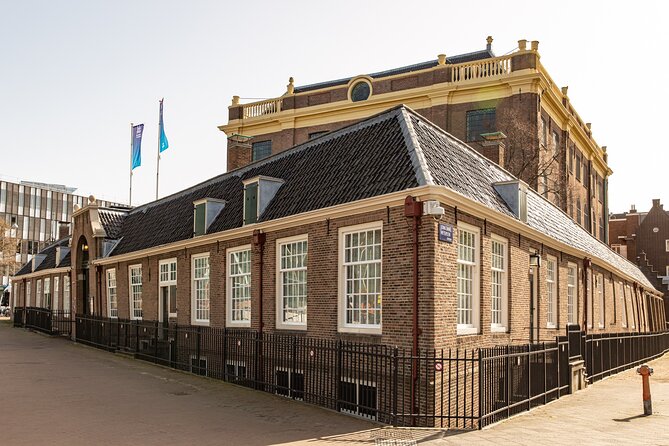
You begin at the Portuguese Synagogue, a 17th-century Sephardic synagogue known for its vast interior and wooden vaulted ceilings. One of the most striking details is that it was preserved without modern lights or heating. That means the place doesn’t feel like a staged exhibit. It feels like you’re looking into the original atmosphere as much as possible.
This stop is about 20 minutes, and there’s an important “know before you go” point: admission is not included. You’ll stay oriented outside, and your guide frames what to look for. Then, if you decide you want to go in fully, you can buy tickets separately.
Possible drawback here: if you’re hoping the tour bundles every ticket for you, this one won’t. Still, it’s easier to manage costs when the paid stops are clearly separated.
Stop 2: Daniel Libeskind’s National Holocaust Memorial, even while unfinished
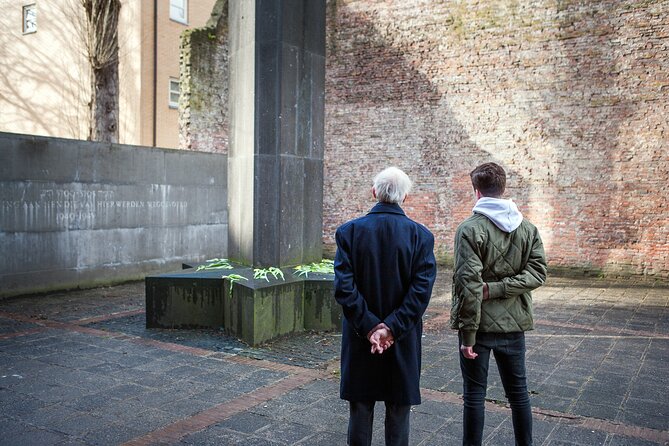
Next comes the National Holocaust Memorial, designed by Daniel Libeskind. This is a symbolic stop, and not only because of what it represents. It’s also because you’re seeing the memorial in a state of transition: the design is still under development, though the completion is anticipated.
You’ll spend about 20 minutes here, and admission is free. The practical benefit of starting at a major memorial early is that it sets the emotional temperature for the rest of your walk. You’re not jumping straight from synagogue architecture into an unrelated part of WWII; the tour threads the connection.
If you’re the type who likes architecture and symbolism, this stop gives you both. If you just want the story, your guide will keep it human and anchored.





Stop 3: The Auschwitz Memorial in Wertheimpark and the power of broken mirrors
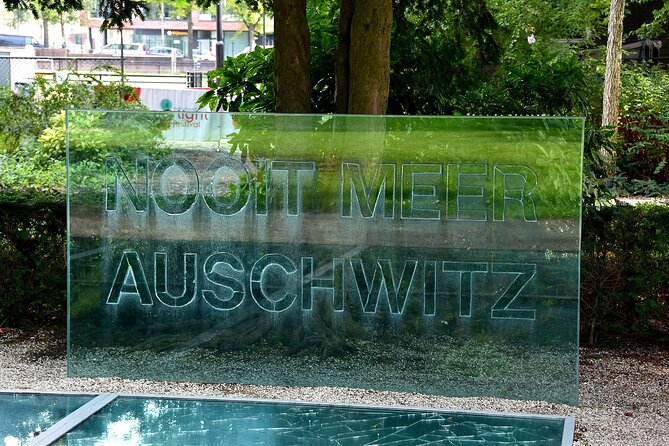
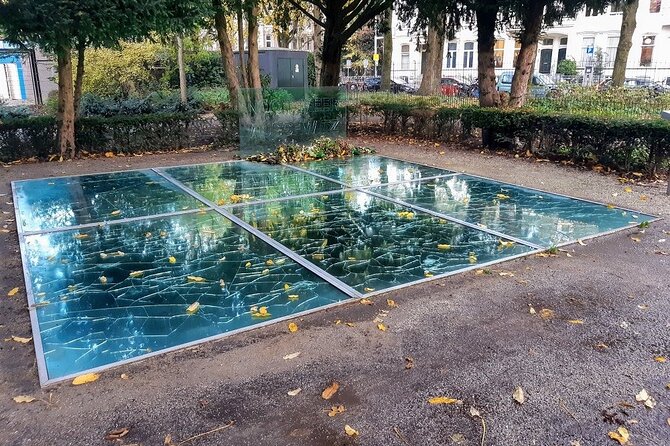
After the Holocaust Memorial, you head to the Auschwitz Memorial in Wertheimpark. This installation was created by Jan Wolkers, and the signature visual is broken mirrors. They reflect the sky in fragments—symbolizing shattered lives from the atrocities of Auschwitz.
Admission here is free, and you’ll get about 20 minutes. This is one of those stops where you’ll probably want the full time. The mirrors aren’t just art. They’re a focus point for grief and scale, and the guide’s job is to keep you from skimming past it.
From the way the tour is praised, this is often the stop that stays with people. Not because it’s dramatic for effect, but because it forces you to slow down and notice the meaning.
Stop 4: Rembrandt House Museum and what your guide helps you see
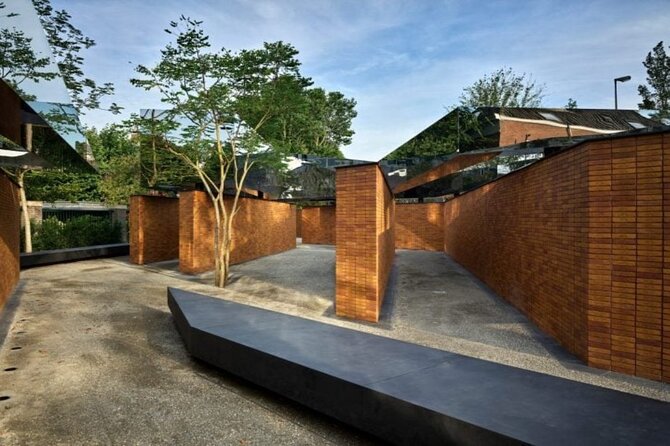
Then the tour shifts into another kind of history with the Rembrandt House Museum. You spend about 20 minutes and, again, admission is not included.
The museum is tied to where Rembrandt lived and worked, and it’s been restored to its original state. The museum highlights things like his etchings, personal items, and how he worked through painting techniques. Even if you don’t pay to go in, the guided framing helps you understand what you’re looking at and why this house matters in a broader story of Amsterdam and its thinkers.
Why I like this stop on an Anne Frank-focused itinerary: it reminds you the city wasn’t only war and persecution. It also had artists, thinkers, neighbors—an ordinary life that makes the contrast with what happened later feel real.
Stop 5: Zuiderkerk viewpoint and Amsterdam’s first Protestant church
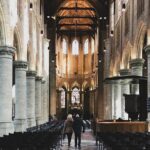
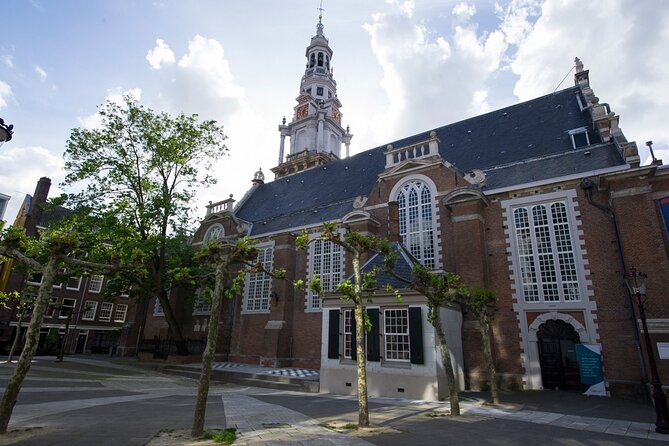
Next is the Zuiderkerk, often called Amsterdam’s first Protestant church. The stop highlights the city’s shift in religious and architectural identity, with a famous tower that can offer city views.
In your experience here, the guide focuses on history and place. Admission isn’t included, and your visit is described as outside viewing. The church is now used as a municipal information center, which keeps it in use rather than frozen in time.
This stop works as a breather. It still keeps you in Amsterdam’s history track, but without the same heavy symbolism as the memorials.
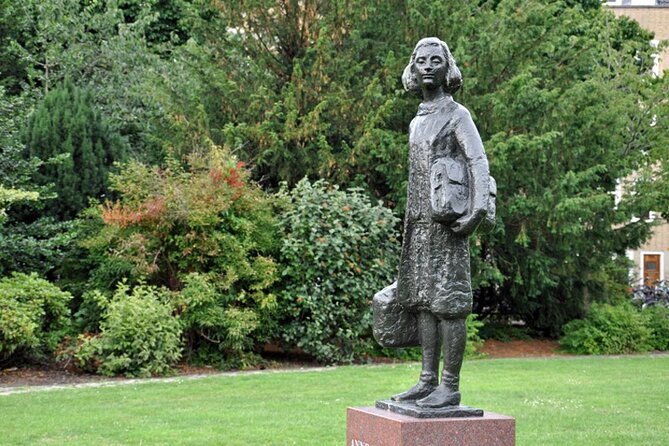
Stop 6: The Anne Frank Statue near the House
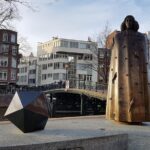
You finish at the Anne Frank Statue, located near the Anne Frank House. This is a respectful close, meant to bring your walking storyline back to the person at the center of it all.
Admission is free at this point, and it’s a great place to pause and reset after the memorial stops. If you want to continue, the tour ends close enough that you can pursue Anne Frank House separately—just remember the tour itself does not include entry.
This ending style is smart. You’re not forced to do everything at once, and if you’re emotionally ready, you can move on. If not, you still leave with a clear sense of where to go next.
The guiding style that makes this tour work (especially with Stefan)
The reason this tour earns strong praise is the way the guide connects facts to feeling without turning it into a lecture. Stefan, for example, is described as explaining details in depth and adding thought-provoking questions. That question layer matters because it turns passive listening into active processing.
You also get helpful pacing. Since each stop is about 20 minutes, you’re not stuck with one location until you feel numb. Instead, you get short periods to absorb, then move to the next place that adds a new angle to the story.
If you’re traveling solo, that matters even more. You still get guidance and room to reflect without needing a group conversation to feel “included.”
Planning tips so you get the most from the 2-hour walk
Because it’s a walking tour of about two hours, plan for standing and moving on sidewalks. Comfortable shoes are the boring answer, but it’s the correct one. Also, since some locations are outside-view stops, you’ll likely want your attention on the street-level details your guide points out.
Tickets-wise, remember the pattern:
- Some stops are free (Holocaust Memorial and Auschwitz Monument)
- Some stops have admission not included (Portuguese Synagogue, Rembrandt House Museum, and the Zuiderkerk stop)
The best strategy is to decide ahead of time which paid building(s) you want to enter. Then you can let the tour guide your priorities instead of making decisions in the moment.
Also, if you plan to visit the Anne Frank House, consider booking that separately. This tour ends nearby, but the House entry is not part of this ticket.
Who this tour is best for
This is a strong fit if you want:
- A guided route that connects Anne Frank to Amsterdam’s WWII landmarks in a logical order
- A historian-led walk that offers context you might miss on your own
- A two-hour structure with short stops instead of a long museum day
It may be less ideal if you:
- Want mostly indoor time and included museum admissions
- Are hoping the Anne Frank House visit is bundled in
That said, even with those limits, it can still be a great first step. Many people use tours like this to orient themselves emotionally and geographically, then return independently for the entrances they want.
Should you book the Anne Frank Small Group Walking Tour?
Yes, if you want a guided story through Amsterdam that doesn’t require you to figure out the connections alone. For around $37, the value comes from a historian guide, a tight route, and a mix of free memorial stops plus key cultural landmarks.
Book it if:
- You’re visiting for a short window and want the best use of time
- You want the broken mirrors Auschwitz installation and the Libeskind memorial on your itinerary
- You like having a clear sequence instead of random self-guided wandering
Consider skipping or supplementing if:
- You’re set on paying for multiple buildings and spending long hours inside them
- You need the Anne Frank House included in the same ticket (it’s not included here)
If you’re ready to walk, listen, and reflect in a structured way, this tour is one of the most focused ways to understand how Amsterdam connects to the Anne Frank story.
FAQ
How long is the Anne Frank walking tour?
It lasts about 2 hours (approximately), with around 20 minutes at each stop.
What does the tour cost?
The price is $37.
Where does the tour start and where does it end?
It starts at Jonas Daniël Meijerplein 21, 1011 RG Amsterdam and ends close to the Anne Frank House at Westermarkt 20, 1016 GV.
What time does the tour run?
The start time is 1:00 pm.
Is the ticket a mobile ticket?
Yes, the tour uses a mobile ticket.
Is the Anne Frank House included in the tour?
No. The tour does not include entry to the Anne Frank House, though it ends near it.
Are admissions included for all stops?
No. Portuguese Synagogue, Rembrandt House Museum, and Zuiderkerk stops do not include admission, and the tour is conducted outside those buildings.
Which stops are free?
The National Holocaust Memorial and the Auschwitz Monument stops are free.
How many people are in the group?
The maximum group size is 140 travelers.
Are service animals allowed?
Yes, service animals are allowed.