REVIEW · AMSTERDAM
Alternative Tour Amsterdam | Drugs Story, Street Art & More
Book on Viator →Operated by Guided Tour Holland · Bookable on Viator
Amsterdam has a second voice.
This 2-hour walking tour uses the big postcard spots as a starting point, then leans into the topics most sightseeing skips. You’ll move from Dam Square and the Royal Palace into neighborhoods and street scenes tied to counterculture, LGBTQ history, and Amsterdam’s more complicated reputation.
What I like most is the tight small-group size (max 10), which keeps the pace human and the questions flowing. I also like that the tour covers the city’s “under the surface” side through street art, graffiti, and houseboats, not just museum facts.
One consideration: the themes are mature. The tour is recommended for adults, and for teens only with a guardian, because the guide talks about prostitution and Amsterdam’s soft drugs policy.
In This Review
- Quick Hits: What Makes This Tour Worth Your Time
- Where the Tour Starts at Dam Square (And How That Helps)
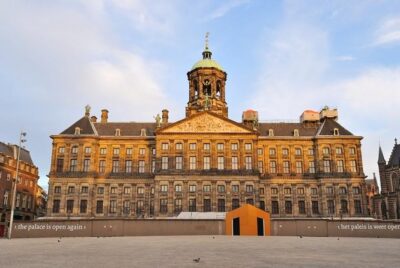
- Dam Square to Royal Palace: Two Icons, One Layer Deeper
- The Jordaan Hour: Cafes, Studios, and Working-Class Stories
- Gay Monument: A Liberal City’s Harder Past
- Street Art, Graffiti, and Houseboats (Without Entering the Red Light District)
- Price and Value: Why $3.60 Makes This an Easy Yes
- Walking Pace, Meeting Point, and What to Bring
- Who This Tour Fits Best (And Who Might Want to Skip It)
- Should You Book This Amsterdam Street Art and Drugs Story Tour?
- FAQ
- What’s the duration of the tour?
- Is it in English?
- How big is the group?
- Where does the tour start and end?
- Do you enter the Red Light District?
- Is it suitable for teens?
Quick Hits: What Makes This Tour Worth Your Time
- Dam Square orientation at the National Monument, with the walk starting and ending in the same easy-to-find spot
- Royal Palace context in a short stop, plus a strong suggestion to book a visit separately if you want inside time
- Jordaan at street level: narrow lanes, cafes, art studios, and the people-and-work stories behind the area
- Gay Monument remembrance that connects Amsterdam’s modern image to a harsher past of persecution
- Street art and graffiti route with houseboat scenes, while staying within local tour restrictions around the Red Light District
- Very low price for an English-guided walking experience, especially given the topics covered
Where the Tour Starts at Dam Square (And How That Helps)
You meet at the National Monument at Dam Square, postal code 1012 JS Amsterdam. That matters more than it sounds, because Dam Square is a central landmark that’s easy to reach and easy to re-find later.
The tour begins in the exact kind of place where first-time visitors can feel “Okay, I get Amsterdam now.” It’s also a natural launchpad for a walking route that doesn’t require transit tickets or complicated connections. If you want a quick reset after arriving, this start point is about as smooth as it gets.
Since the walk ends back at the meeting point too, you don’t have to calculate how to get home from a far-off corner. You can pop out, grab a snack, or continue exploring while the route is still fresh in your head.
You can also read our reviews of more tours and experiences in Amsterdam


Dam Square to Royal Palace: Two Icons, One Layer Deeper
The first stop is Dam Square itself, right by the National Monument. It’s a short orientation moment, around five minutes. The payoff here is mental setup: you learn where Amsterdam was founded close by, so when you look around, the space has a story behind it.
Then you move to the Royal Palace Amsterdam (also about five minutes). A key detail the guide shares is that the building was originally built as a town hall. That small fact changes how you read the architecture. Instead of seeing only royal grandeur, you start seeing civic life, governance, and public identity—Amsterdam’s idea of who belongs in the city’s story.
The tour doesn’t try to cram an official palace visit into the walk. It’s framed as a best-next-step suggestion: if you want to go inside, you can book through the Royal Palace website on your own. That keeps the tour moving and keeps you from getting stuck in lines if you’re not planning on a longer stop.
Practical takeaway: if the palace interior is your priority, plan extra time beyond the 2-hour tour window.
The Jordaan Hour: Cafes, Studios, and Working-Class Stories

After the palace area, you head into the Jordaan neighborhood for about an hour. This is one of the parts where the tour feels less like sightseeing and more like city-watching with context.
Expect narrow streets lined with cafes, art studios, and independent boutiques. That’s the surface. What makes it worth doing is the guide’s focus on people: rebellious artists, working-class heroes, and the struggles that shaped day-to-day life in earlier eras.
This stop is also a big reason the tour works for first-time visitors. You’re not just seeing famous buildings; you’re seeing how neighborhoods function—where people gather, where ideas get made, and how culture grows in the spaces between landmarks.
A possible drawback here: because it’s an hour walk, you’ll want comfortable shoes. If you’re planning this as your only big activity that day, schedule it when your legs still feel fresh.
Gay Monument: A Liberal City’s Harder Past
Next is Amsterdam’s Gay Monument, where you’ll spend about ten minutes. The message is direct: Amsterdam is famous as a liberal city, but it wasn’t always that way.
The guide uses this stop to recognize LGBTQ people who were persecuted due to gender or sexual preference. This is one of the stops that balances the tour’s overall mood. Street art and counterculture can sometimes sound playful from far away; the Gay Monument brings the story back to real harm and real survival.
What I like about placing this early enough in the walk is that it prevents the tour from turning into only “edgy Amsterdam.” Instead, you get a reminder that rights and freedoms are not background noise. They have costs, and those costs show up in monuments like this.
If you’re traveling with teens, this stop is also a good place to pause and talk. It gives you something concrete and respectful to discuss, even when the rest of the tour becomes more controversial in topic.
Street Art, Graffiti, and Houseboats (Without Entering the Red Light District)
The final major segment is where the tour earns its name: street art, graffiti, and houseboats, plus the city’s counterculture angle. You’ll spend about forty minutes at various locations.
Here’s what to know up front. As of 2020, tour operators aren’t allowed inside the Red Light District, so the tour doesn’t promise a walk-through of that area. But it does cover the subject and the relevant backstory. In other words, you get the context without the access.
This is also where the guide’s topic choices become most noticeable. The tour is described as an educational look at Amsterdam’s counterculture, and the mature themes include prostitution and Amsterdam’s soft drugs policy. That’s part of the design: it’s meant to explain how a city can look relaxed while still dealing with tough realities.
How to judge this segment: if you prefer your tours to stay polite and surface-level, you might find this portion uncomfortable. But if you want Amsterdam explained as a real place with moral debates and policy tradeoffs, you’ll likely appreciate the honesty.
One more practical point: street art and graffiti don’t always photograph perfectly. If you’re a photographer, arrive ready to move your feet and adjust angles. The best “read” of these visuals is often at walking speed, not from one static spot.






Price and Value: Why $3.60 Makes This an Easy Yes
At $3.60 per person, this tour is priced like a small snack and built like a proper city lesson. Even if you’re the type who usually thinks guided tours are overpriced, this is hard to dismiss as purely marketing.
What you get:
- An English-speaking guide
- Educational storytelling focused on counterculture
- A walking route that hits multiple landmark areas
- A small group capped at 10, which helps the guide manage attention and pacing
- Free stops at key places along the way, so you’re not paying separate admissions during the walk
What you don’t get is also part of the value equation. You’re not paying for transit. You’re not paying for food stops. You’re not being charged for access inside restricted areas.
So the money goes mainly to interpretation and storytelling. That’s where this experience earns its rating of 4.3 from 11 reviews: people seem to appreciate getting behind the facade and learning what makes Amsterdam feel “loose,” but not careless.
If you’re traveling on a budget, consider this tour as a low-cost way to train your eye. You’ll start noticing details you’d miss on your own—signs of identity, resistance, and everyday life.
Walking Pace, Meeting Point, and What to Bring
This is a walking tour, and that shapes how you should pack your day.
- Duration is about 2 hours
- Start time is 1:30 pm
- It runs from the National Monument at Dam Square and returns there
- You walk everything, so bring water (food and beverages are not included)
Since the tour is near public transportation, you can slot it into a wider Amsterdam day without stress. Also, service animals are allowed, which is useful to know if accessibility is part of your planning.
For comfort, wear shoes you can walk in for at least an hour at a time. The itinerary has multiple short landmark stops, but one neighborhood segment (Jordaan) lasts longer, and the final street-art segment is movement-heavy.
Timing tip: because you don’t catch up if you’re late, aim to arrive a few minutes early. In a busy hub like Dam Square, you’ll lose time fast if you’re still figuring out where you are.
Who This Tour Fits Best (And Who Might Want to Skip It)
This tour is recommended for adults or teens with a guardian, because the themes include prostitution and Amsterdam’s soft drugs policy. The “drugs story” part isn’t just a buzzword; it comes with real discussion.
You’ll enjoy it most if:
- You like city context, not only photos
- You want a side of Amsterdam that feels honest and political
- You’re okay with adult topics being explained in an educational, guided way
- You prefer small groups so the guide can keep the discussion grounded
You might want to skip it (or choose a different tour) if you’d rather avoid mature themes entirely, or if you want a purely family-friendly walking route with no discussion of sex work or drug policy.
For teens, the best fit is usually when a guardian is present and ready to talk. The tour is explicitly framed for that kind of supervision.
Should You Book This Amsterdam Street Art and Drugs Story Tour?
If your Amsterdam plan includes big sights like Dam Square and the Royal Palace, this tour is an efficient add-on. You’ll get landmark context up front, then you’ll spend the bulk of the time where the city’s real personality shows: Jordaan street life, a LGBTQ remembrance stop, and an interpretation of street art and counterculture.
My simple call: book it if you want Amsterdam explained, not just seen. The small-group size, the English guide, and the low price make it easy to justify even if you only commit to one guided experience.
Skip or consider a different option if mature topics would make you uncomfortable, or if you’re looking for a tour that stays fully sanitized.
FAQ
What’s the duration of the tour?
The tour lasts about 2 hours.
Is it in English?
Yes, the tour is offered in English.
How big is the group?
The group is limited to a maximum of 10 travelers.
Where does the tour start and end?
It starts and ends at the National Monument on Dam Square (1012 JS Amsterdam).
Do you enter the Red Light District?
No. Tour groups are restricted from entering the Red Light District, but the guide does cover the subject and its backstory.
Is it suitable for teens?
It’s recommended for adults, and for teenagers only with a guardian due to mature themes including prostitution and Amsterdam’s soft drugs policy.