REVIEW · AMSTERDAM
Amsterdam: Anne Frank and Jewish Quarter Walking Tour (TOP RATED)
Book on Viator →Operated by Trigger Tours · Bookable on Viator
Anne Frank’s story starts in plain sight. I love the small-group size (capped at 15), and I love how the stops give street-level context for Jewish Amsterdam before and during WWII. The result feels more like following a careful guide through real neighborhoods than doing a quick photo sprint.
One thing to plan for: this is a moving walk with lots of time outside, and it’s designed as an alternative to touring the Anne Frank House, not a replacement. You’ll want good-weather clothes and a mindset for heavy history.
In This Review
- Key Things That Make This Walk Work
- The Intimate Jewish Quarter Walk: What You Get in 2 Hours
- Portuguese Synagogue: From Community Pride to a War-Torn World
- Auschwitz Monument: Remembering Deportation in a Few Focused Minutes
- Verzetsmuseum Amsterdam: Resistance, Not Only Victims
- Hollandsche Schouwburg: Deportation Caught in a Building’s Name
- De Plantage and the Walk Through Place: Why Neighborhood Context Matters
- Spinoza Monument and the Move Toward Dam Square
- Nieuwmarkt Finish: Letting Anne Frank’s Story Land
- Price and Value: Is $33.26 Actually a Good Deal?
- Guides Make the Difference: What the Best Runs Feel Like
- Who This Walk Is For (and Who Might Prefer Something Else)
- Good to Know Before You Go
- FAQ
- How long is the Amsterdam Anne Frank and Jewish Quarter walking tour?
- What is the group size?
- Is the tour offered in English?
- Where do we meet, and where does it end?
- Does this tour include the Anne Frank House?
- Which stops are included during the walk?
- Are any admission tickets required?
- What if the weather is bad?
- Should You Book This Tour?
Key Things That Make This Walk Work

- Small group, short stops: capped at 15, with frequent “pause and explain” moments that keep the story clear.
- Major WWII sites without the museum maze: you hit multiple memorials and key locations tied to deportation.
- Portuguese Synagogue stop for Golden Age context: it anchors the story in a community that was influential, not only persecuted.
- Resistance and survival are part of the route: you don’t only focus on tragedy; you also hear about resistance.
- Dam Square and Royal Palace area comes at the end: it helps you connect history to the Amsterdam you’re seeing today.
- Guide quality shows up in the reviews: names like James, Aaron, Guido, Maria, and Andrea get strong praise for pacing and sensitivity.
The Intimate Jewish Quarter Walk: What You Get in 2 Hours
This tour is built for people who want context, not just a list of landmarks. It runs for about 2 hours and keeps moving with short visits—around 10 minutes at several stops—so you get story beats without losing the rhythm of walking through Amsterdam.
The big practical win is the maximum group size of 15. That matters in this subject. You can hear the guide clearly, ask questions more easily, and you’re less likely to feel like one face in a crowd. I also like that it uses a mobile ticket, which cuts down on “where is my confirmation?” stress.
You start at Amstel 51C, 1018 EJ Amsterdam, and the tour ends back near the same meeting point. There’s also pickup from select city-center hotels, which can make the beginning of the day feel smoother if you’re staying nearby.
You can also read our reviews of more walking tours in Amsterdam



Portuguese Synagogue: From Community Pride to a War-Torn World
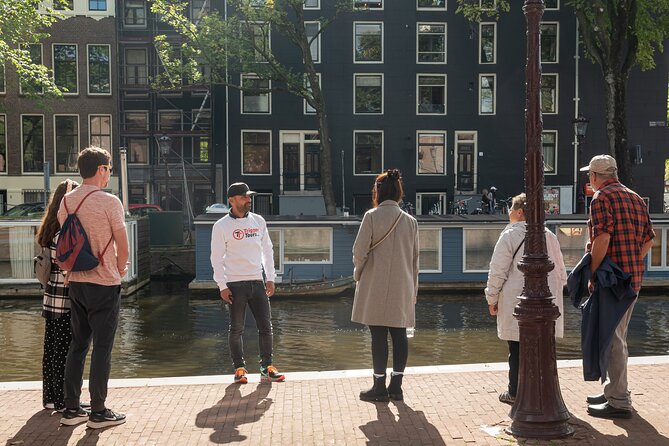
Your first stop is the Portuguese Synagogue. This isn’t just a pretty building on a postcard route. It’s framed as a window into the Sephardic community of Amsterdam during the Dutch Golden Age—one of the largest and richest Jewish communities in Europe at the time.
What I like about starting here is simple: it stops the story from beginning at the worst moment only. You learn how a community grew, worshiped, and built influence. And since the synagogue is described as an active place of worship and a tourist attraction, you get that contrast in real time: then and now.
The tour notes admission is free for this stop. That’s a nice value add because it keeps the focus on the guide’s explanation rather than ticket logistics.
A drawback to consider: this stop can feel emotionally sharp for some people because it quickly sets up the contrast with what comes later. If you’re sensitive to sudden tonal shifts, give yourself a second to breathe when the story turns.
Auschwitz Monument: Remembering Deportation in a Few Focused Minutes
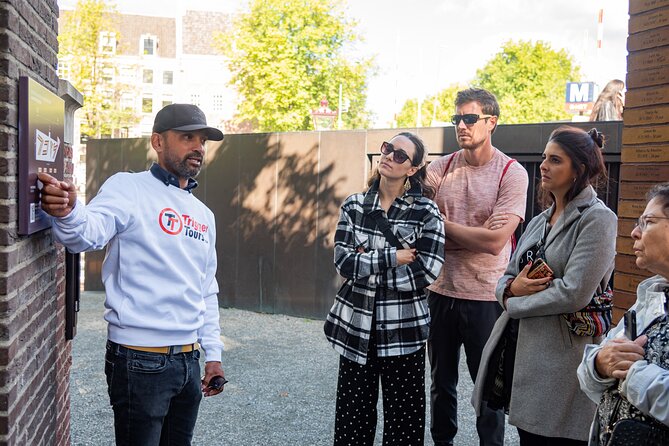
Next comes the Auschwitz Monument. This stop is specifically about the Jewish deportation. It’s short—again, around 10 minutes—but that brevity is part of the design. The guide steers you toward what you should notice and understand, then moves you along.
In practical terms, memorial stops work best on a guided walk when you don’t drift into numbness. A good guide keeps the focus from turning into a passive “look and move on” moment. This tour’s strongest reviews repeatedly praise guides for clarity and keeping the tone respectful.
Admission is listed as free here. That’s helpful: you’re paying for story and guidance more than paying for entry fees.
Verzetsmuseum Amsterdam: Resistance, Not Only Victims
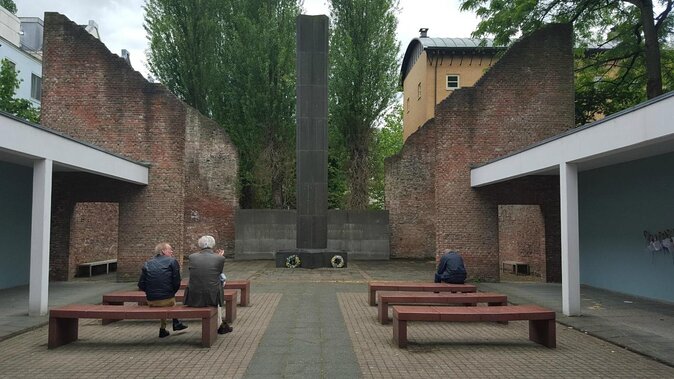
The route then includes Verzetsmuseum Amsterdam, with a focus on Jewish resistance. This matters. Holocaust history can get taught in one track—persecution, hiding, loss—without enough attention to what people did to fight back or survive through action.
The museum stop is listed as admission ticket free. Whether you stay fully inside or just absorb what’s explained outside isn’t specified in the details you provided, but the format is clearly designed as a guided hit that builds the larger picture.
If you’re choosing this walk as your main WWII activity in Amsterdam, this stop helps balance the emotional load. You learn the story isn’t only about what was taken. It’s also about how people responded.
Hollandsche Schouwburg: Deportation Caught in a Building’s Name
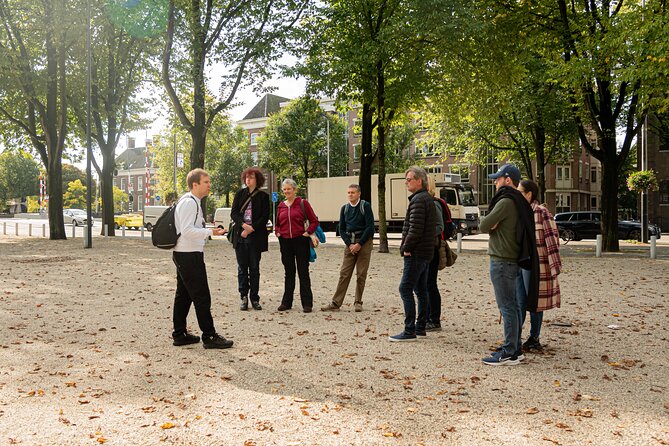
At Hollandsche Schouwburg, the tour shifts to the deportation camps context. This is one of those Amsterdam stops that feels oddly close to normal city life when you’re standing there—just streets, buildings, and a guide explaining what happened within that ordinary setting.
Again, the stop is about 10 minutes, and admission is listed as free. That’s convenient because you can still spend time processing what you’re learning without burning half a day inside.
One thing I’d watch for: this kind of site can bring up tears fast. So even though the tour is efficient, don’t treat it like a checklist. If you find you need an extra moment, it’s okay to slow down your walking pace briefly so you don’t feel rushed.





De Plantage and the Walk Through Place: Why Neighborhood Context Matters
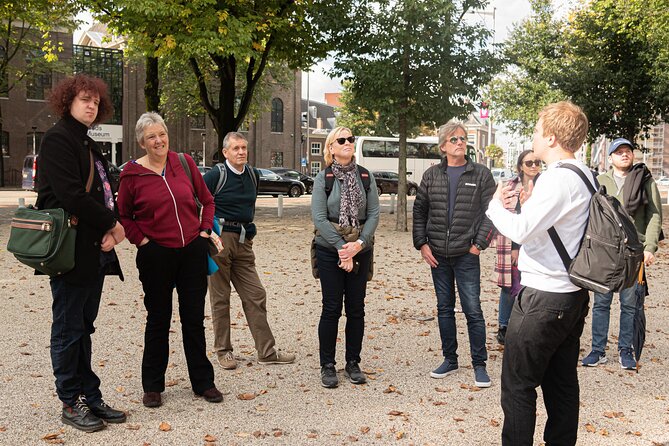
Then you get into De Plantage. This is where the tour does something smart for your understanding: it shows you the beautiful area and gives the neighborhood history. Not every history tour bothers with place. This one uses the streets to explain the lived-in side of the story.
It’s another 10-minute stop with admission listed as free. The value here is that the guide connects what you’re seeing now to what the area meant then. That makes the rest of the WWII context stick better later, when you’re wandering on your own.
If you’re also planning to see other Jewish history spots in Amsterdam, this kind of neighborhood framing helps you avoid feeling like you’re collecting disconnected facts. You start to see patterns: where communities gathered, how people moved, and how the city’s layout shaped what happened.
Spinoza Monument and the Move Toward Dam Square
After De Plantage, you stop at the Spinoza Monument to learn about Spinoza and his place in Jewish intellectual life. The point isn’t “famous philosopher trivia.” It’s another way of showing that Jewish Amsterdam wasn’t only a WWII story. It was also ideas, culture, and daily influence long before the occupation era.
From there, the route includes a walk toward Dam Square and the Royal Palace. This segment helps you do something useful: connect what you learned in the quieter Jewish quarter back to the Amsterdam you see at major landmarks.
I appreciate this transition because it helps the tour end with a sense of the present city, not just a wall of sorrow. You can stand at Dam Square with your new context and actually see the contrast the way the guide intends.
Nieuwmarkt Finish: Letting Anne Frank’s Story Land
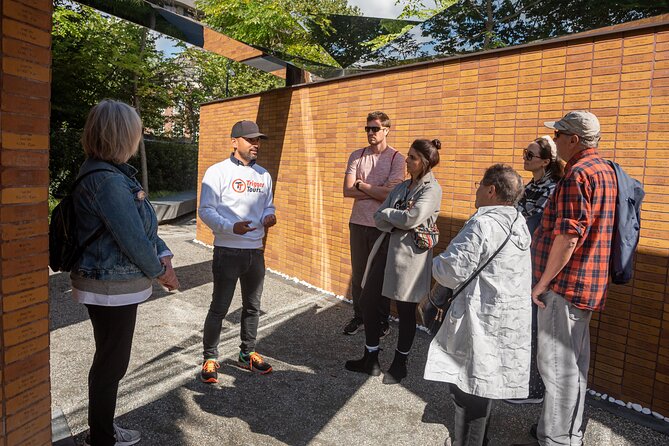
The tour ends at Nieuwmarkt, where the guide provides more about the Anne Frank story and finishes the tour. This is the “wrap-up” stop that ties the broader Jewish WWII context back to the Anne Frank name most visitors come to Amsterdam for.
The details you provided label admission as not included for the Nieuwmarkt segment. That’s likely because this part is more about walking and interpretation than paying for a ticket. Either way, it’s a good finale stop because it keeps the focus on understanding rather than scrambling for entries.
If you want your memory to work later, take a breath here. When the guide’s narration clicks, it tends to stay with you during the rest of your Amsterdam day—especially if you plan to revisit nearby streets on your own.
Price and Value: Is $33.26 Actually a Good Deal?
At $33.26 per person for about 2 hours, this isn’t priced like a museum-day ticket. You’re paying for guided storytelling and the ability to visit key WWII-related locations efficiently.
Here’s where value really comes in:
- Several listed stops show admission ticket free, which means you’re not paying again for each location.
- The 15-person cap makes the guide’s explanations more useful, not diluted.
- You’re also getting a route that acts like a bridge: Jewish community history → Nazi occupation → deportation context → resistance → Anne Frank connection.
If you’re deciding between doing only the Anne Frank House or doing this walk too, this tour is positioned as a perfect alternative to the House. That’s not the same as saying it’s identical. The House visit is its own experience and takes you inside. This walk gives you the surrounding city context that can make the House visit hit harder if you later choose to add it.
Guides Make the Difference: What the Best Runs Feel Like
One theme pops in the strong reviews: guides with clear pacing and a respectful tone can make this kind of history feel real without turning it into a show.
Names you’ll see praised include James, Aaron, Guido, Maria, and Andrea. The comments often point to two things you should care about:
- the guide brings the story to life with vivid, specific explanations
- the guide keeps the delivery thoughtful and organized, even when the subject is heartbreaking
I’d treat this as a hint for your own expectations. This tour isn’t meant to be casual. It is a “listen and understand” walk.
There is also one negative outlier in the provided material describing an unpleasant guide experience involving anger and joking delivery during sensitive moments, plus claims the reviewer felt were inaccurate or conspiratorial. That’s not the pattern, but it’s real enough that I’d advise you to watch your own comfort level with the topic. If you want strictly date-and-fact, no-nonsense narration, read recent feedback closely before you go and trust your instincts.
Who This Walk Is For (and Who Might Prefer Something Else)
This tour is a strong match if you:
- want a guided, emotionally serious introduction to Amsterdam’s Jewish WWII story
- like your history tied to specific places, not only inside museum rooms
- want more than the Anne Frank House, but without spending a full day locked indoors
- appreciate a small group where questions feel possible
It might be less ideal if you:
- need a lighter, more casual sightseeing day
- expect a purely Anne Frank House style visit (this walk focuses on broader Jewish Quarter context rather than touring the House itself)
- aren’t comfortable with outdoor walking through winter or chilly months (the route is mostly walking and you’ll feel it)
Good to Know Before You Go
This experience is described as requiring good weather. So on rainy or windy days, plan for a different schedule or a change of date.
You’ll also want practical expectations about time and movement. With frequent short stops, this isn’t a “sit down for long explanations” tour. It’s more like: walk, pause, learn, move on. If that style matches how you like to travel, you’ll probably love it.
Also keep in mind: it’s offered in English, and it’s near public transportation, which makes it easier to plug into a day of sightseeing.
FAQ
How long is the Amsterdam Anne Frank and Jewish Quarter walking tour?
It runs for about 2 hours.
What is the group size?
The tour caps at a maximum of 15 travelers.
Is the tour offered in English?
Yes, it is offered in English.
Where do we meet, and where does it end?
You meet at Amstel 51C, 1018 EJ Amsterdam, and the tour ends back at the meeting point.
Does this tour include the Anne Frank House?
No. It focuses on Jewish Quarter history and memorial sites as an alternative to visiting the Anne Frank House.
Which stops are included during the walk?
The route includes the Portuguese Synagogue, Auschwitz Monument, Verzetsmuseum Amsterdam, Hollandsche Schouwburg, De Plantage, Spinoza Monument, a walk toward Dam Square and the Royal Palace area, and a finish at Nieuwmarkt.
Are any admission tickets required?
The provided stop details list admission ticket free for several locations, and they also note that admission at the Nieuwmarkt stop is not included.
What if the weather is bad?
The experience requires good weather. If it’s canceled due to poor weather, you’ll be offered a different date or a full refund.
Should You Book This Tour?
If you’re choosing just one Anne Frank–related experience in Amsterdam, I’d book this only if you want the bigger neighborhood story, not an inside House visit. For the price, you get a tightly paced walk through key memorial and community sites, with the small-group size that makes the explanations land.
I’d skip it (or at least double-check your expectations) if you want something lighthearted or if you’re specifically hunting for the Anne Frank House experience itself. And if you’re the type who reads the room well, look for the guides praised for clear, sensitive delivery. That’s where this tour seems to shine most.