REVIEW · AMSTERDAM
Amsterdam Private Walking Tour
Book on Viator →Operated by Amsterdam Guías & Tours · Bookable on Viator
Dam Square hits harder when you know what to look for. This private walk gives you an efficient route through Amsterdam’s inner-city landmarks, with stops that connect everyday streets to bigger stories. You’ll have a private guide and a route built around classic squares like Dam Square and Nieuwmarkt.
I especially like how the tour stays flexible. You can personalize the itinerary to match your interests, and the route is designed so you see a lot without feeling rushed. One thing to plan for: it’s a walking tour with no food or drinks included, and part of the route covers WWII-era events in the Jewish Quarter.
In This Review
- Key points to know before you go
- Why this private walking tour is a smart way to see central Amsterdam
- Beursplein to Amsterdam Centraal: your fast orientation route
- Zeedijk and Nieuwmarkt: Chinese Quarter sights with an easy neighborhood feel
- Jodenbuurt and Zuiderkerk: Jewish Quarter context (with WWII history)
- Muntplein and Begijnhof: flowers, gates, and a quieter Amsterdam pocket
- Dam Square: Amsterdam’s central showcase, with key landmarks in reach
- The walk ending near Westerkerk: a convenient finish for the rest of your day
- Price and value for a private group up to 10
- Pickup options and how the meeting works (without losing time)
- What made the guides shine: Xavier, Karl, Laura, and Zara
- Who should book this Amsterdam private walking tour
- Should you book this tour? My decision checklist
- FAQ
- Where does this tour start?
- What time does the tour begin?
- How long is the walking tour?
- Is this a private tour?
- How many people can be in the group?
- Is hotel pickup available?
- What is included in the price?
- Are food and drinks included?
- Is the tour route customizable?
- Is there a mobile ticket?
- Can the tour be changed or refunded if I cancel?
Key points to know before you go
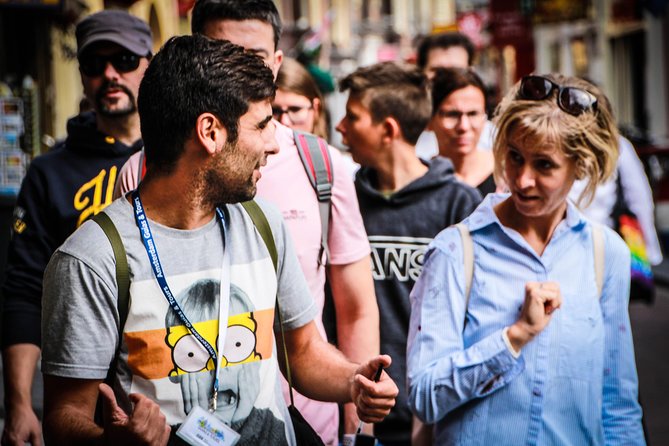
- Blue umbrella start at Beursplein so you can spot your guide quickly
- Iconic orientation stops like Amsterdam Centraal (Pierre Cuypers, 1889)
- Chinese Quarter + Buddhist Temple of Amsterdam on Zeedijk
- Jewish Quarter and WWII context discussed around Zuiderkerk
- Muntplein + flower market area and the calmer pause at Begijnhof gardens
- Ends near Anne Frank House and Westerkerk so you can keep exploring on foot
Why this private walking tour is a smart way to see central Amsterdam
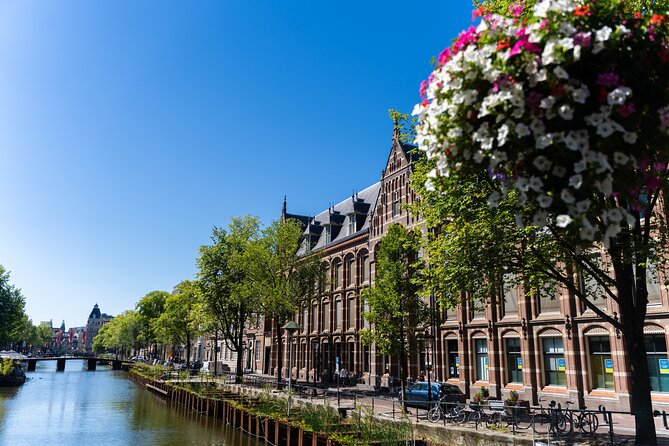
Amsterdam can feel like a maze when you arrive with a map and a time limit. This tour is built to help you get your bearings fast—without needing museum tickets or a long transit plan. It’s also private, so you’re not sharing your guide with a crowd that has to move at different speeds.
The best value here is the mix of “famous postcard spots” and “street-level context.” You’re walking past major landmarks, but you’re also getting the why behind what you’re seeing: how the city’s neighborhoods connect, what changed over time, and how Amsterdam’s culture shows up in everyday places like gates, squares, and markets.
You should expect a classic inner-city Amsterdam walk—lots of scenes in a short window. Comfortable shoes help. And if you’re the type who likes deep museum time, consider this as the orientation layer, not the replacement for a museum afternoon.
You can also read our reviews of more walking tours in Amsterdam



Beursplein to Amsterdam Centraal: your fast orientation route
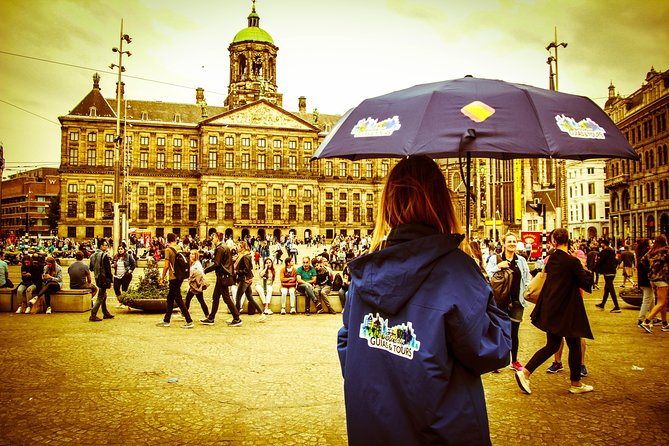
The tour kicks off at Beursplein 1-3, near the stock exchange area. The meeting detail matters: the guide will be waiting under a blue umbrella with the tour logo, which takes away that awkward early-street-search feeling.
From there, the next stop is Amsterdam Centraal Station. This isn’t just a big building to pass by. The guide frames it with key facts: Amsterdam Centraal was designed by Dutch architect Pierre Cuypers, opened in 1889, and it’s the city’s largest and main railway station. Even if you don’t ride trains that day, it helps to understand what kind of landmark you’re standing next to.
What you gain by starting here:
- You learn the “geometry” of central Amsterdam—where major lines of movement run.
- You understand how the station fits into the city’s growth, not just its present-day function.
- You get a landmark anchor early, so the rest of the walk feels connected.
A small note: since it’s a walking tour, you’ll mainly experience Centraal from the street level and surrounding areas, not as an in-depth inside visit.
Zeedijk and Nieuwmarkt: Chinese Quarter sights with an easy neighborhood feel
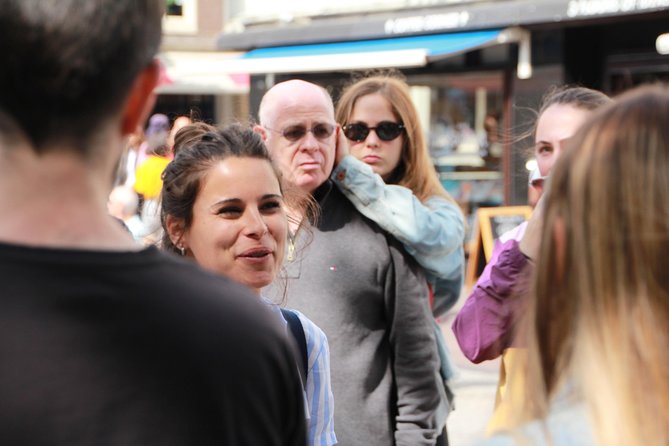
After Centraal, you head toward Zeedijk, walking through Amsterdam’s Chinese Quarter. This is where the tour feels like it’s moving from “major hub” to “real neighborhood.” You’ll see the Buddhist Temple of Amsterdam, a calm presence in the middle of busy city streets.
Then you move to Nieuwmarkt. Here, the guide adds layers you might miss if you’re only passing through. Nieuwmarkt is known as a “new market” area, and you’ll also spot the San Antón Gate, close to the Chinese Quarter. It’s the kind of detail that makes a city feel specific. The gate isn’t just an object; it’s a clue to how Amsterdam has handled trade, travel routes, and neighborhood boundaries over time.
Why I like this middle stretch:
- It shifts your view from big architecture to community spaces.
- It gives you examples of Amsterdam’s multicultural mix without requiring a long detour.
- It’s visually varied in a short time: temple, gate, market square.
If you’re someone who enjoys small cultural contrasts, this section tends to be a highlight.
Jodenbuurt and Zuiderkerk: Jewish Quarter context (with WWII history)
Next comes Jodenbuurt, a neighborhood known for its history and culture that many people feel they should experience in Amsterdam at least once. The walk then reaches Zuiderkerk, where the guide talks about the Jewish Quarter and the sad history of World War II.
This is where the tone can shift. It’s still a city-walk format, but you’re not just sightseeing. You’re learning. If you prefer light and funny only, keep in mind that this tour includes serious historical context as part of the route.
How to make this section work for you:
- Keep some mental space for it; don’t schedule something emotionally demanding immediately after.
- If you’re traveling with kids, this is exactly the part where adult guidance matters most.
- Treat it like context, not a checklist. It adds weight to what you see in later stops.
In my view, adding this history is what stops the tour from being only “pretty places.” It turns your stroll into a better understanding of why these streets mean something.
Muntplein and Begijnhof: flowers, gates, and a quieter Amsterdam pocket
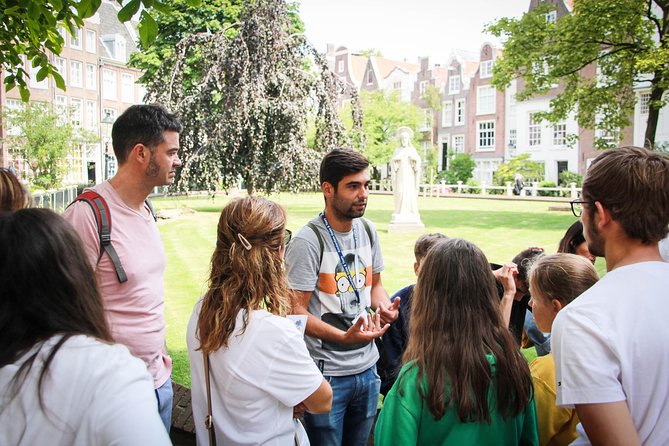
You’ll then reach Muntplein, one of Amsterdam’s well-known squares. This stop is linked to the area’s famous flower market. Even if you’re not buying anything, it’s a key city ritual—one that shows how commerce and everyday life blend into the urban landscape.
From there, the tour continues to Begijnhof, with the visit happening near Spui Square. The Begijnhof Gardens are a different kind of Amsterdam experience: quieter, more enclosed, and easier to slow down inside. This is a nice break in the middle of a longer walking rhythm, and the guide uses the setting to talk about the flower market and also references the San Francisco Church.
What this section is good for:
- It gives you a contrast between public square life and a calmer courtyard garden.
- It helps you connect landmarks that might feel unrelated if you’re just reading from a phone map.
- It’s a “pause stop,” which makes the rest of the walking easier.
If you love photography, this is typically where you’ll want a little extra time just to look around—soft street angles, garden views, and the kind of architectural texture Amsterdam does so well.
You can also read our reviews of more private tours in Amsterdam






Dam Square: Amsterdam’s central showcase, with key landmarks in reach
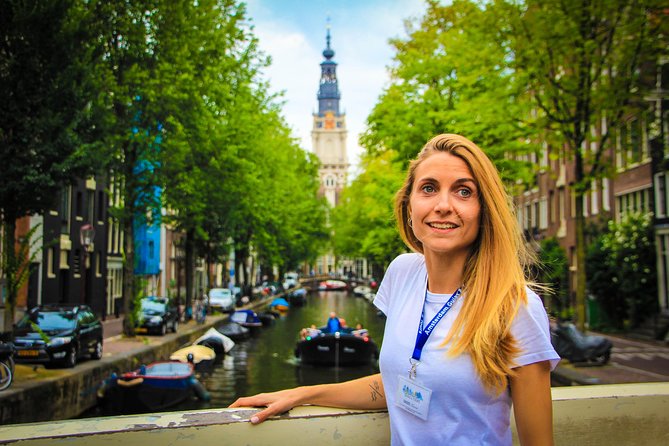
No inner-city Amsterdam walk is complete without Dam Square. This is the heart of Amsterdam, and your guide points out major sights in the area: the Royal Palace, the Nieuwekerk, and the National Monument.
Dam Square can feel like it’s all about crowds and classic photos. The value of having a guide here is that you understand what each landmark represents in the city’s story—what people come for, and why the square became the center point.
I like this stop because it’s flexible for your next moves. Whether you want to head toward canals, museums, or specific neighborhoods, Dam Square is a natural “hub” where you can re-orient quickly.
One practical consideration: Dam Square is a popular place. If your group likes taking photos and lingering, you’ll probably want to pace yourself so you still have time for the final walk segment.
The walk ending near Westerkerk: a convenient finish for the rest of your day

The tour ends close to Anna Frank’s House, the Homomonument, and Westerkerk, with the official endpoint at Westerkerk, Westermarkt 64. This ending location is handy because it sets you up for more exploration on foot without having to figure out what’s nearby from scratch.
Even if you don’t plan to go inside every site right away, the proximity matters. You finish in an area where it’s easy to keep moving with your energy level, or to switch to a more relaxed plan.
If you’re trying to fit Amsterdam into a short visit, this kind of ending matters. You don’t want your best guide hours finishing in a place that’s far from everything you care about.
Price and value for a private group up to 10

The price is $277.64 per group, up to 10 people. That’s the key number to think about, because private tours can be pricey when you’re traveling solo—but they can become good value when you’re part of a group.
Here’s the value math that helps you decide:
- If you fill the group with 10 people, you’re effectively around the high-$20 range per person.
- If you only have a few people, it feels more expensive—but you’re still buying something specific: a guide who can slow down, speed up, and personalize the route for your group.
This tour is also structured around lots of stops where the listed admissions are free to view, meaning you’re paying for guidance and route logic more than for entry fees. That’s a strong fit for people who want to see Amsterdam without turning the day into a ticket-hunting marathon.
Duration is about 2 to 3 hours, starting at 10:00 am. For many first-timers, that’s a sweet spot: enough time to learn the city’s “map in your head,” not so long that it becomes exhausting.
Pickup options and how the meeting works (without losing time)
You can choose between meeting your guide at the starting point or getting pickup offered at your hotel. If your group wants maximum convenience, hotel pickup can be worth it. If you prefer control, the Beursplein 1-3 meeting point makes it easy to start on schedule.
You’ll also use a mobile ticket, and the start and end points are clearly set. The tour is private, so it’s only your group participating, which helps keep the experience calm and more tailored.
The guide starts under a blue umbrella at Beursplein 1-3, which is a small detail that saves you stress—especially if the weather or streets around you look unfamiliar.
What made the guides shine: Xavier, Karl, Laura, and Zara
The most praised part of this tour is simple: the guide experience. Names that come up include Xavier, Karl, Laura, and Zara, and the common thread is how engaging they are—plus the way they turn city facts into something you actually remember.
What you can take from that:
- The guides don’t just recite dates. They connect history and present-day information so the city feels alive.
- Explanations are described as detailed, and the vibe comes across as friendly and professional.
- The tour is framed as fun, not just instructional.
If you’re picky about guides, this is exactly what you should hope for: someone who can make stops feel like conversations rather than lectures. Based on the guide reputation here, you’re more likely to leave with stories than just photos.
Who should book this Amsterdam private walking tour
This tour fits best if you:
- Want a structured introduction to central Amsterdam in 2 to 3 hours
- Prefer private guidance over a large group tour
- Like mixing major landmarks with neighborhood texture (Chinese Quarter, Jewish Quarter, markets, squares)
- Are traveling with a group of friends or family that can realistically use the up-to-10 setup
- Want the flexibility to customize the route to your interests
It’s also a good first-day option. The city hits easier after you learn the “why” behind the famous stops.
Should you book this tour? My decision checklist
Book it if you want an efficient, human-paced walk through central Amsterdam’s signature locations, with a guide who can personalize and explain as you go. The strongest reasons to choose it are the private format, the varied neighborhood mix, and the strong guide reputation with names like Xavier, Karl, Laura, and Zara.
Skip it or pair it differently if you mainly want museums or long indoor time, because this is built around streets, squares, and walking context. Also consider planning your day knowing that part of the route includes WWII-era history in the Jewish Quarter, and that there are no food or drinks included.
If you’re the type who likes to understand where you are while you’re there, this tour is a practical way to make your short Amsterdam window count.
FAQ
Where does this tour start?
It starts at Beursplein 1-3, 1012 JW Amsterdam. You’ll meet your guide there under a blue umbrella with the tour logo.
What time does the tour begin?
The tour start time is 10:00 am.
How long is the walking tour?
The tour lasts about 2 to 3 hours.
Is this a private tour?
Yes. It’s a private tour/activity, and only your group participates.
How many people can be in the group?
The tour price is for a group of up to 10 people.
Is hotel pickup available?
Pickup is offered. You can either be picked up at your hotel or meet at the designated meeting point.
What is included in the price?
A professional guide is included.
Are food and drinks included?
No. Food and drinks are not included.
Is the tour route customizable?
Yes. The itinerary can be customized according to your interests.
Is there a mobile ticket?
Yes. The tour includes a mobile ticket.
Can the tour be changed or refunded if I cancel?
According to the policy, it is non-refundable and cannot be changed for any reason.