REVIEW · AMSTERDAM
Small-Group Walking Tour with Amsterdam Canal Cruise
Book on GetYourGuide →Operated by Guides and Tours · Bookable on GetYourGuide
Canals first, facts second, and you’ll be ready to explore. This small-group walk around central Amsterdam ties the big sights to the city’s tougher stories and explains why the waterways matter. I love the small group size and the way the guide connects streets to canal history; I also like the option to add a cruise with an audio guide or a luxury open boat with a live guide and bar. One thing to consider: the walking pace and route cover lots of ground, and it’s not wheelchair-friendly.
If you want an efficient start in Amsterdam, this combo makes sense. You begin at Beursplein, hit landmarks like Dam Square and Royal Palace with photo stops and short guided segments, then roll right into a canal cruise around the famous seven bridges area. The cruise tickets are handled by your guide after the walk, and the cruise typically starts about 30 to 45 minutes later.
You’ll hear the kind of history that isn’t just dates and buildings, including Amsterdam’s early days by the Amstel and later eras shaped by prostitution and drug decriminalization, plus the tragedy of Anne Frank and Nazi occupation. It’s a lot for three hours, so if you prefer slow and quiet, plan to pace yourself during the 15-minute break.
In This Review
- Key highlights worth your time
- Why this canal-and-walk combo hits the right note for first-timers
- Starting at Beursplein: the route’s purpose and best timing
- Beursplein and Dam Square: the power points you can’t skip
- Nieuwe Kerk and the Royal Palace: photo stops with useful context
- Zeedijk and Nieuwmarkt: markets, streets, and moral complexity
- Zuiderkerk and Begijnhof: religious landmarks and quiet courtyards
- Amsterdam Flower Market and Muntplein: everyday color in the middle
- The 1-hour cruise that shows the seven bridges and Amstel connection
- Audio guide vs luxury open boat with bar: which cruise option fits you
- Small-group dynamics: why 10 to 12 people changes the feel
- Value check: does a roughly $38 price tag make sense?
- Who should book this tour, and who should consider other options
- Should you book it?
- FAQ
- How long is the Small-Group Walking Tour with Amsterdam Canal Cruise?
- Where does the tour start?
- What stops will we see during the walking portion?
- Is the canal cruise included?
- Do I get an audio guide on the canal cruise?
- How far after the walking tour does the cruise start?
- What languages are the live guides?
- Is this tour refundable if plans change?
Key highlights worth your time
- Beursplein to the canal core: a fast orientation through the city’s most recognizable central stops
- Told by real Amsterdam guides: stories that connect streets, canals, and difficult chapters of the city
- Small group walking: limited to about 10 to 12 people, so questions actually get answered
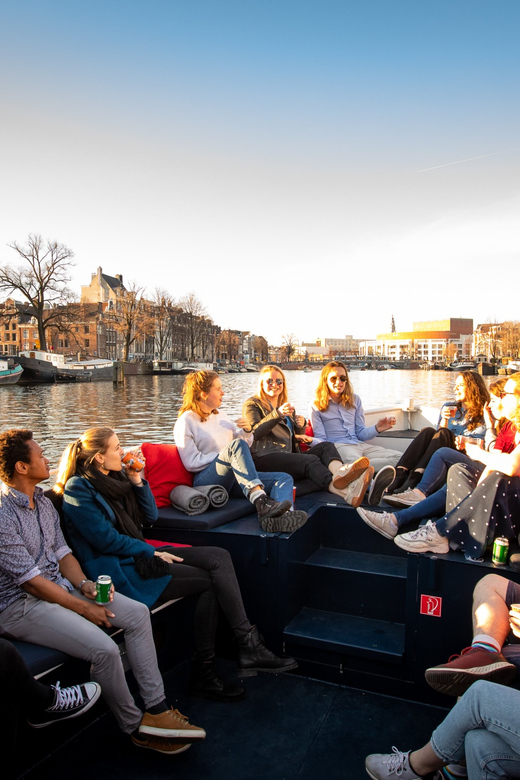
- Cruise choice built in: audio-guide canal cruise in 17 languages, or luxury open-boat cruise with a live guide and bar
- You get tickets during the walk: your guide helps you transition from the walking route to the boat
Why this canal-and-walk combo hits the right note for first-timers
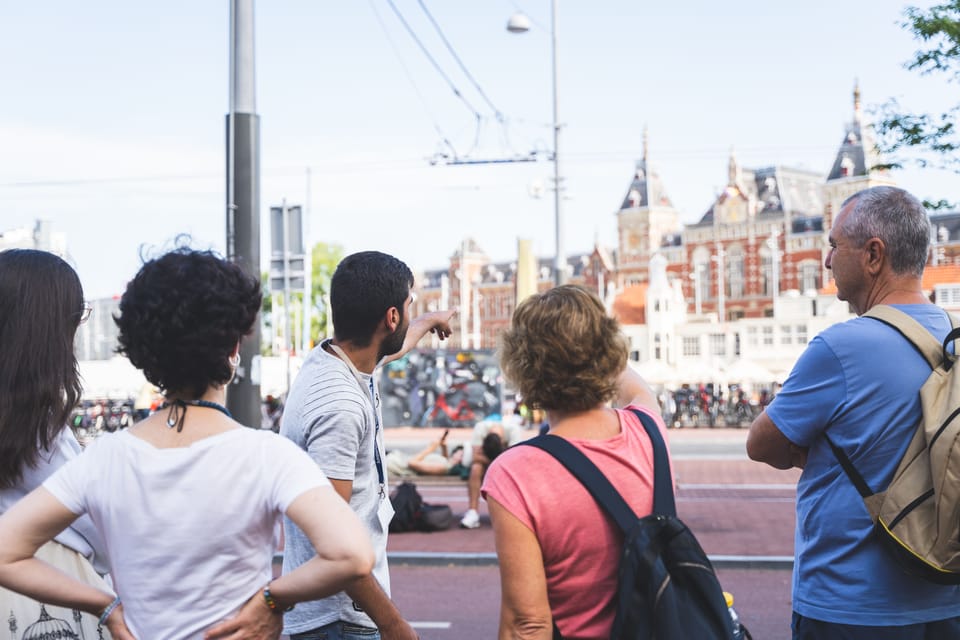
Amsterdam can feel like it’s playing a game of phone numbers: everything looks close on the map, but the street network can confuse you fast. This tour reduces that problem. By the time you finish the walk and board, you’ve already traced the city’s center on foot, so the cruise becomes a way to confirm what you saw instead of a random sightseeing loop.
I also like that the guide doesn’t treat history as wallpaper. The route is built around major squares, churches, courtyards, markets, and waterways—then the narration fills in why the canals exist and how Amsterdam changed through time. You’ll hear about the city’s start as a muddy village along the River Amstel, then you’ll move into later eras that include scandal, reform, and tragedy. That blend helps you understand Amsterdam as more than postcard angles.
The practical upside is that you get two viewpoints in one go: street-level Amsterdam during the walk, then a higher, waterline view during the cruise. You’re not just looking at canals; you’re learning how they shape movement, commerce, and daily life.
You can also read our reviews of more walking tours in Amsterdam

Starting at Beursplein: the route’s purpose and best timing
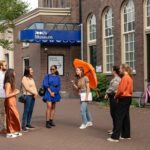
The tour kicks off at Beursplein, in front of Cafe Bistro next to the bull figure. Look for a blue umbrella or an Amsterdam Guides & Tours tag, and arrive a little early so you’re not hunting around while the group forms.
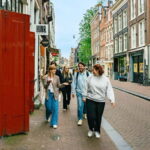
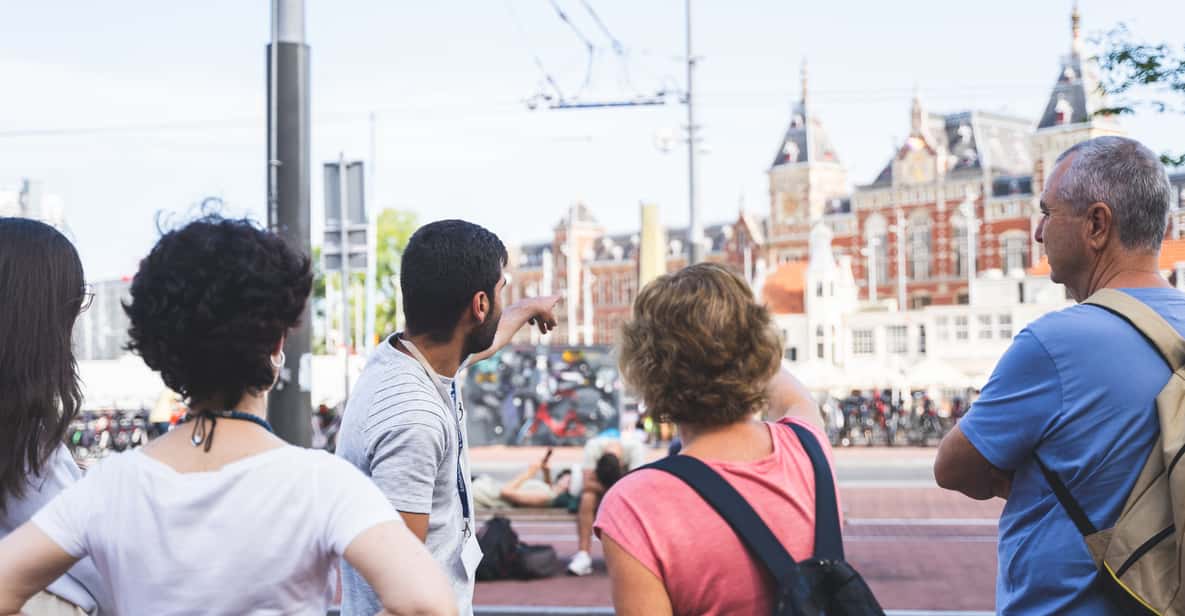
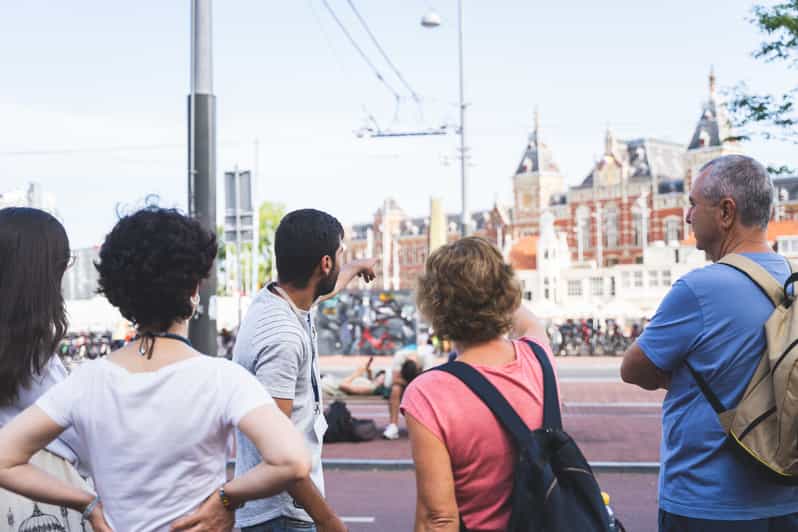
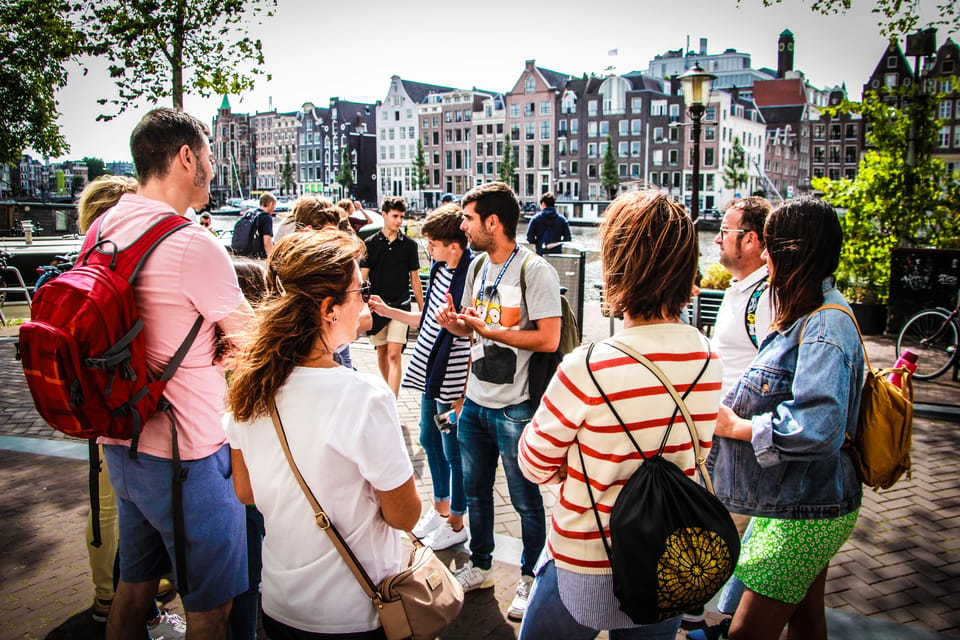
From there, the walking portion is designed to layer the city in quick steps. You start in a commercial area, then work your way through the most famous political and religious landmarks, then into neighborhood squares and courtyards. The pacing includes several photo stops, short guided segments, and one longer break right before the boat.
If you’re trying to fit Amsterdam into a tight itinerary, this is a smart order. You get the main structure first, then the cruise gives you context for everything you just learned. The only snag: the cruise doesn’t begin immediately at the end of the walk. Your guide will tell you where to go and when, usually after about 30 to 45 minutes.
Beursplein and Dam Square: the power points you can’t skip
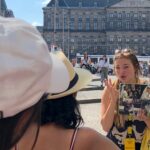
Stop 2 is Beursplein (about 20 minutes). This is where the tour helps you understand central Amsterdam as a place of trade and civic identity, not just a photo stop. You’ll learn how squares like this became the stage for the city’s public life.
Then you move to Dam Square (another guided segment of about 20 minutes). Dam Square is one of those locations you think you know because you’ve seen it in photos. The guide’s job is to make it feel real: what you’re standing on, who mattered here, and how the city’s story links to the broader political shifts of Europe.
One practical tip: during stops like these, you’ll often be pausing in slightly crowded spaces. If you’re prone to getting stuck behind a group when everyone takes photos, aim to take your picture quickly and step aside so you keep moving.
Nieuwe Kerk and the Royal Palace: photo stops with useful context
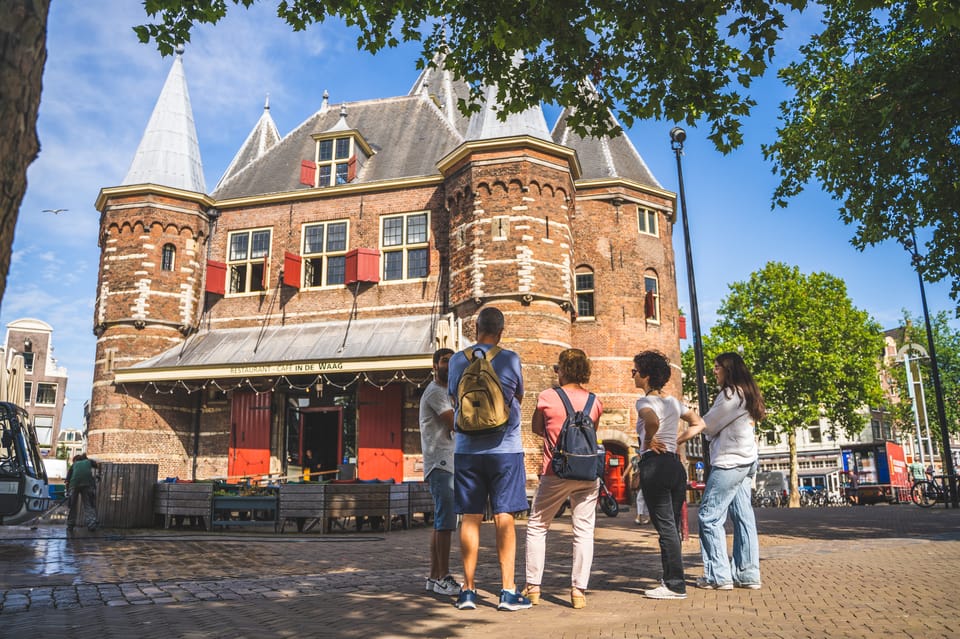
You’ll get photo stops at the Nieuwe Kerk and the Royal Palace (each about 5 minutes). These are quick, so don’t expect a long sit-down explanation at the doors. Instead, the guide uses these stops to anchor the bigger narrative you’ll be hearing as you move on.
Here’s what I like about short photo stops when they’re done well: they force you to look. You’re not just walking past—your brain locks onto a landmark, and then the next guided segment tells you what to notice about it.
If you love architecture or are a detail person, this is one of the points where you can slow down for yourself for a minute after the group photos. Look around for signage, stonework, and how the buildings frame the square. Even a quick personal scan helps the later canal views make more sense.
Zeedijk and Nieuwmarkt: markets, streets, and moral complexity
Next comes Zeedijk Street (about 10 minutes guided). This part of the walk helps you understand Amsterdam as a city of movement—people, goods, and constant change. Streets like Zeedijk aren’t just long roads; they’re corridors where the city’s social history becomes visible.
Then you reach Nieuwmarkt Square (about 15 minutes guided). The guide’s narration here helps turn a broad square into a setting with a past. After that, you enter the Jewish Quarter (about 15 minutes guided). This is one of the more emotionally heavy segments, because the tour explicitly touches major 20th-century trauma, including the tragedy of Anne Frank and the Nazi occupation.
You won’t be sitting in a museum. You’ll be walking through the city itself, and that difference matters. Seeing these stories in place can be more immediate than reading them afterward.
If you’d rather keep it lighter, treat this portion as a reminder that Amsterdam has layers. A canal view later will feel different if you know what the city lived through to get where it is today.
You can also read our reviews of more boat tours in Amsterdam

Zuiderkerk and Begijnhof: religious landmarks and quiet courtyards
You’ll have a photo stop at Zuiderkerk (about 5 minutes). Even with a short pause, the guide’s framing helps you notice the church as part of the city’s structure—how places of worship and public life coexist in Amsterdam’s center.
Then comes Begijnhof (about 20 minutes guided). This is the kind of stop that gives your brain a reset. Begijnhof is a courtyard space that feels like a pause button compared with the wider streets. It’s a good match for the tour because earlier you’ve been moving fast and hearing big stories; here you can breathe and absorb the atmosphere.
One consideration: courtyards can be busy. If you’re someone who hates crowds, choose a moment after the group listens to step slightly to the side and look in from different angles. You’ll get better photos and you’ll feel less squeezed.
Amsterdam Flower Market and Muntplein: everyday color in the middle
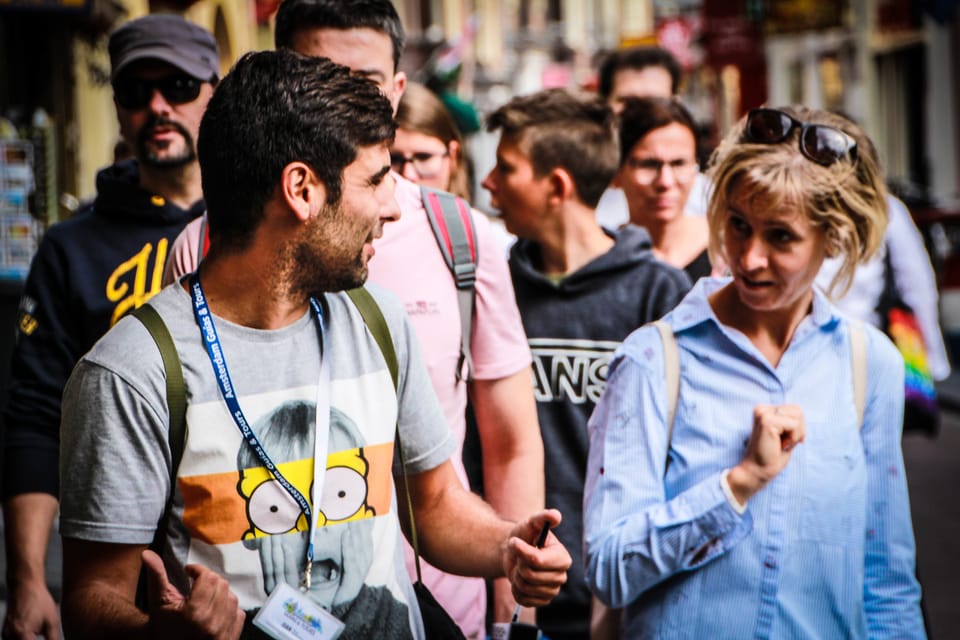
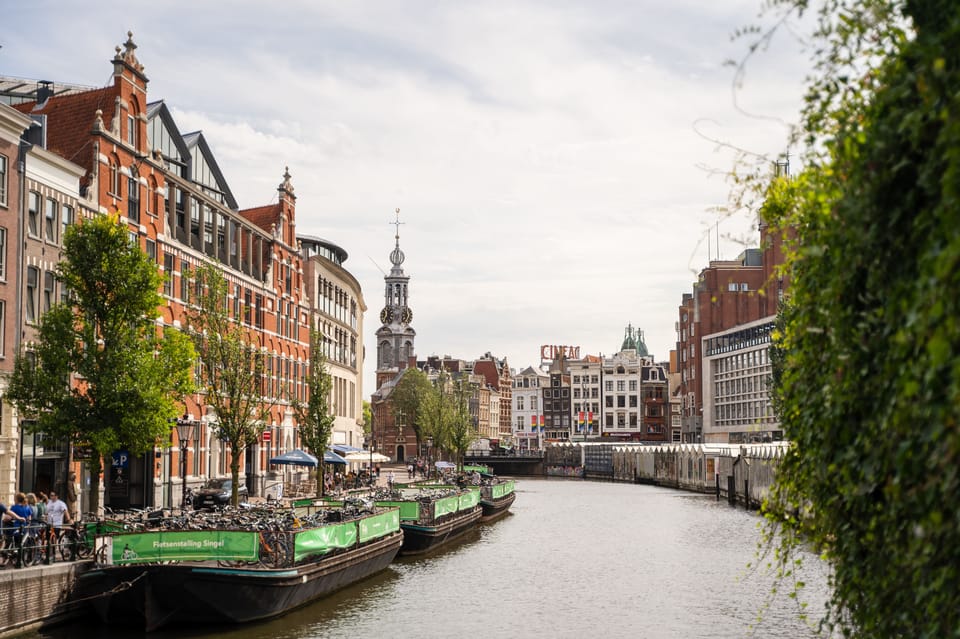
The tour includes a photo stop at the Amsterdam Flower Market (about 10 minutes). This is one of those Amsterdam stops that works well even if you’ve seen pictures. You’ll see how the city turns seasons and commerce into something you can literally walk through.
Then you reach Muntplein (photo stop about 5 minutes). This segment is shorter, but it helps you understand how the central area connects to other parts of the city. The key value here is mapping: you’ll remember where this spot sits when you’re later wandering on your own.
After that, there’s 15 minutes of break time in Amsterdam-Centrum. Use it to reset your body and plan your next step. Since the boat cruise starts later, you’ll want a snack or water and a quick bathroom stop if needed.
The 1-hour cruise that shows the seven bridges and Amstel connection
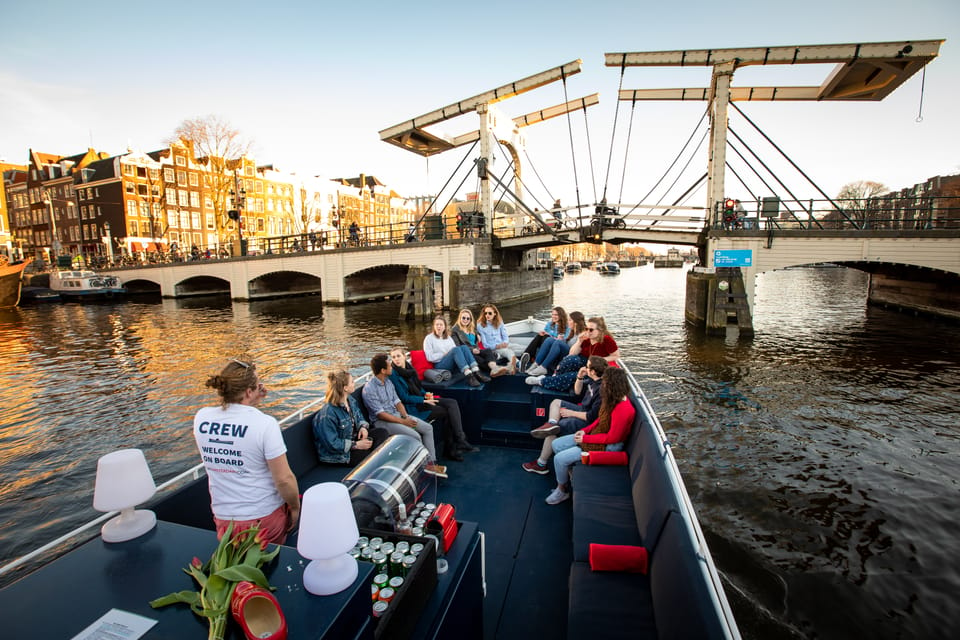
When the walking portion ends, your guide provides your cruise tickets and tells you where to go for the boat. The canal cruise lasts about 1 hour, and it typically begins around 30 to 45 minutes after the walking tour ends.
If you choose the standard option, you’ll likely have an audio guide in 17 languages. That’s a smart backup if you’re zoning out during parts of the walk, or if your Spanish/English level isn’t perfect. You can still follow the story while you look at the canal walls, houses, and bridges sliding by.
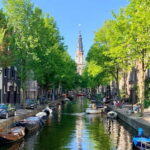
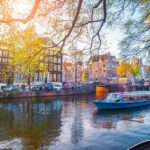
The route focuses on the city’s main canals, the Amstel River, and the famous seven bridges. This is where the walking tour pays off. You recognize squares and street names in your head, and you start seeing how the city’s center is shaped by water corridors as much as by roads.
One of the cruise advantages is that you get perspective without the work. You’re not walking uphill or threading between bicycles for every photo. You just relax, and the city comes to you.
Audio guide vs luxury open boat with bar: which cruise option fits you
The tour includes both cruise formats depending on what you select.
If you go with the option that includes the audio guide, you’ll get a self-paced layer during the cruise, with narration available in 17 languages. This format works well when you want control. You can tune in when the boat approaches a bridge or landmark and then glance out quietly between points.
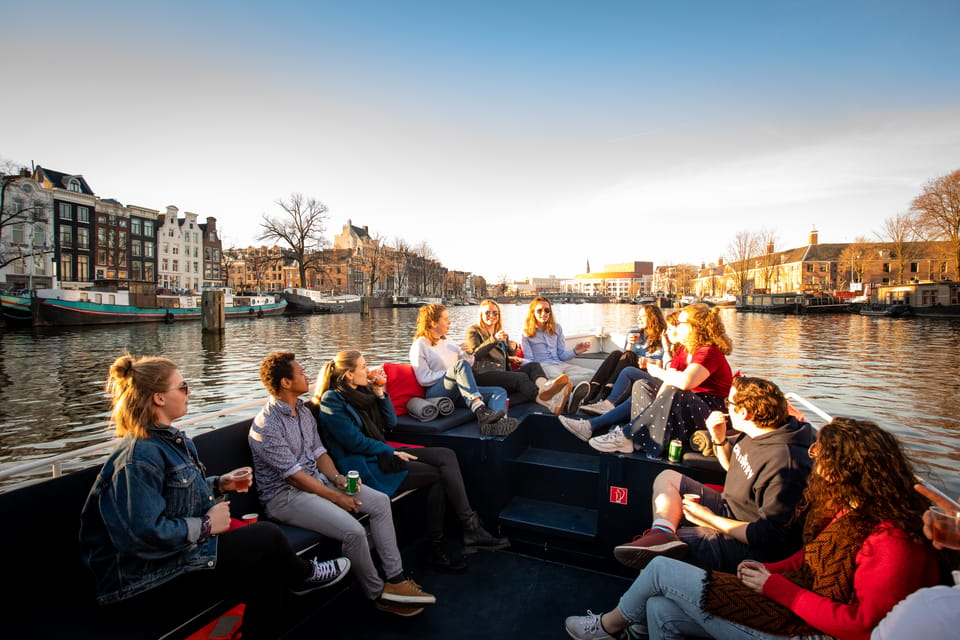
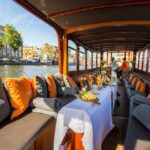
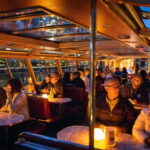
If you pick the luxury open-boat option, you get a live guide and a bar on board. Keep expectations grounded: the tour data lists food and drinks as not included, so the bar is more about availability than free refreshments. Still, a live guide adds a different kind of value because you can ask questions and react to what you’re seeing in real time.
Either way, there’s one detail I think matters: your cruise starts after a short gap. That gap is useful for regrouping and getting to the dock without stress. I’d treat that time as part of the tour, not an annoying delay.
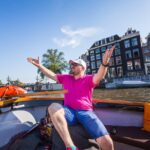
And yes, you might luck into a boat experience that feels more like a story session than a lecture. In past departures, captains such as Captain Mo have been described as funny and knowledgeable, which can make the time feel lighter even when the canal narration references harder chapters.
Small-group dynamics: why 10 to 12 people changes the feel
A group limited to 10 participants (sometimes described as up to 10–12) is a meaningful difference in a city like Amsterdam. You’re less likely to get swept away from the guide. You also get better chances to ask a question when something doesn’t make sense—like why a canal layout developed a certain way, or what a landmark is really connected to historically.
Two guide names you may hear from well-run departures include Rob and Blanca. Rob has been praised for being very well-informed on Amsterdam and Dutch history and for handling questions in significant depth. Blanca has been praised for being knowledgeable and friendly and for keeping the walk engaging, with the cruise also going smoothly afterward.
Even if you don’t get those exact guides, the small-group format is the underlying reason the tour tends to feel personal rather than rushed.
Value check: does a roughly $38 price tag make sense?
At about $38 per person, you’re paying for an efficient package: guided walking through central highlights plus a 1-hour canal cruise. On its own, even a short canal cruise costs real money in Amsterdam. What makes the price feel fair is the combined “street + water” orientation, and the fact that the walking guide provides the narrative that ties landmarks together.
Also, you get flexibility in cruise style. If you prefer narration in your language comfort zone, the audio option with 17 languages is a strong feature. If you’d rather have a live guide and the relaxed vibe of an open boat with a bar on board, that option is also built in.
The only value-related caution: because the cruise is tied to a ticket and has rules if plans change last minute, you’ll want to choose a departure time that fits your schedule.
Who should book this tour, and who should consider other options
This tour is a good match if you:
- want a fast Amsterdam orientation that covers central landmarks and canal context
- like guided storytelling rather than only reading plaques
- prefer a small group so you can ask questions
- want either audio-guided canal cruising or a live guide on a luxury open boat
It’s less ideal if you:
- need wheelchair accessibility (it’s listed as not suitable)
- hate walking for several hours on uneven pavement and stairs
- prefer super-individual time over a structured route with photo stops
Should you book it?
Yes, if you want a solid first move in Amsterdam and you like your sightseeing with both charm and substance. The walk helps you understand where everything sits, and the canal cruise turns those same sights into a coherent map you can actually use later.
I’d book it if you’re the type who benefits from a guide explaining why a place matters. I’d also book it if you’re curious about the city’s harder chapters, because the tour doesn’t pretend Amsterdam is only pretty canals and photo angles.
If you’re going to Amsterdam and you only have one “orientation day,” this one is hard to beat: Beursplein to the center landmarks, then the Amstel and seven bridges from the water. That combination is practical, memorable, and worth the time.
FAQ
How long is the Small-Group Walking Tour with Amsterdam Canal Cruise?
The total duration is about 3 hours.
Where does the tour start?
It departs from Beursplein, in front of Cafe Bistro next to the bull figure, near a blue umbrella or a tag with the Amsterdam Guides & Tours logo.
What stops will we see during the walking portion?
The walk includes stops around Beursplein, Dam Square, Nieuwe Kerk, Royal Palace, Zeedijk Street, Nieuwmarkt Square, the Jewish Quarter, Zuiderkerk (photo stop), Begijnhof, the Amsterdam Flower Market (photo stop), and Muntplein (photo stop), with a 15-minute break in Amsterdam-Centrum.
Is the canal cruise included?
A 1-hour canal cruise is included if you select the cruise option. Your guide will also provide the cruise tickets at the end of the walk.
Do I get an audio guide on the canal cruise?
If you select the audio-guide option, you’ll have an audio guide in 17 languages.
How far after the walking tour does the cruise start?
The canal cruise starts about 30 to 45 minutes after the walking tour ends.
What languages are the live guides?
The live tour guide is listed as Spanish and English.
Is this tour refundable if plans change?
Cancellation is listed as free up to 24 hours in advance for a full refund. The canal cruise tickets are noted as non-refundable and non-exchangeable with less than 48 hours notice.