REVIEW · AMSTERDAM
Amsterdam: Queer City Walking Tour With Local Guide
Book on GetYourGuide →Operated by LGBTOUR_Amsterdam · Bookable on GetYourGuide
Queer Amsterdam, told by people who lived it. On this small-group walking tour, you get 2 hours of LGBTQI+ stories in the oldest streets of the city, led by Sanne from LGBTOUR_AMSTERDAM. It’s historically grounded but also deeply personal, with stop-by-stop moments that connect people, protests, love, and survival.
I especially like how the route balances public landmarks with human-scale details. You’ll hear stories tied to the Nationaal Monument and then move into places like Condomerie, where need and AIDS-era urgency shaped a business that became a symbol. I also like the way Sanne encourages sharing—this isn’t just listening, it’s making connections with queers and allies from around the world.
One drawback to consider: it’s rain or shine, so if weather can ruin your day, plan for it. And because the stories include real lives and controversy, you should expect a walk that can feel emotional—not just scenic.
In This Review
- Key things to know before you go
- Starting at Dam Square: where the walk turns personal fast
- Homomonument to Belle: queer memory in stone and stories
- Condomerie and the AIDS-era origin story you won’t forget
- Zeedijk and the Red Light District: seeing the same streets differently
- Unicorns, a Royal Palace moment, and Pride in Amsterdam’s DNA
- Kokopelli and identity paperwork: the story behind a passport change
- Café ’t Mandje: finishing with a living queer landmark
- Price and value: what $59 buys you in real terms
- Who this tour suits best
- Should you book Sanne’s Queer City Walking Tour?
- FAQ
- Where is the meeting point?
- How do I recognize the guide?
- How long is the tour?
- What language is the tour in?
- What’s the price?
- Is the tour wheelchair accessible?
- What should I bring?
- Does the tour run in bad weather?
Key things to know before you go
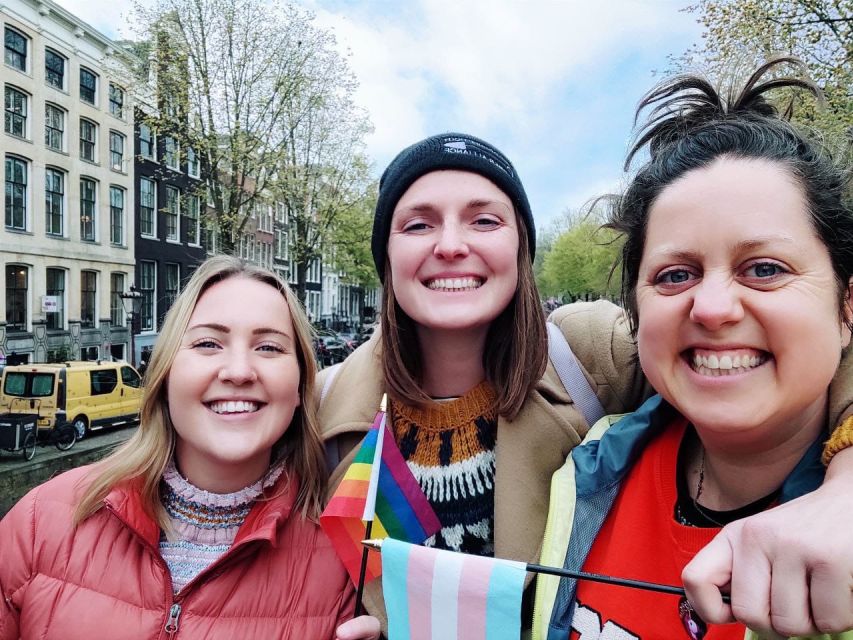
- Starts at Dam Square’s Nationaal Monument with controversy and context right away
- Led by Sanne (LGBTOUR_AMSTERDAM) in English or Dutch, easy to spot with a tiny rainbow flag
- Personal stories meet big moments like Pride, protests, and the city’s LGBTQI+ landmarks
- Stops include Condomerie and Kokopelli, where you’ll hear how necessity became identity
- You’ll see the Red Light District area from a queer perspective, not a typical tourist lens
- Ends at Café ’t Mandje, described as the oldest queer bar
Starting at Dam Square: where the walk turns personal fast
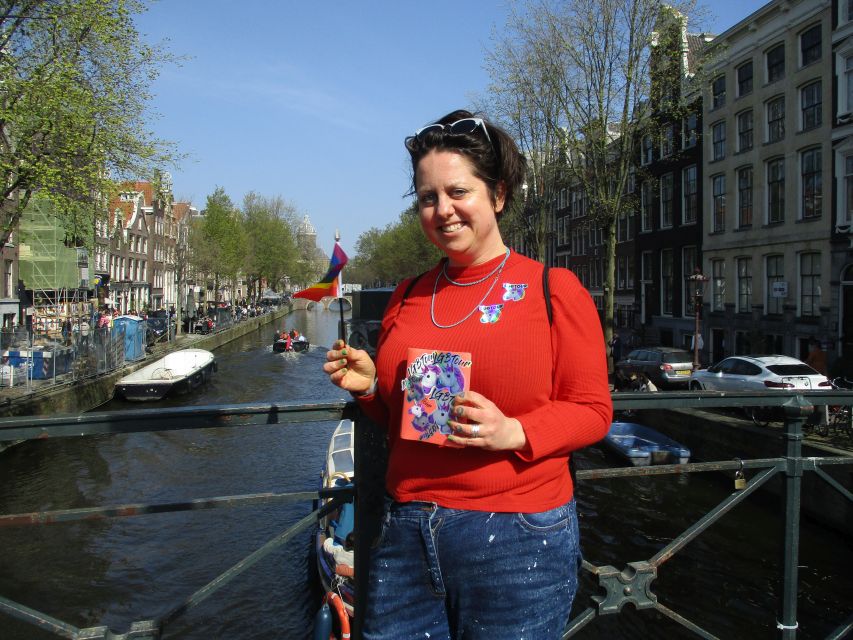
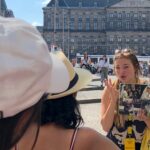
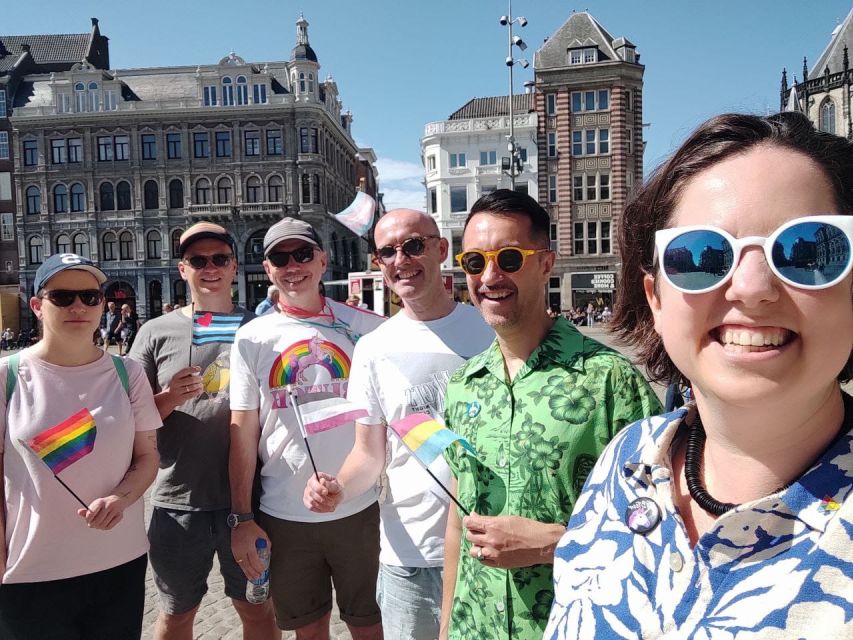
Meet at the National Monument on Dam Square, and you’ll know Sanne by a tiny rainbow flag. That matters, because the tour tone is set immediately: this isn’t a “facts only” stroll. Sanne frames the city’s queer life as something lived in real bodies, across decades, and through conflict as well as celebration.
From the beginning, the walk asks you to look past the postcard version of Amsterdam. Even before you move far, the tour points you toward the idea that monuments and streets aren’t neutral. You’ll hear controversial stories about how the monument came to be, and that’s a useful lens for the rest of the route.
This is also a good length for people who want meaning without burning a whole afternoon. Two hours is long enough to connect dots, but short enough that you still have time to continue exploring on your own afterward.
You can also read our reviews of more walking tours in Amsterdam
Homomonument to Belle: queer memory in stone and stories
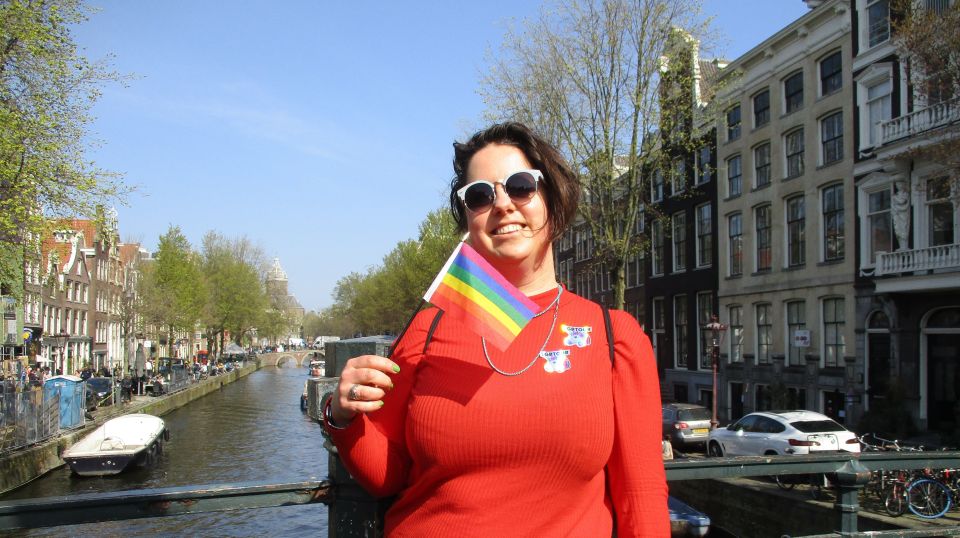
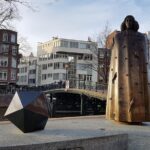
The first major stop is the Homomonument, where you’ll get a guided visit of about 20 minutes. This is one of those places you can see in a quick photo, but you won’t get it from a photo. The guided part matters because the monument is about remembering people and movements, not just admiring design. Expect a tone that blends respect with clarity—why this kind of public remembrance exists, and what it tries to keep from being erased.
From there you move into a shorter guided stop at Belle (about 10 minutes). This is where Sanne leans into how queer history can show up in unexpected corners. The tour connects city life to personal transformation, and it’s especially good for you if you like the “how did that happen here?” feeling—how something you thought was private (love, identity, paperwork) can become part of a public story.
If you’re the type who enjoys small, specific narratives, these early stops are the payoff. They set up the idea that Amsterdam’s queer past isn’t one straight line—it’s a web of people meeting, resisting, inventing, and caring.
Condomerie and the AIDS-era origin story you won’t forget
Next comes Condomerie for a guided visit of about 10 minutes. This stop is emotionally direct, because it’s tied to necessity during the Aids crisis. You’re not just looking at a shop or a sign; you’re hearing how practical responses can become cultural markers.
Why this matters: it gives you a fuller understanding of queer community life. People often talk about Pride like it appears from nowhere—float by float. But Condomerie puts responsibility and survival front and center. It also shows how commercial spaces can grow out of community needs and become symbols people carry with them.
The tour’s pacing works well here. You’re walking steadily through layers of meaning, so each guided moment feels like a chapter rather than a checklist.
Zeedijk and the Red Light District: seeing the same streets differently
After Belle and Condomerie, the route takes you through Zeedijk Street for about 15 minutes. This portion is more of a guided walk—good for settling into the neighborhood feel and learning how the “old gay town” area has hosted queer life for a long time.
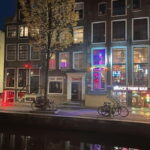
Then you visit the Amsterdam Red Light District for about 15 minutes. The key is the framing. You’re not being asked to stare at anything sensational. You’re being asked to understand the area from a queer perspective—how this part of the city became part of the story, and how “ordinary street life” can carry extraordinary social meaning.
A quick practical note: the Red Light District area can feel busy and crowded. Wear comfortable shoes and be ready for foot traffic. If you’re easily uncomfortable with street-level adult entertainment, this stop may require a more grounded mindset—but Sanne’s focus stays on stories and context.
Unicorns, a Royal Palace moment, and Pride in Amsterdam’s DNA
Along the way, you’ll get passing views of Eagle Amsterdam and Pride Clothing (short stops, mostly on-the-go). These aren’t random. They help show that queer identity in Amsterdam isn’t stuck in museums. It lives in storefronts, fashion, and nightlife culture.
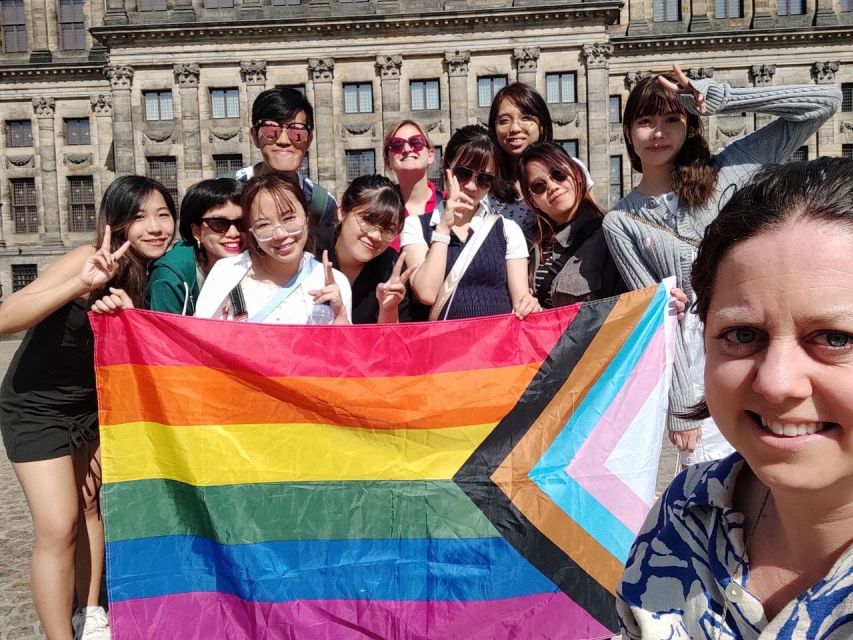
One of the most fun moments is a “look closer” stop connected to the Royal Palace. The guide points out the unicorns and asks what they’re doing there. It sounds playful, and it is—but it also reinforces a point: symbols can carry history, and history can be read in details most people ignore.
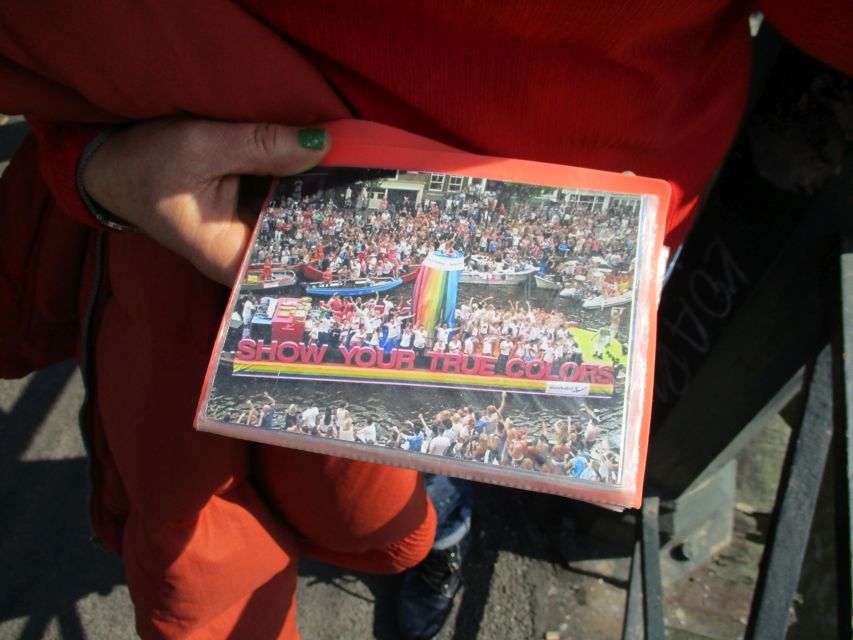
And then there’s Pride. The tour explicitly connects Amsterdam’s biggest LGBTQI+ moment to both celebration and protest. You’ll hear how Pride happens on the canals, which is a very Amsterdam kind of stage. This isn’t just about a parade; it’s about visibility—and what visibility costs.
You can also read our reviews of more guided tours in Amsterdam




Kokopelli and identity paperwork: the story behind a passport change
The next guided stop is Kokopelli for about 10 minutes. The tour uses this moment to deepen the personal side of queer life—how community identity forms not only in public events, but also in everyday spaces and social networks.
After that you do a photo stop at Dancing Houses, Amsterdam for about 10 minutes. It’s a lighter interlude, and it helps you reset your brain after the heavier themes. It also keeps the walk from becoming all serious all the time.
Then, a standout story gets woven into the route: Sanne shares the tale of a woman who was the first to change her gender on her passport. This is one of those details that turns abstract ideas into something real and specific. It also helps you understand why queer activism often fights for paperwork, legal recognition, and everyday safety—not only for culture or nightlife.
Café ’t Mandje: finishing with a living queer landmark
You end at Café ’t Mandje, where the tour finishes. The guide describes it as the oldest queer bar, which makes the ending feel like more than a final stop. You’re walking out into a space built for people who wanted community—somewhere you can keep talking after the stories land in your head.
This ending is also practical. If you want to keep exploring, you’ll be in an area where you can grab a drink or simply decompress without needing to jump across town.
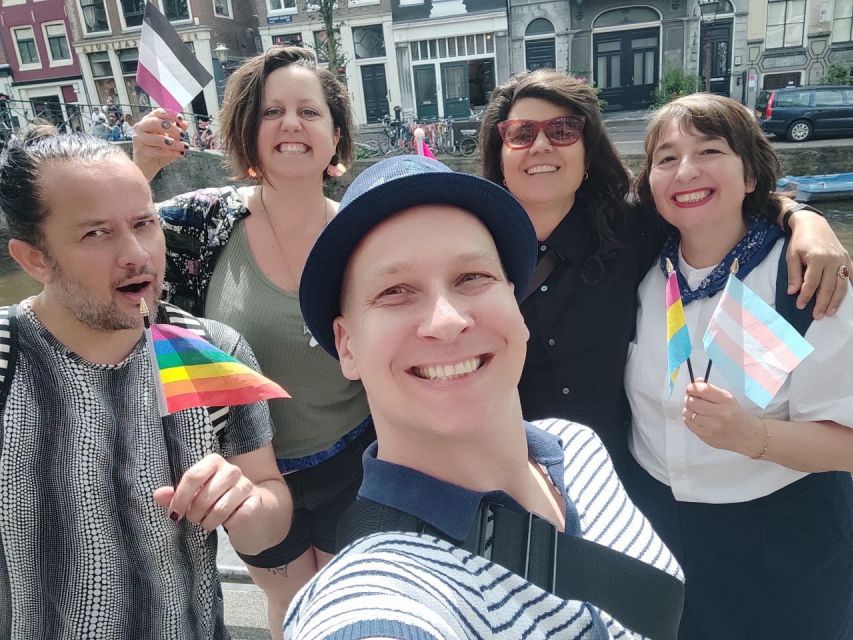
If you’re the kind of person who likes to process with company, this tour’s conversation-friendly structure helps. Sanne encourages you to connect, share your own experiences, and feel part of the group rather than like you’re consuming someone else’s story. That can make the final café moment feel natural, not forced.
Price and value: what $59 buys you in real terms
At $59 per person for 2 hours, this is not a budget “quick walk.” But it also isn’t priced like a premium museum ticket. You’re paying for something that’s hard to replicate on your own: a guided route that strings together major landmarks with personal stories and community context.
The value really comes from three parts:
- Guided time at key stops (not just passing by)
- A local guide’s personal framing, including love, being gay and single in Amsterdam, and lived experience
- Story connections that link pride and protest to the city’s quieter, tougher moments
If you’re doing Amsterdam for the first time, this tour is a smart way to get perspective early. If you’ve already toured canals and museums, this tour adds a missing layer: the human story behind the streets.
Who this tour suits best
This tour is a great fit if you want:
- LGBTQI+ history you can feel, not just read
- A walking route that’s thoughtful about place, especially in the oldest parts of the city
- A guide who balances factual framing with personal storytelling
- A small group atmosphere where connecting with others is part of the experience
It may be less ideal if you want a purely lighthearted city walk, or if you’re not comfortable with topics tied to discrimination, AIDS-era impacts, and controversial monument narratives.
Should you book Sanne’s Queer City Walking Tour?
I think it’s worth booking if you care about seeing Amsterdam through a queer lens—and you want that lens delivered with empathy, not just facts. The combination of start-point context at Dam Square, guided stops like Homomonument, Condomerie, and Kokopelli, plus a meaningful ending at Café ’t Mandje makes the two hours feel focused.
Book it if you’re open to being moved, even a little. If you want emotional safety above all else, take that into account and consider whether the themes match your day. But if you want real stories, a small-group feel, and a route that connects Pride to protest and love to identity paperwork, this is a strong choice.
FAQ
Where is the meeting point?
You meet at the National Monument at Dam Square.
How do I recognize the guide?
You can recognize Sanne by her tiny rainbow flag.
How long is the tour?
The tour lasts 2 hours.
What language is the tour in?
The tour is offered in English and Dutch.
What’s the price?
The price is $59 per person.
Is the tour wheelchair accessible?
Yes, it is listed as wheelchair accessible.
What should I bring?
Bring comfortable shoes, and also sun hat, sunscreen, and rain gear if needed, plus comfortable clothes.
Does the tour run in bad weather?
The tour takes place rain or shine.