REVIEW · AMSTERDAM
Secrets of Amsterdam Walking Tour plus Dutch Sweets Tasting
Book on Viator →Operated by 360 Amsterdam Tours · Bookable on Viator
Two hours can change how you read Amsterdam. This walking tour stitches together the big-corner landmarks and the small, odd details that make the city click fast. I like that it’s built for orientation: you move on foot (no traffic delays) and you’re back near where you started without needing a whole day.
My other favorite part is the tasting included with the tour—Old Amsterdam cheese plus a glass of port wine. One thing to consider: the itinerary is intentionally short, with very brief stops along the way, so if you want deep, slow-burn history at every corner, you might find it a touch light.
In This Review
- Key Highlights You’ll Actually Care About
- Starting at Dam Square: Royal Palace, Dam, and the New Church
- Spui Square and the Bookmarket: Amsterdam’s Miracle Nearby
- Begijnhof Courtyard: A Quiet Detour That Changes the Street Noise
- Bloemenmarkt: The World’s Floating Flower Market Comes to Life
- Munt Tower (Munttoren): Reading a Landmark Like a Story
- Nieuwmarkt and de Waag: Rembrandt’s Painting Spot in Plain Sight
- The Cheese and Port Tasting: A Dutch Break Without the Delay
- Pace, Group Size, and Comfort: How This Walk Fits Your Day
- Price and Value: What $34.47 Buys You
- Should You Book This Amsterdam Walking Tour With Tasting?
- FAQ
- FAQ
- How long is the Amsterdam walking tour?
- How much does it cost per person?
- Where does the tour start?
- Does the tour end back at the meeting point?
- Is the tour offered in English?
- Are service animals allowed?
- How big is the group?
- What’s included in the price?
- Are there admission fees for the stops?
- What if I need to cancel?
- What happens if the minimum number of travelers isn’t met?
Key Highlights You’ll Actually Care About
- Dam Square to the start of Amsterdam history in about two hours, without a marathon schedule
- Spui bookmarket + a local miracle story nearby, perfect for framing how Amsterdam thinks
- Begijnhof’s courtyard calm—a quiet pause when the streets get loud
- Bloemenmarkt as the world’s largest floating flower market you’ll see in motion (and remember)
- Nieuwmarkt and de Waag tied to Rembrandt painting—art history with a street-level payoff
- Old Amsterdam cheese + port wine built into the walking rhythm, not tacked on later
Starting at Dam Square: Royal Palace, Dam, and the New Church
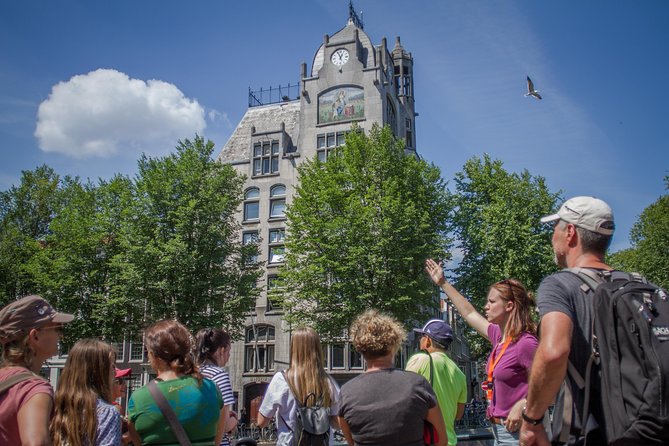
You begin at Dam Square, the obvious hub—but for good reason. The tour starts with the Royal Palace area, the Dam, and the New Church, which gives you a strong mental map right away: where power sits, where the city gathers, and how Amsterdam’s center evolved.
What I like about starting here is how quickly you can spot relationships between places. You’ll be walking in a loop style that keeps the heart of the city close, which means you spend less time guessing and more time looking. If this is your first Amsterdam day, the timing works because it teaches you the direction of travel before you’re tempted to wander in circles.
Because it’s a walking format, you also avoid the slowdowns that come with buses and traffic. Even when the weather turns, the pace is steady enough that you can keep moving and stay focused on the details.
You can also read our reviews of more walking tours in Amsterdam



Spui Square and the Bookmarket: Amsterdam’s Miracle Nearby
The first quick stop is Spui. The big idea here is that something like the city’s miracle happened close by, and the square connects to a book culture that shows Amsterdam’s “talk, read, discuss” identity.
Spui also matters because it’s a very practical sightseeing lesson: squares in Amsterdam aren’t just scenic—they’re living rooms. If you watch how people cross, pause, and gather, you start learning the city’s rhythm faster than you would from a map alone.
This stop is short (about five minutes), and that’s deliberate. You get a taste of the story without getting bogged down, which is ideal if you’re balancing other plans like canal cruises or museum time.
Begijnhof Courtyard: A Quiet Detour That Changes the Street Noise
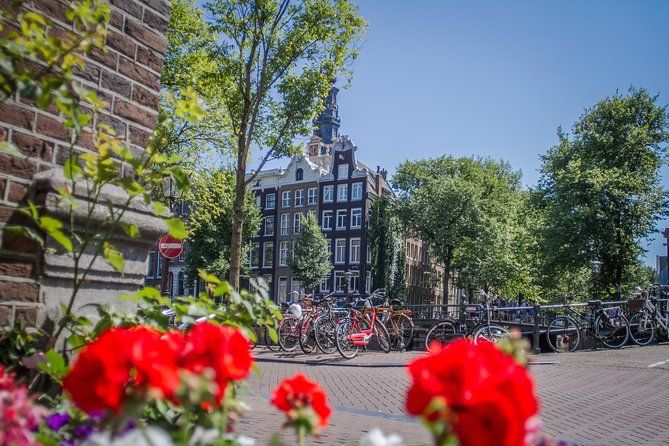
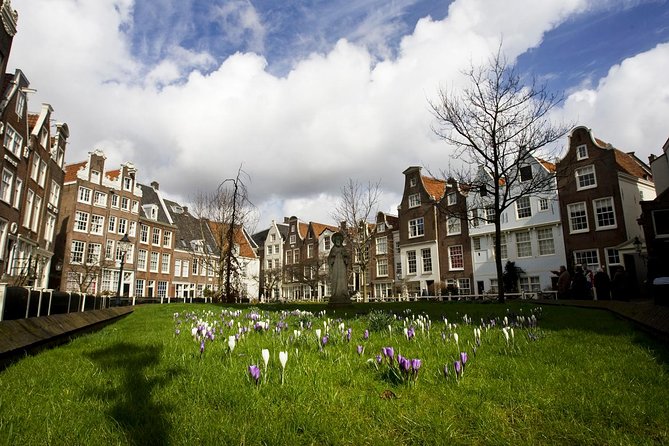
Next up is Begijnhof, and the pitch is simple: it’s beautiful and there’s a lot to talk about. This is the kind of place where the atmosphere does half the work for you. One moment you’re in the open city; the next you’re in a courtyard feeling that’s designed for calm and reflection.
I like Begijnhof because it teaches you a key Amsterdam skill: noticing contrasts. The city can feel fast and loud, then suddenly you’re in a pocket where buildings and layout shape the mood. That’s the sort of detail you’d normally miss if you rushed from attraction to attraction.
The tour gives you only a brief window here (again, around five minutes), so go in with the right expectation. You won’t get a full-on architecture course, but you’ll get enough context to recognize why the space feels different the moment you step inside.
Bloemenmarkt: The World’s Floating Flower Market Comes to Life
At Bloemenmarkt, you’ll see the largest floating flower market in the world. That’s a big claim, but it’s exactly the kind of thing you can verify by looking around: water, boats, stalls, and the constant flow of people doing their normal market-business.
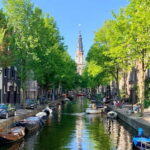
What makes this stop valuable is not just the flowers—it’s the way the market reveals Amsterdam’s relationship with water. The city didn’t build around water as a backdrop; it built around water as infrastructure. When you watch how market life fits the canal setting, your brain starts connecting the dots you might have ignored in a guidebook.
This stop is also brief (about five minutes). If you’re the type who wants to linger, take a quick look during the tour, then plan a second pass on your own later. The tour’s goal is to get you oriented, not to keep you there for an hour.
Munt Tower (Munttoren): Reading a Landmark Like a Story
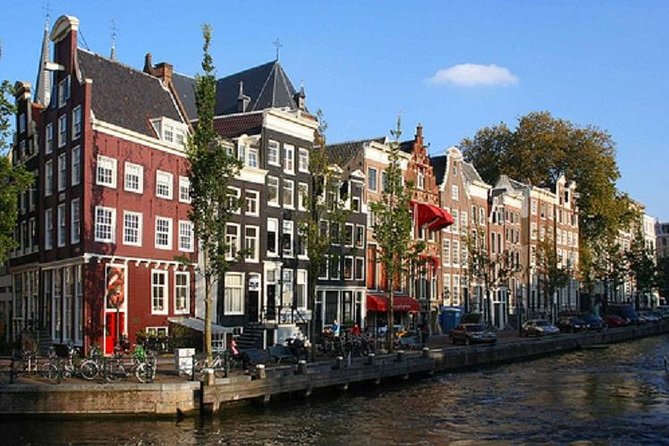
The next stop is Munt Tower (Munttoren). The tour’s focus is to tell you what you need to know, not just point and move on. A tower like this is one of those landmarks that can look “pretty” without feeling meaningful—until someone explains the role it played in the city.
I like this part because towers, gates, and markers are where a walking tour turns into real understanding. You start noticing Amsterdam’s signals—how the city used structures to communicate, mark authority, and anchor key locations.
Like the other city stops, the time is short (about five minutes). You’ll walk away with a framework, but you won’t leave with every detail memorized. That’s fine. The value is that now you can interpret what you see later while you’re exploring on your own.
You can also read our reviews of more food & drink experiences in Amsterdam




Nieuwmarkt and de Waag: Rembrandt’s Painting Spot in Plain Sight
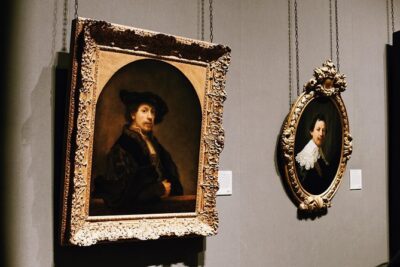
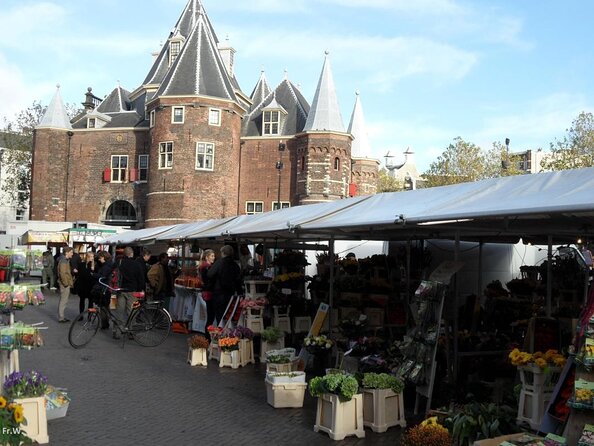
Then you arrive at Nieuwmarkt, described as one of the city’s most beautiful squares, with the impressive de Waag in the middle. Here’s the detail that makes it stick: Rembrandt came to paint there back in the days.
This is a great example of what I look for in an effective city walk. The guide doesn’t treat history like a list of dates. They tie it to a place you can point to right now, so you remember the story because you can see where it happened.
Nieuwmarkt also works well because it’s a “street-level” learning moment. You’re standing in an active public space where buildings, square layout, and a single landmark (de Waag) all shape the viewpoint. Even if you’re not a museum person, this kind of stop gives you a reason to look closely.
Again, it’s quick—about five minutes—but the Rembrandt connection gives the stop a built-in emotional hook. Art history becomes a real location, not a distant concept.
The Cheese and Port Tasting: A Dutch Break Without the Delay
The included tasting is Old Amsterdam cheese plus a glass of port wine. This is the kind of add-on I like because it’s not a separate sit-down event that eats your schedule.
The tour keeps the food element simple: you get a tasting while the day is still moving. That matters if you’re trying to fit Amsterdam experiences together without losing half a day to lines, waits, and long meal timing. Also, a cheese-and-port pairing is a very Dutch-style “small indulgence” that feels appropriate for a walking tour.
One practical note: the tour name mentions Dutch sweets, but the stated included tasting here is cheese and port wine. If you’re specifically hunting for candy, cookies, or dessert during this time slot, you may want to plan an extra stop of your own after the walk.
Pace, Group Size, and Comfort: How This Walk Fits Your Day
This tour runs about two hours. It’s short enough to fit right into a packed itinerary, and it’s long enough for you to learn more than just the obvious postcard stops.
The group maximum is 50 people, which means you’ll be in a lively tour setting. You still get good guide attention in the key moments, but don’t expect a private conversation at every corner. If you’re someone who likes quiet, you might prefer smaller tours; if you like energy and momentum, this group size can feel lively in a good way.
A mobile ticket is included, and the tour is offered in English. Service animals are allowed, and it’s near public transportation, so getting there and getting back is straightforward.
Also, wear comfortable shoes. Even when each stop is brief, Amsterdam sidewalks add up fast. You’ll thank yourself the moment the route picks up pace.
Price and Value: What $34.47 Buys You
At $34.47 per person, you’re paying for three things: a guide for about two hours, the walk between major city anchors, and the tasting (Old Amsterdam cheese plus port wine).
The best value angle here is that the guide helps you connect the dots. A self-guided route can absolutely work, but it takes effort to know what matters. This tour does that filtering for you, especially in the smaller stops like Spui’s bookmarket context, Begijnhof’s courtyard significance, and Nieuwmarkt’s Rembrandt connection.
You’ll also get free admission at several listed stops (Spui, Begijnhof, Bloemenmarkt, Munt Tower, and Nieuwmarkt are noted with admission ticket free). That keeps the day from turning into surprise ticket math.
Tips aren’t included, and food or beverages beyond the tasting aren’t included. So if you’re the type who likes a snack every hour, budget for that separately.
Should You Book This Amsterdam Walking Tour With Tasting?
Book it if you want a fast, efficient orientation to Amsterdam’s center and you like learning through place-based stories. This tour is especially smart on a first visit day or any day when you only have a couple hours before dinner plans.
Skip it (or consider a longer, more specialized tour) if your idea of a great walking tour is slow and deep at every stop. One highlighted experience notes that the walk didn’t feel like it had a lot of substance, so if you’re expecting a longer, more layered march, you may end up wishing for more time per location.
If you do book, I’d go in with one mindset: treat it as your “city brain reset.” After this, you’ll navigate better, look smarter at landmarks, and know which places deserve a second visit.
FAQ
FAQ
How long is the Amsterdam walking tour?
It lasts about 2 hours.
How much does it cost per person?
The price is $34.47 per person.
Where does the tour start?
The meeting point is Dam SquareDam, 1012 Amsterdam, Netherlands.
Does the tour end back at the meeting point?
Yes, it ends back at the meeting point.
Is the tour offered in English?
Yes, it’s offered in English.
Are service animals allowed?
Service animals are allowed.
How big is the group?
The tour has a maximum of 50 travelers.
What’s included in the price?
You get the tour guide (English), all fees and taxes, and an Old Amsterdam cheese tasting plus a glass of port wine.
Are there admission fees for the stops?
The listed stops at Spui, Begijnhof, Bloemenmarkt, Munt Tower, and Nieuwmarkt are noted as admission ticket free.
What if I need to cancel?
Free cancellation is allowed up to 24 hours in advance for a full refund. If you cancel less than 24 hours before the start time, the amount paid won’t be refunded.
What happens if the minimum number of travelers isn’t met?
If the experience is canceled because the minimum number isn’t met, you’ll be offered a different date/experience or a full refund.