Amsterdam hides big stories in plain sight. This private, crowd-free walking tour threads through the Jewish Quarter at a pace that lets you actually look, not just rush. I like how it combines major memorials with quieter corners you’d miss on your own.
I also like the way the guide turns tough locations into clear stories you can follow. On this tour, guides like Aleks are known for proactive coordination (even helping with Anne Frank House timing) and using personal photos when interior access is limited.
One drawback to consider: the topic is heavy, and it’s a 3.5-hour walk. Some museum interiors along the route can’t be visited because of reconstruction (for example, Hollandsche Schouwburg area), and several paid sites are not included in the tour price.
In This Review
- Key things to know before you go
- Jewish Quarter, but on a private pace
- Price and value: what $540.69 buys for up to 4
- Meeting point at Piet Heinkade and an ending at Westermarkt
- Walking stops, big meaning: from naming victims to places of Jewish life
- Holocaust Namenmonument: the names angle you can’t ignore
- Auschwitz Monument: broken glass as a message
- Hollandsche Schouwburg outside stops during construction (until 2024)
- Jewish Historical Museum and the Portuguese Synagogue (tickets not included)
- Dockworker Statue and Jewish resistance monuments you can actually walk to
- Spinoza stops: where philosophy meets Amsterdam’s Jewish threads
- Gassan diamond stop, Rembrandt House, and Waterlooplein Market
- GASSAN (diamond museum/workshop)
- Rembrandt House Museum (ticket not included)
- Waterlooplein Market (WWII-era social center)
- Anne Frank House at the end: optional entry, no automatic tickets
- Who this private walk is best for (and who should think twice)
- Quick practical tips so your day goes smoother
- FAQ
- Is Anne Frank House included in the tour price?
- What sites have tickets not included?
- Are interiors available at Hollandsche Schouwburg?
- How big is the group?
- How long is the walk?
- Does the tour offer pickup?
- Should you book this Jewish Amsterdam private walking tour?
Key things to know before you go
- A max of 4 people keeps the route calm and question-friendly, instead of a march.
- Holocaust memorials early on set the context right away, before you move into everyday Jewish Amsterdam landmarks.
- Construction affects interiors near Hollandsche Schouwburg until 2024, so plan on story-based exterior stops and guide visuals.
- Synagogue and museum tickets aren’t included, even when the tour passes the best-known rooms.
- Anne Frank House is optional; your guide can help with ticket availability but doesn’t automatically include entry.
- Short, steady stops (mostly 10–15 minutes) make it easier to absorb the meaning without fatigue.
Jewish Quarter, but on a private pace
This is the kind of Amsterdam walking tour that feels like it was designed for paying attention. You’ll move through the historic Jewish Quarter area with a guide who can adjust pace and add breaks when needed, since the tour can run about 3 hours 30 minutes on foot.
The “private” part matters more than you might think. In a small group (up to 4), you can stop and ask why a place matters. You can also slow down to read details on memorial stones and plaques, which is where the story gets real. And yes, some moments hit hard—this tour doesn’t sugarcoat World War II and the Holocaust—but the layout helps you process it step by step.
If you like walking tours that give context (not just dates), you’ll likely enjoy this format. You get short stops, then explanations, then the next place—no endless lecture at one corner.
You can also read our reviews of more walking tours in Amsterdam



Price and value: what $540.69 buys for up to 4
The price is $540.69 per group for up to 4 people, so your “per person” cost drops quickly once you split it. The biggest value isn’t just convenience. It’s control: a small group, a focused route, and a guide who can help you manage ticket reality for sites like Anne Frank House.
Also, because this is often booked in advance (on average 89 days), you’re paying for a reliable planning slot. That matters in Amsterdam when certain museum entries are timed and demand can spike.
What you should factor in: several museum entries are not included, including parts of the Jewish Historical Museum/Portuguese Synagogue complex and the Rembrandt House Museum. You’ll also need to think about optional Anne Frank House entry. If you’re okay adding a few ticket fees, the guided structure and crowd-free pace can feel like excellent value.
Meeting point at Piet Heinkade and an ending at Westermarkt
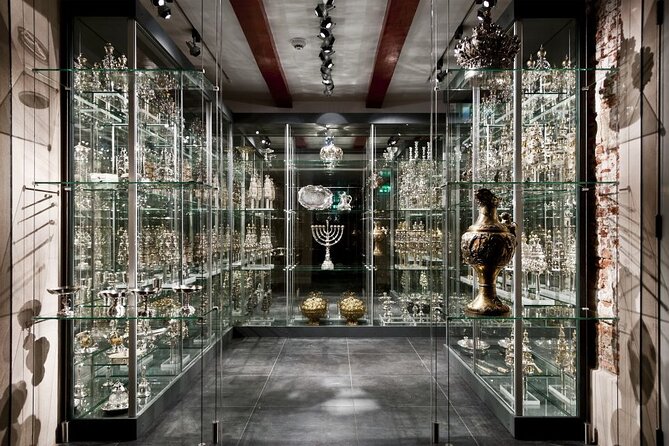
You start at Passenger Terminal Amsterdam (Piet Heinkade 27, 1019 BR). If you’re arriving by train or using public transit, this area is easy to reach, and the tour is listed as having nearby transportation.
Pickup is offered, which is helpful if you’re dragging luggage or if you’re trying to sync the tour with hotel check-in plans. The route finishes at Anne Frank House (Westermarkt 20, 1016 GV), near Western Church at Prinsengracht.
Why this ending matters: even if you don’t go inside Anne Frank House, you’ll be dropped off at the area you’ll likely want to explore next. And if you do want to go in, you’re already in the neighborhood with the right context.
Walking stops, big meaning: from naming victims to places of Jewish life
This tour is built like a story in chapters. It begins with Holocaust memorials, then moves through the Jewish institutional and cultural landmarks, then returns to resistance and remembrance—ending with the Anne Frank House area.
Expect a mix of:
- memorials with names or symbols tied to victims and deportations
- synagogue buildings and former Jewish community spaces
- monuments connected to resistance and specific groups (like deaf Jewish victims)
- historic houses and philosophical sites tied to Baruch Spinoza
Most stops are 10–20 minutes, so you’re never trapped too long in one place. That pacing helps when you’re dealing with heavy subject matter.
Holocaust Namenmonument: the names angle you can’t ignore
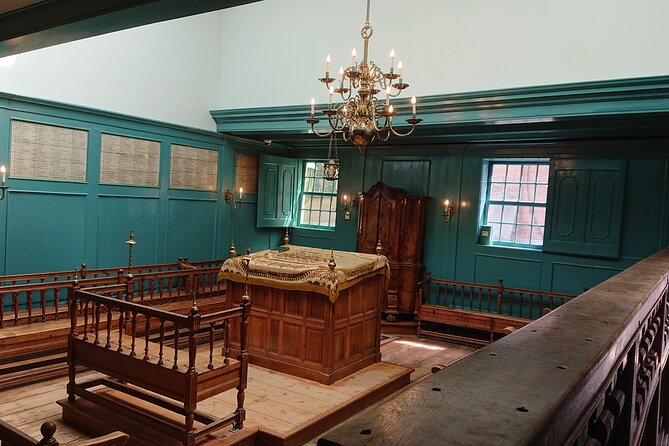
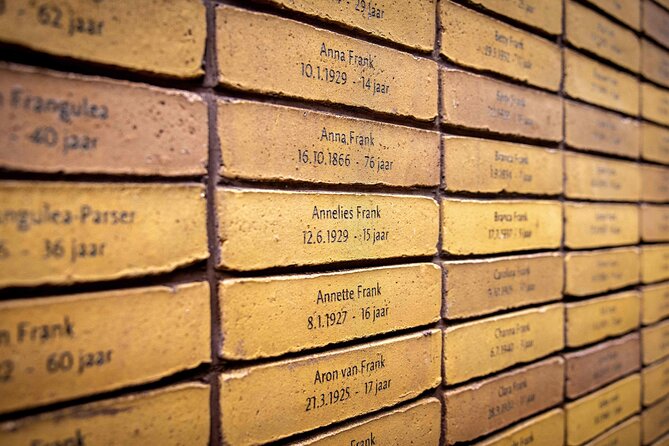
One of the first stops is the Holocaust Namenmonument. This memorial bears the names of 102,000 people who died in Nazi camps of death and were not given a proper burial.
This is not the kind of monument where you just glance and move on. The “names” concept is the point, and your guide’s framing sets you up to read the space with respect. It’s also a helpful starting position—before you see any buildings, you understand the human scale.
The stop is about 15 minutes, and admission is free. That’s a good combo: you get time to absorb, without feeling pressured by an entry line or ticket window.
You can also read our reviews of more private tours in Amsterdam



Auschwitz Monument: broken glass as a message
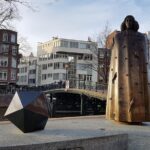
Next comes the Auschwitz Monument, which uses broken glass as its honoring symbol for around one million victims of Auschwitz.
Even if you’ve seen Holocaust memorial art before, this one communicates differently. The visual language is immediate, and your guide’s job here is to explain what you’re looking at and why that symbolism was chosen.
This stop is short—about 10 minutes—and also free. Treat it as a quick reset between larger memorials and the next shift into Amsterdam’s specific Jewish locations.
Hollandsche Schouwburg outside stops during construction (until 2024)
The Hollandsche Schouwburg area is one of the hardest and most important stops on the route. The two linked buildings connect to Holocaust museums and related monuments, with a story that includes suffering and genocide—but also human courage and selflessness.
Here’s the practical catch: the Hollandsche Schouwburg alias Dutch Theater and the Holocaust memorial building are under construction until 2024. That means you generally can’t visit interiors as part of this tour.
Still, the tour treats these buildings as meaningful stop points. Your guide’s personal opinion (and approach) is that it’s worth hearing the story and facts tied to the architecture and purpose, using personal photos to show what’s inside. You may also be told what the reconstruction timeline means for future access and whether interiors might be available later.
If you want maximum museum time, this is where you’ll either:
- accept the exterior-first approach and focus on the narrative, or
- plan a separate independent visit once reconstruction ends.
Jewish Historical Museum and the Portuguese Synagogue (tickets not included)
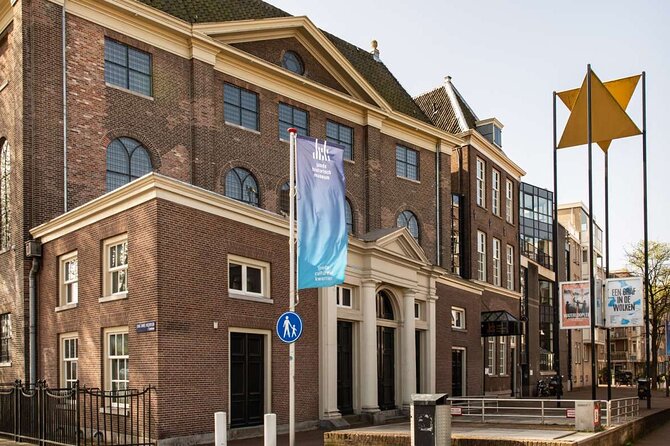
This section focuses on Jewish institutional life in Amsterdam, with stops tied to the Jewish Historical Museum (JHM) and the Portuguese Synagogue, also known as Snoge/Esnoga.
A key practical note: admission for these museum/synagogue interiors is not included. The tour lists a combined ticket for the Jewish Historical Museum and Portugese Synagogue (Snoge/Esnoga), and that combined ticket is not included in the tour price.
You’ll see the Portuguese Synagogue’s identity clearly: it’s Sephardic, built in 1675, and is still in use. The tour frames it as one of the oldest surviving synagogues for the Sephardic community in Europe (with another famous comparison noted: Prague’s Great Synagogue).
If your goal includes inside visits, plan time and ticket budget. If your goal is mainly guided context and exterior landmarks, you can still get a lot out of this part. The guide’s photos can also help when you can’t get in.
Dockworker Statue and Jewish resistance monuments you can actually walk to
A standout stop mid-route is the Dockworker Statue (Dokwerker). It honors dock workers who protested Nazi anti-Semitic policies and the first deportations of Jews to Mauthausen in February 24th, 1941.
Then you’ll hit remembrance monuments tied to broader resistance and specific victim groups, including:
- the Deaf Memorial, in memory of Jewish deaf victims of the Nazi regime from 1940–1945
- the Monument vor Joods verzet, dedicated to Jewish resistance fighters who died in World War II
These are valuable stops because they show that history didn’t happen only in distant documents. It happened in public spaces, and it included people who tried—sometimes at tremendous personal cost—to resist.
Admission for these memorial stops is free, and each is brief enough to keep the pace manageable.
Spinoza stops: where philosophy meets Amsterdam’s Jewish threads
This tour weaves in Baruch Spinoza, tied to the Jewish community in Amsterdam. You’ll see a church building from the 19th century that was once the family residence of Spinoza and his family. That contrast—religious building use across time—adds a layer you might not expect from a Holocaust-focused route.
You’ll also see:
- Huis De Pinto, the home built in 1603 that belonged to the wealthy Jewish merchant Isaac de Pinto
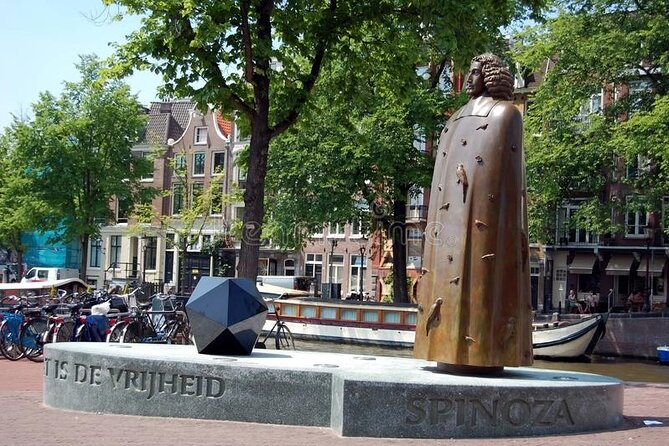
- the Spinoza Monument, honoring Spinoza as a descendant of a prominent Portuguese Jewish family and highlighting his place in European philosophy
This part works best if you like connections—how 17th-century life overlaps with later events, and how names and places keep resurfacing through time. It also balances the day so you’re not only surrounded by tragedy.
Gassan diamond stop, Rembrandt House, and Waterlooplein Market
Not every moment on this walk is heavy. You’ll also cover craft, art, and street life that connect to the city’s long-running culture.
GASSAN (diamond museum/workshop)
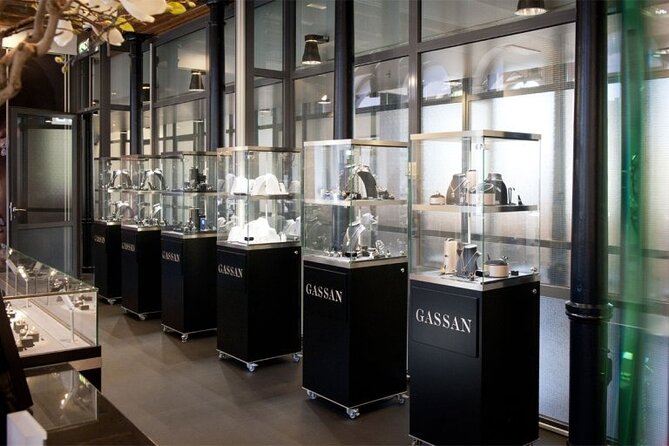
You get a 20-minute stop at GASSAN, a museum/workshop/store connected to a famous diamond family company. There’s free visiting with local company guide tours available during that window.
This is a clever breather. It’s not a random detour; it’s a chance to see Amsterdam’s economy and craftsmanship energy, even while the rest of the route is teaching you about tragedy and memory.
Rembrandt House Museum (ticket not included)
The tour also passes by the Rembrandt House Museum, where Rembrandt lived from 1639 until 1658. The tour notes that his life and work were connected to Amsterdam’s Jewish community in the 17th century.
But the interior ticket is not included. If you want to step inside, you’ll need to decide whether it fits your timing after the earlier ticket decisions.
Waterlooplein Market (WWII-era social center)
You’ll also pass Waterlooplein Market, described as the oldest flea market of Amsterdam and the Netherlands until World War II, and as a center of social life for more than 150 years.
This stop doesn’t give you a controlled museum experience. It gives you place-based context—Amsterdam’s social spaces, markets, and community behavior across time.
Anne Frank House at the end: optional entry, no automatic tickets
This is the part where many people get surprised, so pay attention.
The tour ends at Anne Frank House, and the tour explicitly says the Anne Frank House visit is not included. Your guide can assist regarding availability of admission fees and ticket providing, but the guide can’t obtain tickets personally.
Practically, that means you should plan your decision early:
- If you want to go inside, be ready to handle tickets as a separate step.
- If you decide it’s too much on the day, you’ll still finish at the right location with context from the memorials and Jewish Quarter story that came before.
One important note: because Anne Frank House demand can be intense, it helps when your guide is flexible about timing. Some guides associated with this tour have been known to coordinate the schedule so you can try to catch Anne Frank House entry after the walking portion.
In other words: don’t treat the ending as guaranteed entry. Treat it as an opportunity you’ll want to plan around.
Who this private walk is best for (and who should think twice)
This tour is a good fit if you:
- want a small-group, crowd-free walk through the Jewish Quarter
- like a guide who connects memorials, architecture, and names into a clear timeline
- want a route that ends right where Anne Frank House is, with context already in place
It’s also a strong choice for people who prefer short stops and frequent regrouping. The tour notes walking speed can be adjusted and breaks may be added up to agreement.
Think twice if you:
- have limited mobility and don’t feel comfortable with at least 3.5 hours of walking, even with possible adjustments
- want many interior museum visits on the same day (construction affects Hollandsche Schouwburg until 2024, and several museum/synagogue tickets aren’t included)
Quick practical tips so your day goes smoother
- Wear comfortable shoes. The route is mostly outdoors and the theme makes you want to linger.
- Decide ahead of time whether you’ll buy tickets for the Jewish Historical Museum/Portuguese Synagogue combo and whether you’ll also attempt Anne Frank House entry.
- Bring a notepad or notes app. The day packs names, dates, and places—your brain will thank you later.
- If you’re sensitive to heavy content, tell the guide early. A good guide will pace you.
FAQ
Is Anne Frank House included in the tour price?
No. The tour ends at Anne Frank House, but the visit is optional and the ticket is not included. Your guide can assist with ticket availability information, but they can’t obtain tickets personally.
What sites have tickets not included?
The tour notes that admission tickets are not included for Hollandsche Schouwburg (stop point), the Jewish Historical Museum and Portuguese Synagogue combo, and the Rembrandt House Museum. It also lists Anne Frank House as not included.
Are interiors available at Hollandsche Schouwburg?
The Hollandsche Schouwburg / Dutch Theater and the Holocaust memorial building are under construction until 2024, so interior visits are not possible as part of the stops. The tour treats the buildings as stop points and relies on the guide’s explanations and photos.
How big is the group?
The tour has a maximum of 4 travelers, which keeps it private and makes it easier to ask questions.
How long is the walk?
The duration is approximately 3 hours 30 minutes.
Does the tour offer pickup?
Yes, pickup is offered.
Should you book this Jewish Amsterdam private walking tour?
If you want an Amsterdam walk that’s structured, respectful, and small enough to ask questions, I think it’s a strong booking. The value comes from the private pace, the carefully sequenced memorial-to-life-to-resistance route, and the fact that you finish at Anne Frank House with the right context.
Book it if you’re comfortable handling extra ticket decisions and you’re okay with some stops being exterior due to construction. Skip it (or plan a different format) if you’re hoping for lots of interior museum time without managing tickets, or if a 3.5-hour walk would be stressful.
If you do book, start thinking about tickets for the Portuguese Synagogue/Jewish Historical Museum combo and Anne Frank House early—Amsterdam timing can be the difference between a meaningful visit and a rushed one.