REVIEW · AMSTERDAM
Amsterdam: Royal Concertgebouw Orchestra Concert Ticket
Book on GetYourGuide →Operated by The Royal Concertgebouw Orchestra · Bookable on GetYourGuide
The Concertgebouw turns sound into something physical. I love the Main Hall and its acoustics, and I like how a top orchestra can make even small musical details feel close. You’re sitting in Amsterdam’s cultural heart, ready for one focused, grown-up evening of music.
Two practical perks help you settle in: you get drinks before the concert and again at intermission, and you can watch major conductors and soloists doing their work live on stage. One thing to consider is that the seating plan can vary a bit by concert, so your view angle may not be identical to anyone else’s.
In This Review
- Key things to know before you go
- Concertgebouw Main Hall: the sound you feel
- Royal Concertgebouw Orchestra on stage: conductors, soloists, and tempo
- Your pre-concert drink and the 20-minute intermission rhythm
- What you’ll hear: rotating programs from Mahler to holiday traditions
- Price and value at about $61 with two drinks
- Tickets, seats, and timing: how to avoid stress
- Who this concert is perfect for (and who should skip it)
- Should you book this Concertgebouw concert ticket?
- FAQ
- How long does the concert last?
- What’s included in the ticket price?
- Are drinks included, and what can I order?
- Where do I exchange my voucher for the ticket?
- What kind of music will I hear?
- Is food included?
- Is the concert suitable for children?
- Is the venue wheelchair accessible?
- Are the seats guaranteed to be the same each time?
Key things to know before you go
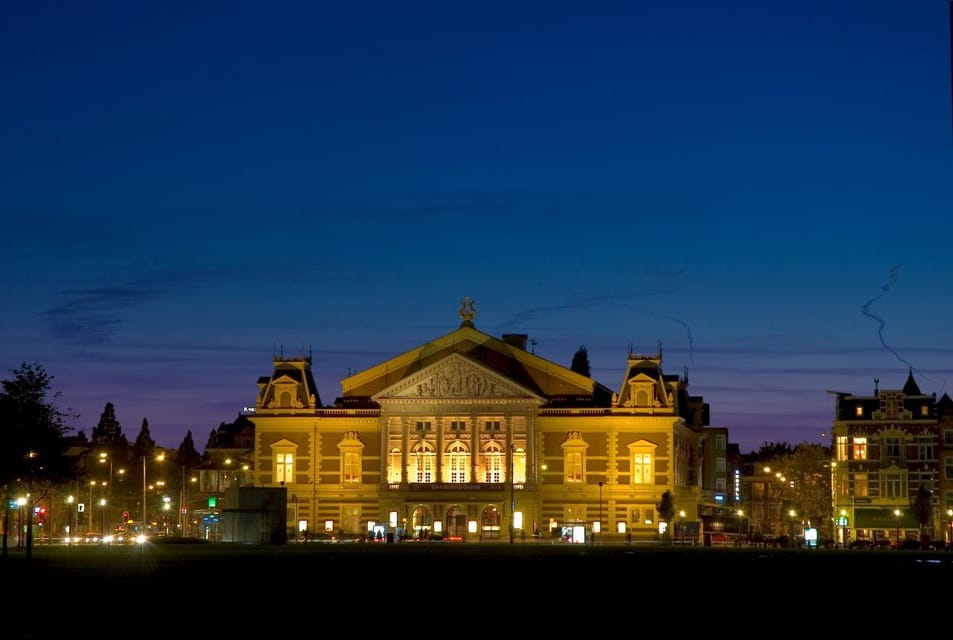
- Main Hall acoustics matter: the room is famous, and you’ll hear it from your seat.
- Two included drinks: one before the performance and one during the 20-minute intermission.
- Live conductors and soloists: watch the real coordination, not a recording.
- Programs rotate each night: you might hear Mahler, Richard Strauss, or Anton Bruckner.
- Voucher exchange at the box office: plan a few minutes to swap your voucher for the ticket.
Concertgebouw Main Hall: the sound you feel
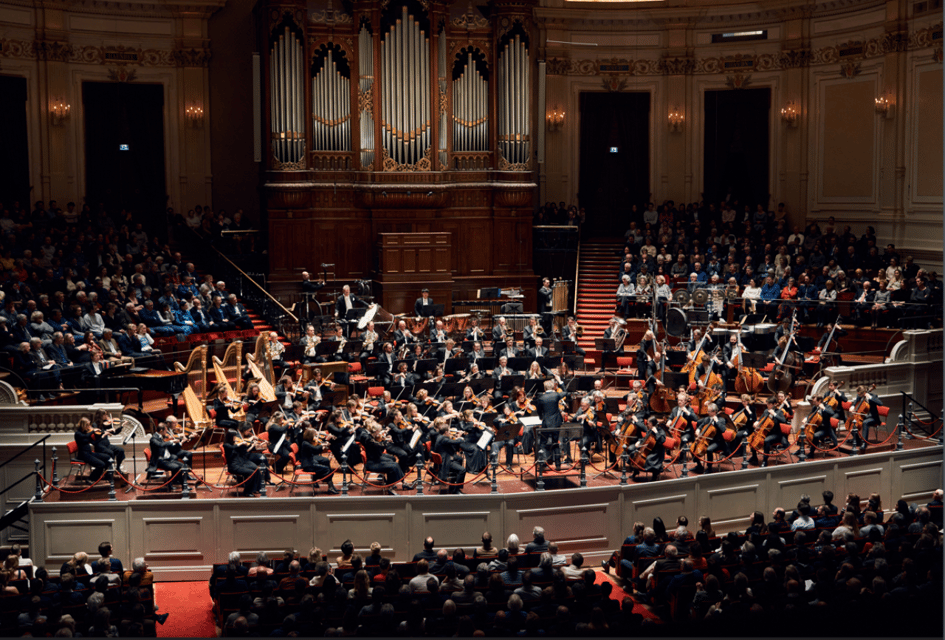
If you’ve ever listened to a great orchestra and thought, I wish I could hear the space around the notes, this is that moment. The Royal Concertgebouw Orchestra performs in the Main Hall of the Concertgebouw, and the big reason this concert experience gets repeat praise is simple: the acoustics are exceptional. You don’t just hear music. You notice how it blooms, how it decays, and how voices of different instruments lock together.
This matters even if you’re not a hardcore classical fan. When the room does its job, you can follow the music easier. Strings don’t blur into one sheet; you can sense the shape of phrases. Brass comes in with weight instead of harshness. Soft passages stay audible rather than disappearing into the ceiling.
Also, the Main Hall is a proper concert environment. That’s your cue to slow down. Put your phone away. Arrive ready to listen, not to multitask. In a place like this, your attention is part of the experience.
You can also read our reviews of more tours and experiences in Amsterdam



Royal Concertgebouw Orchestra on stage: conductors, soloists, and tempo
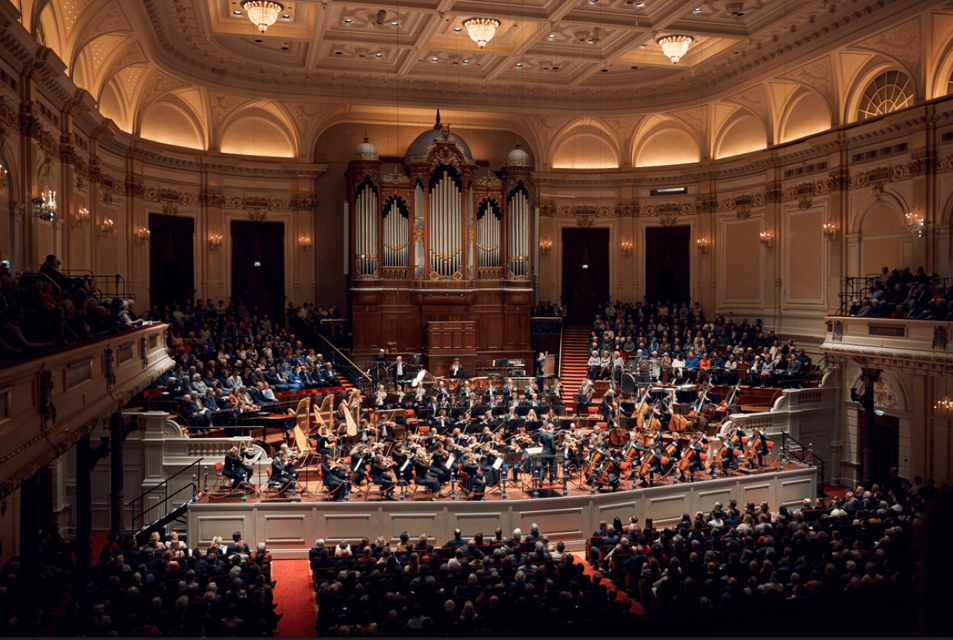
You’re not watching an ensemble on a screen. You’re watching the Royal Concertgebouw Orchestra work together in real time. That means you’ll see the conductor’s cues, the physical coordination, and the little decisions that never show up in a video: where phrasing tightens, when tempo steadies, how entrances land together.
The format also keeps things interesting. You’ll be treated to a full symphonic program, and the night may include major conductors and soloists performing live on stage. Even if you don’t know every name on the program yet, you’ll feel the difference between musicians who are used to serious halls and those who are just touring.
One more good detail: the concert duration is built for real listening. Expect about two hours total, including a 20-minute intermission. That intermission break is long enough to reset your body and grab your included drink, but short enough that you don’t lose the thread of the music.
Your pre-concert drink and the 20-minute intermission rhythm
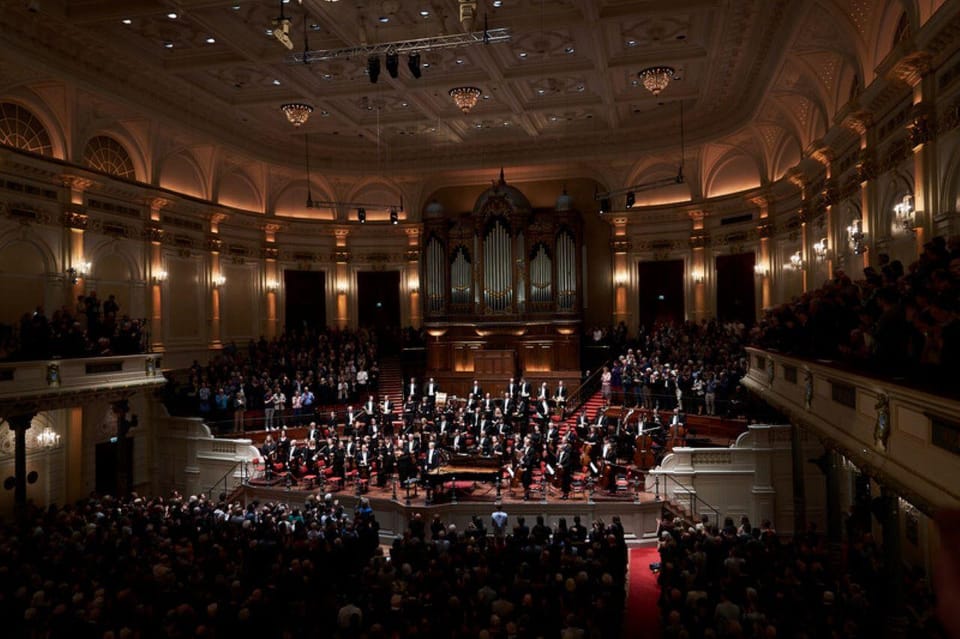
One of the most user-friendly parts of this experience is that it’s not all “sit and wait.” You get a drink before the concert and another drink during intermission. Options include coffee, tea, soft drinks, beer, or wine.
For practical reasons, I like that setup. It takes the edge off the time between arriving and the first downbeat. You can settle in, mingle a bit if that’s your style, then head to your seat with less fuss.
And at intermission, you’re not stuck hunting for cash or making decisions while everyone is moving. You’re already included. That 20 minutes passes faster than you expect—especially in a famous hall—so having your drink handled inside the experience keeps things smooth.
Food is not included, so don’t count on a meal being available as part of the ticket. If you want dinner, plan it earlier (or later). Think of this ticket as the main event: the music, the hall, and the drink breaks.
What you’ll hear: rotating programs from Mahler to holiday traditions
The program changes from concert to concert, so you’re signing up for “a great symphonic night,” not one fixed set list. That’s a plus if you’re flexible, because it gives the orchestra room to program different composers and styles.
From the typical range you might hear, three composer names show up often: Gustav Mahler, Richard Strauss, and Anton Bruckner. If you’re curious about what sets each of them apart, this is a solid way to experience it live. Mahler tends to feel emotional and expansive; Strauss often brings color and sharp character; Bruckner can feel architectural and slow-building, with big payoffs.
You might also run into long-standing concert traditions depending on the season. Two examples mentioned for this broader series include the St Matthew Passion the week before Easter and a Christmas Matinee. If you’re visiting around those periods, you could end up with something that feels less like a standard concert and more like a shared ritual.
There’s also an optional welcome talk if you selected that add-on. If you’re new to symphonic listening, a short talk can help you catch what to notice while the music unfolds. Just don’t expect it to replace the music—this evening is built around what you’ll hear in the hall.
Price and value at about $61 with two drinks
At around $61 per person, this concert ticket is priced as an all-in cultural night: you’re paying for a seat at Amsterdam’s Concertgebouw and the orchestra experience that comes with it. The value jumps because you also get two included drinks—one before and one during intermission—so you’re not adding extra costs just to participate comfortably.
Is it a budget option? No. But is it a good-value “you’ll remember this” purchase? For many people, yes—especially if you factor in that you’re not just hearing music, you’re hearing it in the Main Hall with world-class musicians.
There’s also a useful signal from the overall rating: it’s listed at 4.7 out of 5 with 11 reviews. That doesn’t mean every night is identical (programs differ), but it suggests the experience is landing well for people who actually attend.
One practical note on value: the ticket does not include food. If you’re planning a full evening out, budget for dinner separately so you don’t feel squeezed right before the show.
You can also read our reviews of more tours and experiences in Amsterdam


Tickets, seats, and timing: how to avoid stress

This experience is straightforward, but it does require one step: you’ll exchange your voucher at the Concertgebouw box office to receive your ticket. That’s the key moment to get right. I recommend showing up with a little buffer so you’re not rushing while everyone else is lining up.
Your seat assignment can vary slightly depending on the concert. So even if two nights look similar on paper, the exact view angle may be different. If you care about sightlines—like wanting a clear view of the conductor’s hands—plan to arrive early enough to find your seat quickly once doors open.
On timing: the activity window is listed as 1 to 2.5 hours, and concerts run about 2 hours including the 20-minute intermission. That means you should treat it as a real evening commitment. Build your day so you aren’t trying to squeeze in another major plan right before the start time.
A small “be ready” mindset helps too. This kind of ticket exchange can be smooth, but if your voucher details don’t match what the box office expects, you’ll want your reference information on hand so they can locate your booking fast.
Who this concert is perfect for (and who should skip it)
This is a great match if you like live performance and you want a high-quality cultural experience in one sitting. It’s also ideal if you enjoy the social rhythm of going to a real venue: arrive, enjoy a drink, sit down, and then let the program unfold without distractions.
It’s especially worth it if:
- you want to hear big symphonic works in a famous hall
- you want live conductors and soloists doing their job in front of you
- you like the idea of rotating programs, so you might not hear the same night twice
It’s not a fit for everyone. The ticket notes it is not suitable for children under 6. So if you’re traveling with younger kids, you’ll need another plan for them.
The good news: it’s also wheelchair accessible, so people who need accessibility support can attend without having to guess about whether the venue can handle it.
Should you book this Concertgebouw concert ticket?
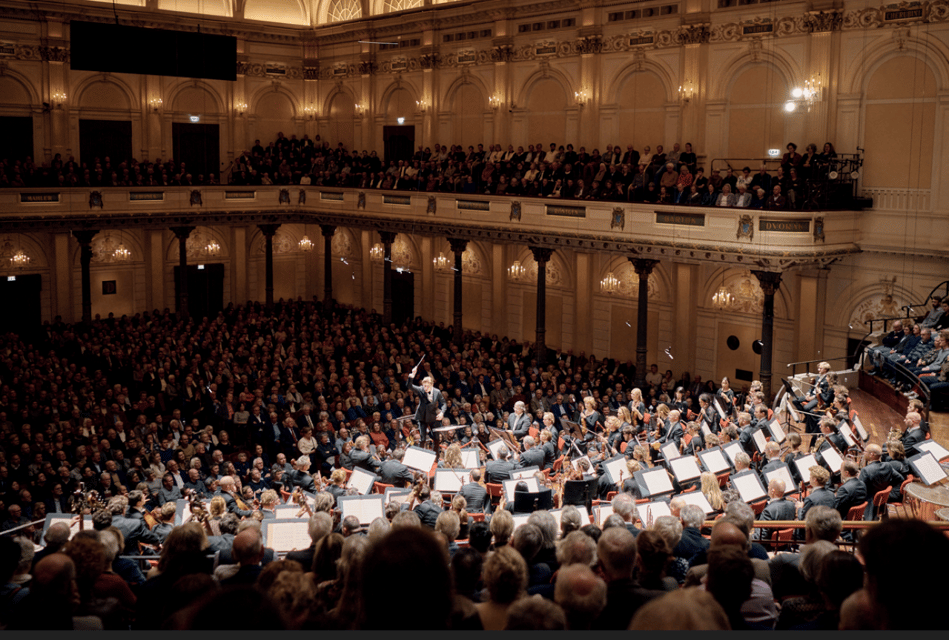
Yes—if you want a classic Amsterdam night with real music in a world-famous hall, this is an easy decision. For many people, the combination of Main Hall acoustics, a full symphonic program by the Royal Concertgebouw Orchestra, and the included drinks makes it feel more like a complete experience than just a ticket.
Book it if you’re the type who likes to sit still and listen. If you’re expecting a dinner-and-show experience with food included, or you’re traveling with very young children, you’ll probably be happier choosing something else.
My final nudge: check the concert program date you’re looking at, because the music changes, and traditions like the St Matthew Passion week before Easter or the Christmas Matinee can turn a normal evening into something seasonal.
FAQ
How long does the concert last?
Concerts last about 2 hours including an intermission of 20 minutes. The overall experience duration is listed as 1 to 2.5 hours depending on the starting time.
What’s included in the ticket price?
Your ticket includes the classical symphonic concert admission. You also get 1 drink before the concert and 1 drink during intermission (coffee, tea, soft drinks, beer, or wine). A welcome talk may be included if you selected that option.
Are drinks included, and what can I order?
Yes. Drinks are included: coffee, tea, soft drinks, beer, or wine. You receive one drink before the concert and one during intermission.
Where do I exchange my voucher for the ticket?
Go to the Concertgebouw box office to exchange your voucher for the ticket.
What kind of music will I hear?
Programs change every concert. The program may include works by Gustav Mahler, Richard Strauss, and Anton Bruckner. Depending on timing, you may also see concert traditions such as the St Matthew Passion week before Easter or the Christmas Matinee.
Is food included?
No. Food is not included with the ticket.
Is the concert suitable for children?
It is not suitable for children under 6 years old.
Is the venue wheelchair accessible?
Yes. The experience is wheelchair accessible.
Are the seats guaranteed to be the same each time?
The seating plan might vary slightly depending on the concert.