REVIEW · AMSTERDAM
Small-Group Women’s History Tour in Amsterdam
Book on Viator →Operated by Badass Tours · Bookable on Viator
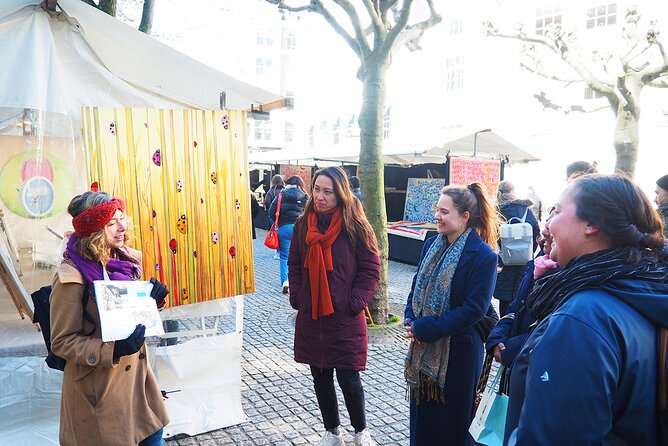
Amsterdam has a second story, and women wrote it. This small-group women’s history walk turns street corners into scenes, with a trained storyteller guiding you through Amsterdam’s historic center and its overlooked characters. I like that it’s not stuck on one stereotype; you get a wide range of women’s roles and ambitions, from culture to power, often with a spicy edge.
Two things I especially like: the guide’s focus on variety—not just “work” and “feminism”—and the way the route uses landmark settings to match the theme of each story. At some departures you may meet Elyzabeth, and you can feel how seriously she takes women’s history and how well she connects it to Amsterdam itself.
One consideration: this is a walking tour (about two hours), and parts of it depend on day-to-day conditions like whether the Begijnhof is open. If the weather is rough, you’ll need to be flexible, since the experience requires good conditions.
In This Review
- Key highlights to look for
- Why women’s history in Amsterdam works best as a story walk
- From Prins Hendrikkade 48 to Spui: how the walk is laid out
- Stop 1: Centraal Station’s harbor view as your opening scene
- Stop 2: Beurs van Berlage and the women who answer to money
- Stop 3: Dam Square and the art of a tasteful scandal
- Stop 4: Beurspoortje, motorcycles, and a story you’ll remember
- Stop 5: Nes and theater power, including a millionaire with a twist
- Stop 6: The equestrian statue of Queen Wilhelmina
- Stop 7: Rokin, the Miracle of Amsterdam, and the Women’s Riot
- Stop 8: Begijnhof, the calm women’s enclave (if it’s open)
- Price and value: is $47.47 worth it for 2 hours?
- Who should book this women’s history walk
- Practical FAQ
- FAQ
- How long is the Small-Group Women’s History Tour in Amsterdam?
- What is the group size?
- Where do I meet the guide, and where does the tour end?
- Is admission included for the stops?
- Can I get a mobile ticket?
- What happens if the weather is bad or I need to cancel?
- Should you book it?
Key highlights to look for
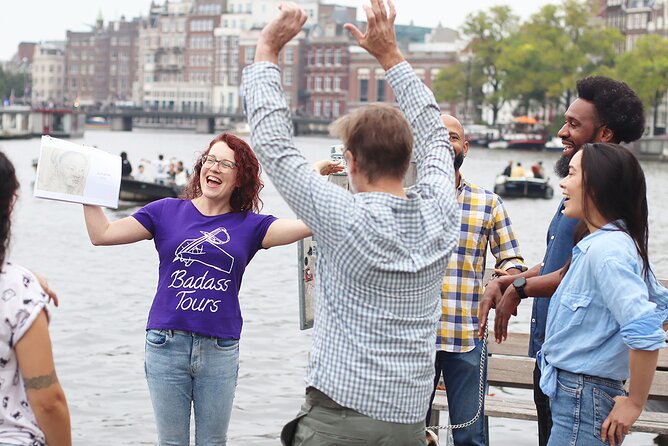
- A trained storyteller who makes women’s history feel like a live scene, not a slideshow
- 8 real-world locations tied to specific themes, from the stock exchange to a quiet women’s enclave
- Stop-by-stop pacing (about 10–20 minutes each) that keeps you moving and listening
- Small group size with a maximum of 12 people, so it stays conversational
- A “spice, but tasteful” storytelling style that’s about shock value without going trashy
- Begijnhof as a possible final bonus, if it’s open when you arrive
Why women’s history in Amsterdam works best as a story walk
Most history tours in big cities pick a narrow lane. This one doesn’t. It aims to correct a common problem: Amsterdam women’s history often gets reduced to working life or Dutch feminism. That’s part of it, yes. But Amsterdam women did much more—changing society at top levels, shaping culture, and defying both social pressure and even supernatural claims people once treated as real.
That approach matters because it changes how you see the city. Instead of memorizing names and dates, you start noticing patterns in the streets: where money and power sat, where performance and ideas lived, and where women found shelter—even in the middle of a noisy city.
The result is a tour that feels like city-reading. You’ll leave with an Amsterdam that makes more sense: not just canals and landmarks, but decisions, conflicts, and bold choices.
You can also read our reviews of more historical tours in Amsterdam



From Prins Hendrikkade 48 to Spui: how the walk is laid out

You start at Prins Hendrikkade 48 (1012 AC) and finish outside Begijnhof, near Spui (1012 Amsterdam). The route is designed for an easy-to-follow linear walk through the historic center.
A couple practical notes that affect your comfort:
- Mobile ticket: you’ll have what you need on your phone, which makes day-of logistics simpler.
- Near public transport: getting to the start and leaving after the tour is straightforward.
- Small group (up to 12): you get a personal feel without turning into a private tour.
If you’re the kind of traveler who likes your history with legwork (rather than sitting in one spot), this format is right on target. You’ll also get frequent photo opportunities because the stops are tied to major squares and prominent buildings.
Stop 1: Centraal Station’s harbor view as your opening scene
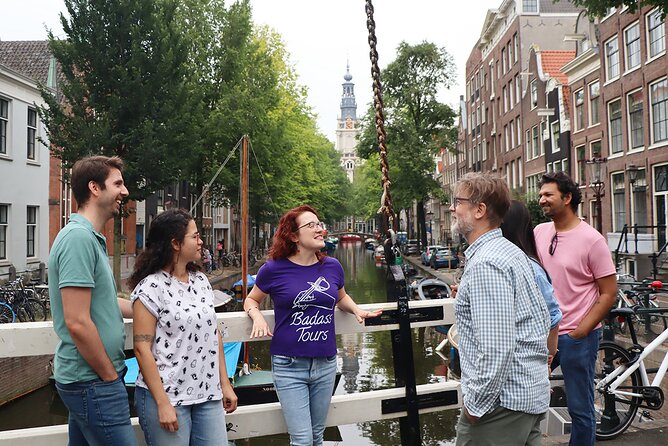
The tour kicks off across from Amsterdam Centraal Station, starting with an introduction across the old harbor. It’s a smart opener. Centraal isn’t just a pretty postcard. It’s a reminder that Amsterdam has always been a city of movement—people, trade, and influence.
You’ll get the city orientation you need early, then the stories start linking women’s lives to the urban machine around them. Since the first stop is about 10 minutes, it keeps things brisk and gets you ready for the more specific themes ahead.
Stop 2: Beurs van Berlage and the women who answer to money
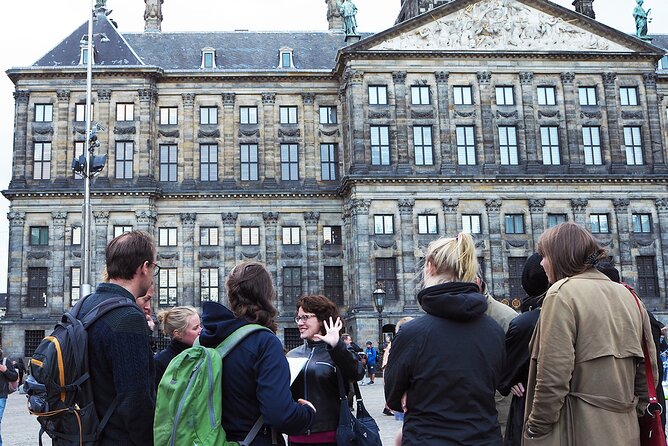
Next is Beurs van Berlage (about 15 minutes), where the tour connects the building to two female fighters and Amsterdam’s stock exchange—both old and new (the newer space now serves as an event hall).
Why this stop works: it forces you to look at power in a different way. You’re not just learning that women existed; you’re seeing how financial systems and public institutions shape who gets to speak, decide, and win.
Even if you know little about Amsterdam’s economic history, the framing makes the stakes clear. This is women’s history placed next to money history, so the city’s hierarchy becomes visible.
Stop 3: Dam Square and the art of a tasteful scandal
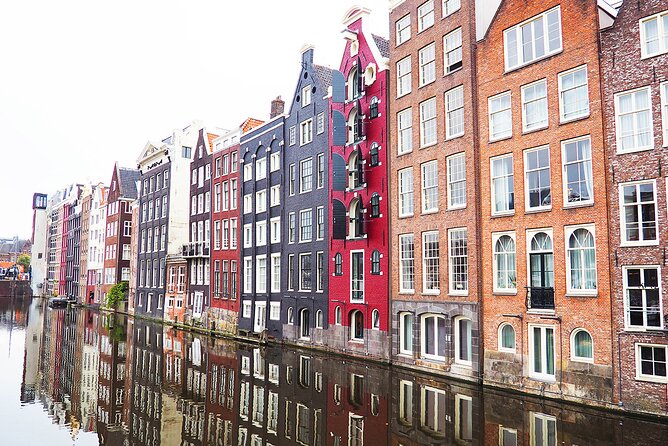
Then you hit Dam Square (about 10 minutes). Expect the atmosphere—people coming and going, the central energy of the city. The guide shares one of the more salacious stories, described as salacious but tasteful.
Here’s what you should look for: how the story uses a public place. Dam Square isn’t a private room where history happens. It’s where society performs itself. So when the tour brings a bold narrative into this open space, you start to understand how women navigated visibility—how you can be judged, mocked, protected, or erased depending on where you stand.
If you don’t love crowds, choose your timing wisely and be ready to listen while moving. The stop is short, which helps.






Stop 4: Beurspoortje, motorcycles, and a story you’ll remember
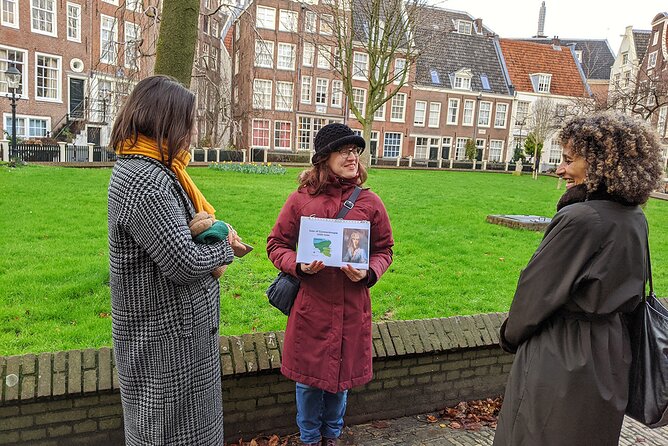
At Beurspoortje (about 10 minutes), the tour leans into one of its favorite badasses, with details that mix the practical and the outrageous. The story includes motorcycles, Amsterdam’s first modern gay bar, and a plot twist involving drinking Nazis under the table.
That mix isn’t random. It shows how women’s agency can look different depending on the era and the pressures around it. Sometimes resistance is political. Sometimes it’s social survival. Sometimes it’s just refusing to live by the rules others write for you.
Practical tip: this kind of story lands best when you let the guide’s pacing do the work. Don’t rush ahead for photos if it breaks your chance to follow the narrative thread.
Stop 5: Nes and theater power, including a millionaire with a twist
Next comes Nes (about 20 minutes), described as Amsterdam’s hub for cutting-edge theater. The tour uses that energy to talk about powerful women, including the first Black female millionaire in the Americas—plus a key hint that she wasn’t in the US.
This is the moment where you’ll likely feel the tour’s broader argument. Theater and culture aren’t just entertainment. They’re platforms for ideas, influence, and visibility. The stop uses a lively area to show how women gained power through performance, reputation, and public presence.
The “hint” detail matters for your understanding: it nudges you away from a US-centered default. You start seeing the Americas as connected, with wealth and status moving through wider networks than people often assume.
Stop 6: The equestrian statue of Queen Wilhelmina

At the equestrian statue of Queen Wilhelmina (about 10 minutes), you learn about the Netherlands’ first queen regnant. It’s a compact stop with big symbolism: a queen on a horse is public authority made stone.
This isn’t only about monarchy trivia. It reinforces a bigger theme the tour keeps returning to: women in leadership roles aren’t a modern invention, and they didn’t arrive without controversy. Even when power was formal, women still faced resistance—just in a different form than in everyday life.
If you like your history grounded in what you can see, this stop is satisfying because the monument is there for you to interpret.
Stop 7: Rokin, the Miracle of Amsterdam, and the Women’s Riot
Rokin is where the tour slows into meaning (about 20 minutes). You walk along Amsterdam’s first main waterway and hear about the Miracle of Amsterdam—plus how it led to The Women’s Riot.
Waterways shape cities. In Amsterdam, the water isn’t just scenery; it’s infrastructure, trade, and survival. Connecting “miracle” thinking to civic unrest makes the story feel real, not myth-like. It suggests that when systems fail or control shifts, people react—women included.
This stop is one you’ll want to pay attention to even if you’re tired. It tends to be the one that gives the tour its emotional spine: how big changes in a city’s functioning can show up in street-level action.
Stop 8: Begijnhof, the calm women’s enclave (if it’s open)
The final stop is Begijnhof (about 10 minutes), a quiet women’s enclave tucked into the city. The tour notes that if you’re lucky, the Begijnhof will be open, letting you experience that calm pocket for yourself.
Even if the entrance is limited, just knowing where you are helps. Amsterdam has always had spaces where people could live differently—especially when society gave women fewer freedoms on paper. The Begijnhof is a physical reminder that “freedom” sometimes meant finding community, not just having individual rights.
Since this final stop is conditional, keep expectations flexible. It’s still worth it as a closing note because the contrast with the surrounding city does the storytelling for you.
Price and value: is $47.47 worth it for 2 hours?
At $47.47 per person for about two hours, this isn’t a bargain in the way a free walking loop is. But it also isn’t trying to compete with museum ticket prices.
What you’re really paying for is:
- A trained storyteller who connects women’s stories to the specific places you’re standing in
- A small-group format (max 12) that supports a lively pace and better listening
- A route where the stops are admission ticket free, so you’re not adding extra costs mid-tour
For me, the value comes from integration. The tour uses Amsterdam’s built environment like a classroom. When that works, it sticks. You remember the place and the story together, not just facts in a vacuum.
If you only have one day or you’re trying to orient quickly, the price can feel more reasonable because you’re buying time and context.
Who should book this women’s history walk
This tour fits best if you like:
- Narrative history—stories tied to real locations
- City walking as part of learning
- A focus on women’s roles across time, including culture and power
- Light-to-medium humor and a “spicy but tasteful” style
It might be less ideal if you want long stops, museum-style depth, or lots of indoor time. Also, because it requires good weather, plan an alternate option if you’re visiting during a rainy stretch.
Practical FAQ
FAQ
How long is the Small-Group Women’s History Tour in Amsterdam?
It runs for about 2 hours.
What is the group size?
The tour has a maximum of 12 travelers.
Where do I meet the guide, and where does the tour end?
You meet at Prins Hendrikkade 48, 1012 AC Amsterdam and the tour ends outside the Begijnhof, near Spui (1012 Amsterdam).
Is admission included for the stops?
The tour’s stops list admission ticket free, so you shouldn’t need separate tickets for those specific locations.
Can I get a mobile ticket?
Yes. The tour provides a mobile ticket.
What happens if the weather is bad or I need to cancel?
The experience requires good weather. If it’s canceled due to poor weather, you’ll be offered a different date or a full refund. You can cancel for a full refund up to 24 hours before the start time.
Should you book it?
If you want Amsterdam history that changes what you notice when you walk—especially women’s stories tied to real public spaces—this is an easy yes. The small-group size, the trained storyteller, and the mix of landmarks from stock-exchange buildings to Begijnhof make the two hours feel like more than a casual stroll.
Book it early in your trip if you can. It helps you see the city with better context from day one. Just wear comfortable shoes, bring a layer for shifting weather, and be ready to listen while standing in some of Amsterdam’s most central spots.