REVIEW · AMSTERDAM
Skip-the-line Rijksmuseum & Rembrandt House Semi-Private 8ppl Max
Book on Viator →Operated by Babylon Tours Amsterdam · Bookable on Viator
Amsterdam rewards the curious, not the rushed. This semi-private tour strings together the Rijksmuseum and Rembrandt House with priority entry and time-saving pacing. You’ll also get a walking thread through canal districts and key Rembrandt-linked corners of the city.
I especially like the small group size (max 8). It keeps the vibe calm inside big-ticket places, and it means your guide can answer questions instead of speaking to a crowd.
One consideration: this is still a walking tour. If you have mobility limits, it’s not recommended, and even with skip-the-line access you may face short security queues and rules about bags inside the museum.
In This Review
- Key takeaways before you go
- Why skip-the-line at the Rijksmuseum actually changes your day
- A 10:00 start that’s built for comfort and focus
- Rijksmuseum tour: Rembrandt masterworks plus the stuff most people miss
- Spiegelgracht and Keizersgracht: the canal walk that doubles as orientation
- Museum Van Loon, Bloemenmarkt, and Munttoren: small stops with big atmosphere
- Rembrandtplein and the Night Watch bronze cast
- The Amstel bridges and the Stopera: city icons with a story
- Jodenbuurt: a preserved neighborhood walk toward Rembrandt’s world
- Museum Het Rembrandthuis: where the Rembrandt story turns personal
- Price and value: what $287.18 includes, and what you’ll pay separately
- Practical tips to keep the day smooth (and avoid surprises)
- Who should book this tour
- Should you book this small-group Rijksmuseum and Rembrandthuis tour?
- FAQ
- What language is the tour offered in?
- How long is the experience?
- Is the Rijksmuseum admission included?
- Does the tour include the Rembrandt House Museum entry?
- How big is the group?
- Where do you meet and where does it end?
- Is pickup from your hotel included?
- Is it available if it rains?
- Is it suitable for wheelchair users?
- Are lines completely eliminated because it is skip-the-line?
Key takeaways before you go
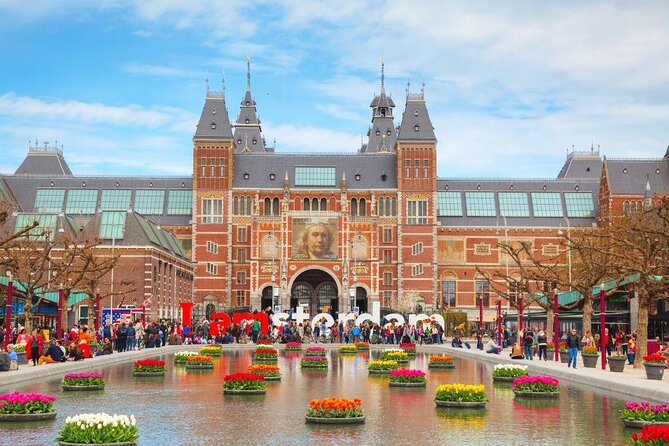
- Priority admission helps you avoid the worst Rijksmuseum waiting.
- Max 8 people keeps the tour personal and guide-focused.
- Rijksmuseum depth in 2.5 hours with clear highlights and context.
- Rembrandt’s story gets local at the house where he lived and worked.
- Canal-side city stops add orientation without turning into a long bus day.
- Security and dress rules mean you’ll want to travel light.
Why skip-the-line at the Rijksmuseum actually changes your day
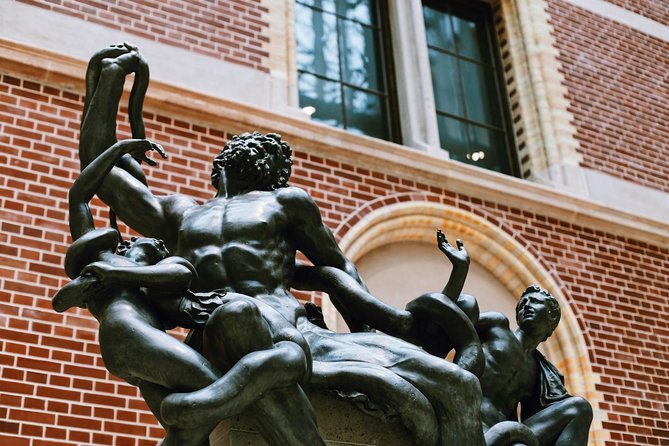
The Rijksmuseum is big enough that first-timers often lose time before they even begin to enjoy it. Here, priority admission means you spend less of your precious Amsterdam hours standing still and more time looking. That matters because the museum’s collection is spread across many rooms, and your guide is there to keep you moving with purpose.
You also get the “right kind” of guided pace. This tour is built as an overview with specific stops inside—so you’re not trying to plan your own route under pressure. I like that it’s not just a checklist; it’s framed as Dutch art and culture across centuries, with Rembrandt used as the thread that pulls you through.
Still, keep expectations realistic: the tour includes skip-the-line and priority-style access, but the tour notes that lines can form due to security at some attractions. Translation: plan for a bit of queueing around busy times, but expect far less than regular ticket lines.
You can also read our reviews of more private tours in Amsterdam


A 10:00 start that’s built for comfort and focus
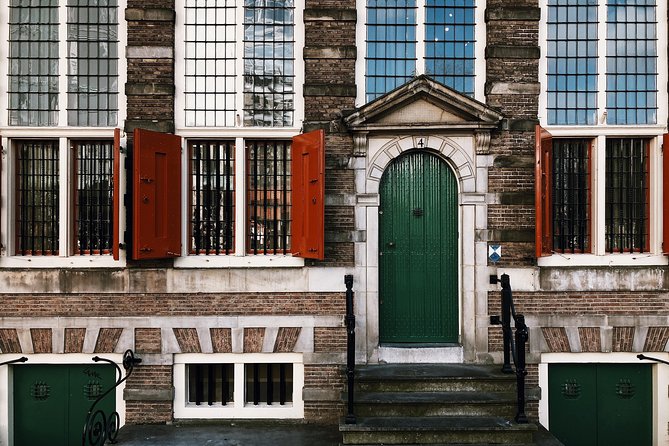
This tour starts at 10:00 am and gathers at Cobra Café on Hobbemastraat 18. It runs about 5 hours 30 minutes and includes a lunch break in that time window. You’ll end at Rembrandt House Museum on Jodenbreestraat 4, so the day finishes right where the Rembrandt story gets intimate.
Because it’s listed as running rain or shine, you should assume you’ll be outside for portions of the walk. The route is mostly a city stroll, with short stops, so the walking is manageable if you have moderate fitness—but it’s not the kind of tour where you can fully avoid steps and streets.
Also note the “small-group exclusivity” angle: it’s described as a private museum tour and walking tour with a professional guide exclusively for you, within a max group of 8. That structure is what keeps the experience from feeling like a standard big-bus afternoon.
Rijksmuseum tour: Rembrandt masterworks plus the stuff most people miss
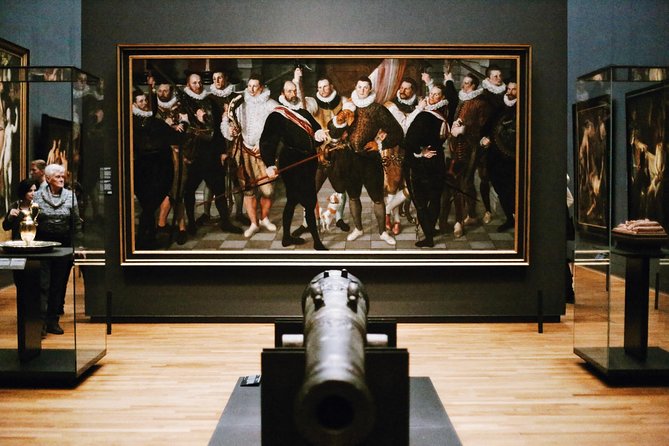
The Rijksmuseum segment lasts about 2 hours 30 minutes, and it’s designed to give you a mental map fast. The museum holds thousands of objects, and the tour frames the collection as a look at Dutch history through art and artifacts. If you’ve never visited, that overview helps you understand what you’re seeing instead of just ticking off famous rooms.
The guide-led highlights are anchored in major Rembrandt works and other star artists, including:
- The Night Watch
- The Jewish Bride
- The Syndics of the Drapers’ Guild
- Vermeer’s The Milkmaid
What I love here is that the famous names are paired with the “wait, what is that?” objects. You’ll learn about lesser-known pieces like 17th-century dollhouses, plus details that add texture to Dutch daily life. There’s also mention of a 19th-century library, and that’s the kind of unexpected space that makes a museum visit feel like discovery rather than navigation.
And yes, there’s context for Dutch culture beyond paintings. Expect stops involving Delft ceramics, and items like globes and a ship replica (the kind of objects that show how art, trade, and world-thinking connected in Dutch society).
A practical inside note: the tour warns that no large bags or suitcases are allowed inside the Rijksmuseum. You’ll want a small crossbody or thin daypack you can manage through security. If you carry too much, your museum time starts with stress, not art.
Spiegelgracht and Keizersgracht: the canal walk that doubles as orientation

After the Rijksmuseum, the tour shifts into a walking rhythm that’s great for first-timers. You head toward the Singelgracht, a canal that formerly formed the city’s outer defenses. This is a simple way to understand Amsterdam’s layout: water was a boundary before it became scenery.
Then you’ll visit the Spiegelgracht, part of the Canals of Amsterdam UNESCO World Heritage site. This stretch is known for art galleries and antiques, so it feels like an extension of museum culture—but outside, in a real neighborhood setting.
Next comes the Keizersgracht (Emperor’s Canal), the middle of the three main inner-city canals, and the note says it’s the widest. It’s named after Emperor Maximillian of Austria. Even if you don’t care about canal history, the scale cues help you “read” Amsterdam’s geography with less guessing.
These canal stops are short—think minutes, not long museum-time—and that’s the point. You get context and views without losing the thread of the day.
Museum Van Loon, Bloemenmarkt, and Munttoren: small stops with big atmosphere

This part of the walk adds charm and variety. You’ll pass Museum Van Loon, a canalside house associated with Ferdinad Bol, described as Rembrandt’s favorite pupil. Even if you don’t go inside (admission here is not included), it’s a useful checkpoint: it connects Rembrandt’s circle to the city’s architecture and neighborhood scale.
Then the tour moves toward the Bloemenmarkt, the flower market, where you’ll see the Munttoren (called the Mind Tower in the tour notes). This tower is tied to Amsterdam’s medieval defenses, originally part of a main gate in the city wall. That’s a nice contrast to Rijksmuseum’s 17th-century focus—you’re seeing how that era’s layout shaped the city you walk through today.
One caution: market areas can be lively and crowded. This isn’t described as an in-depth market tour, so keep your attention on the guide-led explanations and avoid getting pulled into shopping lines.
You can also read our reviews of more tours and experiences in Amsterdam






Rembrandtplein and the Night Watch bronze cast
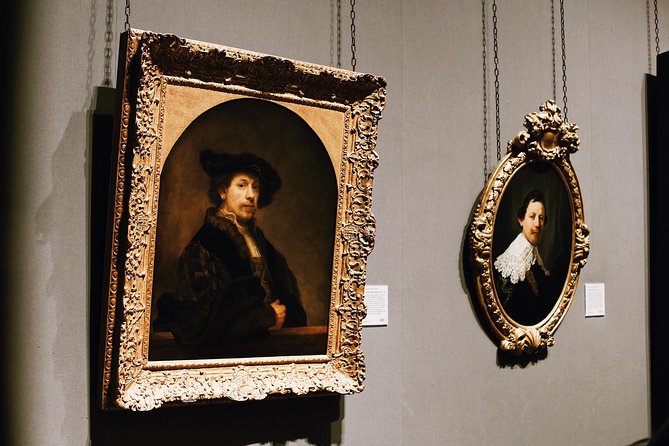
You’ll walk through Rembrandtplein, one of the city’s busiest squares. The tour highlights a bronze-cast representation of The Night Watch, created for the artist’s 400th birthday celebrations in 2006.
This stop is brief, but it works. Seeing The Night Watch outside the museum frames the painting as public culture, not just a ticketed experience. You also get the reminder that Rembrandt’s influence shows up in place names and city landmarks, not only inside galleries.
The itinerary description repeats this Night Watch viewing in a separate step, but the takeaway for you is simple: you’ll have a clear moment to connect the painting to the square called for him.
The Amstel bridges and the Stopera: city icons with a story
From Rembrandtplein, you’ll walk by the Amstel River and see two bridges mentioned by name: the Skinny Bridge and the Blue Bridge.
- The Skinny Bridge is described as Amsterdam’s most famous bridge, spanning the Amstel from 1934.
- The Blue Bridge is not blue today; it’s named after a wooden blue bridge from the 17th century.
This is the kind of detail that makes a walking tour feel intelligent rather than random. You’re learning what the city chose to remember, and why names matter.
Next comes the Stopera, the complex housing the city hall and the Dutch National Opera and Ballet. The tour notes that construction took at least 60 years. Even without a performance planned, it’s a dramatic visual stop, and it helps you understand the area’s civic and cultural importance.
Jodenbuurt: a preserved neighborhood walk toward Rembrandt’s world
The tour includes a walk into Jodenbuurt, described as the former Jewish neighborhood, with many preserved historic buildings managed by the Jewish Cultural Quarter.
This is brief—about ten minutes—but it changes the feel of the day. By this point, you’ve been inside for art, stepped through canal geography, and seen Rembrandt’s public footprint. This neighborhood stop adds a sense of place: Amsterdam isn’t just pretty canals and museum rooms; it’s layers of communities and history still visible today.
Keep your shoes ready for city sidewalks and curb transitions. The explanations will be most useful if you’re not distracted by footing.
Museum Het Rembrandthuis: where the Rembrandt story turns personal
The final stop is Museum Het Rembrandthuis, with about 1 hour allotted. This is where the tour becomes less about famous masterpieces and more about the human scale of Rembrandt’s life.
You’ll visit the historic building where Rembrandt lived and worked between 1639 and 1656. That date range is important: you’re not just looking at an exhibition titled Rembrandt—you’re stepping into a place tied to his working years.
The museum collection includes Rembrandt’s etchings and paintings of his contemporaries. That combination helps you see him not only as a lone genius but also as an artist embedded in the people and styles around him.
This end point also makes practical sense. You finish your walk right where your Rembrandt-focused day naturally culminates, instead of dispersing you back toward a far meeting spot.
Price and value: what $287.18 includes, and what you’ll pay separately
At $287.18 per person, this isn’t a bargain-basement tour. But it targets the expensive parts of Amsterdam sightseeing: major museum time with a professional guide and admission included.
Here’s what you do get for the price:
- Skip-the-line private museum tour plus walking tour
- Professional guide exclusively for your group
- About 5.5 hours
- All entrance fees included
- Mobile ticket
- Runs rain or shine
What you don’t get:
- Hotel pickup or drop-off (you’re advised to use Uber or taxi)
- Gratuities (optional)
- Certain admissions aren’t included for some city stops, like Museum Van Loon and some exterior views
- It’s not recommended for people using a wheelchair or with walking disabilities
So the value equation is: you’re paying for time saved at the Rijksmuseum, guided interpretation that helps you make sense of a huge collection, and a finished Rembrandt-focused experience at the house. If you’d otherwise try to DIY both places, you’d still likely spend a similar chunk of money once you add museum tickets, time, and the frustration of planning routes that aren’t built for first-time navigation.
One more timing note: this tour is often booked about 95 days in advance. That suggests you should reserve early, especially if you’re traveling in high season or with a tight schedule.
Practical tips to keep the day smooth (and avoid surprises)
A few details matter here because they directly affect how your visit feels:
- Bring a mobile phone number with country code, since confirmation and coordination depend on it.
- Dress appropriately for entry at some sites.
- Keep your bag small. The Rijksmuseum notes no large bags or suitcases, only handbags or small thin packs through security.
- Expect quiet-room rules in some parts of the Rijksmuseum. If a space is restricted for speaking, your guide should explain where that applies before you enter.
- Even with skip-the-line, increased security means you might still see short queues in certain places.
If you do these things, you’ll spend your time on art and explanations instead of dealing with logistics at the door.
Who should book this tour
This tour makes the most sense if:
- You’re a first-time visitor who wants a guided overview without building a complex itinerary.
- You’re a Rembrandt fan (or want to understand why he matters) and you want both masterpieces and the personal end point at his house.
- You prefer small-group attention over hearing vague commentary from a large bus group.
- You want city orientation through canals and landmarks, not just indoor museum time.
It’s less suitable if you need step-free access or have limited mobility, since the tour is described as not recommended for wheelchair use.
Should you book this small-group Rijksmuseum and Rembrandthuis tour?
I’d book it if your top goals are priority entry, a guided overview of the Rijksmuseum highlights, and a satisfying ending at Rembrandt’s house. The small-group size is the difference-maker: you get attention, context, and a calm rhythm across a day that could otherwise feel rushed.
Skip it only if you’re the type who wants to wander completely on your own with zero structure. This tour gives you a plan for seeing the “important things” and connecting them with Rembrandt’s story and Amsterdam’s geography. If you like that kind of direction—this is a very strong fit.
FAQ
What language is the tour offered in?
The tour is offered in English.
How long is the experience?
It runs for about 5 hours 30 minutes (approximately).
Is the Rijksmuseum admission included?
Yes. Admission fees are included, and the Rijksmuseum portion includes a ticket as part of the tour.
Does the tour include the Rembrandt House Museum entry?
Yes. The tour includes the Rembrandt House Museum stop, and admission fees are included for the experience overall.
How big is the group?
The tour allows a maximum of 8 people.
Where do you meet and where does it end?
You meet at Cobra Café, Hobbemastraat 18, 1071 ZB Amsterdam and you end at Rembrandt House Museum, Jodenbreestraat 4, 1011 NK Amsterdam.
Is pickup from your hotel included?
No. Hotel pickup and drop-off are not included.
Is it available if it rains?
Yes. The tour will run rain or shine.
Is it suitable for wheelchair users?
The tour is not recommended for those with walking disabilities or using a wheelchair.
Are lines completely eliminated because it is skip-the-line?
Skip-the-line priority helps, but the tour notes that lines may still form in some cases due to security measures at attractions.