REVIEW · AMSTERDAM
Amsterdam National Maritime Museum Skip-the-line-Ticket
Book on Viator →Operated by Het Scheepvaartmuseum · Bookable on Viator
Amsterdam’s sea stories come with receipts. This skip-the-line ticket gets you into Het Scheepvaartmuseum quickly, so you can spend more time looking and less time waiting. Once inside, you get a relaxed 1-hour audio guide that helps you make sense of Dutch maritime power, from maps and instruments to ship details.
I especially like the museum’s setting: it’s housed in a restored 17th-century Arsenal, once tied to the Royal Dutch Navy’s storage. And I love that you’re not trapped in a rigid route—you can use the audio to steer your visit, or wander the halls at your own pace while the building’s courtyard and glass roof give you a calm place to reset.
One possible drawback: this experience is built around self-paced visiting, so if you want a live guide talking continuously in real time, you may feel a bit unstructured. Plan on choosing what you’ll focus on before you lose time to the coolest-looking objects.
In This Review
- Key things to know before you go
- First impressions: what makes Het Scheepvaartmuseum special
- Skip-the-line entrance and the restored Arsenal setting
- Your on-site plan: use the audio guide, then choose your own route
- Golden Age of maritime power: what to focus on inside
- East wing-style favorites: art, artifacts, and photographs
- Virtual seafaring adventure and the old port journey
- The outdoor-style payoff: replica ship and the cargo ship moment
- How long should you plan for? (30 minutes vs 1.5 hours)
- Price and value: is $24.03 worth it?
- Getting there and keeping your day flexible
- Who this ticket is best for
- Should you book this skip-the-line ticket?
- FAQ
- What’s included with the Amsterdam National Maritime Museum skip-the-line ticket?
- Is the ticket mobile?
- What language is the audio guide offered in?
- How long should I plan to spend at the museum?
- Where is the National Maritime Museum located?
- Is hotel pickup or drop-off included?
- Is transportation to and from the museum included?
- Is there food or drinks included?
- Is the museum wheelchair-friendly?
- When is the start time?
Key things to know before you go
- Skip-the-line admission means less standing outside and more time with the exhibits
- 1-hour audio guide (English) helps you hit the highlights without feeling rushed
- 17th-century Arsenal setting adds real atmosphere beyond the displays
- Golden Age maritime exhibits include navigation instruments, ship decorations, globes, and large digital screens
- Replica of an 18th-century Amsterdam cargo ship is a major visual payoff
- Family-friendly and wheelchair-friendly—you can bring kids or move through comfortably at your own pace
First impressions: what makes Het Scheepvaartmuseum special
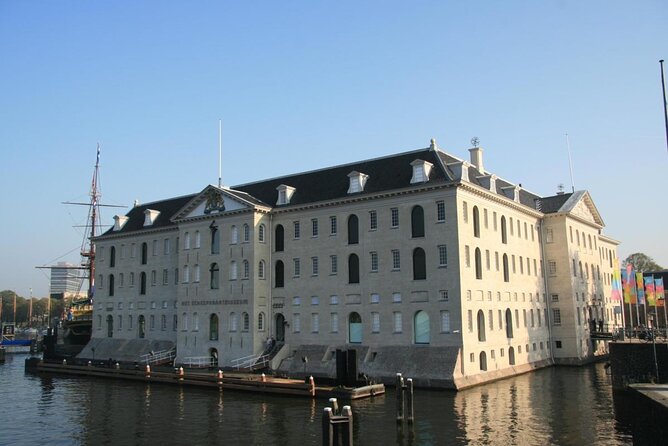
Het Scheepvaartmuseum, also called Het Scheepvaartmuseum in daily use, is set up for visitors who want history that feels tangible. You’re not just looking at paintings in a generic room—you’re walking around a restored 17th-century Arsenal, a building tied to the Royal Dutch Navy’s storehouse function. Even before you reach the collections, the place already tells you why the Netherlands cared so much about ships, routes, and sea power.
The second big reason I’m a fan: the museum’s layout and content give you options. You can follow the highlights with the included 1-hour audio guide, or you can freestyle. That matters in Amsterdam, where your energy levels and weather can change fast. If you’re visiting on a busy day, the skip-the-line ticket helps you start strong.
You can also read our reviews of more tours and experiences in Amsterdam



Skip-the-line entrance and the restored Arsenal setting

You’ll travel independently to the museum at Oosterdok, Amsterdam’s East Dock area. The ticket is mobile, and you can use it for fast access when you arrive. The practical win here is timing: the experience is typically about 30 minutes to 1.5 hours, so losing 45 minutes to a ticket line would cut into your real time with the exhibits.
Once you’re in, take a moment to orient yourself. The courtyard area has a modern glass roof, which turns the space into a bright “breather” between galleries. It’s also a useful reset point if you’re visiting with kids, or if you want to decide which wing to prioritize before you start moving fast.
Your on-site plan: use the audio guide, then choose your own route
The included audio guide is designed for a 1-hour walkthrough of highlights. Since it’s in English, it’s an easy anchor for understanding what you’re seeing—especially if Dutch maritime history isn’t already part of your mental map.
Here’s how I’d use it to get the best value:
- Listen early to learn what the museum wants you to notice (routes, instruments, ship design).
- Then switch to selective browsing for the objects that grab you most.
- If you start feeling “information overload,” pause and just look around the room. Ship models and navigational instruments often reward slow staring.
The flexibility is key. Some people want structure. Others want to move from display to display like a detective. This ticket lets you do either without feeling like you’re breaking the rules.
Golden Age of maritime power: what to focus on inside
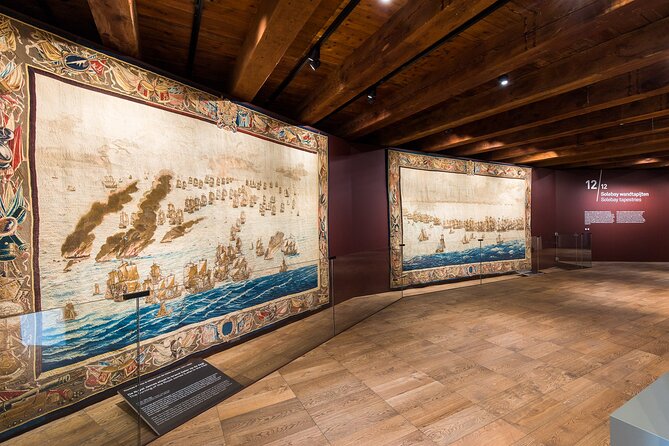
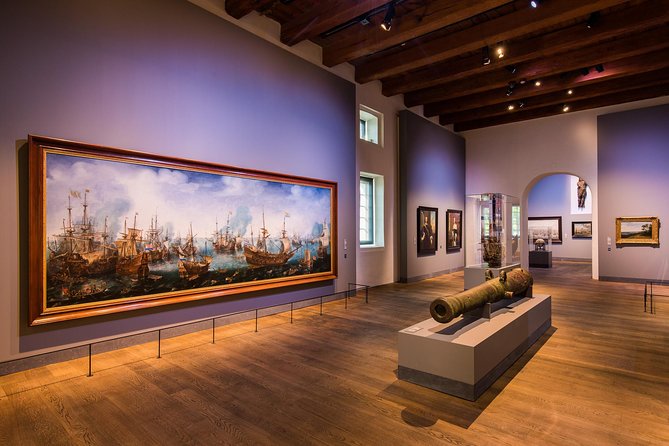
Inside, you’ll find a mix of traditional artifacts and more modern presentation. One standout is the set of high-definition screens that chart the Netherlands’ Golden Age of maritime power in the 17th century. They’re helpful if you want the big picture—when the Dutch were building influence through trade, navigation, and shipbuilding.
Then you can switch from timeline to detail. Expect halls filled with:
- Globes and navigation tools
- Ship decorations and model ships
- Maritime landscapes and gallery displays built to show how sea travel shaped daily life and national ambitions
This is one of the most praised parts of the museum because it’s organized in a way that makes objects feel related, not random. You’ll likely come out with a clearer idea of how navigation instruments connect to ship design, and how art and documentation reflect what Dutch sailors and shipbuilders valued.
East wing-style favorites: art, artifacts, and photographs

The museum has areas with strong visual storytelling, including art and documentation that help you see maritime history as a whole cultural project—not only engineering and commerce.
If you love museums where the details matter, spend extra time in the sections focused on the East wing-style collections (art, artifacts, photographs). You don’t need to read every label to benefit. Let your eyes track patterns: repeated ship types, recurring decorative styles, and the way objects from trade and exploration show up as symbols back on land.
You can also read our reviews of more museum experiences in Amsterdam





Virtual seafaring adventure and the old port journey
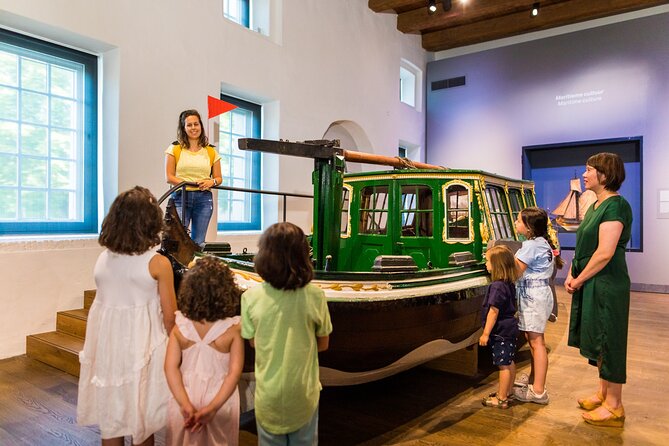
As you work through the experience, you’ll also come across immersive elements, including a virtual seafaring adventure and a journey through old Amsterdam port. This is where the museum helps you connect the dots between static exhibits and real-world movement—routes, arrivals, and the scale of port life.
This kind of segment is worth your attention even if you’re not a big “multimedia” person. It can turn the museum’s objects into something you can picture, which makes the rest of the displays easier to understand.
The outdoor-style payoff: replica ship and the cargo ship moment
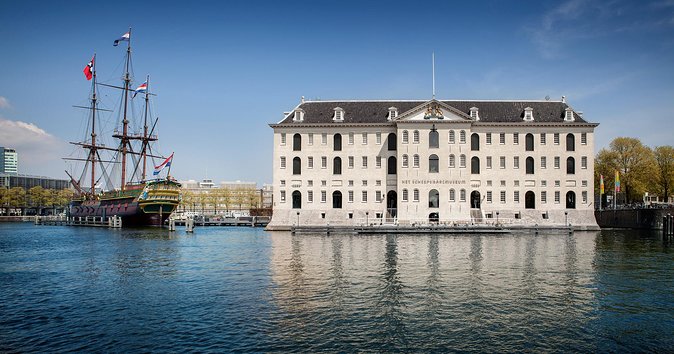
The museum’s showpiece is a replica of an 18th-century Amsterdam cargo ship that you can explore. This is the moment where a lot of visitors relax into pure visual interest: wood, structure, and the sense of how cargo ships were built to do their job.
You’ll feel the shift from “reading history” to “seeing how it worked.” If you’re traveling with children, this is often the easiest section to keep attention, because it’s concrete and physical. If you’re traveling solo or as a couple, it’s the perfect place to slow down and take in how ship design reflects trade priorities.
If you only have a short window, this is one of the first areas I’d prioritize.
How long should you plan for? (30 minutes vs 1.5 hours)

The ticket experience is listed as 30 minutes to 1 hour 30 minutes, and that range matches how different people use the audio guide.
- If you’re in a hurry: aim for the audio highlights, then skim models and navigation tools, saving the replica ship for last.
- If you want a calmer visit: finish the audio guide, then return to your favorite rooms for deeper looking—especially the navigation instruments and the 17th-century Golden Age screens.
A good strategy is to decide your “must-sees” before you start walking. The museum has enough to keep you moving, but you’ll enjoy it more if you don’t try to see everything equally.
Price and value: is $24.03 worth it?
At $24.03 per person, this skip-the-line ticket sits in the mid-range for major museums in Amsterdam. The value comes from two places:
1) Time saved: you’re paying for easier entry, which matters in a museum experience where your total visit time is limited and you’ll want to get into the collections quickly.
2) Included audio guide: the 1-hour audio guide is part of the ticket, so you’re not adding an extra cost for interpretation.
If you’re the type who likes to wander with structure (or understand what you’re seeing without hiring a separate guide), this is a strong setup. If you already know a lot about Dutch maritime history and you want maximum depth with minimal media, you might still enjoy it, but you’ll need to focus so the time doesn’t fly by.
Getting there and keeping your day flexible
The museum is near public transportation, and you start at 10:00 am. You’re traveling independently, so give yourself a little buffer. Oosterdok can be a straightforward arrival area, but Amsterdam days are better when you’re not sprinting.
Bring comfy shoes. Even at a museum pace, you’ll likely walk through multiple halls plus the courtyard spaces. And if you’re visiting with kids, plan on letting them linger—interactive-style displays make it easier to slow down without killing the schedule.
Who this ticket is best for
This experience fits best if you want a self-guided museum visit that still gives you direction. I’d point you to it if:
- You like maritime history but don’t want to get stuck reading everything
- You want strong museum visuals: ship models, instruments, and high-definition screens
- You’re visiting with family and want something that works for multiple ages
- You appreciate a museum building with real historical atmosphere (not only modern galleries)
It also works for wheelchair users; the museum is wheelchair-friendly, so you can focus on the exhibits without constantly thinking about access issues.
Should you book this skip-the-line ticket?
Yes—if you’re aiming for an efficient museum visit with a solid highlight route. The skip-the-line feature is the money-maker on a time-limited day, and the included English audio guide helps you get more meaning from the objects without needing extra planning.
Skip it only if you strongly prefer live narration with a guide leading every step, or if you’re the kind of visitor who enjoys museums exclusively through reading labels and doesn’t need any audio support. Otherwise, this is a sensible, value-driven way to tackle one of Amsterdam’s best maritime-focused collections.
FAQ
What’s included with the Amsterdam National Maritime Museum skip-the-line ticket?
You get skip-the-line admission and a 1-hour audio guide.
Is the ticket mobile?
Yes. It’s provided as a mobile ticket.
What language is the audio guide offered in?
The audio guide is offered in English.
How long should I plan to spend at the museum?
The experience is approximately 30 minutes to 1 hour 30 minutes.
Where is the National Maritime Museum located?
It’s at Het Scheepvaartmuseum in Amsterdam, at Oosterdok (East Dock).
Is hotel pickup or drop-off included?
No. Hotel pickup and drop-off are not included.
Is transportation to and from the museum included?
No. Transportation to and from the museum is not included.
Is there food or drinks included?
No. Food and drinks are not included.
Is the museum wheelchair-friendly?
Yes, the museum is wheelchair-friendly.
When is the start time?
The start time is 10:00 am.