REVIEW · AMSTERDAM
Rembrandt & Van Gogh Amsterdam walking experience
Book on Viator →Operated by Guidance Travel · Bookable on Viator
Art meets street corners in Amsterdam. This 2-hour Rembrandt and Van Gogh walking experience turns famous names into real locations, with a local guide and great photo stops built into the route. It’s also a small-group format, so the pace stays relaxed and you can ask questions without yelling across a crowd.
I also like that it’s built for first-timers: you’ll get a sensible sense of how Amsterdam’s squares, churches, and canal views connect. One possible drawback to plan for: the stops are short (around 10–15 minutes each), so if you prefer long museum-style time, you’ll want to pair it with a bigger visit right after—especially the Rijksmuseum, which is not included.
In This Review
- Key things I’d mark on your map before you go
- Why this Rembrandt and Van Gogh Amsterdam walk works so well
- Starting at Prins Hendrikkade 95, ending at Blauwbrug
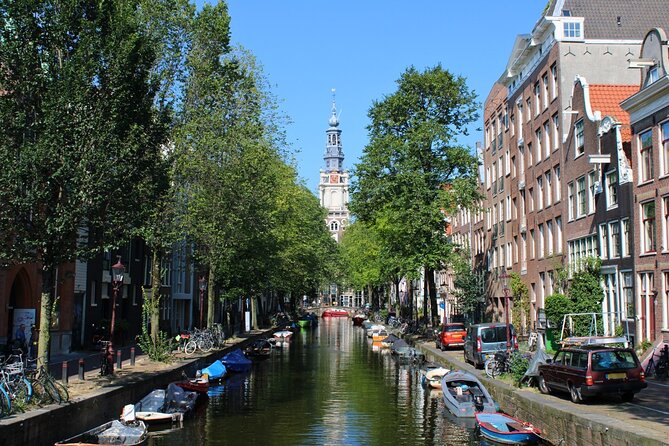
- Weeping Tower (Stop 1): the vistas painters couldn’t ignore
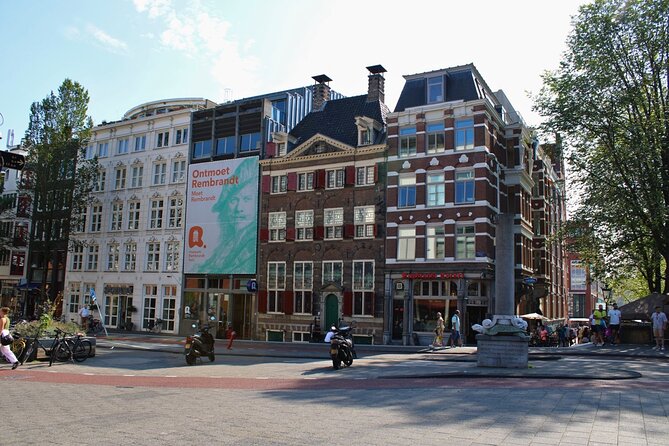
- Nieuwmarkt (Stop 2): turning a square into an artist’s reference point
- Trippenhuis (Stop 3): Rembrandt’s link to this impressive building
- South Church (Stop 4): Italy’s influence on 17th-century Dutch painting
- Museum Het Rembrandthuis (Stop 5): Rembrandt’s home and the art-market engine
- Oudemanhuispoort (Stop 6): Vermeer connections and what to spot at the Rijksmuseum
- Staalstraat (Stop 7): where French inspiration meets Amsterdam’s work
- Tivoli Doelen Amsterdam Hotel (Stop 8): the Frans Hals painting story in Amsterdam
- Blauwbrug (Stop 9): final painter’s spot and a classic canal panorama
- Rijksmuseum ticket value: how to use this tour as prep
- Group size, pace, and photo strategy for best results
- Who this is best for (and who should think twice)
- Should you book the Rembrandt & Van Gogh Amsterdam walking experience?
- FAQ
- How long is the Rembrandt and Van Gogh Amsterdam walking experience?
- Is the tour offered in English?
- What’s included in the price?
- Do I need a Rijksmuseum ticket?
- Where does the tour start and end?
- How big is the group?
- FAQ
- Is there admission cost for the stops on the walk?
- Is the tour suitable for most travelers?
- Can I bring a service animal?
- Is the meeting area near public transportation?
- Do I receive a ticket on my phone?
- What’s the cancellation rule?
Key things I’d mark on your map before you go
- Small-group format (max 15): easier conversation and more attention at each stop.
- Photo-friendly viewpoints: multiple chances to frame canals, towers, and bridges.
- Art on the route, not just in a lecture: you connect painters to buildings you can actually see.
- Short, efficient timing: around two hours total, with quick hits at nine locations.
- Rijksmuseum prep built in: you’ll know what to look for when you buy entry separately.
- English-speaking local guide: offered in English and suited to most travelers.
Why this Rembrandt and Van Gogh Amsterdam walk works so well
If Amsterdam is your first big art city, this type of route can save you time. Instead of hopping randomly between landmarks, you follow a line of streets where Dutch painting grew up alongside canals, churches, and the daily rhythm of the city.
I like that the tour is about connections. Each stop is tied to a painter or a specific artistic idea—Rembrandt’s world, Vermeer’s angle, Italian influence on Dutch painting, and how other painters (including French artists and Frans Hals) fit into the bigger story. You’re not just collecting names. You’re learning what to notice next time you’re face-to-face with a painting.
You also get practical orientation. By the end at Blauwbrug, you’ve typically seen the kind of views and waterfront geometry that shape how Amsterdam feels. That makes it easier to plan a canal cruise, a museum day, or a simple wander afterward.
You can also read our reviews of more walking tours in Amsterdam

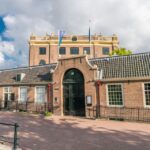
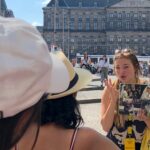
Starting at Prins Hendrikkade 95, ending at Blauwbrug
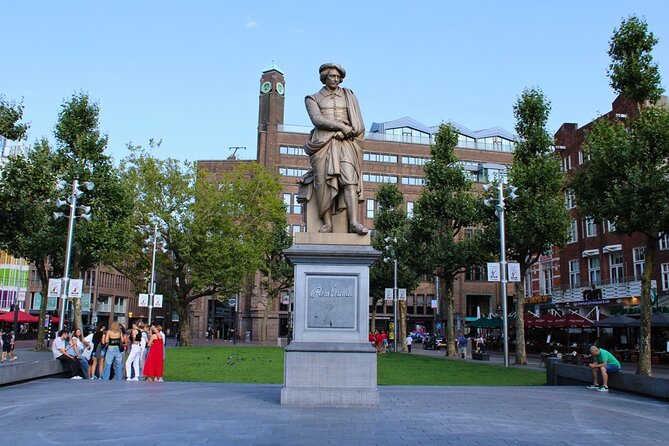
The meeting point is Prins Hendrikkade 95, 1012 AE Amsterdam. The tour ends at Blauwbrug, 1011 PT Amsterdam, in the center between Rembrandtplein and Waterloo Square.
Two practical tips here:
- Give yourself a little extra time to find the exact spot. One customer noted they had brief confusion at the start, and the fix was simply locating the guide waiting nearby.
- Think of the endpoint as a gift. Blauwbrug is in a lively central zone, so it’s convenient for lunch and for continuing your day without backtracking.
The tour uses a mobile ticket, and it runs in English. Duration is about 2 hours, with a maximum of 15 travelers, so you won’t feel packed in.
Weeping Tower (Stop 1): the vistas painters couldn’t ignore
Your first stop is the Weeping Tower, with time for a quick look and a big takeaway: what scenes caught artists’ attention in this part of Amsterdam, and why a good view can become part of an artist’s visual language.
Even when you don’t know anything about art, you can feel the point. This is where the tour starts training your eye. You learn how to look at a skyline, a stretch of water, and the way buildings frame the horizon.
It’s also a great warm-up. You’ll be walking, taking in the city, and snapping photos before the tour settles into the more “inside the art story” stops.
Nieuwmarkt (Stop 2): turning a square into an artist’s reference point
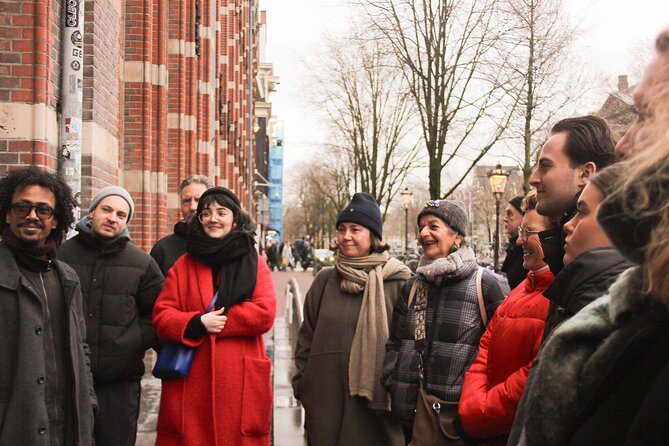
Next up is Nieuwmarkt. The idea here is simple: painters didn’t invent their subjects in a vacuum. They watched city life and noticed particular angles, textures, and rhythms.
This stop is also friendly if you like photography. Squares in Amsterdam often give you a mix of street life and architecture in one frame. And the tour keeps it short—about 15 minutes—which means you stay moving and don’t get bogged down.
If you’re the kind of person who likes to stand still and compare details, just remember this isn’t an hour-long photo walk. It’s more of a guided “look again, but smarter” session.
Trippenhuis (Stop 3): Rembrandt’s link to this impressive building
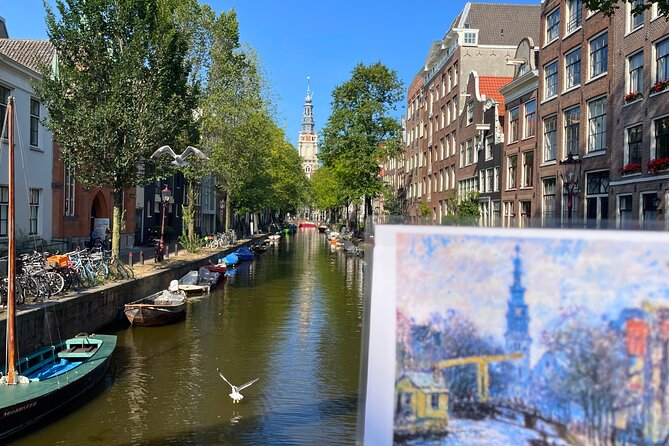
At Trippenhuis, the tour connects you to Rembrandt in a specific way: you’ll learn who Rembrandt painted here. That’s the heart of this stop—getting from a famous name to a place where something real happened.
The tour also brings in the wider institutional story tied to the Rijksmuseum—including notable figures who once moved through its halls. You don’t need museum expertise for this part. The value is that you’ll understand why major art collections end up where they are, and what that means for the paintings you’ll see later.
One practical note: since this is a short stop (about 15 minutes), you’ll get the storyline and key details, but you won’t have time for long reading. If something sparks your interest, jot it down in your phone so you can chase it during your museum visit.


South Church (Stop 4): Italy’s influence on 17th-century Dutch painting
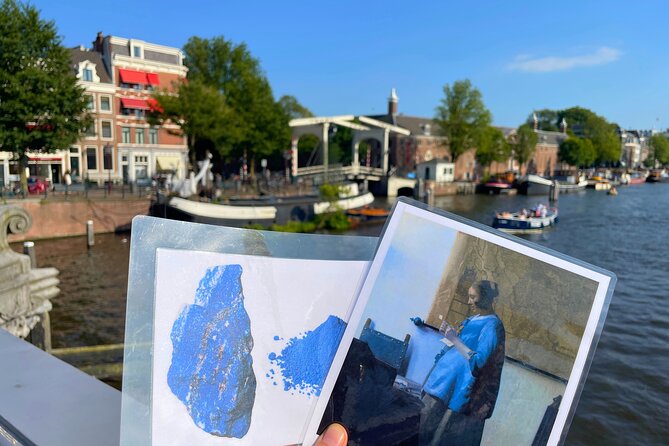
At the South Church, you’ll explore how Italian influence shaped 17th-century Dutch painting. The tour also points out a groundbreaking technique that helped Dutch artists gain fame.
Even if art history isn’t your thing, this stop is designed to be understandable in plain language. The goal is to help you recognize why certain Dutch works look the way they do—how artistic ideas traveled, how techniques spread, and how styles became recognizable.
Expect this to be more conceptual than the waterfront stops. Still, it’s worth it because it gives you a framework. When you later see Dutch paintings, you’ll be able to ask: What look is this? Where did it come from? Why did it catch on?
Museum Het Rembrandthuis (Stop 5): Rembrandt’s home and the art-market engine
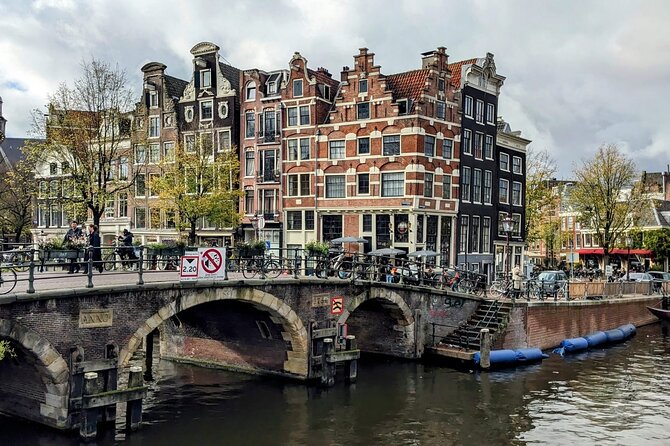
This is the most “Rembrandt-forward” moment: Museum Het Rembrandthuis is tied to the former site of Rembrandt’s famous 17th-century home.
The tour also explains the bigger forces behind his success—specifically how the rise of the Dutch art market helped fuel his career. That matters because Rembrandt wasn’t only an artist; he was part of a system with patrons, buyers, and demand.
If you like realism in art (and you like the drama of looking behind the scenes), this stop helps connect the dots. You’ll walk away with a stronger sense of how artists earned a living and how that affected what they painted.
This stop is also about timing: you’ll get about 15 minutes total. If you want to go beyond the street-level story, this is the moment to decide whether you’ll add more time later.
Oudemanhuispoort (Stop 6): Vermeer connections and what to spot at the Rijksmuseum
At Oudemanhuispoort, the tour steps into the orbit of Vermeer. You’ll learn about the Dutch master’s world and how a noted collection now displayed at the Rijksmuseum ties back to this area.
This stop is especially valuable if you plan to visit the Rijksmuseum right after. The tour is essentially pre-loading your brain with the kinds of questions to ask when you stand in front of Dutch works.
What I like here is that it turns a museum visit from passive “look and move on” into active “notice and connect.” You won’t need to memorize art theory. You’ll simply have better context.
Staalstraat (Stop 7): where French inspiration meets Amsterdam’s work
At Staalstraat, the tour answers a fun kind of question: which renowned French painter drew inspiration from these artistic giants. The stop also looks at one of Amsterdam’s thriving industries, showing how art and the city’s economy can be part of the same story.
This is one of those moments that makes the tour feel less like a straight-line school lesson. It shows that Dutch painting didn’t only influence locals; it traveled through visitors, collectors, and artists across borders.
It’s also a quick stop (around 10 minutes), so you’ll get the essential link, not a long lecture. If the French connection sparks curiosity, keep your notes and search it later in the museum or on your own.
Tivoli Doelen Amsterdam Hotel (Stop 8): the Frans Hals painting story in Amsterdam
This stop at the Tivoli Doelen Amsterdam Hotel ties the location to a former headquarters and highlights something specific: the only painting Frans Hals created in Amsterdam.
That kind of detail is exactly why this walking tour can outperform a generic sightseeing loop. Instead of saying Rembrandt and Van Gogh are famous, you learn what makes the story unusual—why a location matters because of a very particular artistic moment.
The stop is short (about 10 minutes), so it’s best to listen for the key facts, then use the moment to imagine what the building must have been like during Hals’s time.
Blauwbrug (Stop 9): final painter’s spot and a classic canal panorama
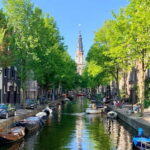
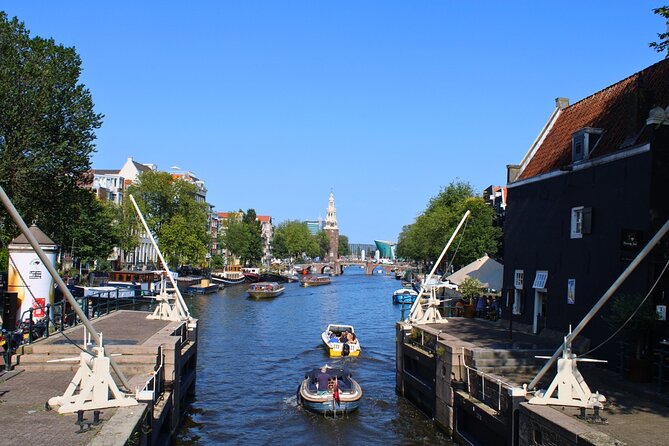
You end at Blauwbrug, with time to learn what painter used to paint here and to enjoy one of Amsterdam’s most breathtaking vistas.
This is a strong closing strategy. Starting with tower-and-view energy and finishing with a canal bridge view gives your trip a satisfying arc. By the end, you’re not just thinking about art names—you’re seeing Amsterdam as a place that visually fed artists.
If you want the best photos, this is where to be ready. You’ll likely have the most “wide-angle Amsterdam” feeling in this last stretch, because the bridge setting gives multiple ways to frame water, buildings, and sky.
Rijksmuseum ticket value: how to use this tour as prep
The Rijksmuseum is not included. Admission is listed as €22.50 per person.
That’s not a problem if you treat this tour as smart preparation. Nine exterior stops plus art ideas means you walk into the Rijksmuseum with better bearings: you know what kind of connections to look for, and you can focus on paintings rather than trying to figure out the basics while you’re inside.
If you’re unsure whether to do both, use this rule:
- If you want a guided “where this came from” understanding, pair the walk with a Rijksmuseum visit.
- If you only want light art context and plan to spend most time outside, you can skip the museum and still get plenty from the route.
Group size, pace, and photo strategy for best results
This is a maximum 15 travelers tour, and that size matters. It helps keep the guide’s attention on the group, not lost in a big shuffle.
The pace is also built around quick stops: you’ll generally get 10–15 minutes at each location. That works well for most people because it prevents information overload. Still, it can feel fast if you’re the type who likes to linger in one spot.
For photos, the guide’s timing is your friend. The route includes multiple “pull over, look, shoot, move” moments. Bring:
- Comfortable walking shoes (Amsterdam gets uneven and you’ll be moving for about two hours).
- A phone with enough battery if you’re shooting a lot of canal/bridge angles.
Who this is best for (and who should think twice)
This walking tour fits art-lovers who want a guided route with context, not a heavy museum day. It’s also helpful if you’re in Amsterdam for the first time and need to understand where things sit.
It’s not the best match if you want:
- Long museum time at each stop.
- Deep technical art analysis at a slower pace.
But if you want a clear, street-level way to connect Rembrandt and Van Gogh-related themes to real corners of Amsterdam, this hits a sweet spot.
Should you book the Rembrandt & Van Gogh Amsterdam walking experience?
I’d book it if you want:
- A small-group route that keeps the energy friendly.
- A guided path through key painter-linked locations.
- A quick setup for the Rijksmuseum so your time there feels more focused.
Skip it only if you dislike walking tours or if you’re committed to spending the full day inside museums with lots of unstructured time.
One last thing: guides can make a real difference. Manouk, a guide associated with this experience, has been specifically praised for preparation and for speaking clearly when a traveler needed hearing support—so if communication is important to you, it’s worth letting the team know your needs.
FAQ
How long is the Rembrandt and Van Gogh Amsterdam walking experience?
It runs for about 2 hours.
Is the tour offered in English?
Yes, the tour is offered in English.
What’s included in the price?
The tour includes a local guide.
Do I need a Rijksmuseum ticket?
Yes. The Rijksmuseum is not included, and the ticket price is listed as €22.50 per person.
Where does the tour start and end?
It starts at Prins Hendrikkade 95, 1012 AE Amsterdam and ends at Blauwbrug, 1011 PT Amsterdam, in the center between Rembrandtplein and Waterloo Square.
How big is the group?
The tour has a maximum of 15 travelers.
FAQ
Is there admission cost for the stops on the walk?
The tour lists admission ticket free for the stops included in the walking route.
Is the tour suitable for most travelers?
The experience notes that most travelers can participate.
Can I bring a service animal?
Yes, service animals are allowed.
Is the meeting area near public transportation?
Yes, it is listed as near public transportation.
Do I receive a ticket on my phone?
Yes, it uses a mobile ticket.
What’s the cancellation rule?
Free cancellation is available up to 24 hours in advance for a full refund.