First impressions can make or break Amsterdam. This 2-hour intro walking tour gives you a smart start with a licensed local guide, moving from Dam Square to the Canal Ring and then into the quieter maze of streets where big buses do not fit. I like that it’s small-group and relaxed, and I like that you get practical tips on what to see, where to wander next, and how to think about Dutch culture.
One consideration: it’s all walking, so you’ll want moderate stamina and the right shoes, plus you should arrive on time because the tour won’t wait for latecomers.
In This Review
- Key reasons to go
- The smartest way to start Amsterdam in just two hours
- Dam Square and the National Monument: your orientation anchor
- Canal Ring time: UNESCO views on cobblestones and canals
- The maze of Amsterdam: side streets, squares, and off-bus pockets
- What you’ll learn: Dutch mindset, not just Dutch facts
- The pace, group size, and logistics that actually matter
- Price and value: why $3.62 can still make sense
- What’s not included (and how to plan around it)
- How to use this tour to plan the rest of your day
- Should you book this Amsterdam intro walk?
- FAQ
- Is this tour in English?
- Where does the tour start and end?
- How long is the walking tour?
- What sights are included in the route?
- Is entry into the stops included?
- Do I need transportation tickets?
- How big is the group?
- Can I cancel and get a refund?
- What should I bring?
Key reasons to go
- Dam Square start + finish at the National Monument makes navigation easy
- UNESCO-listed Canal Belt sights without fuss (and no paid entry built into the stops)
- A guide-led stretch into side streets and squares tour buses can’t reach
- Clear, funny history talk is a big part of the experience, from guides like Gerben, Luuk, Craig, Vendi, and Ethan
- You’ll walk with a small group (max 15 travelers) and you may even be split into smaller groups so everyone can hear
The smartest way to start Amsterdam in just two hours
If you only have a day or two, a self-guided stroll can turn into aimless zigzagging. This tour is designed to get you oriented fast: where the city started, why the canal belt matters, and how Amsterdam’s neighborhoods feel when you’re away from the main tourist lanes.
The value stands out because the price is low for what you get: a licensed local guide for about two hours, plus real-world tips for sightseeing, shopping, and dining. There’s no transportation hop, no complicated ticketing puzzle, just steady walking and story time.
And because the route includes both famous sights and less-obvious streets, you come away with a feel for the city’s shape, not just a checklist.
You can also read our reviews of more walking tours in Amsterdam



Dam Square and the National Monument: your orientation anchor
Most “see Amsterdam” days begin with big squares and big landmarks, and this one starts at Dam Square near the National Monument. It’s a natural first stop because it ties into the story of the city’s early center—close to where Amsterdam grew.
The tour spends about 10 minutes here. That short timing matters. You’re not stuck standing around for ages, and you’re ready to move before the square gets too crowded.
A bonus you can use right away: the historic palace here (built as a town hall) is the most culturally significant palace in the Netherlands. The tour doesn’t turn this into a formal palace visit, but it’s a good prompt to plan a visit after the walk. If you want to do it, you’ll need to arrange tickets separately on the Royal Palace site.
Practical tip: the meeting point area can feel busy since multiple groups and vendors cluster around the same busy hub. Show up a bit early so you can spot your guide and settle in without stress.
Canal Ring time: UNESCO views on cobblestones and canals
Then comes the Amsterdam Canal Ring, the UNESCO-listed Canal Belt. This is the part of Amsterdam that makes people stop mid-walk and take photos—long sight lines, canal-side facades, and that classic blend of waterways and narrow streets.
You’ll walk for about 55 minutes here, and the payoff is not just the scenery. This stop helps you understand how the canals function as connective tissue. In other words, you start seeing the canal belt as a system rather than just a pretty backdrop.
You’ll also notice how Amsterdam’s design works at street level: cobbled paths, the rhythm of bridges, and houseboats that feel less like “attractions” and more like lived-in neighborhoods. If you’ve seen canal images before, this is where it starts to feel real.
One small consideration: this is a walking tour, so wear shoes that can handle cobblestones comfortably. You’ll feel the difference after 90 minutes in Amsterdam’s pavement.
The maze of Amsterdam: side streets, squares, and off-bus pockets
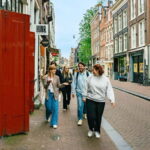
After the canal belt, the tour shifts into the city’s quieter corners. The guide leads you into a maze-like area: sideways streets, small squares, and places where tour buses and some larger boats simply can’t go.
This segment lasts about 55 minutes. The key detail is that there’s no rigid set script beyond the general direction. Your guide will surprise you with an original route based on their perspective—what they think connects the past to the present, and what they feel is worth seeing at walking pace.
That changes how you experience Amsterdam. Instead of marching from landmark to landmark, you start to notice patterns: how neighborhood scale shapes daily life, how streets bend and funnel people, and how the city can feel both compact and surprisingly secret.
If you like history that feels like it explains behavior (not just dates and rulers), this is often the highlight. Guides in past groups—like Gerben and Luuk—have brought history together with how people think in the Netherlands, including religion, politics, and social and economic angles.
What you’ll learn: Dutch mindset, not just Dutch facts
A great walking guide can turn Amsterdam from a postcard into a place with logic. The standout theme across the guides I’ve heard about is that they connect big-picture Dutch history to everyday city life.
You can expect a blend of topics—Dutch history from Republic to Kingdom, plus how religion and politics shaped social and economic attitudes. It’s not delivered like a lecture. It’s delivered like a conversation that keeps moving because you’re walking and seeing what they’re talking about.
A few named guide examples you might run into on this tour: Gerben (humor and lots of context), Luuk (history framed in relation to Europe and the wider world), Craig (fun, clear, and highly informative), Vendi (entertaining facts around Dam Square), and Ethan (covering a lot of ground, with extra local touches).
Even if you don’t match with the same guide personality, the tour format helps: you’ll get a guided thread through the city, then you’ll be set up to explore on your own with better instincts.






The pace, group size, and logistics that actually matter
This tour is built as a small-group experience, capped at 15 travelers. In practice, that usually means you’re not fighting for attention or craning your neck every time your guide speaks.
English is the standard language for this version, and the tour is designed so you can follow along without straining. A mobile ticket is used, and the start point is near public transportation, so it’s easy to slot into your day.
One more practical note: you should have moderate physical fitness. It’s two hours of walking, plus time spent standing at points along the way. If you’re coming from a long flight or a busy first day, take it easy earlier in the day so you’re not walking on empty.
Also: if you’re late, you can’t catch up and rejoin. You’ll need to book a new time slot. That rule keeps the group moving and is worth respecting.
Price and value: why $3.62 can still make sense
The price—$3.62 per person—is so low that it feels almost too good. Here’s how to think about the value without getting disappointed.
This tour’s cost is mainly paying for the licensed local guide and the guided city orientation. There’s no transportation included, and you won’t be fed. The big sights you pass are handled as walking stops, and any paid entries aren’t bundled into the tour fee. The Royal Palace, for example, is specifically suggested as an add-on after the tour, not as a included ticket.
So you should book this for what it does best:
- getting oriented fast
- understanding what to prioritize later
- making your self-guided exploring more efficient
If you’re looking for a guided visit with timed indoor tickets, you’ll likely need a separate plan. But if you want a smart start, this is the kind of bargain that can genuinely improve the rest of your trip.
What’s not included (and how to plan around it)
To keep the tour running smoothly, a few things are not part of the experience:
- No food or drinks
- No transportation (you walk everything)
Bring water. Even in mild weather, walking around central Amsterdam adds up quickly. Also, plan for bathroom breaks around your own schedule rather than expecting long stops during the tour.
If you’re doing the Royal Palace after, keep that timing in mind. The palace mention is a strong hint, but you still need to arrange your own visit.
How to use this tour to plan the rest of your day
This is the kind of tour that pays off later. Once you’ve walked Dam Square, the canal belt, and the side-street maze, you’ll have a mental map that makes it easier to pick where to go next.
Here’s a simple way to use it:
- After the walk, choose one area you were curious about during the canal stop and linger there.
- If you’re interested in indoor attractions, consider booking the Royal Palace visit separately while the theme is fresh in your mind.
- Spend the rest of your time walking in the direction your guide steered you, not backtracking toward the busiest lanes.
Because the last segment doesn’t follow a rigid script, it often leaves you with at least one new pocket of the city you didn’t plan to visit. That’s usually where the best “my day turned out great” feeling comes from.
Should you book this Amsterdam intro walk?
Book it if you:
- want a fast, low-stress way to get oriented in central Amsterdam
- enjoy history explained through local perspective, not just facts
- like canals and want more than a surface-level look
- want a small group experience with an English-speaking guide
Skip it (or pair it differently) if you:
- want a tour with lots of paid entry attractions included
- hate walking long enough to cover about two hours
- need a very structured, fixed route with zero surprises
Overall, this is a solid value pick for your first visit. It’s practical, easy to fit into a day, and it gives you the city’s logic so your next hours feel like exploring instead of wandering.
FAQ
Is this tour in English?
Yes. This version is offered in English. Other languages are handled as separate tours.
Where does the tour start and end?
Both the start and the end are at Dam Square near the National Monument.
How long is the walking tour?
The tour runs for about 2 hours.
What sights are included in the route?
You’ll cover Dam Square, the Amsterdam Canal Ring (Canal Belt), and then you’ll walk into smaller streets and squares around the city.
Is entry into the stops included?
The tour includes free admissions at the listed stops. If you want to visit the Royal Palace, you’ll need to book separately on the Royal Palace website.
Do I need transportation tickets?
No. Transportation isn’t included since the tour is walking throughout.
How big is the group?
The maximum group size is 15 travelers.
Can I cancel and get a refund?
Yes. You can cancel for free up to 24 hours before the experience’s start time for a full refund.
What should I bring?
Bring water, and wear shoes comfortable for walking on city streets and cobblestones.