REVIEW · AMSTERDAM
Rembrandt House & Neighborhood Guided Tour Semi-Private 8ppl Max
Book on Viator →Operated by Babylon Tours Amsterdam · Bookable on Viator
Rembrandt’s Amsterdam feels close-up, not postcard. I like the small-group feel and the fact you’re not just staring at famous sights—you get inside Rembrandt’s own house and look at the tools and works that shaped his life. One thing to plan for: you’ll walk a moderate amount and there are museum rules (no big bags, and some rooms are extra quiet).
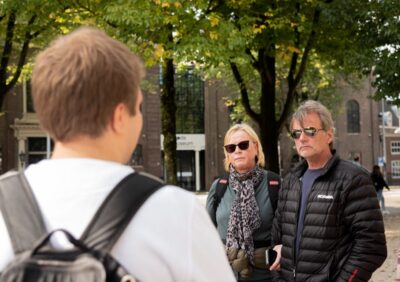
The guide quality seems to be the headline here, especially Jo, who’s praised for giving a group her undivided attention while staying friendly and sharply informed. I also like how the tour builds a path through the city—canals, monuments, and the Jodenbuurt—so the house visit lands with context instead of feeling like a standalone ticket.
If you’re chasing a super-slow pace with lots of sitting breaks, this may feel a bit brisk. Also note that Rembrandt’s House can have occasional closures, and the tour may switch to an alternative if timing gets pushed.
In This Review
- Key highlights worth marking on your map
- Why this Rembrandt House tour is a smart fit for your Amsterdam day
- The canal route: Spiegelkwartier and Singelgracht to Keizersgracht
- Museum Van Loon: the Rembrandt pupil link (and what’s worth knowing)
- Bloemenmarkt and the Munttoren: gates, flowers, and a sharp city detail
- Rembrandtplein monuments and the Night Watch moment
- By the Amstel: Skinny Bridge, Blue Bridge, and civic architecture
- Jodenbuurt walk: ending in the right neighborhood mindset
- Inside Het Rembrandthuis: what the included hour gets you
- Guide Jo and the small-group advantage (what you should actually pay attention to)
- Timing, walking pace, and what to bring so the day feels easy
- Pricing and value: is $159.21 a good deal?
- Should you book this Rembrandt House neighborhood tour?
- FAQ
- FAQ
- How much does the Rembrandt House & Neighborhood tour cost?
- About how long is the tour?
- What’s the maximum group size?
- Is the tour offered in English, and when does it start?
- Where do I meet the guide, and where does the tour end?
- Is hotel pickup or drop-off included?
- What museum admission and entrances are included?
- Does the tour run in bad weather?
- What if Rembrandt House is closed on the day?
- Is it suitable for wheelchair users or people with walking disabilities?
Key highlights worth marking on your map
- Max 8 people for a semi-private experience with personal attention from the guide (Jo gets named in top reviews)
- Spiegelkwartier and UNESCO canal scenery at street level, not just from a tram window
- Keizersgracht (Emperor’s Canal) walk-through with the story behind its name and layout
- Rembrandtplein Night Watch bronze monument tied to the 400th birthday celebration in 2006
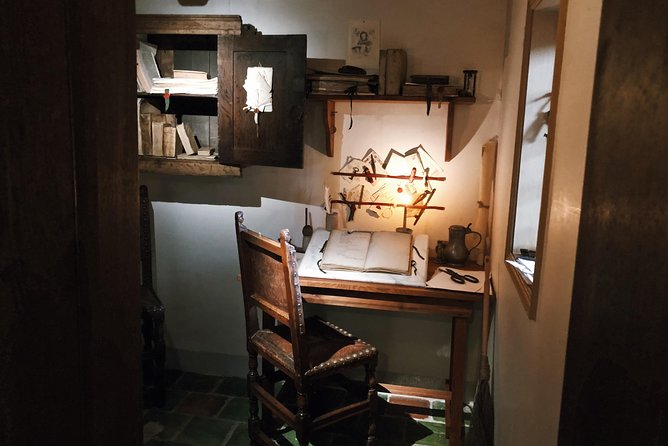
- Het Rembrandthuis included entry with time inside the artist’s living-and-working space
- Jodenbuurt approach—you finish the walk toward the Jewish Cultural Quarter area before entering the museum
Why this Rembrandt House tour is a smart fit for your Amsterdam day
Amsterdam can be a lot. The streets pull you in 20 directions, and the famous sights stack up fast. This tour handles that problem by giving you a clear route with a story—Rembrandt’s city, not just Rembrandt’s name.
The biggest value is the tour size. With a maximum of 8 people, you’re less likely to get lost in a crowd, and the guide can adjust pacing and questions. That matters a lot when you’re heading to a museum where timing and movement affect your experience.
You also get a mix of “look” and “learn.” The walking portion connects you to landmarks—canals, towers, bridges, and civic buildings—while the included museum time is focused on Rembrandt’s world inside the house.
You can also read our reviews of more guided tours in Amsterdam



The canal route: Spiegelkwartier and Singelgracht to Keizersgracht
The tour starts at Cobra Café, Hobbemastraat 18 at 1:30 pm, and then moves you toward the center’s waterline. First stop is the Spiegelkwartier area, with a walk along Singelgracht—the canal that historically helped form the city’s outer defenses. That’s a detail I appreciate because it turns a scenic strip of water into something functional and historical.
Next you head to Spiegelgracht, part of the Canals of Amsterdam UNESCO World Heritage site. This is where the day starts to feel like “Amsterdam through an artist’s eyes.” You’re in the canal belt zone where art galleries and antiques cluster, so you get the sense of the city’s long relationship with collecting, looking, and displaying.
Then comes the Emperor’s Canal (Keizersgracht). You’ll see it as the middle of the three main canals in the inner city, and the name connects to Emperor Maximillian of Austria. The tour describes Keizersgracht as the widest of the inner-city trio, which helps you understand why these waterways don’t feel uniform—you notice the city’s design choices when you walk the banks instead of viewing them from a boat.
Practical note: canal-belt walking is pretty, but the pavement can be a mix of old stone and tight corners. Comfortable shoes will save your feet.
Museum Van Loon: the Rembrandt pupil link (and what’s worth knowing)
From the canal belt, the tour takes you to Museum Van Loon, set in a canalside house. The big story here is the connection to Ferdinand Bol, Rembrandt’s favorite pupil. Even if you don’t go inside, the point is clear: Amsterdam wasn’t just one genius—it was a whole workshop-and-studio network.
The itinerary marks admission for Museum Van Loon as not included, so treat this as an “on the route” stop rather than the main museum moment. For me, that’s actually a good approach: Het Rembrandthuis is the centerpiece. You get extra context without forcing you to add another ticketed interior stop.
Bloemenmarkt and the Munttoren: gates, flowers, and a sharp city detail
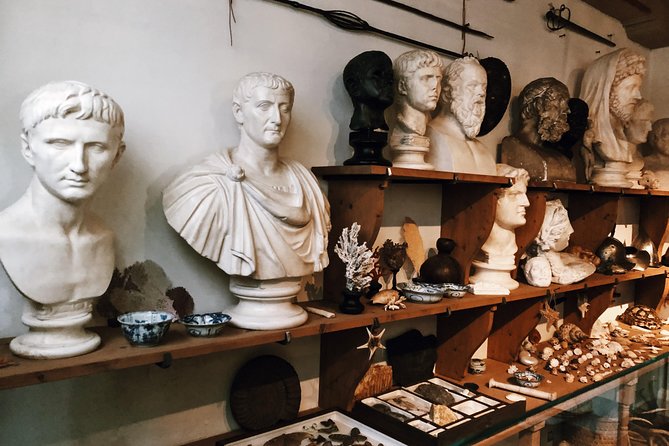
Next you’re walking through the famous flower market area at Bloemenmarkt. The headline isn’t just the market—it’s what’s beside it. You’ll see the Munttoren (Munt Tower), often called the Mind Tower in some descriptions. The key historical detail is that it was originally part of a main gate in Amsterdam’s medieval city wall.
This is one of those stops where the guide’s job matters. Without a person framing the scene, it’s easy to treat it as a quick photo point. With the story, it becomes a clue: this is how Amsterdam controlled movement, protected the city, and then later repurposed the urban fabric into what you see today.
The itinerary notes Munttoren admission as not included, so plan to enjoy it from the outside unless your guide specifically suggests an internal option that fits your time.
Rembrandtplein monuments and the Night Watch moment
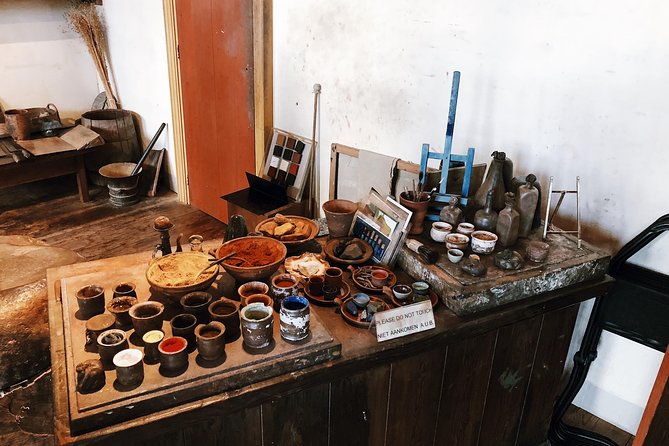
The next stretch targets Rembrandtplein, a square named for the painter Rembrandt. Here you’ll see a bronze-cast representation of The Night Watch that was displayed during Rembrandt’s 400th birthday celebrations in 2006.
This part is a good “pause and look” break in the tour. The Night Watch isn’t just a painting here—it becomes a public landmark, a way the city carries its art in metal and stone. And because you’re walking in a guided loop, the monument doesn’t feel random. It’s a waypoint on your way to the house where Rembrandt actually lived and worked.
One extra detail in the itinerary: the tour repeats the Night Watch/Rembrandtplein monument listing in the route notes. In practice, what that usually means for you is the guide is building in a proper moment at the square. Either way, you should plan to spend enough time to look closely rather than treating it as a quick stop.
You can also read our reviews of more private tours in Amsterdam






By the Amstel: Skinny Bridge, Blue Bridge, and civic architecture
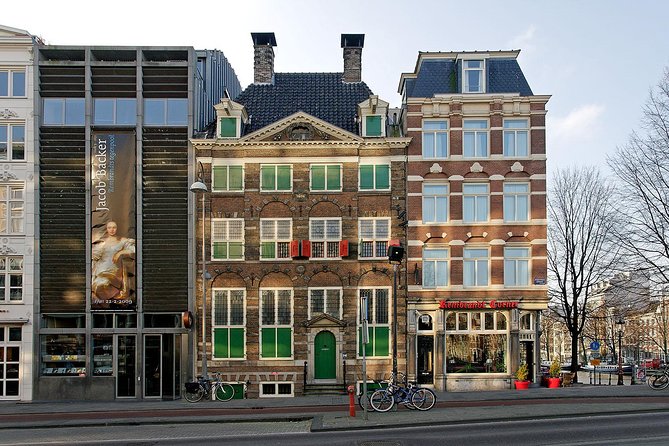
From Rembrandtplein you walk toward the Amstel River, passing two bridges called the Skinny Bridge and the Blue Bridge. The Skinny Bridge is described as probably Amsterdam’s most famous bridge, spanning across the Amstel from 1934.
The Blue Bridge is described as not blue at all—its name comes from a wooden blue bridge that spun across the Amstel in the 17th century. That’s the kind of small factual twist I like, because it turns a simple photo into a tiny lesson about how infrastructure changed over time.
Then the route goes to Stopera, the complex housing both the city hall and the Dutch National Opera and Ballet. The itinerary notes the build took at least 60 years. Even if you’re not an architecture fan, that “60 years” detail gives the building weight—it’s not a quick construction; it’s an institution that took a long time to shape.
This segment feels like a breather before the final push into the museum area.
Jodenbuurt walk: ending in the right neighborhood mindset
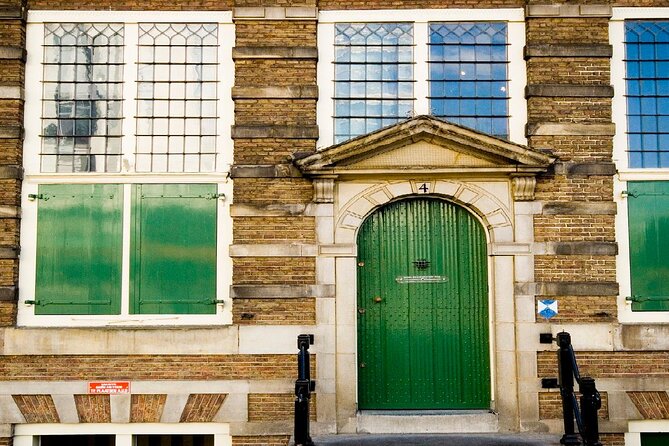
Next you move toward the Jodenbuurt, the former Jewish neighborhood. The tour frames it as an area with historically important buildings that are preserved and managed by the Jewish Cultural Quarter.
For me, this walk matters because the Rembrandt House museum isn’t just about art technique. It’s about the world Rembrandt lived in—his time, his surroundings, and the shifting city around him. Arriving from the street with neighborhood context helps you make more sense of what you’ll see inside.
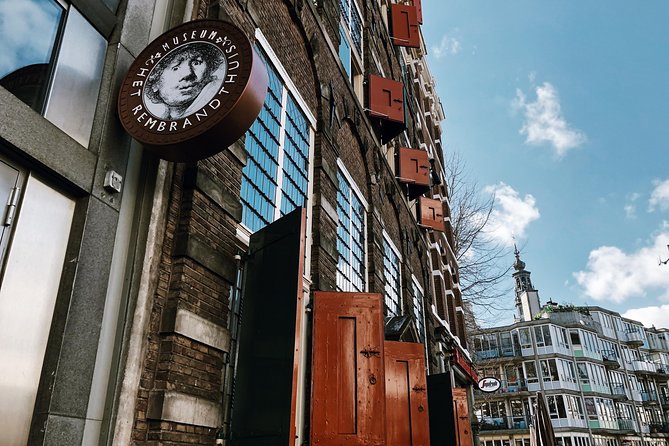
The tour keeps you moving at a manageable rhythm, and then you land at the final stop: Museum Het Rembrandthuis on Jodenbreestraat 4.
Inside Het Rembrandthuis: what the included hour gets you
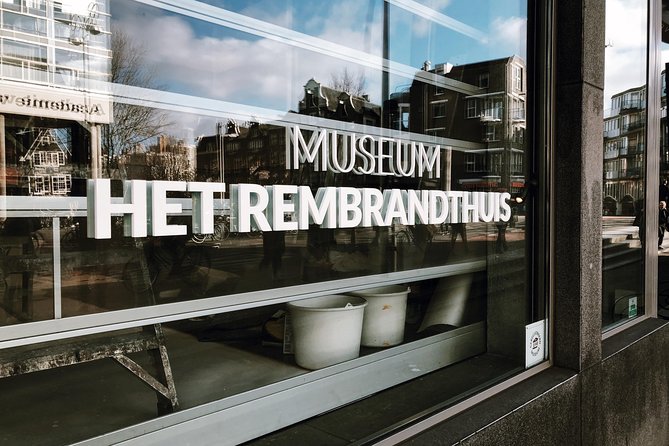
The best part of the day is the included museum time—about 1 hour with admission included.
Rembrandt’s House is a historical building and art museum where Rembrandt lived and worked between 1639 and 1656. That date range is a huge deal: it anchors the visit in a real working life, not just a commemorative site.
Inside, the museum collection includes Rembrandt’s etchings and paintings of his contemporaries. That mix gives you more than the famous-name hits. You see how Rembrandt looked at the people around him, not only how he branded himself with one style.
A big practical detail you should know: some rooms are very quiet or restricted for speaking, and the guide is supposed to explain those rules before entering. That means you’ll want to keep your voice down and follow the guide’s cues. It’s not a bad thing. It actually helps the experience feel respectful and focused.
Dress matters too. The notes say that appropriate dress is required for entry into some sites on the tour. If you’re traveling in warm weather, bring something light but not overly casual—think “comfortable, covered enough for museum entry” rather than “beach mode.”
Also plan for security. The tour information is explicit: no large bags or suitcases inside the museum. Only handbags or small thin bag packs go through security. If you’re traveling with a daypack, keep it small or be ready to check how the museum wants bags handled.
Guide Jo and the small-group advantage (what you should actually pay attention to)
One thing that stands out from the top feedback is the guide’s style. Jo is praised for being personable and for giving the group her undivided attention. In practical terms, that usually means you can ask a question and get a direct answer instead of getting brushed aside while the group funnels into the next photo.
That matters most in two moments:
- When you’re on the move outside—canal details, bridge stories, and the “why that name” explanations
- When you’re inside Rembrandt’s House—quiet-room rules and how the guide ties the art to the setting
If you like tours where the guide talks like a real person with a plan (and not like a headset recording), this is the right size and format.
Timing, walking pace, and what to bring so the day feels easy
The tour is about 2 hours 30 minutes total. It runs rain or shine, which is a huge plus in Amsterdam because weather can switch fast and still stay windy even if it’s just a light drizzle.
You should have moderate physical fitness for this one. The route is a walk from canal belt stops toward Rembrandt’s neighborhood and then into the museum. It’s not described as a hardcore trek, but it isn’t a sit-and-watch day either.
Here’s what you’ll want ready:
- A phone that works on the day. The tour requests a mobile phone number with country code
- Comfy walking shoes
- A small bag for museum security (skip bulky luggage)
- Clothes that meet museum entry expectations
Accessibility note: the tour is not recommended for people with walking disabilities or those using a wheelchair. If that’s you, it’s worth looking for a different format.
Pricing and value: is $159.21 a good deal?
At $159.21 per person for roughly 2.5 hours, this isn’t a “cheap quick hit.” It’s priced for two things you can actually feel during the day: a small group max of 8 and professional guided museum time at Het Rembrandthuis.
You also get key inclusions that improve value:
- All entrance fees are stated as included in the tour package
- The itinerary ends with Rembrandt House admission included
- You get a guide for the full walking-and-museum block
At the same time, a couple stops are marked with admission not included in the route notes (for example Museum Van Loon and Munttoren, plus the Stopera complex). That doesn’t automatically make the tour worse—it just means the main paid experience is the house, and the other stops are mostly about what you can see outside or on-route.
If you compare this to buying a museum ticket alone, you’re paying for the connective tissue: the guided route, the name stories, and the way the neighborhood walk sets up the house visit.
Should you book this Rembrandt House neighborhood tour?
Book it if you want a day that’s part art museum, part city reading. The best reason is that the tour route sets context before you enter the museum—canals, monuments, and the Jodenbuurt walk all funnel into the house where Rembrandt lived and worked.
Skip it or rethink your plan if you:
- Need wheelchair-friendly access or have significant walking limitations
- Want a very relaxed pace with lots of long breaks
- Prefer to control the route yourself without a fixed walking plan
If your priority is to do Rembrandt House in a way that feels guided and connected, this small-group format is a strong choice.
FAQ
FAQ
How much does the Rembrandt House & Neighborhood tour cost?
It costs $159.21 per person.
About how long is the tour?
The duration is listed as approximately 2 hours 30 minutes.
What’s the maximum group size?
This tour allows a maximum of 8 travelers.
Is the tour offered in English, and when does it start?
Yes, it’s offered in English, and the start time is 1:30 pm.
Where do I meet the guide, and where does the tour end?
You meet at Cobra Café, Hobbemastraat 18, 1071 ZB Amsterdam and the tour ends at Rembrandt House Museum, Jodenbreestraat 4, 1011 NK Amsterdam.
Is hotel pickup or drop-off included?
No. Hotel pickup or drop-off is not included.
What museum admission and entrances are included?
The tour includes private museum tour and walking tour, and the admission ticket for Museum Het Rembrandthuis is included. The tour also states that all entrance fees are included.
Does the tour run in bad weather?
Yes. The tour will run, rain or shine.
What if Rembrandt House is closed on the day?
Rembrandt’s House may have occasional closures without prior warning. If the museum opening time is delayed by more than 1 hour from the tour start, the provider will offer an appropriate alternative, and they note that refunds or discounts aren’t available in these cases.
Is it suitable for wheelchair users or people with walking disabilities?
It’s not recommended for those with walking disabilities or using a wheelchair.