REVIEW · AMSTERDAM
Amsterdam: Anne Frank and Jewish Quarter Tour
Book on GetYourGuide →Operated by Trigger Tours · Bookable on GetYourGuide
Amsterdam’s Jewish Quarter has hard stories on every corner. This tour is interesting because it connects the day-to-day reality of Nazi-occupied Amsterdam to the personal story people associate with Anne Frank. I like that it focuses on the places tied to deportation and remembrance, not just a single landmark, and I also like the way the walk covers the neighborhood’s longer story, including how Jewish life shaped the city. One drawback: the subject matter is heavy, so it is not a great fit if you want something light and casual.
What makes this experience feel especially useful is the tour’s practical structure: you move through major sites, each with a short guided moment, and you come away with names, events, and locations that stick. Guides on this route include James, Aaron, Pilar, and Masha (plus others), and the best common thread in their delivery is balance: respectful, moving context with enough engagement that you can actually follow what happened and where. The tour is also a good value for a $24 ticket because it packs two hours of focused walking and explanation into a small geographic area.
In This Review
- Key highlights you’ll care about
- A Jewish Quarter walk that feels specific, not generic
- Tour snapshot: 2 hours, paid at $24, and what you actually get
- Getting started near the action: where the walk begins
- Wartime Amsterdam: the February Strike and Hunger Winter, explained with place
- The Portuguese Synagogue and the Jewish Historical Museum: more than WWII
- Hollandsche Schouwburg, the Dokwerker, and Auschwitz Monument: seeing remembrance in public space
- Anne Frank context without Anne Frank House tickets
- The Jewish Council headquarters stop: why those details matter
- The guide makes the difference: James, Aaron, Pilar, Masha, and pacing
- Where the walk lands: canals and easy add-ons
- Price and value: why $24 can feel fair here
- Who this tour is best for (and who should skip it)
- Should you book this Amsterdam Anne Frank and Jewish Quarter tour?
- FAQ
- Is the Anne Frank House entrance included?
- How long is the walking tour?
- How much does it cost?
- What sites does the tour cover in the Jewish Quarter?
- What language is the guide available in?
- Where does the tour start and end?
- What should I bring?
- Is there free cancellation?
Key highlights you’ll care about
- Wartime Amsterdam timeline: occupation, February Strike, and the Hunger Winter, tied to real locations
- Anne Frank context, without logistics stress: you get the story and why it matters locally, but no Anne Frank House entry
- Memorial stops beyond the usual headlines: places like the Dokwerker and the Auschwitz Monument
- Jewish Quarter foundations: how Jewish neighborhoods evolved over centuries, not just during WWII
- Portuguese Synagogue and Jewish Historical Museum: landmarks that anchor cultural continuity
- A guide who can handle questions: people praise clear pacing and thoughtful answers
A Jewish Quarter walk that feels specific, not generic
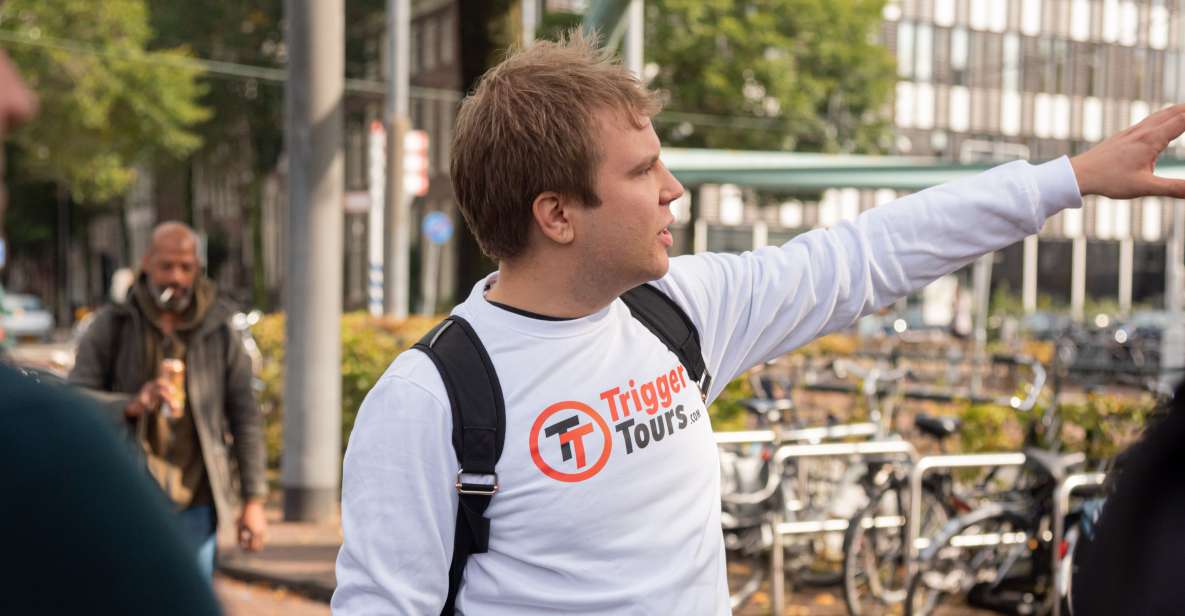
If you only visit the most famous Anne Frank sites, it’s easy to end up with a story that feels stuck in one moment. This tour helps you build the bigger picture around that moment. You learn how Amsterdam’s Jewish community lived through occupation, how events like the February Strike and the Hunger Winter changed daily life, and how survival and persecution unfolded in the city.
I also like that the walk doesn’t treat the Jewish Quarter as a static museum. It frames the neighborhood’s background and evolution across centuries, then brings it to the WWII years and the aftermath of the Holocaust. That matters because it keeps the story human and historical at the same time: people lived here long before 1940, and the community’s influence continued after the war.
You can also read our reviews of more tours and experiences in Amsterdam.


Tour snapshot: 2 hours, paid at $24, and what you actually get
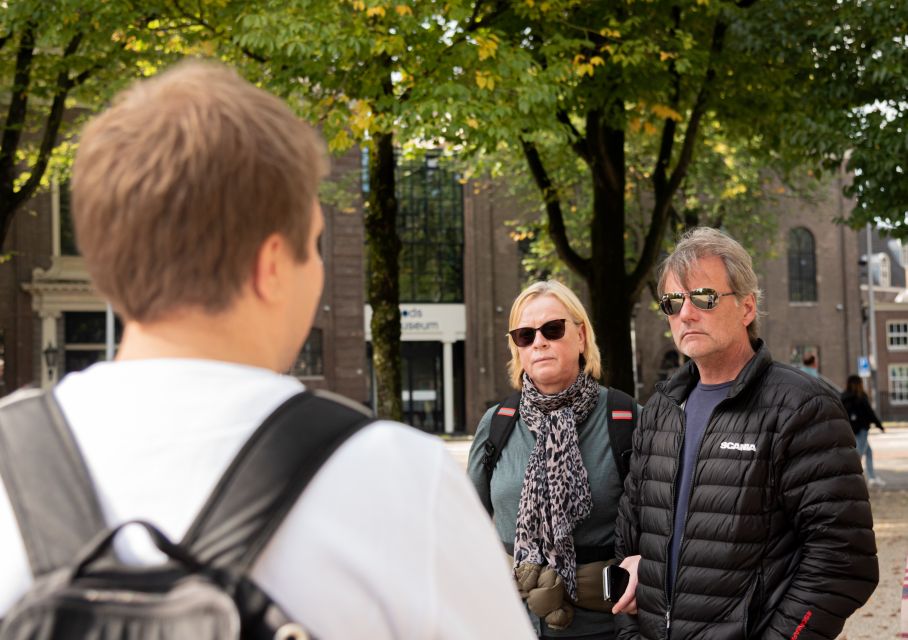
This is a 2-hour walking tour in Amsterdam focused on the Jewish Quarter and WWII-era sites. The price is $24 per person, which is a smart deal if you want local guidance that points out what to notice and gives you the context to connect the dots.
You get a live guide (English or Spanish) and you’ll cover several stops with brief guided segments along the way. The tour includes guided moments at named places such as the Portuguese Synagogue, the Jewish Historical Museum, and memorial locations including the Hollandsche Schouwburg National Holocaust Memorial and the Auschwitz Monument. You also spend real time in the Jewish Quarter area itself, walking through narrow streets and alleys where the neighborhood’s layout helps you understand how a community lived.
Two practical notes based on the tour details:
- Comfortable shoes are a must.
- The tour does not include tickets or entry to the Anne Frank House, so if that is on your must-do list, plan it separately.
Getting started near the action: where the walk begins

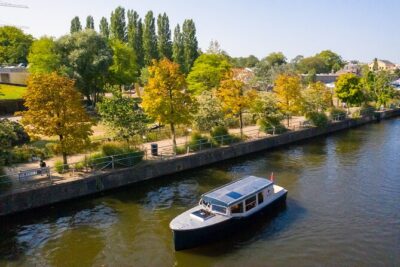
Meeting point can vary depending on the option booked, but one listed starting location is Amsterdam Boat Adventures (Open boat tours). If you’re also trying to fit in canal time or a boat ride during your trip, starting near that area can make your day feel smoother.
You’ll also have drop-off options listed, including Hermitage Amsterdam, and another option connected to Amsterdam Boat Adventures. That’s useful because it lets you pair the tour with something else nearby instead of mentally rebooting the day from scratch.
Wartime Amsterdam: the February Strike and Hunger Winter, explained with place
A lot of Holocaust-related history becomes abstract unless you attach it to a map. This tour does that. You’ll learn about Amsterdam’s struggles during the Nazi occupation in the early 1940s, and the guide ties key events to the neighborhood and sites you’re standing near.
Two events highlighted in the tour description are the February Strike and the Hunger Winter. What I appreciate about covering them on foot is that it supports a clearer mental timeline. You’re not just hearing dates. You’re connecting how pressure on people intensified, how shortages and fear reshaped everyday life, and how the city’s experience differed from place to place.
The guide also covers the aftermath—what changes after a catastrophe, and how remembering becomes part of the public story. That’s an important shift, because many tours stop at the darkest part and call it done. Here, the focus continues into the way Amsterdam dealt with what happened.
The Portuguese Synagogue and the Jewish Historical Museum: more than WWII
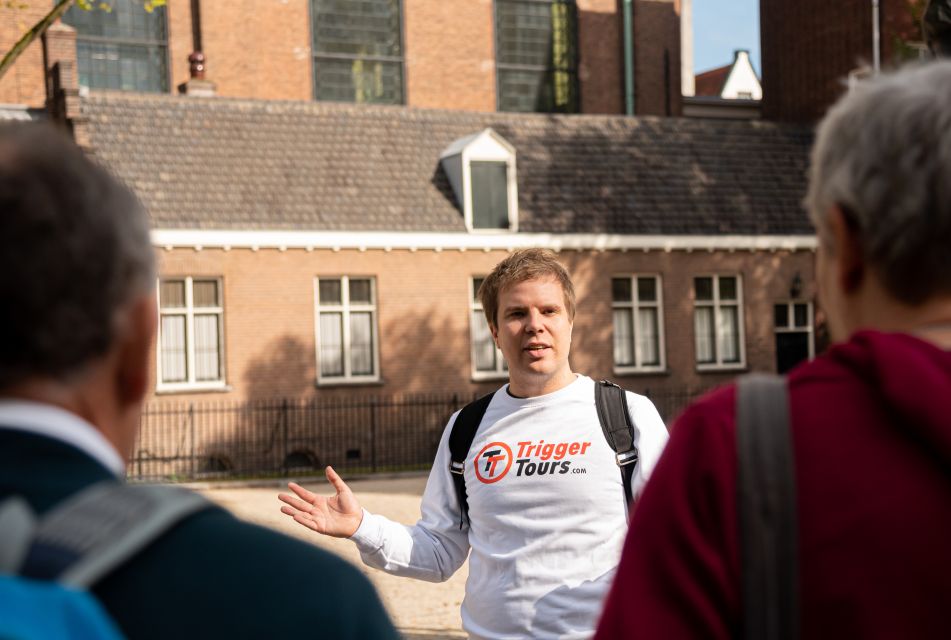
It’s tempting to treat Jewish Quarter stops as only WWII markers. This tour resists that. When you reach places like the Portuguese Synagogue and the Jewish Historical Museum, the conversation is not only about the Holocaust. It also supports continuity: Jewish community life before the war, and how the neighborhood shaped Amsterdam’s cultural heritage.
For me, that approach answers a question you might not realize you have: How did this community build a life here in the first place, before it was targeted? The stops named on the tour give you that sense of depth, so the WWII years hit harder for the right reason. They are not a random tragedy. They’re a rupture in something that already existed.
A practical tip: if you like museums, decide in advance whether you want to do more reading on your own after the tour. Since the tour includes guided time at the museum, you may still want to return later for extra context at your pace.




Hollandsche Schouwburg, the Dokwerker, and Auschwitz Monument: seeing remembrance in public space

This is where the tour becomes emotionally serious. The route includes memorial sites tied to the Holocaust and to the way the city remembers. You’ll hear about experiences of Amsterdam’s Jewish community during World War II and the Holocaust, and you’ll visit places such as:
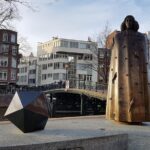
- The Dokwerker
- Hollandsche Schouwburg National Holocaust Memorial
- Auschwitz Monument
Even if you already know the broad story, visiting multiple remembrance points in one walk helps your brain organize what you’re learning. Instead of one heavy stop, you get a sequence: different locations representing different parts of the story of persecution and deportation, and different forms of remembrance in the cityscape.
One thing I’d consider if you’re planning your day: keep your expectations realistic. This tour is designed to be respectful and direct. It isn’t a facts-only stroll, and it’s not trying to lighten the mood with gimmicks. If you tend to feel overwhelmed with intense historical material, schedule this when you don’t also have big plans afterward.
Anne Frank context without Anne Frank House tickets
You’ll hear the story of Anne Frank, including her family and the strife connected to this dark period. The tour’s title may pull you toward one specific location, but here the emphasis is on the neighborhood and its WWII role rather than on entering the Anne Frank House.
That is a real planning advantage. The tour explicitly does not include entrance to the Anne Frank House, so you avoid the added step of arranging tickets for a separate timed entry on the same day. If you still want to visit the House, you can do it as its own outing, with the time pressure removed.
Based on the tour’s structure, you’ll leave with a better sense of why Anne Frank’s story fits into a wider Amsterdam context: how the city’s Jewish life was shaped over centuries, and how it was attacked during occupation, with the aftermath carried forward in memorial culture.
The Jewish Council headquarters stop: why those details matter
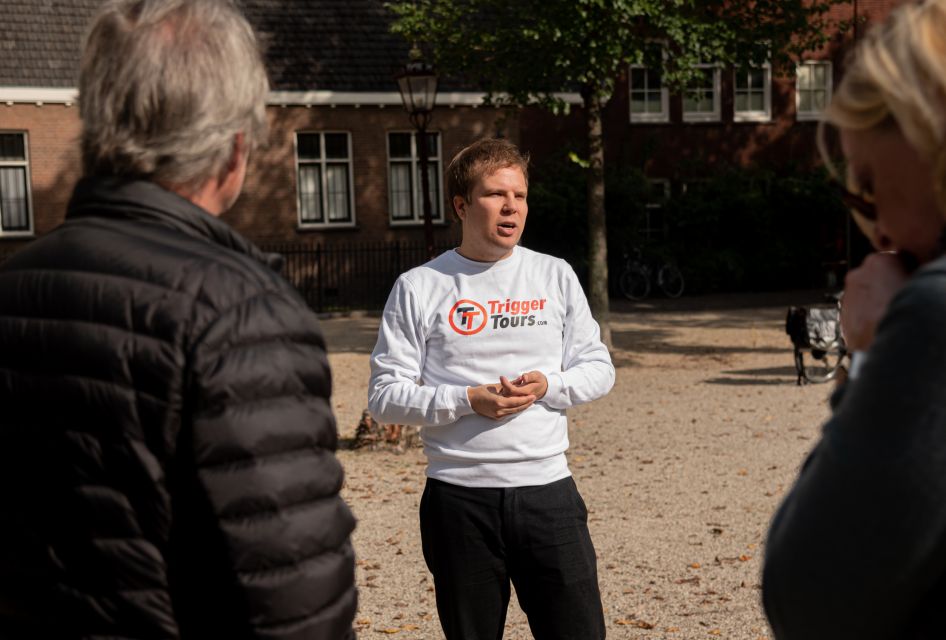
The tour includes the Headquarters of the Jewish Council as one of the featured sights. That kind of stop matters because it brings the story down to the administrative and communal level, not only the big events.
When you learn about the headquarters as part of the walk, you get a clearer understanding of how Jewish organizations navigated impossible circumstances under Nazi rule. It’s also a reminder that history wasn’t only happening in distant camps or on battlefields. It unfolded in local structures too.
The guide makes the difference: James, Aaron, Pilar, Masha, and pacing
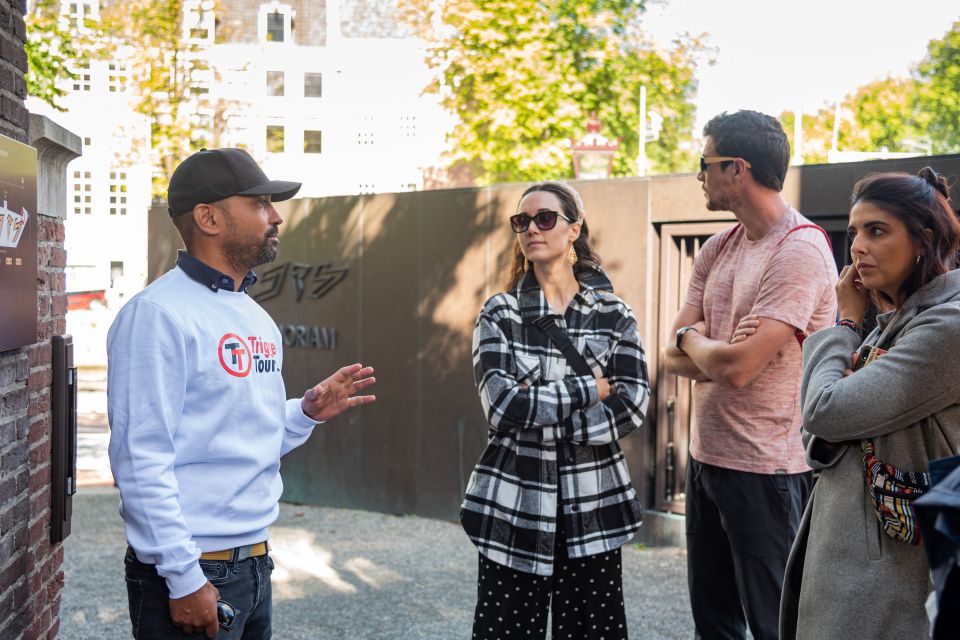
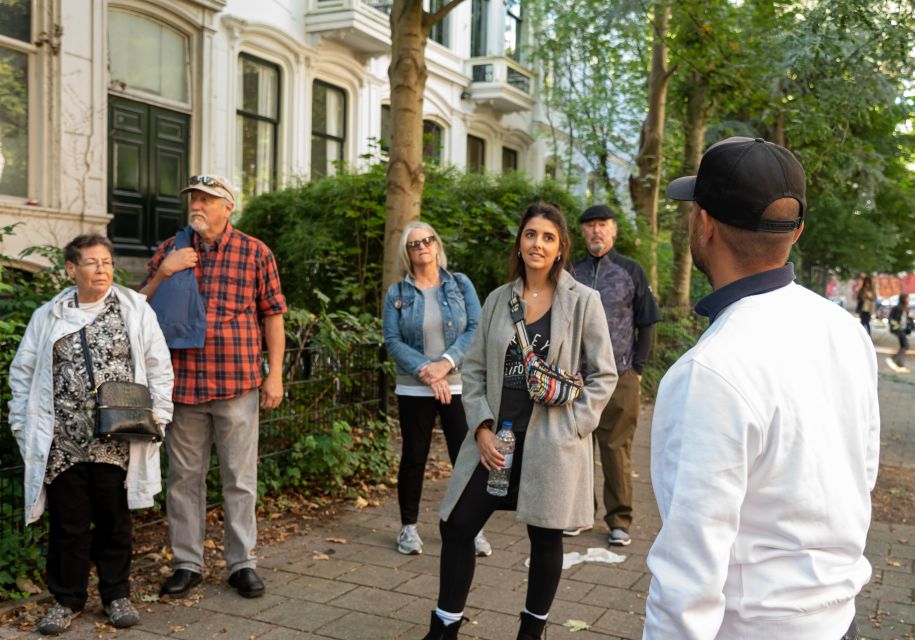
A walking tour rises or falls on the guide. This one has a strong reputation for exactly that. Many comments praise guides like James, Aaron, Pilar, and Masha for being able to handle difficult material with the right tone and the right pace.
What stands out is the balance people describe: sensitive storytelling without turning it into a dramatic performance. Guides also tend to answer questions clearly and patiently, which is huge when you’re learning about a complicated period and want to connect names and places on the spot.
Pacing also comes up repeatedly. The tour moves at a tempo that feels manageable for a range of ages, though it does involve a fair amount of walking. If you like asking questions while you’re still standing at the location where the story connects, this format works well.
Where the walk lands: canals and easy add-ons
After the main Jewish Quarter portion and the featured sites, the tour includes a Grachtengordel section. The canal belt area is a practical way to end a historical walk because it gives you a natural decompression point. You can look at the city’s present-day beauty and structure without pretending the history is gone.
One more practical benefit: drop-off options include places like Hermitage Amsterdam, so you can keep going with something nearby. If you prefer planning your day in blocks—history first, then a museum or a meal—this ending helps you do that without backtracking across town.
Price and value: why $24 can feel fair here
Let’s talk value plainly. $24 for two hours with a live local guide is a good deal in a city like Amsterdam, especially for a tour that covers multiple specific landmarks and memorial sites instead of just offering broad commentary.
You’re paying for three things:
- Direction: the tour helps you notice what matters where you stand.
- Context: events like February Strike and Hunger Winter become understandable, not random headlines.
- Connections: Anne Frank becomes part of a larger Amsterdam story, including Jewish community evolution over centuries.
Also, because it doesn’t require Anne Frank House entry, you can keep your planning simpler. You’re not forced into a timed ticket on top of your walking tour.
Who this tour is best for (and who should skip it)
This tour is a great fit if you want:
- A guided way to understand Amsterdam during WWII beyond the headline sites
- A clear connection between Anne Frank and the city’s wider Jewish story
- A walking format that puts memorial locations into a real route you can picture later
It may be less ideal if you want a light sightseeing day. This is built around Holocaust remembrance and the realities of Nazi occupation. You’ll hear about suffering, persecution, and loss. That’s not a problem—just a heads-up for your mental planning.
Should you book this Amsterdam Anne Frank and Jewish Quarter tour?
Yes, if you want to leave Amsterdam with more than one famous name. Book it if you like structure: you’ll walk through key sites, learn the local wartime timeline, and understand how the neighborhood’s longer history shapes what happened.
I’d also book it if you’re price-sensitive but still want a guide. At $24, it’s hard to beat the amount of focused learning you get in two hours, especially when the tour includes multiple named landmarks and memorial stops.
The only real reason to pass is if you know you are not ready for heavy Holocaust-related material in walking form. In that case, you could still visit some of these places on your own at a slower pace. But if you can handle the topic, this tour is a strong choice for getting the story in the right places and in the right order.
FAQ
Is the Anne Frank House entrance included?
No. The tour does not include tickets or entrance to the Anne Frank House.
How long is the walking tour?
The duration is 2 hours.
How much does it cost?
The price is listed as $24 per person.
What sites does the tour cover in the Jewish Quarter?
The tour includes stops tied to Amsterdam’s Jewish WWII-era history and remembrance, including the Portuguese Synagogue, the Jewish Historical Museum, the Hollandsche Schouwburg National Holocaust Memorial, the Dokwerker, and the Auschwitz Monument, plus time in the Jewish Quarter and Grachtengordel.
What language is the guide available in?
The live tour guide is available in English and Spanish.
Where does the tour start and end?
The meeting point may vary depending on the option booked. Drop-off locations listed include Hermitage Amsterdam and Amsterdam Boat Adventures.
What should I bring?
Wear comfortable shoes, since it’s a walking tour through narrow streets and alleys.
Is there free cancellation?
Yes. You can cancel up to 24 hours in advance for a full refund.