REVIEW · AMSTERDAM
Historical Walking Tour, private with local Dutch guide
Book on Viator →Operated by Artsy Tours · Bookable on Viator
Amsterdam reads like a story on foot. This private historical walk helps you make sense of Amsterdam fast, mixing medieval defenses, world-trade connections, and everyday neighborhoods into one practical route.
I love that your local Dutch guide has lived in Amsterdam for 25 years, so explanations feel grounded instead of textbook. I also like how the tour shows you the Amsterdam most tourists miss, especially once you leave the headline sights.
One consideration: it’s about 2 hours of walking and standing, and mobility aids aren’t provided. It’s also not recommended if you use a walker or have trouble staying on your feet that long.
In This Review
- Key highlights at a glance
- Why This Amsterdam Tour Works for First-Time Visitors
- Where You Start: Café the Schreiertower to Medieval Amsterdam’s Edge
- Weeping Tower: A Medieval Watchtower That Sets the Timeline
- Zeedijk: The Old Dike-Street That Protected the City
- The Waag: Medieval Gate and Defense Lines
- Oostindisch Huis (Dutch East India Company): Trade, Spices, and Finance
- Het Kleinste Huis van Amsterdam: Small House, Big Meaning
- Dam Square: The Heartbeat of Amsterdam, Then and Now
- Canal Ring (Grachtengordel): Golden Age Canals and Merchant Power
- Jordaan: Brown Café Streets and the Neighborhood Feel
- Westerkerk: Finishing at a Church Locals Love
- Price and Value: Is $96 for Two Hours a Good Deal?
- What to Expect on the Walk (and Who It’s For)
- Practical Tips That Make This Day Easier
- Should You Book This Amsterdam Historical Walking Tour?
- FAQ
- How long is the Amsterdam historical walking tour?
- Is this a private tour or a group tour?
- What language is the tour offered in?
- What does the price include?
- Are tickets to the stops included?
- Where does the tour start and end?
- Is bottled water provided?
- Can I bring a service animal?
- Is the tour suitable if I have limited mobility?
- What is the cancellation policy?
Key highlights at a glance
- A private guide with 25 years in Amsterdam for real local context
- Medieval-to-modern route from watchtowers and city gates to the canal ring
- Dutch East India Company connections (1602, spice trade, and early corporate finance)
- Dam Square plus Golden Age canals in a single, first-time-friendly loop
- Jordaan neighborhood time for brown cafés and small boutiques
- Service animals welcome and the tour is designed for most participants who can walk
Why This Amsterdam Tour Works for First-Time Visitors
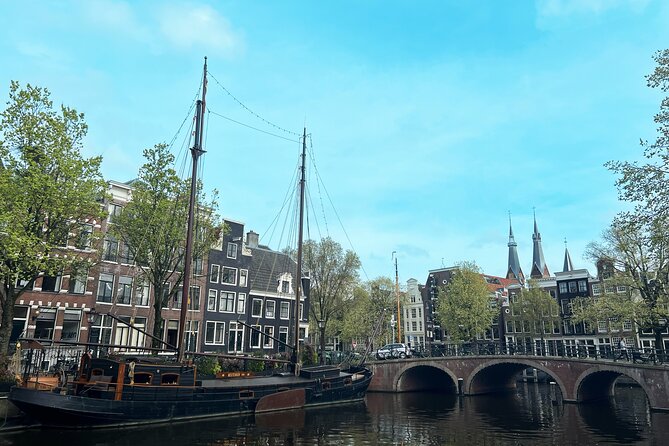
If Amsterdam feels like a blur of canals, bikes, and narrow streets, you’re not alone. The trick is learning how the city is put together before you wander on your own. This private historical walking tour is built for that exact moment—early in your trip, when you need bearings more than souvenirs.
What makes it especially useful is the mix of scales. You start with medieval structures (watchtower, city gate, defensive waterworks) and then move into the stories that made Amsterdam a global hub (trade, the Dutch East India Company, and the way finance grew around voyages). By the time you reach the Grachtengordel canal belt, you understand why these canals look the way they do, and why the city grew where it did.
Another smart choice: the route doesn’t just chase big landmarks. It leaves room for atmosphere in places like Jordaan—where the city feels lived-in, not staged.
You can also read our reviews of more walking tours in Amsterdam



Where You Start: Café the Schreiertower to Medieval Amsterdam’s Edge
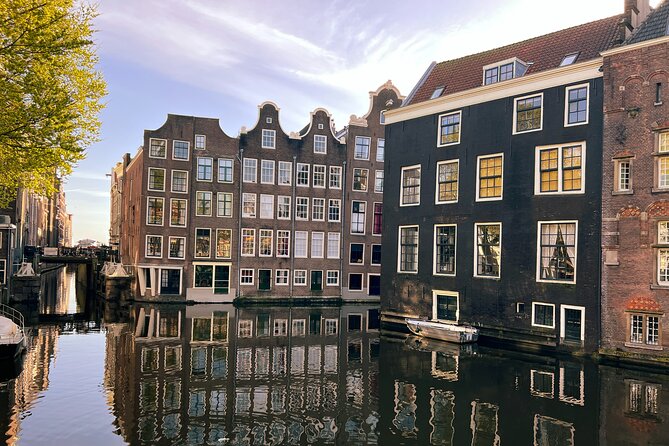
The tour begins at Café the Schreiertower on Prins Hendrikkade (1012 AE). From that area, you’re close to the old “edge” feeling of Amsterdam—water nearby, streets that have been doing their jobs for centuries, and buildings packed tight together like they were never meant to spread out.
Your guide meets you with an introduction that sets the theme: Amsterdam wasn’t just built on land. It was shaped by water management, defense, and commerce. That framing matters, because it changes how you read what you see. Instead of looking at facades, you start spotting functions: why a street was placed there, why a gate mattered, and how the city defended itself.
You’ll also get an English-led experience, with a mobile ticket, so you’re not hunting for paper passes mid-walk. All fees and taxes are included, and admission tickets for the stops are listed as free, which simplifies your day.
Weeping Tower: A Medieval Watchtower That Sets the Timeline
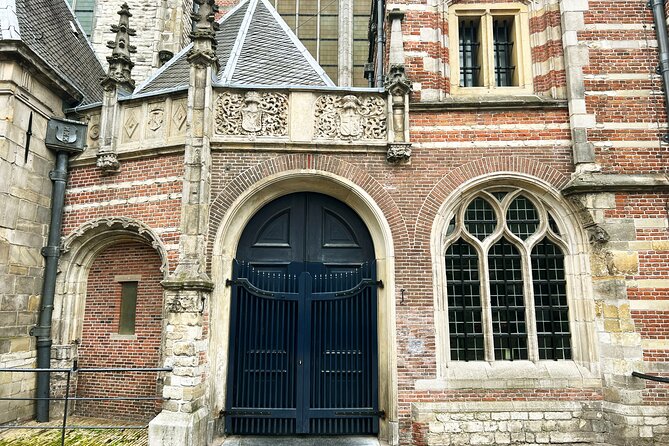
The first stop is the Weeping Tower, a medieval watchtower and one of Amsterdam’s few remaining medieval remnants. This isn’t just a photo stop. Your guide’s job here is to give you an origin story—what Amsterdam was like before it became the city most people think of today.
Here’s what you should pay attention to: how the tower fits into the idea of city defense and monitoring. Even if you’ve never read a map of medieval Amsterdam, the explanation helps you understand why towers and walls existed, and why visibility and control were everything in a crowded, watery city.
Time-wise, the stop is short—about 5 minutes—so keep your brain in “orientation mode.” Let the guide connect the dots instead of trying to absorb everything at once.
Zeedijk: The Old Dike-Street That Protected the City
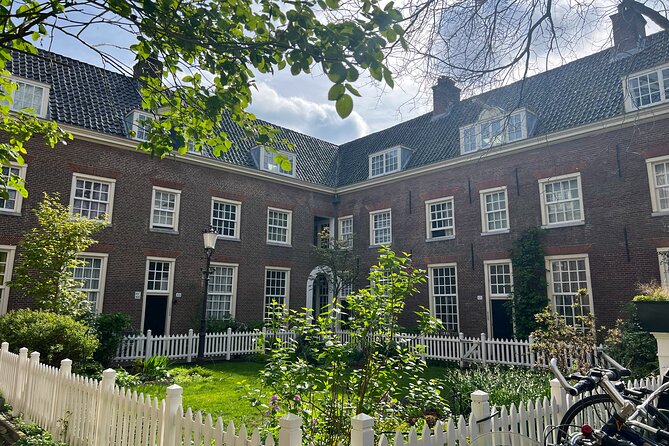
Next comes Zeedijk, described as one of Amsterdam’s oldest streets and historically functioning as a dike with locks. This is one of those facts that instantly upgrades your understanding of Amsterdam.
If you’re used to thinking of dikes as big, separate infrastructure, Amsterdam surprises you. Here the city’s water defenses are woven right into daily streets. When you look down Zeedijk, you can start imagining a different purpose than the one you see today—controlling water levels and protecting neighborhoods from flooding.
This stop also teaches you a key local lesson: Amsterdam’s beauty and livability are linked to engineering. The city’s history isn’t only art and trade. It’s also managing water, year after year.
The Waag: Medieval Gate and Defense Lines
At the Waag, you’re at a medieval city gate that used to be part of a defensive wall and mote system. In plain terms, this is where Amsterdam controlled movement in and out—then and still, in a sense, today as streets shape pedestrian flow.
The value of this stop is perspective. A gate isn’t only an entrance. It’s a boundary. Your guide helps you understand how the layout would have worked when the city needed protection, and how that logic influenced later development.
You’ll only spend about 5 minutes here, so focus on the idea of defensive geography. If you want to revisit later, you’ll know exactly what to look for.
You can also read our reviews of more guided tours in Amsterdam





Oostindisch Huis (Dutch East India Company): Trade, Spices, and Finance
Now you shift from defenses to global power. Oostindisch Huis was the former office and warehouse of the Dutch East India Company, founded in 1602. This stop is packed with meaning: spice trade routes, the growth of organized long-distance commerce, and the early shaping of modern corporate thinking and stock-market behavior.
Even if you’re not a finance person, this is a fascinating stop because it connects stories you might have heard separately—trade, ships, markets—into one location-based narrative. You start seeing how Amsterdam became wealthy, and how that wealth translated into the physical city you’ll walk through later, especially the canal district.
This stop is also short (around 5 minutes), but it’s one of the biggest “aha” moments on the route.
Het Kleinste Huis van Amsterdam: Small House, Big Meaning
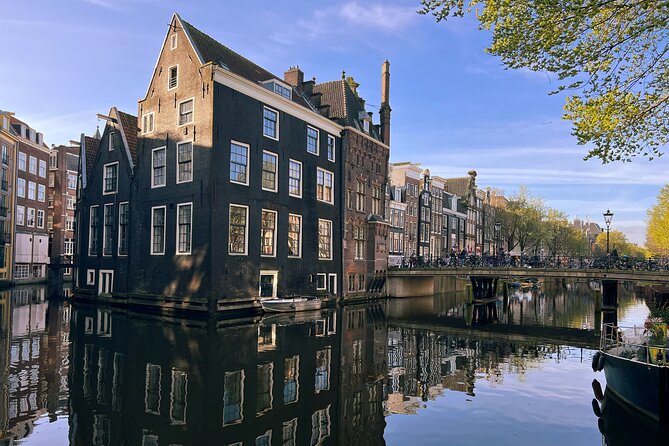
The tour then goes to Het Kleinste Huis van Amsterdam, the smallest house in Amsterdam, located next to a gate decorated with the city’s crest and other symbolic decorations.
This is a quick stop, but it’s one of those city-watching moments that makes you smile. Why would a city record a tiny building like this, and why here, next to symbolic decoration? Your guide’s explanation helps you understand that Amsterdam’s identity isn’t only grand palaces and famous churches. It also lives in quirky, specific details.
Spend a moment looking at the surroundings. That’s where the point lands: the city’s symbols and architecture communicate civic pride, not just personal property.
Dam Square: The Heartbeat of Amsterdam, Then and Now
Dam Square is the old market square, and it’s described as the heart of the city. Today you’ll see the Royal Palace and a national Second World War monument, which means the square holds both political presence and collective memory.
This is where the tour naturally slows down a bit more—about 10 minutes—because Dam Square needs it. It’s wide enough for you to feel the scale, and busy enough that you’ll notice how people use open space in Amsterdam.
Practical tip: even if you’re tempted to scan for famous buildings, take one minute to notice what the square does for the city. It’s a gathering point, a stage for official life, and historically a marketplace. That role helps you connect earlier “how the city worked” stops to later “how the city looks and lives” stops.
Canal Ring (Grachtengordel): Golden Age Canals and Merchant Power
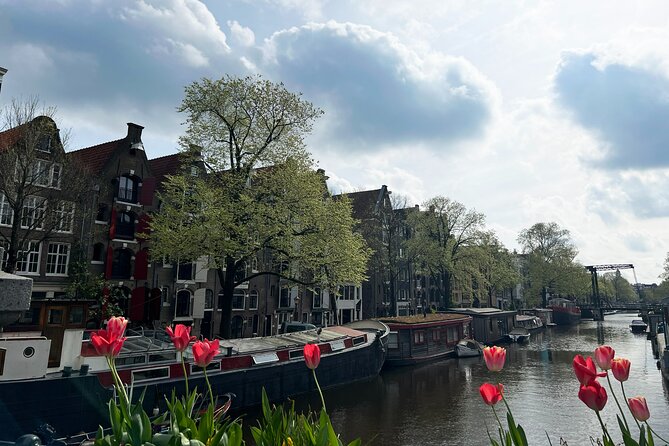
After Dam Square, you reach the Canal Ring, the famous Grachtengordel district built for wealthy merchants during the Golden Age. This is where Amsterdam turns into what you probably imagined—canal houses, houseboats, and that distinct feel of designed wealth.
The tour highlights northern baroque canal houses and the variety of houseboats. But the real value is learning to look beyond aesthetics. Your guide helps you understand that these canals weren’t random scenery. They were tied to wealth, trade, and the status of the people who could shape urban development.
This part is longer—about 30 minutes—so you’ll have time to slow down. Try not to treat it like a checklist. Instead, pick one detail at a time:
- the canal frontage
- the way buildings face the water
- houseboats as part of the living city
If you’re prone to rushing photos, this is the stretch where you can recalibrate and actually see.
Jordaan: Brown Café Streets and the Neighborhood Feel
Next comes Jordaan, a popular and charming neighborhood known for picturesque streets, traditional brown cafés, and unique boutiques. This is a helpful counterpoint to the “grand” canal belt.
Jordaan is where Amsterdam feels more like a neighborhood you’d visit, not a historic set you’d tour. Even if you don’t stop for long, the atmosphere tells you how people live there: smaller street scales, social café culture, and a more human pace.
The tour allots about 30 minutes here. That’s enough time to look around and feel the rhythm. It’s also enough time to grab a snack if you want—one of the practical touches that helps this walking tour feel like a full experience instead of a rapid sprint.
Westerkerk: Finishing at a Church Locals Love
The last stop is Westerkerk, a Dutch Protestant church with a stylish design and an iconic spire. The big clue here is that it’s described as a landmark most loved by locals.
This matters because it changes the emotional tone of the finish. You’re no longer only collecting sights. You’re ending with a landmark that reflects local identity and everyday affection.
You’ll spend about 5 minutes here. Keep your eyes up for the spire, then glance around at how the neighborhood wraps itself around the church. After canal ring and Jordaan, Westerkerk offers a clean final image and a sense of where you are in the broader city.
The tour ends in the vicinity of the Anne Frank House and Westerkerk church, so you’re well positioned to continue your day on foot.
Price and Value: Is $96 for Two Hours a Good Deal?
At $96.02 per person, this isn’t a budget “free walking tour” price. But it’s also not the kind of cost that feels out of line if you value time and accuracy.
Here’s why it can be good value:
- It’s private, so your pacing and interests matter.
- It’s structured for a first visit, which can save you time later when you plan your next neighborhoods.
- All fees and taxes are included, and the listed stop admissions are free.
- You get a local Dutch guide with 25 years in the city, which is the real “premium” behind the price.
One more detail: the advertised duration is about 2 hours, but in practice it can run longer depending on questions and how the group moves. If you have a flexible schedule, that makes the price feel even more reasonable, because you’re not locked into a rushed ending.
What to Expect on the Walk (and Who It’s For)
This is a guided walk, not a museum day. The route is built from a sequence of short stops and a couple longer stretches, including the canal ring and Jordaan.
It suits you best if:
- you want an efficient way to learn how Amsterdam fits together
- you’re interested in medieval origins and later global trade
- you like neighborhood wandering as part of history, not as a separate activity
It’s not the best choice if:
- you have trouble walking and standing for around 2 hours
- you use a walker (mobility aids aren’t available)
- you need step-by-step accessibility support
If you fall into the mobility category, it’s worth considering whether you can handle the continuous walking.
Practical Tips That Make This Day Easier
A few details can make or break a walking tour day in Amsterdam. Here’s how to set yourself up:
- Bring your own water. Bottled water isn’t included, so plan for it.
- Wear shoes you trust. The route is mostly about movement through streets, and you’ll want grip.
- Use public transport if you’re coming from far away. The starting point is near public transportation.
- If you have service animals, you’re covered. They’re welcome on this tour.
- Expect your English guide to manage the pace. Since it’s private, you can usually ask questions and get answers tied to what you’re seeing.
If you’re the type who likes to stop to read signs or take extra photos, this private format can still work. Just remember the time limit is designed for a full loop, not endless loitering.
Should You Book This Amsterdam Historical Walking Tour?
I’d book this tour if you’re visiting Amsterdam for the first time and you want a clear mental map by the end of the day. It’s especially compelling if you like connections: how medieval water defenses relate to the city’s later wealth, how trade shaped building patterns, and why the canal ring and Jordaan feel the way they do.
Skip it if you need extensive accessibility support or you know you can’t comfortably manage a couple hours on foot. Also, if you already know Amsterdam deeply and you’re craving only museum time, you might prefer a different kind of experience.
If you fit the sweet spot—first-time orientation, history with street-level context, and a local guide who can explain why things are where they are—this one is a strong pick.
FAQ
How long is the Amsterdam historical walking tour?
The tour lasts about 2 hours (approx.).
Is this a private tour or a group tour?
It’s a private tour/activity, so only your group participates.
What language is the tour offered in?
The tour is offered in English.
What does the price include?
All fees and taxes are included.
Are tickets to the stops included?
Admission tickets are listed as free for the stops on this tour.
Where does the tour start and end?
It starts at Café the Schreiertower on Prins Hendrikkade 95, 1012 AE Amsterdam, and ends near Westerkerk at Prinsengracht 279, 1016 DL Amsterdam.
Is bottled water provided?
No, bottled water is not included.
Can I bring a service animal?
Yes, service animals are allowed.
Is the tour suitable if I have limited mobility?
It’s not recommended for participants who have trouble walking and standing for 2 hours. Mobility aids aren’t available, and it’s not recommended for participants who use a walker.
What is the cancellation policy?
Free cancellation is available. You can cancel up to 24 hours in advance for a full refund. If you cancel less than 24 hours before the start time, the amount you paid won’t be refunded.