REVIEW · AMSTERDAM
Historic Amsterdam 2-Hour Private Tour with Local Guide
Book on GetYourGuide →Operated by Orange Adventures · Bookable on GetYourGuide
Amsterdam works best when someone explains what you’re seeing.
This private tour is a fast way to do that: you start at Dam Square, then glide through the city’s story with a local guide who ties landmarks to how Amsterdam became a trading powerhouse. Two things I really like are the focus on the canal-side details (barges, bridges, merchant houses) and the way the guide makes the Red Light District feel historical instead of awkward. One consideration: you’ll be doing a mix of walking and possibly cycling, and bike rental isn’t included, so plan ahead if you want the bike option.
You’re not stuck in a big group shuffle either. It’s a private group for up to two, and the length is just right when you want a strong orientation without losing an entire day.
In This Review
- Key highlights to pay attention to
- Dam Square first: where Amsterdam’s 700-year story starts
- Canal Belt and merchant houses: the architecture lesson you can actually walk through
- Red Light District on a human timeline, not a shock-value stop
- Sky Lounge viewpoints: when the tour gives you a planned breather
- Begijnhof and the Flower Market: a softer Amsterdam change of pace
- Rembrandtplein finish: from butter market past to nightlife present
- Private-group value: why 2 hours can feel like 6
- Language and guide quality: what I’d optimize for
- Timing, start times, and how to dress so you don’t rush
- Who this tour suits best
- Should you book this Historic Amsterdam 2-Hour Private Tour?
- FAQ
- Where does the tour start?
- How long is the Historic Amsterdam private tour?
- What’s included in the price?
- Are bike rentals included?
- What languages are available?
- Can I choose my start time?
Key highlights to pay attention to
- Dam Square launch point: start at the heart of the 700-year-old city
- Canal Belt and merchant houses: 16th-century to onward wealth, shown in architecture
- Red Light District with context: learn about Amsterdam’s historic tolerance in a calm way
- Sky Lounge stop: a dedicated moment for skyline views while you’re already in the right area
- Begijnhof to Flower Market: the route shifts from canals and crowds to scent and color
- Rembrandtplein ending: finish near the old butter-market area and lively nightlife streets
Dam Square first: where Amsterdam’s 700-year story starts
Your tour begins at Dam Square, right by the entrance of Hotel Krasnapolsky, behind the white column statue. That matters more than it sounds. Dam Square is one of those places where you could walk around for hours and still miss the pattern. A good guide gives you the map in your head early, so the rest of the city stops being random and starts feeling connected.
From there, you’ll get an orientation that’s history-forward but not academic. The guide explains how Amsterdam grew from a long-established city into a global trading hub, with a special emphasis on the 17th century, when merchants and wealth flowed through the canals and out across the world. You’re not just learning dates. You’re learning why the streets and buildings look the way they do.
If you’re the type who likes to understand a place at street level, this start helps. It sets the tone for everything you’ll see next: canal belts, merchant homes, and even why certain neighborhoods have the character they do.
You can also read our reviews of more guided tours in Amsterdam


Canal Belt and merchant houses: the architecture lesson you can actually walk through
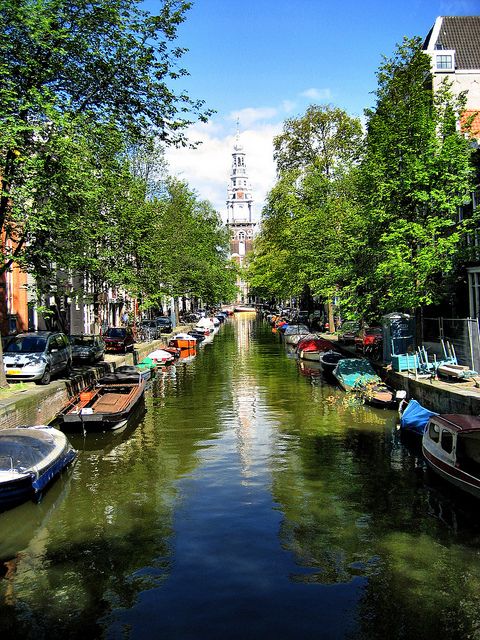
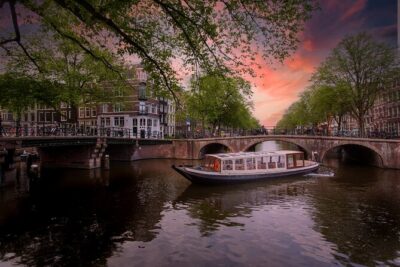
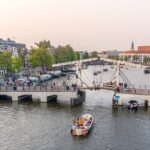
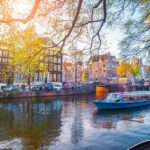
Amsterdam’s canal belt can look like postcard perfection from the outside. On a normal day, you might admire it and move on. On this tour, you slow down just enough to notice what the city is telling you.
You’ll explore handsome merchant houses that trace back to the period when Amsterdam became one of the wealthiest cities in the world. The guide’s job here is to point out the “why” behind the scenery. For example, you’ll connect prosperity to what people built—how homes and facades reflected wealth, and how the canal network shaped everyday life.
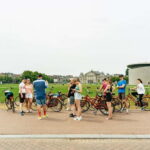
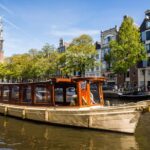
Then there’s the canal-side cycling/walking experience. If you choose the bike option, you’ll cycle by the canal edges and you’ll see colorful house barges and quaint bridges up close. Cycling changes your sense of scale. Instead of viewing canals from one angle, you’re moving with the city’s flow, which makes the bridges and waterfronts feel more like a system than a set of cute spots.
Practical tip: if you’re bringing a camera, this part is where you’ll use it most. Also, the route is outdoors, so dress for changeable weather. Even in short tours, Amsterdam can throw wind and drizzle at you.
Red Light District on a human timeline, not a shock-value stop
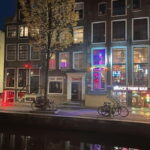
Yes, you’ll visit the Red Light District. But here’s the important difference: you’re not there for spectacle. You’re there with history and context.
The guide leads you through the area in a laid-back way, and you’ll learn about Amsterdam’s historic tolerance—the idea that shaped how the city handled controversial things instead of hiding them. That’s a meaningful lesson because it changes how you interpret the streets. You start seeing policy, economy, and culture as part of the same story, rather than treating the district as a one-note tourist moment.
If you’re worried about the vibe, the tour’s approach is built for respectful understanding. It’s designed to keep things calm and informative while you cycle/walk nearby. You’ll also get a sense of how the neighborhood fits into the broader city fabric, rather than feeling like you’ve jumped into a separate theme park.
One consideration: because the district is active and people are naturally curious, you’ll want to keep your pace steady and be mindful in tighter areas. Private helps, but you’re still in a real neighborhood.
Sky Lounge viewpoints: when the tour gives you a planned breather
At one point, the route includes a stop at Sky Lounge for the best views in town. This is smart tour design. After canals, streets, and neighborhoods, you need a visual “reset.” A viewpoint does that fast.
In a city where everything can feel like it’s at your feet, a viewpoint forces your brain to zoom out. You start noticing canal layouts, bridges as connectors, and how the city’s older core sits with newer movement around it.
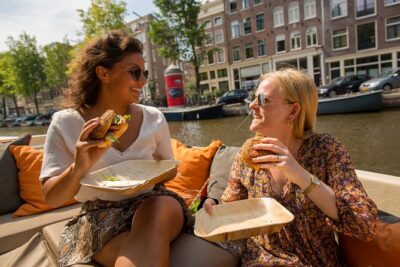
The tour also builds in time to pause at local cafés and bars. You can stop for a cool beer or a hot chocolate depending on weather. Drinks aren’t included, but the pause itself is part of the experience design. You get small pockets of warmth and time to ask questions without feeling rushed.
Begijnhof and the Flower Market: a softer Amsterdam change of pace
After the neighborhood-heavy parts, the tour shifts toward quieter, fragrant imagery.
You’ll end the tour in the direction of Begijnhof, where you’ll catch the fragrance associated with the Flower Market approach. That sensory cue is the point. Amsterdam isn’t only canals and crowds. This area gives you a moment where the city feels more enclosed, calmer, and slower.
The transition also helps you mentally separate Amsterdam into chapters:
- early city power and canal planning
- district culture and social history
- and then the more everyday sensory side: flowers, courtyards, and a different kind of atmosphere
Even if you’ve seen photos of the Flower Market, this route helps you experience it with a sense of placement—what surrounds it, what it leads into, and why this area feels like a color-and-scent pocket inside a very urban city.
You can also read our reviews of more private tours in Amsterdam



Rembrandtplein finish: from butter market past to nightlife present
Your tour arrives near Rembrandtplein (Rembrandt Square), and the guide ties it to the area’s former role as the butter market. That detail is a great example of what makes a local-guided orientation useful. You’re not just watching people cross a busy square. You’re understanding what used to happen there, and that history makes modern street life feel less random.
Rembrandtplein is also close to popular bars, so finishing here gives you easy options after your tour. Once the guide drops you off near that hub, you can decide what kind of evening you want—something casual or something more energetic—without needing to immediately solve transportation puzzles.
If you have limited time in Amsterdam and want to walk away with momentum, ending near a lively square is a practical win.
Private-group value: why 2 hours can feel like 6
The price is $235 per group up to 2, and you get a guided history tour for 2 hours. That sounds like a splurge until you compare what you’re buying.
You’re not paying for a seat on a crowded bus. You’re paying for:
- direction to the right streets and viewpoints
- a guide who can adapt the pace to your questions
- and a format that starts with orientation and ends with momentum
Private tours also reduce the “lost time” factor. In a large-group setting, people slow the group down, then the guide has less room to explain. Here, the guide can keep the story tight and the route moving—without sacrificing context.
And because it’s just you and (up to) one other person, you get a more personal feel. Even if you’re the quiet type, you’ll likely notice the difference: explanations land better when you’re not fighting noise and distractions.
Small note on value: bike rental isn’t included. If you want to bike, you may need to arrange that separately, and that can affect how much you feel like you got a deal. If you don’t mind walking, you can still get the orientation and history beat by beat.
Language and guide quality: what I’d optimize for
This tour offers live guiding in English, German, or Dutch, and that’s a big deal for history because Amsterdam’s past is full of local nuance. When you’re listening in a language you fully understand, you catch the small connections—how merchant families, canal design, and neighborhood reputation interact.
The reviews highlight one name in particular: Rolf. In the feedback, Rolf is described as very competent, very friendly, and quick with answers to questions. That combination matters because it changes the tour from a checklist into a conversation. If your guide is like Rolf, expect you’ll leave with more than facts—you’ll have a sense of what to look for next time you walk on your own.
Also pay attention to pace and question time. A tour like this works best when you ask something real, even if it’s simple like why the buildings look the way they do. This kind of guide gives you follow-up context instead of shutting you down.
Timing, start times, and how to dress so you don’t rush
You can choose your own start time between 9AM and 6PM, and you’ll agree on the time with the tour operator after booking. For a 2-hour orientation, I’d aim for earlier in your day if possible. You’ll get the most value when you can then use the rest of your time applying what you learned.
Weather matters here because you’ll be outdoors for walking and potentially cycling. Check the forecast and dress accordingly. Amsterdam weather can shift quickly, and the tour includes outdoor neighborhoods and canal viewpoints, so comfort affects how much you enjoy the history.
Who this tour suits best
This is a strong fit if:
- You want a quick but guided introduction to the main highlights without joining a big group
- You care about history but want it tied to what you see on the street
- You like canals and want your route to make sense, not just move from photo spot to photo spot
- You want a private experience for two and can handle a couple hours of movement
It’s also a good choice for couples or close friends who want shared context. The route covers major areas—Canal Belt, Red Light District, Begijnhof/Flower Market, and Rembrandtplein—so you end up understanding a lot of Amsterdam’s shape.
If you want deep specialized history on one neighborhood for hours, you may find two hours a bit tight. But for getting oriented and learning the logic behind the city, it hits the sweet spot.
Should you book this Historic Amsterdam 2-Hour Private Tour?
If your goal is to see Amsterdam’s biggest landmarks in a way that actually makes sense, I’d book it—especially if you like your travel with context and you want a private pace. The blend of canal architecture, neighborhood history, and viewpoint time is efficient. You also get language support in English, German, or Dutch, which helps you absorb more than surface-level stories.
I’d think twice if:
- You strongly prefer purely scenic sightseeing and don’t want to hear historical explanations
- You don’t want any cycling and bike rental logistics matter for you
- You’re expecting a full-day “everything in Amsterdam” marathon (this one is built for orientation in 2 hours)
For the right traveler, this is a smart use of time and a solid value for a private tour that focuses on the parts you’ll remember.
FAQ
Where does the tour start?
You meet your guide at Dam Square, at the entrance of Hotel Krasnapolsky, behind the white column statue.
How long is the Historic Amsterdam private tour?
The tour is 2 hours.
What’s included in the price?
The price includes the guide and tax/VAT.
Are bike rentals included?
No. Bike rental is not included, so you’ll need to arrange it separately if you want to ride.
What languages are available?
The live tour guide is available in English, German, and Dutch.
Can I choose my start time?
Yes. You can choose your start time between 9AM and 6PM, and you’ll confirm the time with the tour operator after booking.