REVIEW · AMSTERDAM
Anne Frank Walking Tour Amsterdam Including Jewish Cultural Quarter
Book on Viator →Operated by 360 Amsterdam Tours · Bookable on Viator
This walk connects Amsterdam’s past to today. At 2pm you start at Westermarkt and move through the Jewish Cultural Quarter with a guide who ties together Jewish life and WWII history at street level. I love the way it’s on foot, so you actually feel where things happened, not just see them from a bus. I also love that admissions are included for major stops like the Jewish Museum and the Portuguese Synagogue, so your day flows.
One thing to consider: it’s a packed plan. You’ll want to double-check your museum tickets and be ready for a tight schedule, since a delay can squeeze your time inside.
In This Review
- Key things that make this tour worth your time
- Where to start: Westermarkt, 2pm, and why the timing matters
- Stop 1: Jewish Museum and Jewish life from then to now
- Portuguese Synagogue: the 17th-century building and the candlelit feel
- Holocaust Museum: the story of Jews in the Netherlands
- Hollandsche Schouwburg memorial: theatre turned deportation site
- The Anne Frank walking portion: connecting the names to the streets
- Price and value: what you’re really paying for
- Pace and physical comfort: what to expect from the walking format
- Who should book this tour (and who should think twice)
- My bottom line: should you book it?
- FAQ
- What time does the tour start?
- Where is the meeting point?
- Is the tour offered in English?
- Does the tour include admission to the Anne Frank House?
- What’s included with the museum visits?
- How long is the tour?
- Is this tour suitable for someone with mobility limits?
- Is there a cancellation option?
Key things that make this tour worth your time
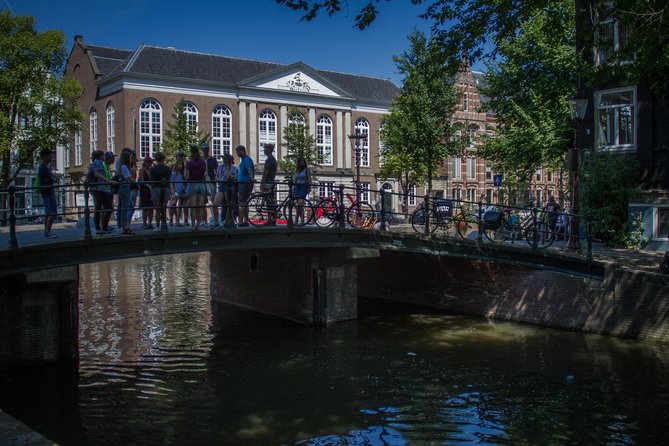
- A 2pm start in Amsterdam’s Jewish Cultural Quarter keeps the day moving from the start
- Jewish Museum + Portuguese Synagogue entry are built into the experience, not tacked on later
- Two Holocaust-related stops teach the Dutch story, including the Hollandsche Schouwburg deportation site
- A guided Anne Frank walk after the museum/memorial portion helps you connect names, streets, and dates
- Small group size (max 15) makes it easier to hear, ask questions, and keep pace
- Mobile ticket + English option makes it easier to manage once you’re in Amsterdam
Where to start: Westermarkt, 2pm, and why the timing matters
This tour runs daily and starts at 2pm at Westermarkt (right by the Jewish Cultural Quarter area). That timing is smart. You’re not wandering Amsterdam at random; you’re stepping into a focused route when the museums and memorials are actually open to visitors.
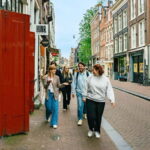
Because it’s a walking format, you should come ready to move. Wear shoes you’d happily walk miles in, and keep an eye on your group pace. With a max group size of 15, you generally won’t feel herded, but you will feel like the guide is moving with purpose.
The practical win: it saves you from doing the hardest part on your own. On this route, it’s easy to stand in front of a building and wonder what you’re looking at. A good guide turns those moments into context, from Jewish life before WWII to what the Nazis changed.
You can also read our reviews of more walking tours in Amsterdam

Stop 1: Jewish Museum and Jewish life from then to now
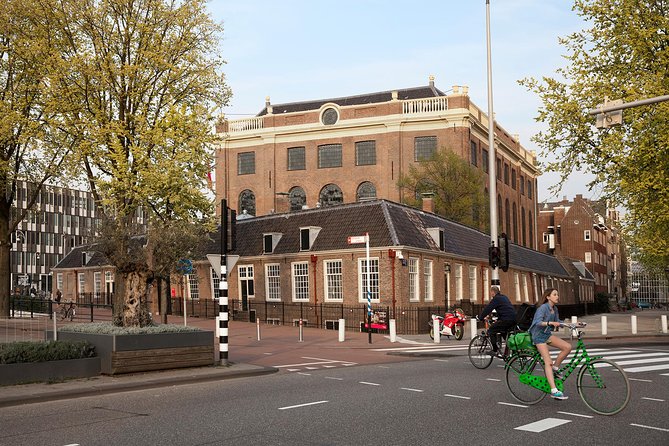
Your day begins with the Jewish Museum, with a full admission ticket included. This is not just a historical stop. It’s designed to answer basics first, like who began settling in the Netherlands around 1600, what Jewish people celebrate on Pesach, and why many Jews wear a kippah.
What I like about starting here: it gives you language for everything that follows. When you later visit WWII sites, the story lands harder because you understand what was taken away and what people tried to protect.
Inside, the museum uses personal stories, objects, and art to explain Jewish religion, history, and culture. If you’re new to Amsterdam’s Jewish Quarter, that orientation matters. You don’t need a background textbook; you need a framework—and the museum provides it.
Also, the tour includes the Jewish Museum Junior. That’s a nice bonus if you’re traveling with kids or teens who learn better with hands-on or youth-focused storytelling. Even if you’re an adult, it helps explain how the museum tries to keep the material readable and human.
Portuguese Synagogue: the 17th-century building and the candlelit feel
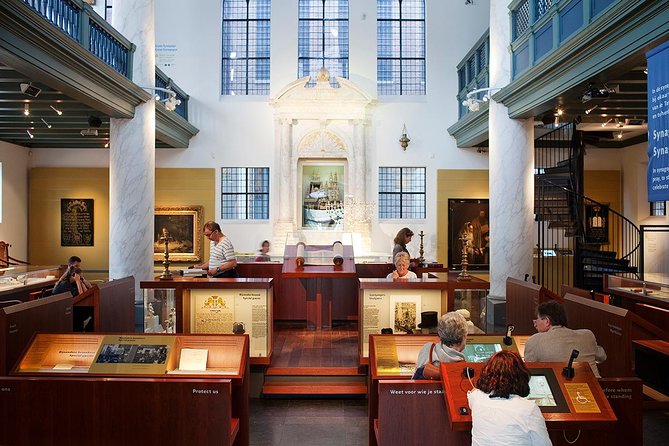
Next comes the Portuguese Synagogue, in the heart of the old Jewish neighborhood. Entry is included, and it’s one of the stops that tends to stick with people.
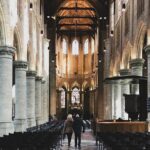
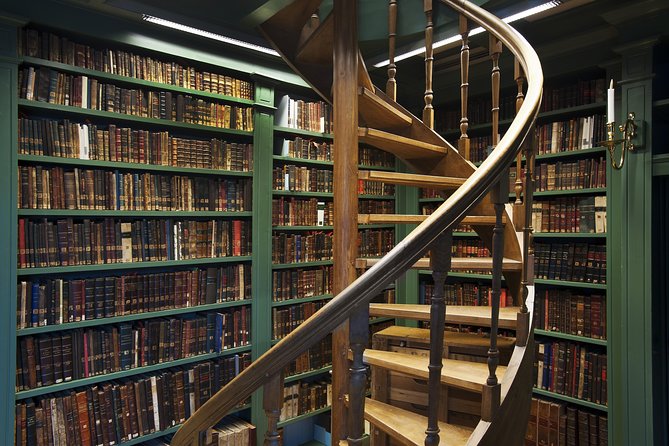
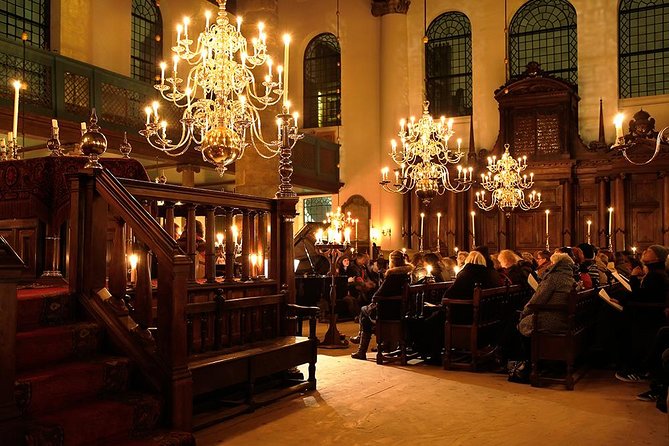
A key detail: the synagogue was the biggest in the world when it was built in the 17th century, and the visit highlights how it has been preserved. The lighting is candle-based rather than modern electric lights, which changes the mood immediately. You’re not just looking at a historic interior; you’re experiencing how it would feel to worship there.
One practical thing to keep in mind: religious buildings can have service schedules. If you’re traveling on a Saturday, there’s a good chance access could be limited depending on services. Plan your expectations for that day accordingly.
And yes, everyone is welcome. Even if you’re not Jewish, you’ll be treated to the architecture and the story with respect.
Holocaust Museum: the story of Jews in the Netherlands
After the synagogues and cultural context, the tour shifts to WWII with National Holocaust Museum entry included. The focus here is specific: Nazi persecution and murder of the Jews of the Netherlands.
This museum matters because it frames what happened in the Dutch context, not just a generic Europe-wide Holocaust overview. Before the Second World War, Jews and non-Jews lived side by side and had the same rights. During the war, the Nazis and collaborators carried out mass murder of Jews, totaling around six million across Europe.
The museum also examines daily life on the eve of the war, the lived experience of liberation, and how Holocaust memory is handled in the national culture of remembrance. That last part can be surprisingly useful. It helps you understand why memorials and ceremonies appear the way they do in the Netherlands, long after the war ended.
If you’re the type who likes facts and dates, you’ll find plenty here. If you’re the type who needs emotional clarity, you’ll also get it, because the museum aims to connect people’s ordinary lives to the machinery that destroyed them.
Hollandsche Schouwburg memorial: theatre turned deportation site
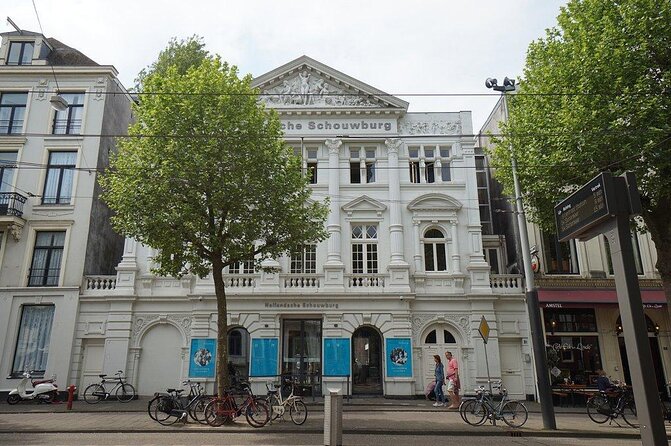
Then you reach Hollandsche Schouwburg, the memorial linked to the former theatre that the Nazis seized during WWII. This stop hits with a heavy, specific fact: from July 1942, Jews ordered to report for deportation were assembled there.
The building served as a holding place. Tens of thousands of people passed through these doors, with many trapped for hours, days, or even weeks before being sent to concentration and extermination camps. Today it functions as a memorial for the victims.
What makes this stop especially powerful is the contrast. You’re in a familiar city setting, but the building’s purpose was twisted into something horrifying. The guide’s job here is to slow you down enough to let your mind catch up to what you’re seeing.
And because you’re on foot, you’re not just reading about it. You’re standing in the urban reality of it, which makes the story feel less abstract.




The Anne Frank walking portion: connecting the names to the streets

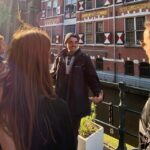
The tour’s last major piece is the 2-hour Anne Frank walking tour with a professional guide. This portion is designed to bring the Anne Frank story into the streetscape, rather than keeping it boxed inside a museum.
You’ll learn about Anne Frank’s life and how her family’s situation unfolded during WWII. The guide also tends to place her story inside broader context: Jewish community life, the pressures of occupation, and why hiding mattered so much.
One detail that I appreciate: this is a walking tour about Anne Frank, not an attempt to replace the Anne Frank House visit. The Anne Frank House itself is not included in this tour. So you can use this walk to understand the neighborhood and the story, then decide whether you want to book the House separately.
In the streets near the Anne Frank area, guides often point out street-level memorial markers and remembrance features tied to victims and stolen identity or belongings. Even if you think you already know the basic story, the street-level points help you see how remembrance is woven into everyday Amsterdam.
Price and value: what you’re really paying for
At $75.58 per person, this tour is priced like a day that includes both guided interpretation and several admissions. You’re getting entry tickets included for the Jewish Museum (and Jewish Museum Junior), the Portuguese Synagogue, the National Holocaust Museum, and the National Holocaust Memorial (Hollandsche Schouwburg).
That combination is the value. If you tried to assemble the same day on your own, you’d spend time figuring out schedules, which museum ticket to buy first, and how to structure the route so you don’t run out of time. The guide handles the flow, and the admissions remove a chunk of logistical hassle.
Still, read the fine print mindset carefully. Some people ran into ticket timing issues, where the museum tickets weren’t immediately usable during the walk portion. Others experienced confusion about what was included versus charged separately for a museum visit. To protect yourself, treat your confirmation and mobile ticket carefully and plan to arrive early enough to settle in.
Also, the tour ends back at Westermarkt, so you’re not stuck figuring out how to get out of the neighborhood at the end of a heavy day.
If you want a practical rule: book early. The average booking window is listed as about 78 days in advance, which signals steady demand.
Pace and physical comfort: what to expect from the walking format
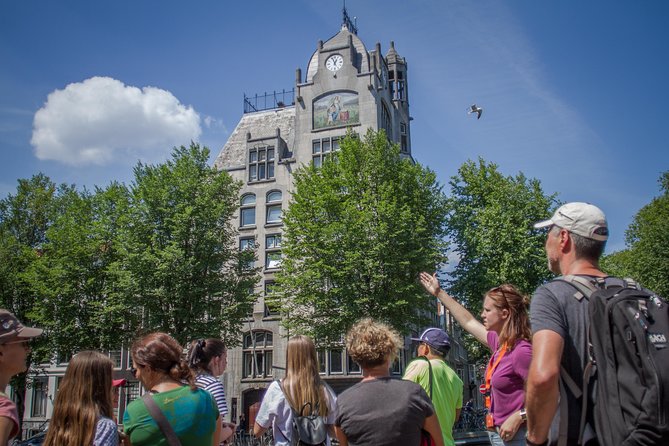
The tour recommends moderate physical fitness. That’s consistent with a full walking day tied to multiple locations. You’ll cover distance on foot, and you won’t have long breaks built into the schedule.
Because you’re moving between museums and memorial sites, the pace can feel brisk if you’re also trying to read every plaque. Bring a bottle of water, keep your phone charged for photos (when allowed), and plan to slow down when the guide asks you to.
Small group size helps. With fewer people, it’s easier for the guide to manage the route and keep everyone oriented. In practice, many guides on this route are skilled at holding attention while staying respectful of the subject.
Who should book this tour (and who should think twice)
This is a strong fit if you want a first serious look at Amsterdam’s Jewish Cultural Quarter. It’s also ideal if you’re a WWII history buff new to the city and want a route that connects Jewish life, occupation, and memorial spaces in one coherent plan.
It’s a good family option in the sense that the content is educational and structured, and the tour includes Jewish Museum Junior. If you’re traveling with teens, this format often works well because it gives both context and a guided path through heavy material.
Think twice if you’re expecting an Anne Frank House experience. This tour does not include entry to the Anne Frank House. If your main goal is the House, you’ll want to plan that separately.
Also, if you’re sensitive to tight schedules, remember that some museums can be affected by timing. One or two guests described issues where ticket use and end-of-day closings became a problem. You can reduce that risk by confirming your ticket setup before you start walking.
My bottom line: should you book it?
I’d book this tour if you want a guided, on-foot day that ties together Jewish cultural context and Holocaust memorials, then adds a guided Anne Frank walk to connect story to place. The admissions included make it good value, and the route is structured so you don’t have to piece everything together yourself.
I’d only hesitate if you’re only interested in the Anne Frank House itself, or if you’re the type who needs lots of downtime between stops. In that case, you might be happier building a flexible day around individual museum visits, then adding a separate guide for the neighborhood.
If you do book: come early, check your tickets, and give yourself permission to go slowly when the story gets heavy.
FAQ
What time does the tour start?
The walking tour starts daily at 2pm in front of the main entrance of the Jewish Museum.
Where is the meeting point?
The meeting point is Westermarkt, 1016 Amsterdam, Netherlands. The tour also ends at Westermarkt.
Is the tour offered in English?
Yes. It’s offered in English (and other languages as listed by the operator for this activity).
Does the tour include admission to the Anne Frank House?
No. Entry/admission to the Anne Frank House is not included.
What’s included with the museum visits?
The tour includes admission tickets for the Jewish Museum (including Jewish Museum Junior), the Portuguese Synagogue, and the National Holocaust Museum and memorial site (Hollandsche Schouwburg).
How long is the tour?
It runs about 4 to 5 hours total.
Is this tour suitable for someone with mobility limits?
It’s recommended for travelers with moderate physical fitness since it’s a walking tour.
Is there a cancellation option?
Yes, free cancellation is available up to 24 hours in advance for a full refund.