REVIEW · AMSTERDAM
Amsterdam: Treasure Hunt Walking Tour “A Secret Sender”
Book on GetYourGuide →Operated by Mystery City · Bookable on GetYourGuide
Amsterdam turns into a game fast. This self-guided treasure hunt sends you through classic sights, then pulls you into side clues and secret-feeling details. I especially love the treasure-map format and the way it mixes big names with smaller moments along the route. One thing to consider: the targets are spread out, so you’ll want to plan for more walking time than the 2-hour estimate.
The story gives you a reason to pay attention. You start at Mystery City Games with a backpack of magical tools, an ancient book of puzzles, and a locked treasure box, then work through challenges tied to Golden Age Amsterdam and Amsterdam history. Just note that part of the game goes through the Red Light District, so it may feel a bit intense depending on your comfort level.
This is built for groups, and that’s part of the fun. All bookings are private, so you play with your own group (no mixed crowd slowing you down), and it’s designed for adults but works for kids 7+ when they play with parents. Comfortable shoes matter, and if it’s raining, come prepared.
In This Review
- Key highlights to know before you go
- The game format: why this feels different from a normal walk
- Getting started at Mystery City Games (Zwanenburgwal)
- How the mystery and puzzle box work
- Nieuwmarkt Square: your first clue, and your first pace check
- Oude Kerk: where the story part becomes part of the game
- Torensluis Bridge: a good break from the puzzle grind
- Sint Luciënsteeg: where side-street energy helps you notice details
- Westerkerk: finish with stories and a sense of accomplishment
- Walking time: plan for real city pace, not just the clock
- Red Light District segment: how to approach it comfortably
- Puzzles and difficulty: what to expect from the challenges
- The value case for $29 per person
- Who should book A Secret Sender
- Booking decision: should you take this treasure hunt?
- FAQ
- How long is the Amsterdam Secret Sender treasure hunt?
- Is this a self-guided activity or a guided tour?
- What do I receive when I pick up my backpack?
- Where do I meet?
- What should I bring?
- Is it okay for children?
- Does the route include the Red Light District?
- What languages are available?
- Is it wheelchair accessible?
Key highlights to know before you go
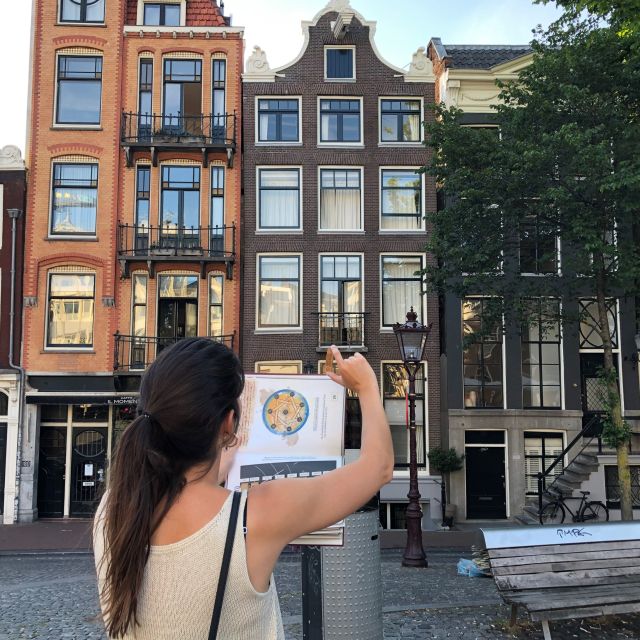
- A self-guided treasure map that leads you to five major stops in the city center
- A locked treasure box you solve in stages by clearing puzzles at each location
- Golden Age Amsterdam stories that connect the mystery to real places and eras
- Adulthood-designed puzzles, with family-friendly options for kids 7+ with parents
- A route that includes the Red Light District for better or worse, depending on your mood
The game format: why this feels different from a normal walk
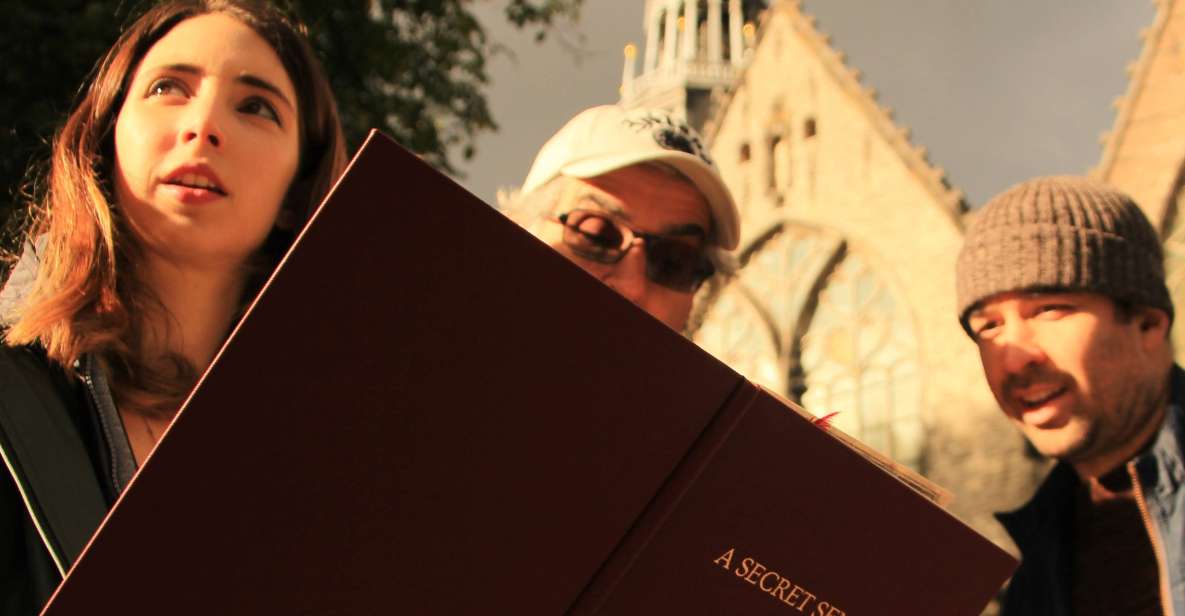
Amsterdam can be a lot. You arrive, you see canals, you tick off sights, then you forget what order things happened in. This experience uses a simple trick: it turns your route into a mission.
You aren’t following a scripted lecture. You’re following a map, solving small challenges at each stop, and using clues from the puzzle book to figure out what to do next. That makes you notice things you’d otherwise glide past, like small details that feel easy to miss in busy streets.
And because it’s self-guided, you control the pace. The plan is about two hours, but the company encourages you to take your time, especially since the map also points out good places to pause for photos and local specialties.
You can also read our reviews of more walking tours in Amsterdam



Getting started at Mystery City Games (Zwanenburgwal)

You meet at Mystery City Games at Zwanenburgwal 178, 1011 JH Amsterdam. Look for the Mystery City Games sign, because that’s your Secret Headquarters.
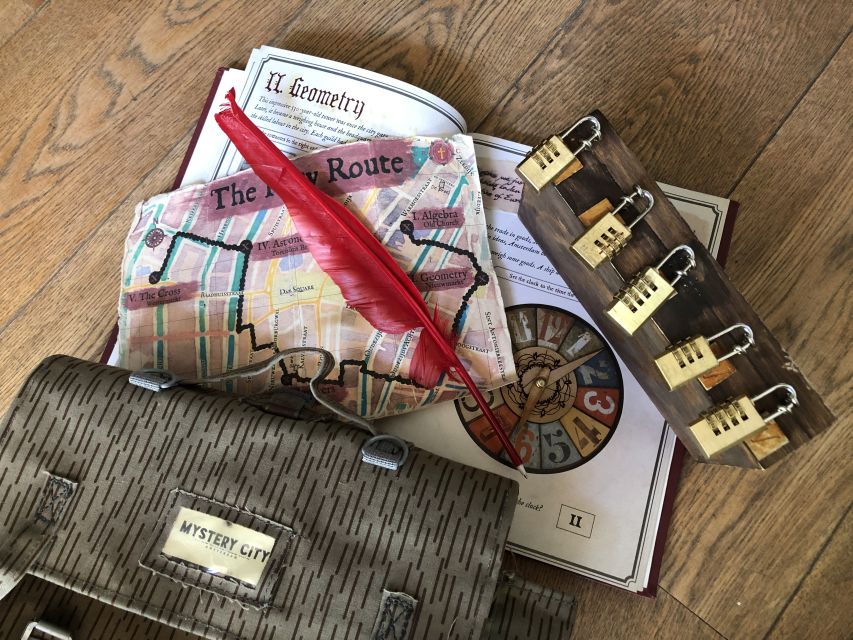
At the shop, you pick up the backpack of what you need: a treasure map, a locked treasure box, a book of puzzles, and “magical tools.” It’s all designed to set you up to solve the mystery without needing to check your phone every two minutes.
Practical tip: before you head out, skim the map once like you’re planning a route for a normal day. You’re going to be walking between points, and the more you understand the shape of the loop, the easier it is to stay calm when puzzles slow you down.
How the mystery and puzzle box work
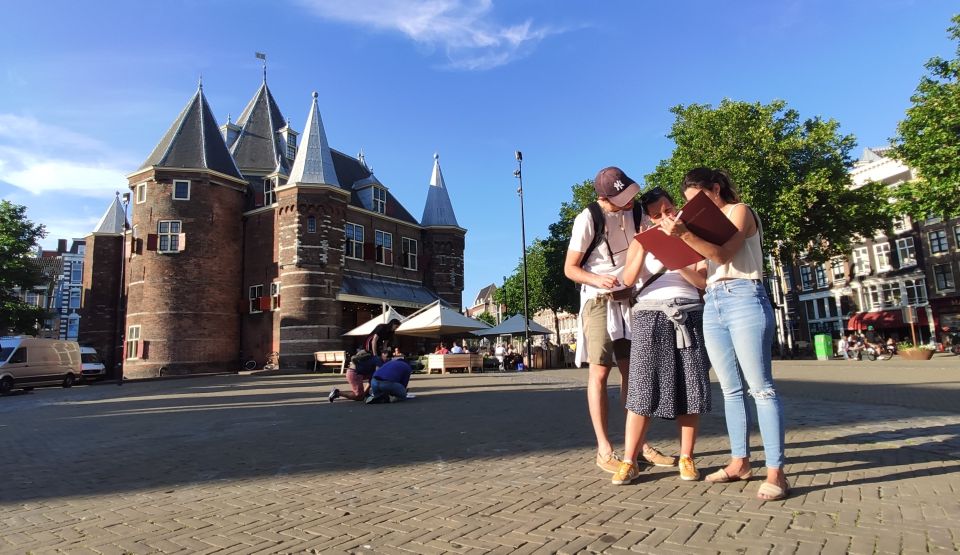
The basic premise is straightforward. A secret society challenges you to uncover the identity of one of their most famous members. To solve it, you follow the treasure map and a chain of clues written in an ancient book.
Each of the five city-center locations is a checkpoint. At every stop, you learn some context tied to Golden Age Amsterdam and Amsterdam history, then complete a challenge that helps open a lock on the treasure box. The endgame is simple: open all the locks, solve the mystery, and return to the shop to claim your prize.
This structure is the key value. Instead of “go see this, go see that,” you get mini goals that make each stop feel purposeful. When you’re done with a challenge, the next location has a built-in reason to matter.
Nieuwmarkt Square: your first clue, and your first pace check
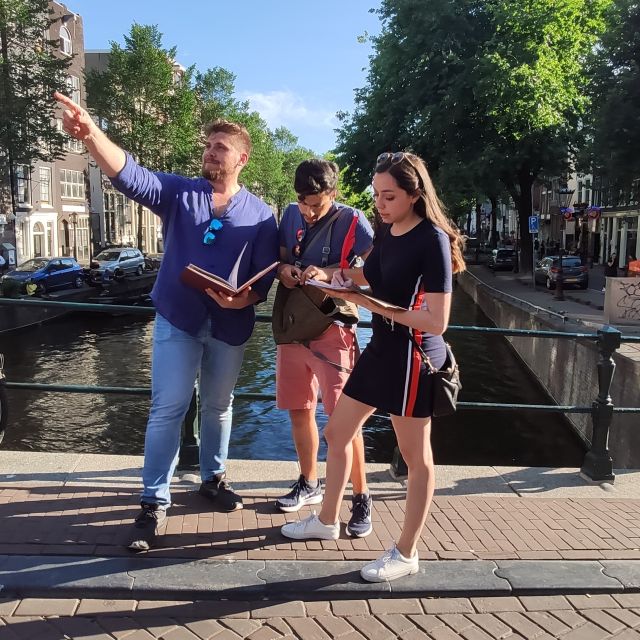
Your first real stop is Nieuwmarkt Square, with about 20 minutes there. This is where you get your groove: you start solving, you figure out how the puzzle style works, and you test whether your group is into logic games or more into observation.
Because it’s your starting checkpoint, it’s also where you can accidentally lose time. If you’re the type who wants to read every clue line-by-line, set expectations early. The goal is not to race, but to keep momentum so the rest of the route stays enjoyable.
What I like about starting here: it’s central enough that the day already feels like Amsterdam. So even if you spend extra minutes with the first puzzle, you haven’t started the tour with “dead time.”
Oude Kerk: where the story part becomes part of the game
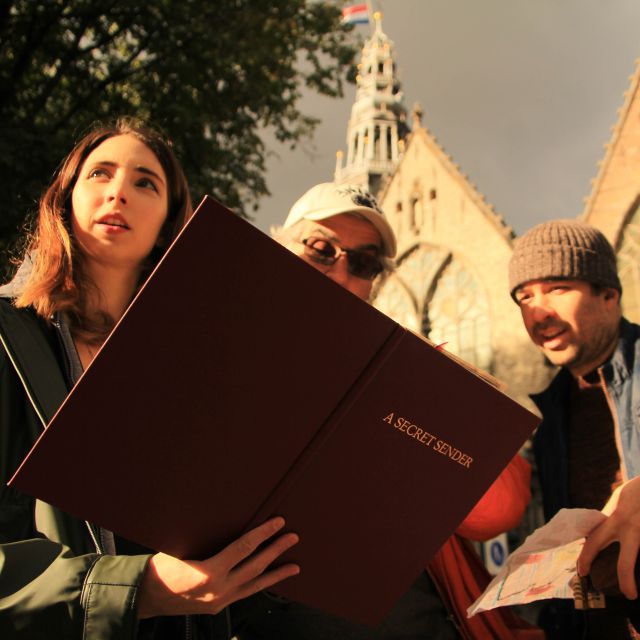
Next up is Oude Kerk (around 20 minutes). This stop is all about blending the setting with the puzzle. You’ll get more of the Amsterdam story angle tied to the Golden Age theme, then solve a challenge connected to that step.
The practical benefit of doing this at a major landmark is focus. In a normal walk, it’s easy to treat big sights like quick photos. Here, you’re forced to slow down just enough to understand what the game needs from you.
One caution: this is not a trivia-only experience. Some puzzles are reported as tricky, and you’ll get the most out of the tour if you’re comfortable thinking for a minute instead of instantly Googling your way out.






Torensluis Bridge: a good break from the puzzle grind
Then you reach Torensluis Bridge, Amsterdam (about 20 minutes). If the earlier stops felt like a steady work session, this one acts like a reset. Bridges are natural pause points anyway: you get a visual break, and you can spread your group out a bit to compare clues.
Because it’s mid-tour, it’s also where you learn whether your route planning is working. The tour description encourages you to take your time for photos and drinks, and the bridge stop is the kind of place where a quick photo turn into a longer pause if you’re not careful.
I like this checkpoint because it helps you keep the mission balanced. You still solve the puzzle step, but you also get room to breathe and look around like you’re sightseeing, not just “working through” a game.
Sint Luciënsteeg: where side-street energy helps you notice details
Your next stop is Sint Luciënsteeg (about 20 minutes). This is the kind of location where the tour’s observation theme really starts to click.
Even without turning the entire city into a puzzle board, the game is built to reward close attention: noticing secret details, hidden places, and small visual cues that you’d normally pass by. This stop is a strong example of that method.
A practical note from experience-style feedback: distances between targets can surprise you. If your group tends to get “puzzle-stuck,” you’ll want to keep an eye on timing. When you’re moving through tighter streets, it’s easy to wander one wrong direction for a few minutes, and then the whole loop starts feeling longer.
Westerkerk: finish with stories and a sense of accomplishment
Finally, you head to Westerkerk (about 20 minutes) before returning to Mystery City Games to claim your prize. This ending stop matters. By the time you reach it, you’ve built enough context from the Golden Age and Amsterdam history elements that the final parts of the story start to feel connected.
If you solve everything smoothly, this is your payoff moment. If you’re still working on a lock or two, it’s your final push.
Either way, it’s a nice way to end because you’re finishing at the original headquarters. You can compare notes, confirm the solution with your group, and then close out the experience in one place.
Walking time: plan for real city pace, not just the clock
The game is designed for 2 hours, and that’s the baseline schedule. But the experience encourages you to slow down. The map even suggests places to stop for drinks and local specialties, and those pauses add up fast.
Here’s the honest way to plan: assume you’ll be walking more and lingering more than you think. One key piece of feedback you should listen to is that you shouldn’t underestimate the distance between targets. You are covering multiple city-center points in a short timeframe, so comfortable shoes are non-negotiable.
My practical recommendation: if you have another appointment soon after, give yourself breathing room. If you want to treat it like a normal Amsterdam day, the extra time is often where the memories are made.
Red Light District segment: how to approach it comfortably
Part of the game goes through the Red Light District. That’s a key “know before you go” item, because it changes the tone of the experience.
If you’re sensitive to crowded nightlife areas or visual material you’d rather avoid, this is the moment to decide your comfort level early. The game is still just a walk with puzzles, but the surroundings are what they are.
I’d handle it like this: keep your focus on the clues and the pace of your group, and don’t let the mood distract from solving. For some people, it adds realism and a sharper sense of how varied Amsterdam is. For others, it’s simply too much, and you’ll want to plan alternative sightseeing after.
Puzzles and difficulty: what to expect from the challenges
The tour includes challenges at each of the five locations. The overall style is puzzle-based, and you can expect variety between steps, not just the same task repeated.
One useful consideration: some puzzles can be rightfully kniffling. That doesn’t mean it’s frustrating. It just means it rewards attention, teamwork, and patience.
If you’re traveling with friends or family, this is a good game to split roles. One person can track the cluebook, another can check the map position, and everyone can compare what they think the secret detail might be. You’ll move faster and feel smarter doing it.
The value case for $29 per person
At $29 per person for roughly two hours, the value is best understood as “paid fun that improves your sightseeing.” You’re not buying a ticket to sit and listen. You’re buying a route, a mission, a puzzle kit, and a guided-style structure without the crowd-control of a traditional group tour.
You also get tangible inclusions: the map, the locked treasure box, the puzzle book, and the magical tools bag. That kit is part of the reason it feels like an actual activity rather than just an app-based scavenger hunt.
You do need to bring the right mindset: if you hate walking, or you dislike puzzles, you’ll get less value. But if you like being active and turning sightseeing into a story you can solve, the math starts to make sense quickly.
Who should book A Secret Sender
This is a smart pick for travelers who want a different way to experience Amsterdam’s center. You’ll likely enjoy it if you:
- like interactive activities more than lectures
- enjoy problem-solving in small bursts
- want a structured route that still gives you freedom to pause for photos and food
- prefer private play with your own group rather than mixing with strangers
It’s also described as not recommended for solo play. The experience is designed for adults, but it can work for kids 7+ when they play with their parents.
Not ideal if you’re visually impaired, since the tour is marked as not suitable for visually impaired people.
Booking decision: should you take this treasure hunt?
If you want Amsterdam that feels like a challenge—without needing a guide’s voice every step—book it. The strongest reason is the blend of story context + checkpoint puzzles + city-center walking. You get to see familiar areas, but you experience them in a fresh order and with a reason to look closely.
Skip it if you hate puzzles, you want a low-effort “just show me the sights” day, or you’re uncomfortable with the Red Light District segment. Also, if your schedule is tight, plan extra time. This isn’t a sprint.
In short: if you’re game for a playful, thinky walk, it’s a solid way to spend a morning or afternoon in Amsterdam.
FAQ
How long is the Amsterdam Secret Sender treasure hunt?
The experience is set up for about 2 hours.
Is this a self-guided activity or a guided tour?
It’s self-guided. You follow a treasure map and clues, and you play with your own group in a private booking.
What do I receive when I pick up my backpack?
You get a treasure map, a locked treasure box, a book of puzzles, and magical tools.
Where do I meet?
Meet at Mystery City Games, Zwanenburgwal 178, 1011 JH Amsterdam. Look for the Mystery City Games sign.
What should I bring?
Wear comfortable shoes. If it rains, come prepared.
Is it okay for children?
It is designed for adults, but it is suitable for children 7+ when they play with their parents. It is not suitable for children under 6.
Does the route include the Red Light District?
Yes, part of the game goes through the Red Light District.
What languages are available?
The host or greeter is available in English, Dutch, Spanish, French, German, and Italian.
Is it wheelchair accessible?
The activity is listed as wheelchair accessible.