REVIEW · AMSTERDAM
Amsterdam: Windmill Guided Tour
Book on GetYourGuide →Operated by Molen van Sloten · Bookable on GetYourGuide
A real windmill lesson in how the Dutch stay dry. You’ll get to see the working Sloten Windmill in action and learn why this 19th-century machine matters in low-lying Amsterdam West. The one catch: it’s a compact, 45-minute visit, so don’t book it if you’re expecting a long museum-style experience.
What makes this tour fun is that it’s not just looking at sails. You follow a guide through how the mill protects the water levels and what you’d call the daily logic of Dutch water management—up close, with the windmill actually doing its job. I also like that the experience is built for families and packed into a tight time slot, so you’re not wasting half a day in transit.
One possible drawback to plan around: climbing and moving through the windmill is part of the show. Even though it’s listed as wheelchair accessible, some visitors may still find the interior stairs and tight spaces challenging—so it’s worth considering your comfort level before you go.
In This Review
- Key points to know before you go
- Molen van Sloten: a working pump mill on Amsterdam’s edge
- Inside the windmill: what the 45-minute guided tour really covers
- How Dutch water control keeps Amsterdam West dry
- The thatched roof, sturdy oak, and the panoramic top-floor view
- Rembrandt’s wax figures in the attic: quirky and surprisingly satisfying
- Guides, group vibe, and the languages you can choose
- Price and value: why $9 for 45 minutes can be a smart buy
- Practicalities: where to meet and what to plan for
- Should you book the Amsterdam-Sloten Windmill guided tour?
- FAQ
- How long is the Amsterdam: Windmill Guided Tour?
- Where do I meet for the guided tour?
- What is included in the price?
- What languages are the guides available in?
- Is the tour wheelchair accessible?
- Are children allowed to join?
- Can I skip the ticket line?
- Is free cancellation available?
Key points to know before you go
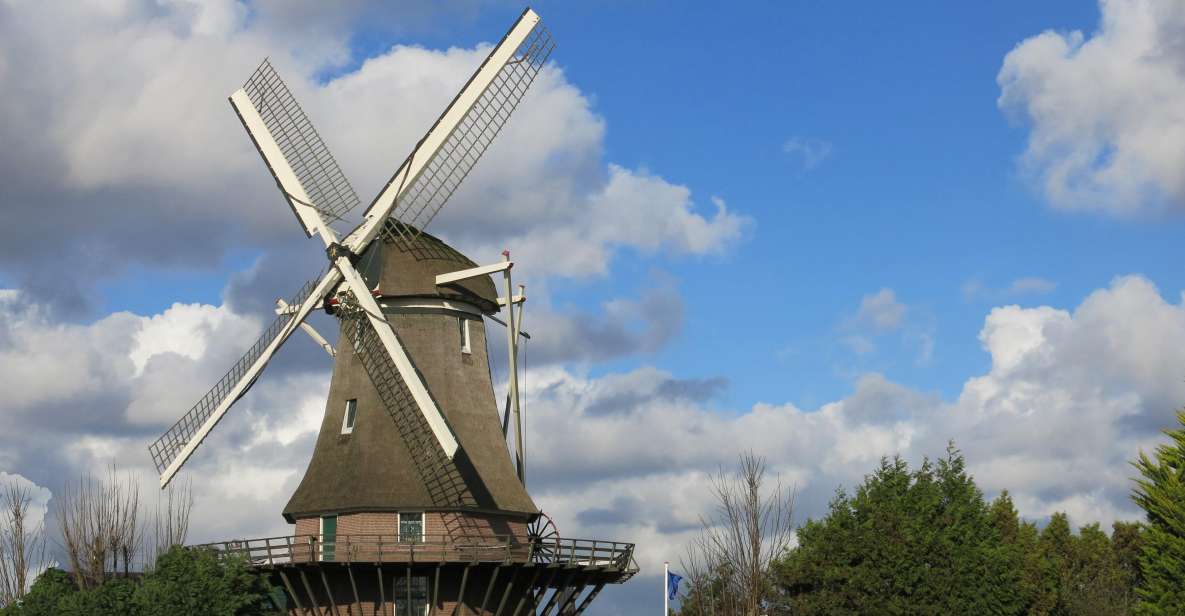
- Working windmill, not a prop: Watch the sails turn on a functional water pumping mill.
- Water management made clear: You learn how the mill supports low-lying Amsterdam West by controlling water levels.
- A 45-minute format that fits real schedules: Short, focused, and easy to pair with other Amsterdam West sights.
- Panoramic top-floor views: From the attic, you get a wide look over the Ringvaart Canal area.
- Rembrandt painted wax characters: In the attic, you’ll see wax figures painted by the Dutch master Rembrandt van Rijn.
- Guides bring both stories and technical detail: English, Dutch, and German guides explain the history and the mechanics.
Molen van Sloten: a working pump mill on Amsterdam’s edge
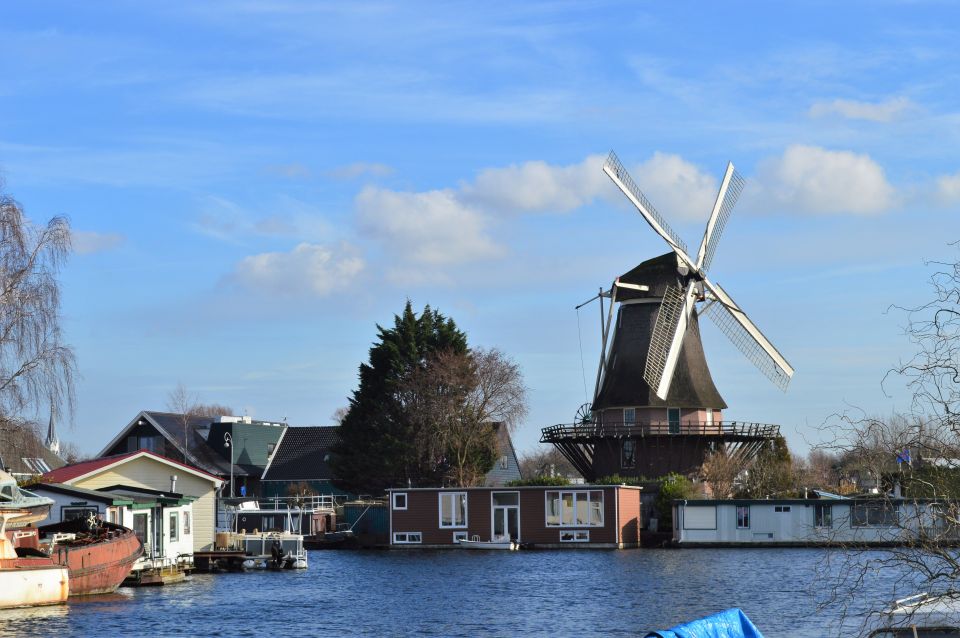
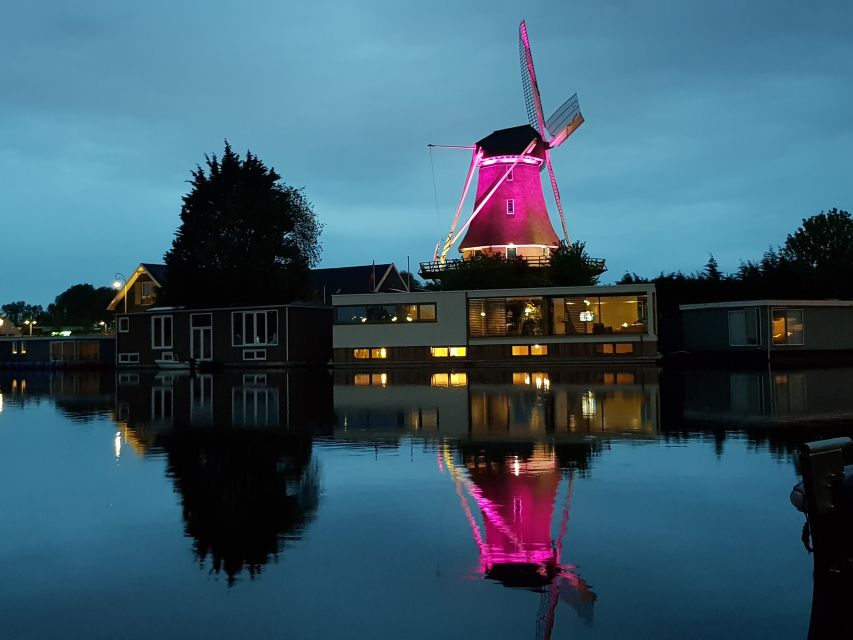
This is one of those Amsterdam experiences that feels like it should be on a school field trip—except it’s better, because it’s actually happening in front of you. The focus is the Amsterdam-Sloten windmill on the western side of the city, where the windmill’s job is tied directly to keeping water under control.
The Sloten Windmill dates to 1847 and still plays a role in controlling water levels in the low-lying neighborhoods around Amsterdam West. That matters because the Netherlands isn’t just flat scenery—it’s engineered living. When you understand that, the windmill stops being a postcard and starts feeling like practical infrastructure.
You’re also visiting as part of a guided experience rather than a self-guided wander. That’s a good thing here. A windmill has moving parts, systems, and rules, and a guide helps you connect what you see (sails turning, water pumping) with why it exists in the first place.
You can also read our reviews of more guided tours in Amsterdam



Inside the windmill: what the 45-minute guided tour really covers
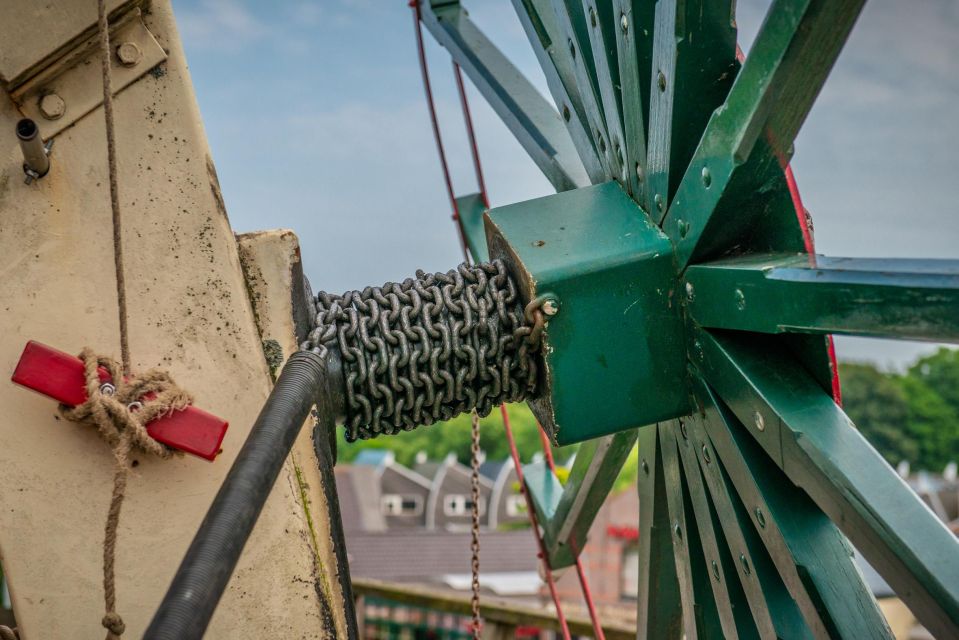
The tour runs about 45 minutes, with live guidance included. That time limit shapes the experience: it’s focused on the parts that help you understand the whole system, not a long crawl through every corner.
You start at Molen Van Sloten (1990) & Kuiperij Museum – Windmill, and the guided entrance is in the souvenir shop. From there, you’ll move into the mill with your guide and follow their pace as they explain what you’re looking at.
Here’s what you should expect as the tour unfolds:
- You’ll learn how to interpret the windmill as a machine, not just a view.
- You’ll see the sails turning while the windmill is functional.
- You’ll get the story of how the mill helped nearby communities, including nearby villages like Sloten and Old Osdorp.
- You’ll climb up to the top level for the view and a specific attic stop.
Even if you’re not the type who loves technical stuff, guides here tend to make it understandable. The goal is simple: you should leave knowing what the windmill does, how it does it, and why this particular spot in Amsterdam West needs it.
How Dutch water control keeps Amsterdam West dry
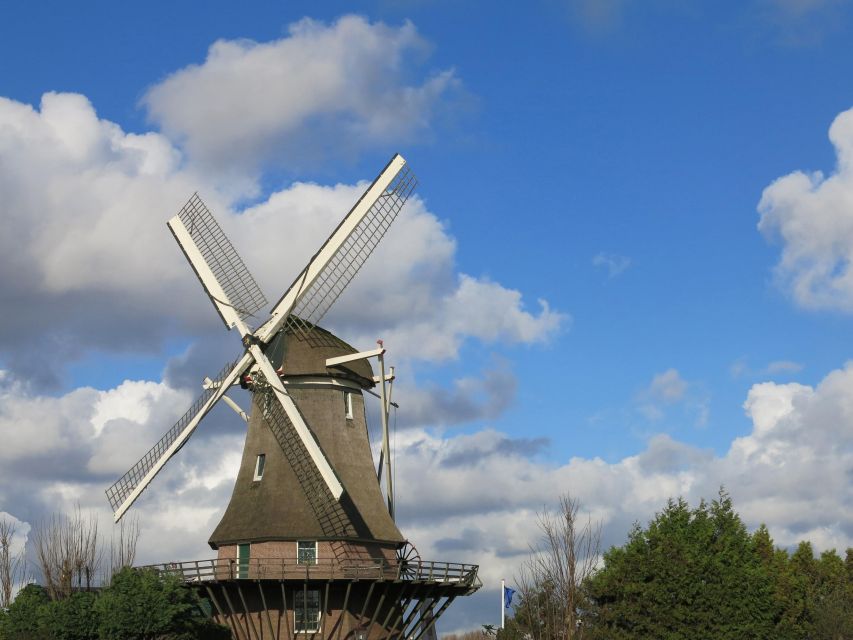
The big idea behind this tour is Dutch water management—keeping the land from flooding. Low-lying Amsterdam West needs constant attention, and a water-pumping system like this windmill is part of the solution.
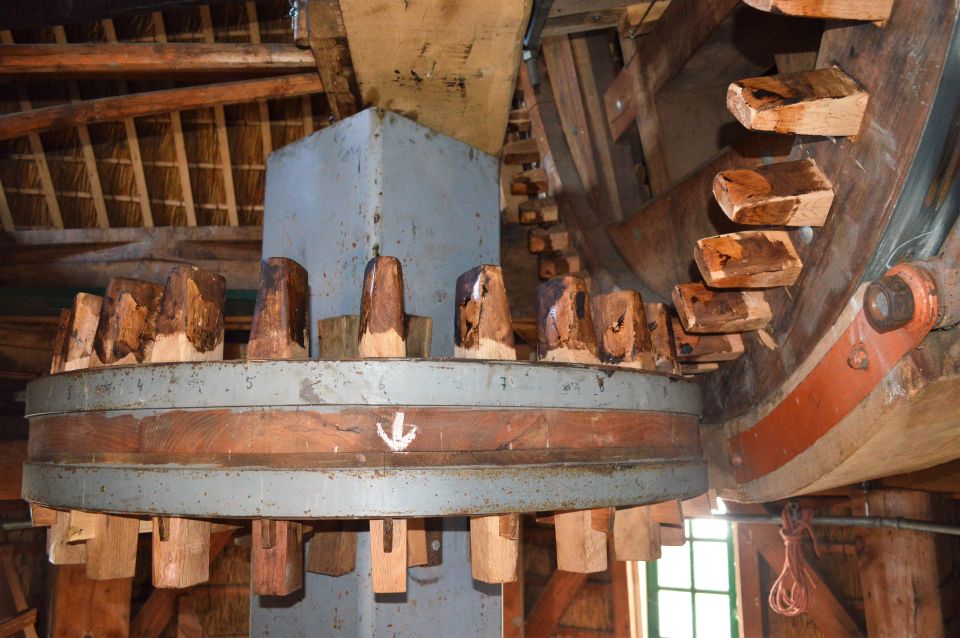
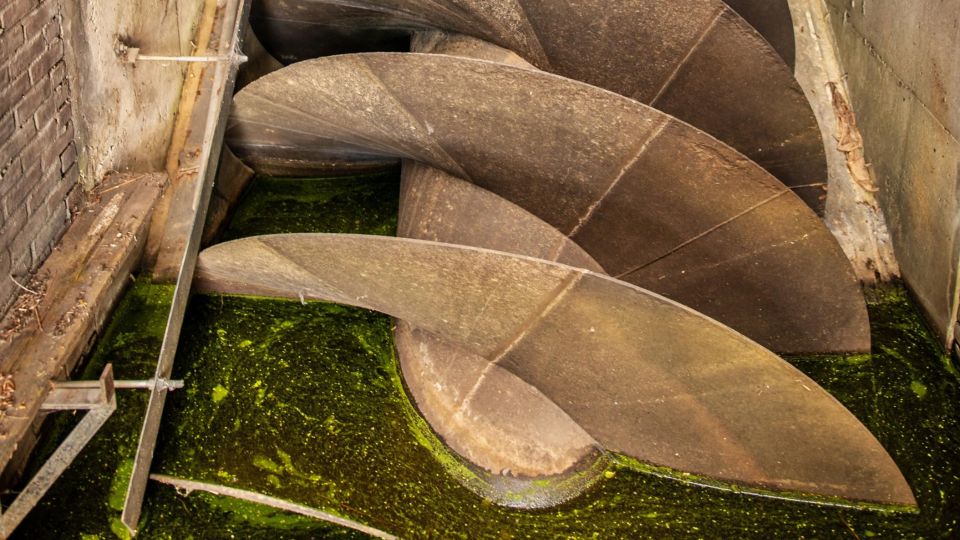
Your guide’s job is to connect the dots: the wind comes in, the sails move, and the mill’s mechanism supports the water-level control that helps protect the area. When it’s explained step by step, it clicks fast. You stop thinking of the windmill as a scenic tool and start thinking of it as a practical response to geography.
One reason I think people love this tour is that it doesn’t treat water control as a vague concept. You learn the purpose of the mill—why it matters right now, not just in the past. And when you watch the sails turning, you get that rare feeling of understanding something live.
If you like hands-on explanations, pay attention to any technical bits your guide points out. One helpful detail from a recent experience: the tour can include very small, behind-the-scenes moments when a miller adjusts the brake on the sails. That kind of practical demonstration is the difference between sightseeing and getting it.
The thatched roof, sturdy oak, and the panoramic top-floor view
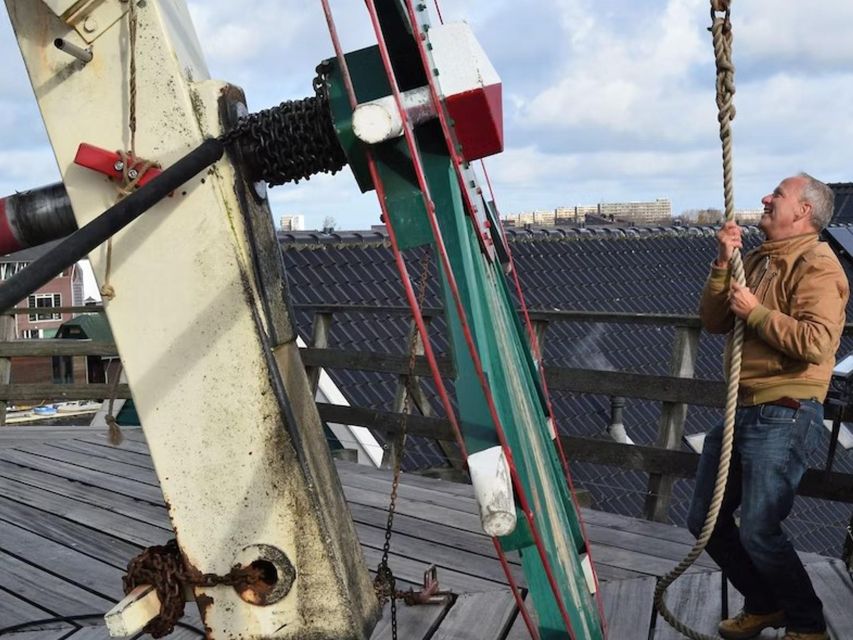
Before you even climb, take a moment for the outside details you’re about to step inside. The windmill’s construction is part of the story. You’ll be guided to notice the quaint thatched roof and the hardy oak build, which helps you picture the mill as an engineered structure designed to last.
Then comes the climb. As you move upward, expect the tour to shift from general background into the specifics of the windmill’s function. You’re not just climbing to a view—you’re climbing to the part of the experience that makes the whole mechanism feel real.
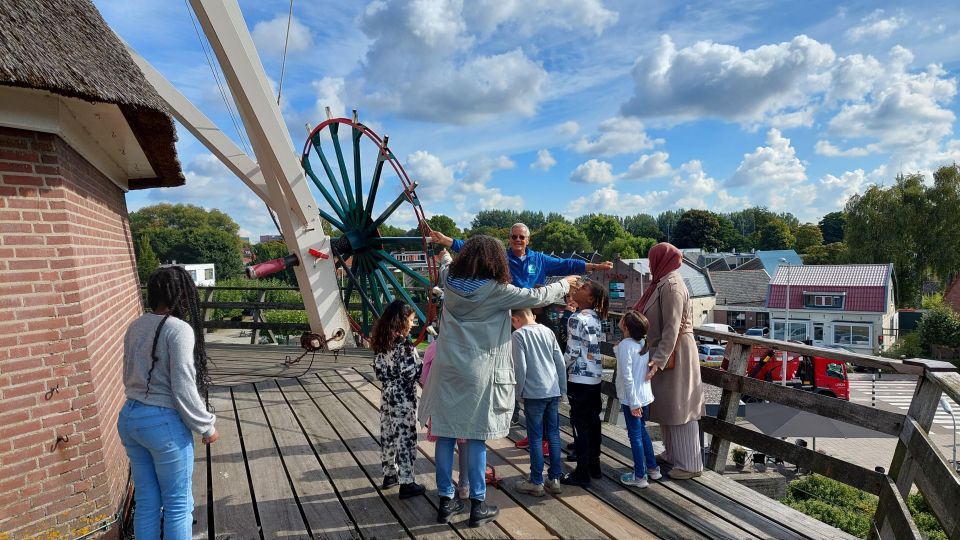
At the top, you’ll get panoramic views over the surrounding canals. The highlight here is the view toward the Ringvaart Canal and nearby areas. On a good day, you can see how the waterways shape the neighborhood layout and why water control is such a big deal.
Also, the vertical layout of a windmill changes your perspective. From inside, you get a better sense of how the machine sits in the landscape—and how closely the Dutch manage water at every scale, from regional systems down to local control.
Rembrandt’s wax figures in the attic: quirky and surprisingly satisfying
One part of this tour is unlike what most people expect from a windmill visit: the attic stop with wax characters painted by Rembrandt van Rijn.
This is a great palate cleanser after the mechanical explanations. It also adds a “why it’s preserved” angle—this isn’t just a working tool. It’s also a cultural site with curated details that help you connect art, Dutch identity, and everyday engineering.
When you’re up there, look at the contrast. The windmill represents survival tech; the wax figures represent the Dutch talent for storytelling through art. Together, they make the mill feel like a living piece of local heritage rather than a single-purpose machine.
It’s also a good moment for families. Younger visitors may not care about every gear or component, but they usually perk up at the visual and the novelty.





Guides, group vibe, and the languages you can choose
This is a small, guide-led tour, and that influences everything. A lot of the best moments come from questions. The guide answers, adjusts explanations, and keeps the pace human.
Languages available are English, Dutch, and German, which is ideal in a city where you can easily get language mismatch. If you’re comfortable in English, you’ll get the full experience. If you’d rather hear it in Dutch or German, that’s supported too.
What also comes through in the experience is that some guides are volunteers, and you can feel the passion for maintaining the mill. One of the strongest praised aspects from past visitors is that guides are both warm and genuinely informative, including technical detail when you ask.
And on occasion, the group can be very small. There’s at least one example of a tour running just for a couple, and the miller even made a small sail adjustment during the visit. That doesn’t mean it’s guaranteed, but it does suggest this is a flexible-feeling experience rather than a factory-style group shuffling.
Price and value: why $9 for 45 minutes can be a smart buy

At $9 per person for a 45-minute guided tour, the value here is mostly about what you’re getting for the money: entrance access plus a live guide, focused on a working windmill. You’re not paying for a generic history talk or a view with no context.
You also get practical extras that make the visit smoother. Ticket line skipping is included, so you don’t lose time right when you arrive. And the tour length means you can fit it into a day without the cost of long detours.
The only place where you need to be realistic is expectations. This isn’t an all-day excursion with multiple stops and extended activities. It’s a short, concentrated experience, which is a plus if you like efficient travel, and a mismatch if you want a long, slow-paced museum day.
If you’re building a day in Amsterdam and want one authentic, non-photo-only stop in a working setting, this is a strong option for the price.
Practicalities: where to meet and what to plan for
Plan to meet at the souvenir shop entrance for the guided tour. The starting point is Molen Van Sloten (1990) & Kuiperij Museum – Windmill, and your entry point is clearly tied to the shop area rather than a random gate.
The tour duration is 45 minutes, and starting times depend on availability. If your schedule is tight, check times early so you can match the tour to the rest of your day.
Food and drinks aren’t included, so come ready with a snack plan if you’ll be out for several hours. The tour itself is short enough that most people can handle it without a full meal, but don’t assume there’s a café built into the experience.
Age rules are straightforward:
- Unaccompanied minors aren’t allowed.
- Children under 12 must be accompanied by an adult.
For comfort, note that it’s listed as wheelchair accessible. Still, you’ll be moving through a windmill setting, and some people may find the interior layout or stairs challenging.
Should you book the Amsterdam-Sloten Windmill guided tour?
Yes, if you want something real and local that fits into a normal Amsterdam schedule. This is one of those rare tours where the main attraction is still a working water-pumping windmill, and the guide helps you understand what that means for Amsterdam West.
Book it if:
- You like practical explanations over just photos.
- You want a short activity that won’t swallow your whole day.
- You’re traveling with kids and want a visit that’s educational without being dull.
Think twice if:
- You need a long, self-paced museum experience.
- You’re uncomfortable with climbing or tight interior spaces, even if the tour is listed as wheelchair accessible.
- You’re seeking a big multi-stop adventure—this is intentionally compact.
If you’re planning a “Dutch life” day—canals, water control, and heritage—this windmill tour is exactly the kind of focused stop that makes the rest of your sightseeing click.
FAQ
How long is the Amsterdam: Windmill Guided Tour?
The guided tour lasts about 45 minutes.
Where do I meet for the guided tour?
The guided tour entrance is in the souvenir shop at Molen Van Sloten (1990) & Kuiperij Museum – Windmill.
What is included in the price?
Entrance fees and a live tour guide are included.
What languages are the guides available in?
Tours are offered in English, Dutch, and German.
Is the tour wheelchair accessible?
Yes, the tour is listed as wheelchair accessible.
Are children allowed to join?
Unaccompanied minors aren’t allowed. Children under 12 must be accompanied by an adult.
Can I skip the ticket line?
Yes, the experience includes skipping the ticket line.
Is free cancellation available?
Yes, free cancellation is offered up to 24 hours in advance for a full refund, and you can also reserve with a pay later option.