REVIEW · AMSTERDAM
Amsterdam private city walking experience with a local
Book on Viator →Operated by Guidance Travel · Bookable on Viator
Some cities feel like a checklist. Amsterdam rewards curiosity. This private walking tour threads major landmarks together with the kind of local storytelling that makes the city make sense fast.
I love that it stays human-scale: you’re walking at a comfortable pace for about two hours, and the guide talks while you move so you’re not stuck listening at each corner. I also like that the guide is personal—Manouk’s reviews mention how she adapts to what you care about (history and architecture), answers questions easily, and even brings maps/pictures to help you follow along.
One possible drawback: the route covers a lot of ground in a short time, so if you’re hoping for long stops to linger, you might feel a bit rushed during the 2 to 2.5 hour walk.
In This Review
- Quick Reasons This Walk Works
- Entering Amsterdam’s Story: A Two-Hour Private Walk
- Beursplein: From a Fishing Place to a 17th-Century Power
- Dam Square: Royal Power and WWII Memory in the Same Frame
- Begijnhof: A Quiet Courtyard That Explains Tolerance
- House on the Three Canals: A Clever Canal-Side Story
- Nieuwmarkt: The Waag, Guild Power, and the Dancing Houses
- Zeedijk: Chinatown’s Tough Past and the Neighborhood’s Shift
- Centraal Station: The Architecture and the Logic of Location
- Why the Guide Style Matters (Manouk’s Approach)
- Price and Value: What $180.62 Buys You
- Who This Tour Fits Best
- Should You Book This Private Amsterdam Walking Experience?
- FAQ
- How long is the Amsterdam private walking experience?
- What stops are included on the walk?
- Is the tour private?
- What language is the tour offered in?
- Where does the tour start and end?
- Do I need to pay admission at the stops?
- Is a mobile ticket provided?
- What is the cancellation policy?
- Is the tour suitable for people with service animals?
Quick Reasons This Walk Works
- A private group up to 12 means you can ask questions and keep the pace sane
- Seven major stops connect Amsterdam’s money square, royal center, courtyards, canal-side oddities, and the station
- Local guidance from Manouk is consistently described as friendly, fun, and genuinely welcoming
- Past and present together: you’ll hear how areas changed, not just what happened long ago
- Small extras like maps/pictures and little local edible treats show this isn’t a cold script
- Free admission at every stop keeps the experience straightforward
Entering Amsterdam’s Story: A Two-Hour Private Walk
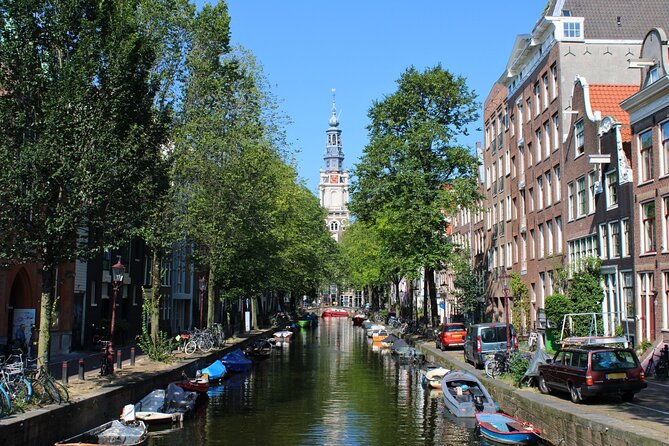
Meet at Beursplein and you finish back at the same spot. The tour is designed as a smooth “connect-the-dots” walk, hitting famous places while also explaining how Amsterdam became what it is today.
It’s private, in English, and built for groups up to 12. That matters because you’re not just watching monuments—you’re getting context, and the guide can shift focus if your group leans toward architecture, history, or neighborhood change.
Expect a steady rhythm: you’ll pause briefly at each highlight, then move on. If you’re planning your first day in Amsterdam, this is a great way to get your bearings fast. If you’re here for a repeat visit, it can still work because the stops are tied together with themes, not just facts.
A practical tip: wear shoes you trust. Amsterdam looks pretty on camera, but you’ll be on sidewalks and canal-adjacent streets where pace matters.
You can also read our reviews of more walking tours in Amsterdam



Beursplein: From a Fishing Place to a 17th-Century Power
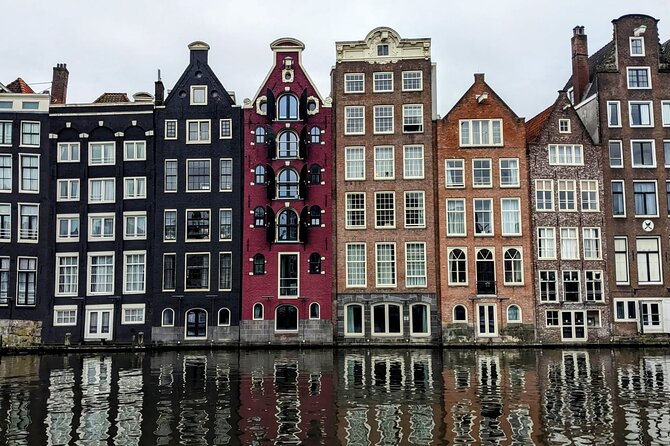
Your walk starts at Beursplein, a square that helps set the economic tone for Amsterdam. Here, you’ll learn how the city’s early identity connects to its name and how Amsterdam grew from a smaller fishing village into a major player by the 17th century.
This stop is less about one single building and more about the big idea: Amsterdam’s geography and trade made it a magnet. Once you understand that, the rest of the tour clicks. You start seeing the city as a system—money, migration, architecture, and infrastructure all pulling in the same direction.
What I like about this first segment is that it gives you a framework before you start sightseeing for real. If you usually get “overwhelmed by Amsterdam,” this kind of intro makes the day easier to follow.
Dam Square: Royal Power and WWII Memory in the Same Frame
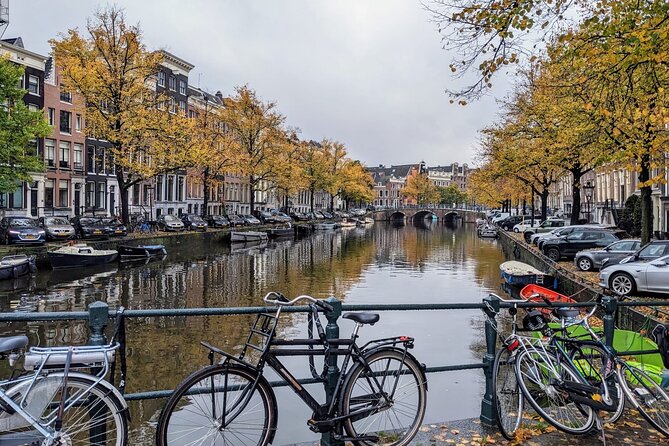
Next comes Dam Square, the central stage where several layers of city life overlap. The guide points out the significance of Dam Square in Amsterdam’s formation and helps you appreciate the Royal Palace on the Dam as more than just an impressive facade.
Then the conversation shifts to the Second World War—how this public square became part of the city’s modern memory. Even if you know a bit about Dutch history already, it helps to see how a place functions as a backdrop for different eras.
This stop can feel intense if you’re in a reflective mood, but it’s also part of why the square matters. Amsterdam doesn’t just trade in scenery. It also carries its responsibilities, and Dam Square is a clear place to understand that.
Begijnhof: A Quiet Courtyard That Explains Tolerance
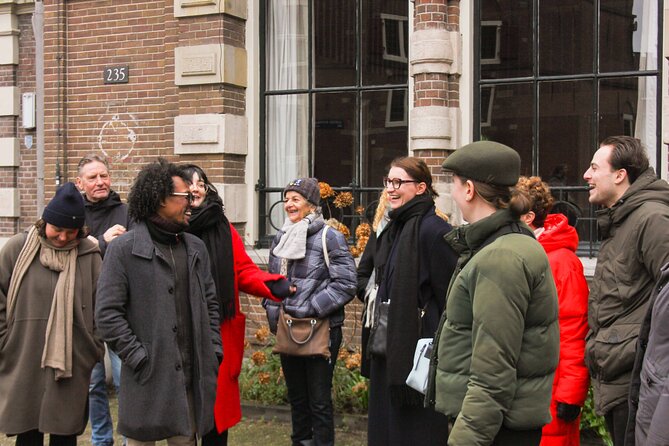
After the busy central areas, you step into the calm of Begijnhof. This is one of those Amsterdam places that feels like a pocket—serene, sheltered, and surprisingly old.
Here, you learn about the religious history behind the Begijnhof and what the courtyard reveals about Amsterdam’s tolerance. You’ll also see some of the oldest houses in the city, including one of the two wooden cottages.
What makes this stop work on a walking tour is contrast. You’ve been in the big public spaces. Now you’re in a hidden, respectful world, and it becomes easier to understand how the city made room for different lives side-by-side.
If your group likes atmosphere, this is the moment you’ll probably slow down naturally, just because it’s quiet enough to notice details.
House on the Three Canals: A Clever Canal-Side Story
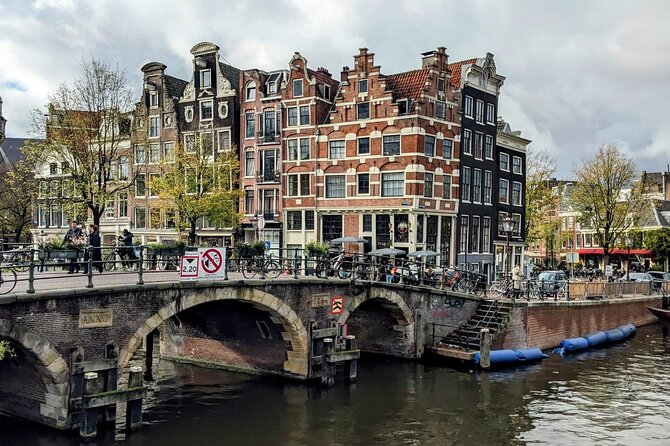
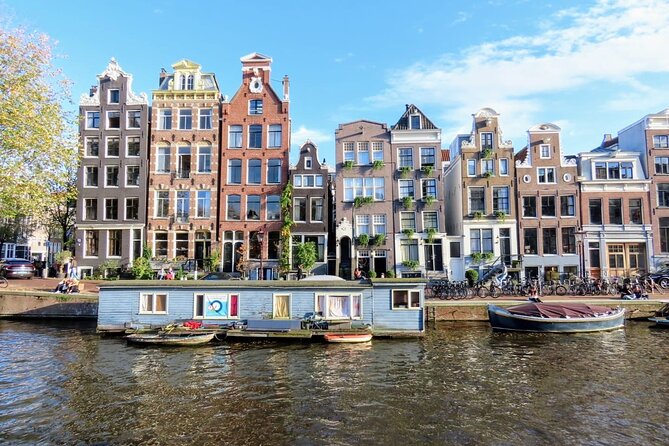
At House on the Three Canals, you’ll see a fascinating bit of Amsterdam oddness: a house shaped around the canal situation, plus the story of the bicycle bridge.
This is a stop for people who like practical creativity—how cities solve awkward space problems when the water, streets, and older buildings don’t cooperate. It’s also a reminder that Amsterdam’s design isn’t only decorative. People built solutions to real everyday issues.
If you’re the type who loves architecture but sometimes gets bored by lectures, this one can land well because the features are visible. You can look, imagine the constraints, and understand the logic.
The only consideration: this stop is short. It’s best if you come ready to notice small details rather than expecting a long hands-on moment.
You can also read our reviews of more city tours in Amsterdam






Nieuwmarkt: The Waag, Guild Power, and the Dancing Houses
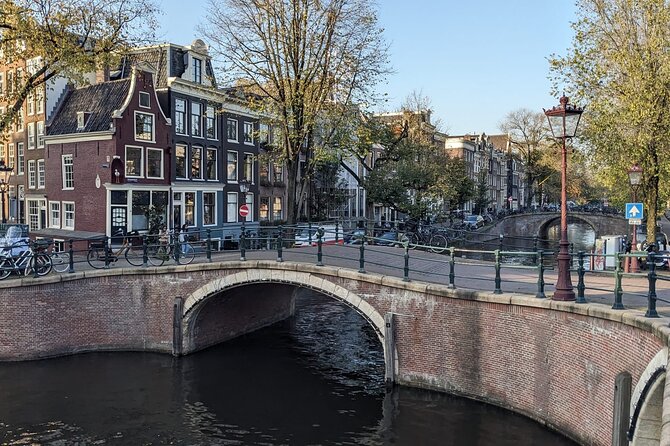
Then you reach Nieuwmarkt, a square that ties together trade, craft, and city governance. The guide takes you to the Waag, described as an old city gate that later became a guild hall.
You’ll hear why guilds mattered in Amsterdam—how organized groups shaped trade and professional life, and how that system influenced the city’s identity.
And yes, you’ll also see the “dancing houses,” which are famous for their unusual look. This is one of those visual moments that helps break up the heavier themes, especially if your group includes kids, architecture fans, or anyone who learns best by watching the shapes.
This part of the walk is good value because you get both: meaning (guilds and the Waag) and spectacle (the dancing houses). You walk away understanding why the city’s built environment looks the way it does.
Zeedijk: Chinatown’s Tough Past and the Neighborhood’s Shift
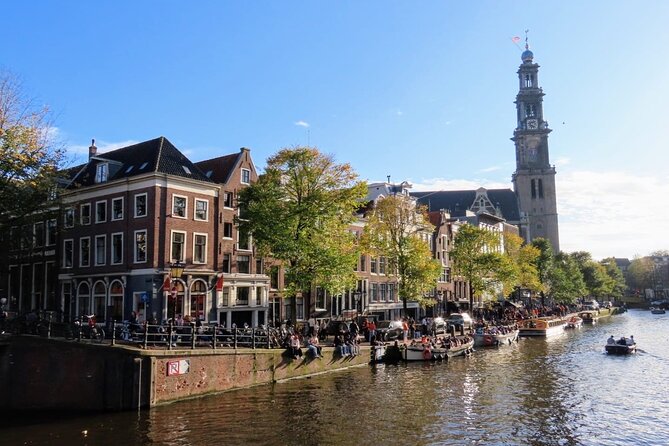
Next is Zeedijk, where the story takes a sharper turn. The guide talks about Chinatown in Amsterdam and remembers when Zeedijk was once considered one of the most dangerous places in the 1970s.
Then comes the interesting part: you learn about the decline of that reputation and how the street changed into a spot many Amsterdammers enjoy. In other words, you see how neighborhoods evolve—not always smoothly, but in ways that reshape daily life.
This stop can give you a more honest view of Amsterdam than the postcard version. It’s a useful reminder that “historic city” and “modern neighborhood” are not separate worlds.
A small practical note: Zeedijk is active. If your group is sensitive to crowds, you may want to keep your pace steady and listen while you walk, rather than stopping to linger too long.
Centraal Station: The Architecture and the Logic of Location
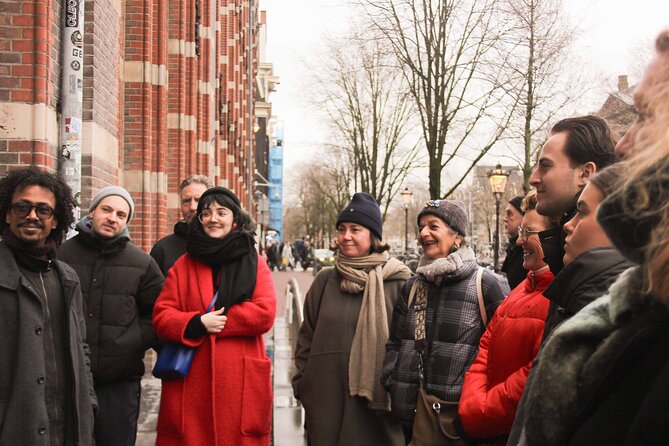
You end at Centraal Station, one of Amsterdam’s most stunning buildings. The guide focuses on the architecture and also explains why the station’s location mattered for centuries as a transportation hub.
This is where the tour’s theme loops back to the earlier economic and trade stories. A city’s power doesn’t just come from wealth or buildings. It also comes from movement—how people, goods, and ideas connect.
The station becomes a symbol of connection and prosperity, and it’s a fitting final stop because it feels like the point where Amsterdam opens outward. Even if you don’t plan to take a train right after, you’ll understand why this spot plays such a big role.
If you still have energy after the tour, it’s also a good area to wander for a bit on your own, just to process everything you learned.
Why the Guide Style Matters (Manouk’s Approach)
The biggest selling point here is how the tour feels: friendly, structured, and flexible. Multiple reviews highlight Manouk as sweet and welcoming, and also serious about getting things right.
You’ll likely notice three things during the walk:
- She personalizes the route to your group’s interests, especially history and architecture.
- She answers questions with ease, so your curiosity doesn’t get cut off.
- She supports her storytelling with maps and pictures, which makes it easier to picture what you can’t literally see anymore.
One more thoughtful detail: reviews mention little local edible treats. That’s not a gimmick. It gives you a quick, low-effort way to taste the area’s culture while your guide is talking about how the city works.
That combination—clear explanation, warm tone, and small extras—helps this tour earn its high rating. It’s not just a walk past landmarks. It’s a guided way to build context while you’re still fresh.
Price and Value: What $180.62 Buys You
This experience costs $180.62 per group for up to 12 people, for roughly 2 hours. On the surface, that may sound like a “private tour premium.” But the math changes when you remember it’s a group rate, not a per-person rate.
If you’re traveling as a couple, a family, or a small group of friends, this can be a practical way to get a local guide without turning it into a solo-cost situation. And because the stops are free of admission charges, you’re not adding surprise ticket expenses to the day.
You’re also paying for something that’s hard to DIY: a narrative that ties Beursplein’s economic origins to Dam Square’s civic meaning, then to courtyards like Begijnhof, and finally to the logic of Centraal Station. That kind of threading is the value.
Who This Tour Fits Best
This tour fits best if you:
- Want a first-time orientation to Amsterdam’s major landmarks
- Prefer walking with explanations over museum-only days
- Like history and architecture, but don’t want a formal lecture format
- Want a guide who can adjust to your questions and interests
It may be less ideal if you:
- Need long “sit and stare” breaks at each attraction
- Have very tight mobility constraints, since it’s still a walking tour across several areas
- Plan to spend most of your day stopping for photos every few minutes (this tour moves with a schedule)
Should You Book This Private Amsterdam Walking Experience?
If you want Amsterdam to feel understandable by the end of the walk, I’d book it. The format is efficient: you cover key sights in a short time, and the guide’s approach (especially Manouk’s warmth and willingness to tailor) is exactly what makes a private walk worth paying for.
Choose it over a generic group tour if you care about context, ask questions, or want the day to feel personal rather than rushed by strangers. And because it’s a private group and English-speaking, it’s an easy win for couples, families, and friend groups who want a smoother first day.
FAQ
How long is the Amsterdam private walking experience?
It takes about 2 hours (around 2 to 2.5 hours total).
What stops are included on the walk?
You’ll pass through Beursplein, Dam Square, Begijnhof, House on the Three Canals, Nieuwmarkt, Zeedijk, and Centraal Station.
Is the tour private?
Yes. It’s a private tour/activity, and only your group participates.
What language is the tour offered in?
The experience is offered in English.
Where does the tour start and end?
It starts at Beursplein, 1012 JW Amsterdam, Netherlands and ends back at the meeting point.
Do I need to pay admission at the stops?
Admission at each stop is listed as free, with no admission ticket required for the tour stops.
Is a mobile ticket provided?
Yes, you’ll receive a mobile ticket.
What is the cancellation policy?
You can cancel for a full refund if you cancel at least 24 hours in advance of the start time.
Is the tour suitable for people with service animals?
Yes, service animals are allowed, and it notes that most travelers can participate.