REVIEW · AMSTERDAM
Amsterdam: “Operation 45 ” Treasure Hunt Walking Tour
Book on GetYourGuide →Operated by Mystery City · Bookable on GetYourGuide
A missing cache of diamonds turns a normal walk into a game. Operation 45 is a two-hour, physical treasure hunt through Amsterdam, using clues hidden in the city’s architecture and a story tied to WWII and the Dutch Resistance. I like the way it sends you into the former Jewish District instead of just circling the most obvious canal stops. One thing to consider: if you prefer an easy stroll with no puzzle pressure, plan closer to 2–3 hours than a tight 2-hour schedule.
You start at Mystery City Games and get a backpack full of game tools—maps, boxes, locks, and puzzle materials—so you’re not staring at a phone screen. The route is about 3 km, and the game pace is built around five stops, each with a challenge and a bit of history. It’s designed for English speakers, and there’s a prize at the end for all participants.
In This Review
- Key things that make this treasure hunt special
- Mystery City Games HQ: starting the WWII diamond hunt
- The backpack puzzle system: clues hidden in Amsterdam’s architecture
- Shadow Wall: a close-look stop that slows your sightseeing down
- Portuguese Synagogue: learning the neighborhood by walking it
- Artis Zoo: a change of pace inside the route’s WWII storyline
- The diamond factory stop: seeing how the trail ends
- Timing on the ground: 2 hours, 3 km, and why it might stretch to 3
- Price and value: is $29 worth it in Amsterdam?
- Who should book Operation 45 (and who should skip)
- If you want the best experience, do these simple things
- Should you book Operation 45 Treasure Hunt Walking Tour?
- FAQ
- How long is the Operation 45 treasure hunt?
- What does the tour cost?
- Is it an app-based experience?
- What will we do during the tour?
- Where is the meeting point?
- What should I bring?
- Is it suitable for young children?
- What’s included at the end?
Key things that make this treasure hunt special
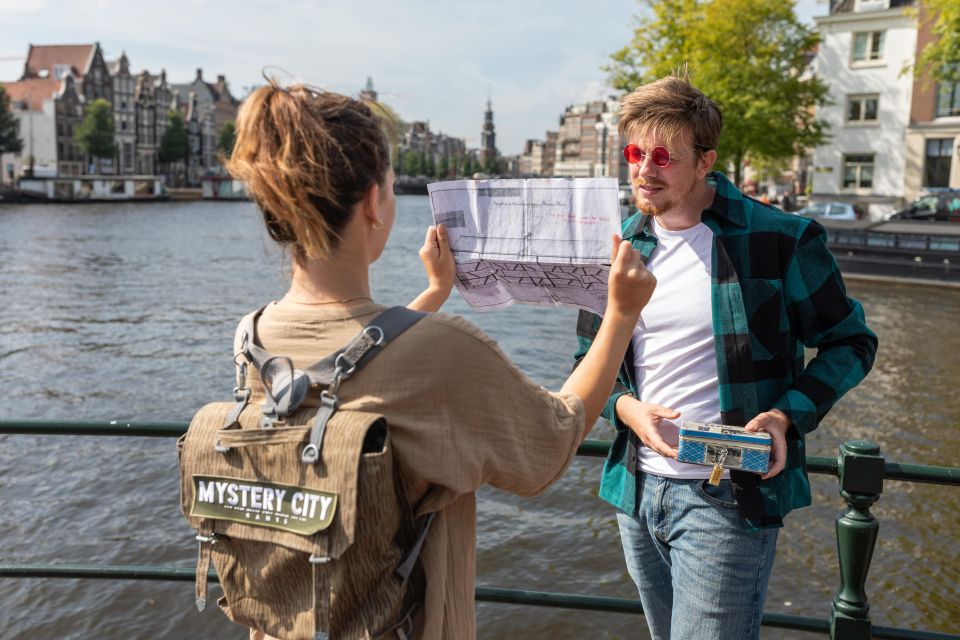
- Physical puzzles, not an app: you use printed materials and real boxes/locks as you solve.
- WWII Dutch Resistance storyline: the hunt is framed as a true-feeling diamond mystery that unfolds step-by-step.
- Former Jewish District route: you’ll explore streets and landmarks people often skip.
- Architecture-as-a-clue approach: you learn to look closely at details, not just move from postcard to postcard.
- A clear walking time estimate: most groups can finish in about 2 hours, but it can run longer if you take it slow.
Mystery City Games HQ: starting the WWII diamond hunt
The experience kicks off at Mystery City Games, Zwanenburgwal 178 (look for the Mystery City Games sign). This is the secret headquarters moment—no grand ceremony needed, just a meeting with the Game Master and then you’re in the story.
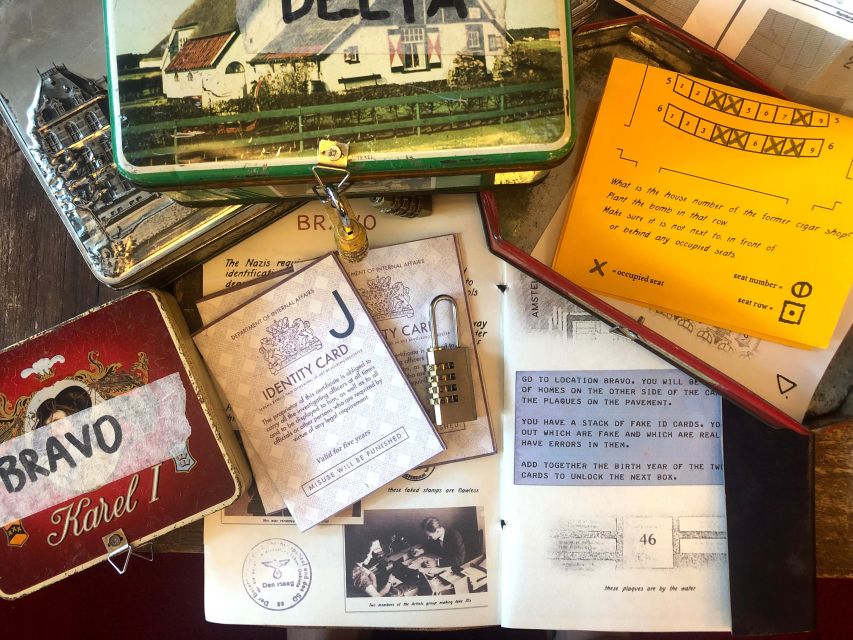
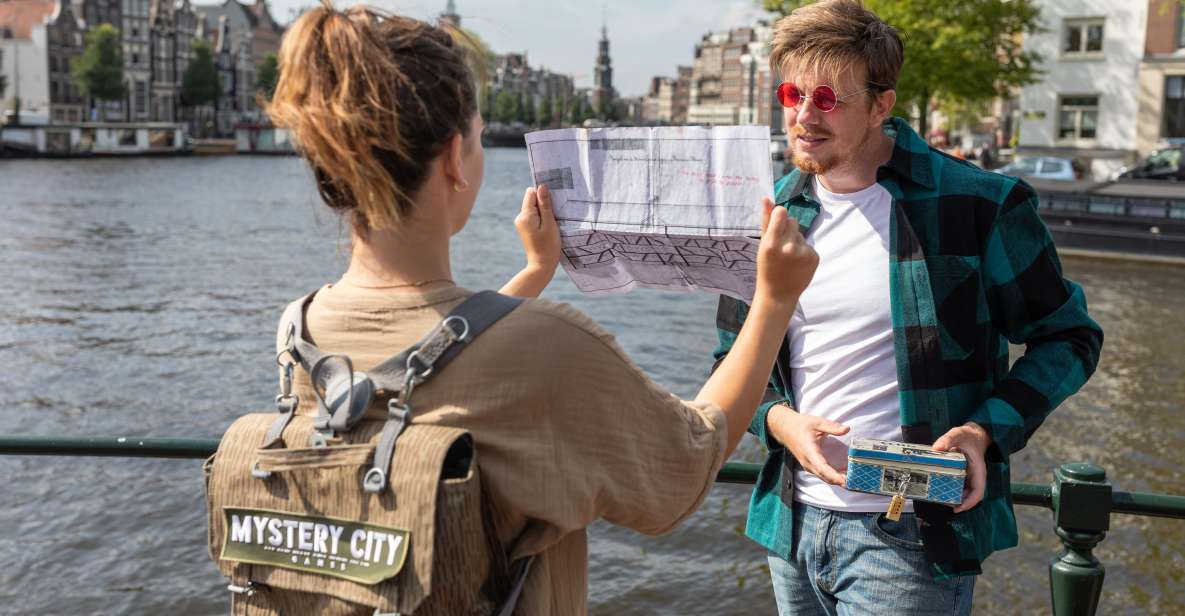
You’ll pick up a backpack filled with period-styled game gear: old tins, maps, and puzzle items like boxes and locks. The big win here is the tone. Instead of being a museum lecture, you’re treated like an active participant—someone who has to notice, match clues, and think like you’re tracking information through a dangerous wartime city.
The practical side matters too. You’ll be walking about 3 km over roughly two hours. So it’s not a quick snack of a game, but it’s also not an all-day commitment.
You can also read our reviews of more walking tours in Amsterdam



The backpack puzzle system: clues hidden in Amsterdam’s architecture
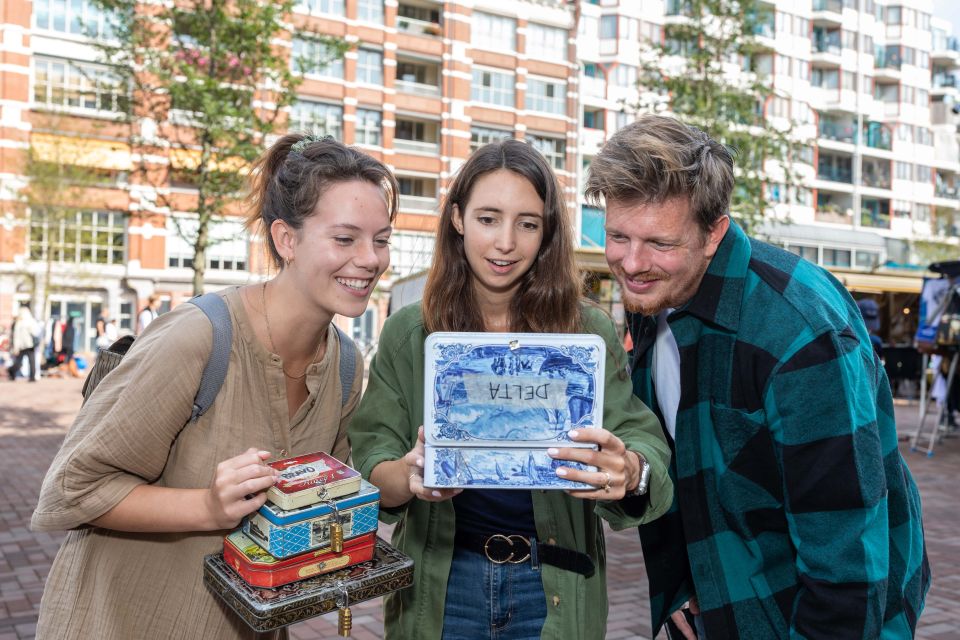
One reason this works so well is that it feels like a hands-on escape room, but outdoors. The tour doesn’t rely on an app. It relies on you opening things, reading clues, and solving small steps that build toward the final answer.
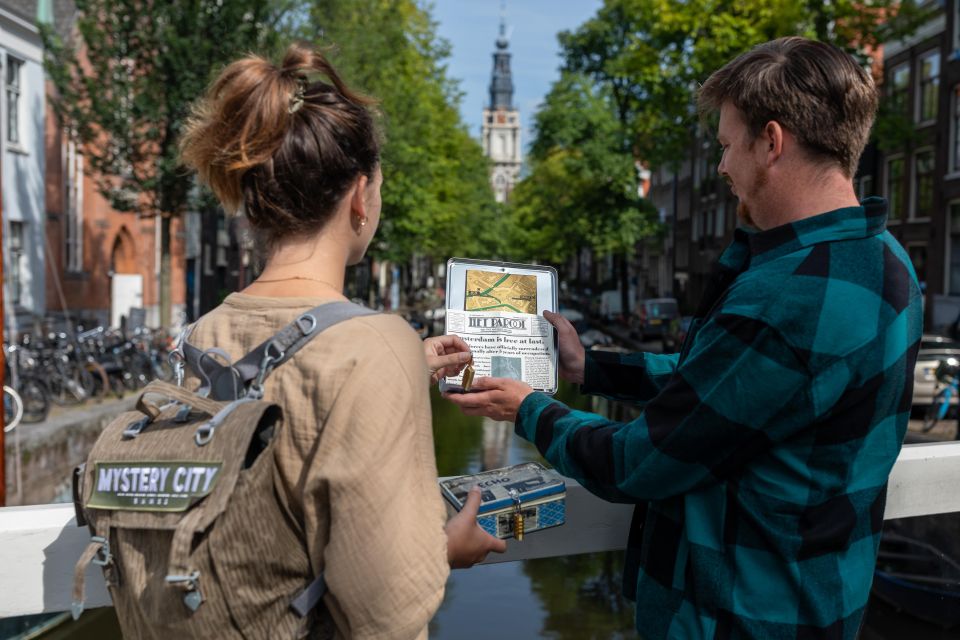
You’ll use the materials in your bag at the key locations on the route. That means you’ll stop, orient yourself, and pay attention to details in buildings and street-level features—architecture as the clue source is the core mechanic.
And yes, it’s “treasure hunt” in the classic sense. You’re following a trail. But it’s also “detective” because you’re connecting what you see with the information the Game Master and your puzzle tools give you at each stop. If you like games where your brain gets a little workout, this style is very satisfying.
Shadow Wall: a close-look stop that slows your sightseeing down
Shadow Wall is one of the first big story landmarks you’ll encounter. Even if you don’t know much history beforehand, this kind of stop is designed to get you to look at the setting differently.
Here’s what you can expect: a puzzle moment tied to the environment. The whole experience is about noticing hidden details and secret places. So rather than just passing by, you’ll take time to examine surfaces, align information from your map or items, and solve the next step in the hunt.
The drawback? That extra attention means you won’t feel like you’re “speed sightseeing.” This is the opposite of a check-the-box walk. If you’re in a hurry or hate puzzles, you might find the stopping breaks annoying. But if you’re game, this is where the tour turns from “nice” to “wow, that’s clever.”
Portuguese Synagogue: learning the neighborhood by walking it
The route goes through Amsterdam’s former Jewish District, and Portuguese Synagogue is a standout stop. This matters because you’re not only seeing famous landmarks—you’re learning how the neighborhood layout and landmark cluster shaped real-life wartime movement and hiding places.
At this point, you’ll connect the WWII diamond story to the geography around you. The puzzles are built to push your attention outward: from one puzzle clue to the bigger context of the street, the building, and the setting.
The tour’s tone stays practical and story-based. You’re not just hearing background facts. You’re using those facts (and the puzzle tools in your backpack) to make sense of the next task. That’s a strong way to make history stick, because your body is doing the remembering too: you stop, look, compare, solve, move on.
Artis Zoo: a change of pace inside the route’s WWII storyline
Artis Zoo shows up on the hunt path, which adds variety to the experience. After spending time focused on historic sites and architecture clues, it’s refreshing to have a major Amsterdam location that feels like a different “world” while still staying inside the game’s narrative trail.
What you’ll get here is another puzzle challenge at a key stop. The game keeps asking you to switch gears: look closely, interpret clues, use what’s in your bag, and continue. That rhythm is one of the most enjoyable parts of the whole experience—your attention stays active instead of drifting into background sightseeing mode.
One note: since the provided details only say you’ll visit Artis Zoo (not that you’re doing a full indoor tour), treat this as a stop within the walking game. Plan on walking and puzzle time, not a long zoo detour.






The diamond factory stop: seeing how the trail ends
Later in the route, you’ll head toward a diamond factory as part of the final leg of the hunt. This is where the WWII framing feels most tangible, because you’re not only solving puzzles—you’re moving through places connected to the idea of diamonds, production, and the larger wartime context.
From a gameplay standpoint, factory-type locations also tend to be visual puzzle gold: you can expect the same style of clue-based observation—using your materials to figure out the next piece and get one step closer to the missing cache story.
The broader value here is closure. The tour is structured so that each stop adds a layer to the mystery, so the end doesn’t feel like a random finish line. And you finish with a prize for all participants, which keeps the tone friendly and upbeat, even for groups who work at a slower pace.
Timing on the ground: 2 hours, 3 km, and why it might stretch to 3
The route is listed as about 3 km and designed to take roughly 2 hours. That’s a helpful estimate for planning your day around it. In practice, if your group is motivated and comfortable with puzzles, it can land right around that mark.
But if you’d rather take it easy—reading clues carefully, talking through ideas, and not rushing the architecture checks—expect closer to 2–3 hours. The good news is that the format isn’t exhausting like an all-day walking tour. It’s a sequence of short puzzle stops that break up the walking.
You’ll also want comfortable shoes. This is a strolling-with-purpose tour. You’ll move enough that footwear really matters.
Price and value: is $29 worth it in Amsterdam?
At $29 per person for about two hours, this sits in the “good value” zone for Amsterdam activities—especially if you like interactive learning. Why? Because you’re getting more than a guide and a walk.
You get:
- A structured puzzle game with physical materials (not an app).
- Several story stops tied to real Amsterdam sites and WWII framing.
- A meeting with a Game Master to kick things off and keep the story on track.
- A prize for all participants, so you finish with something tangible.
If you’re comparing it to a standard guided walking tour, the difference is agency. You don’t just listen. You solve. That’s often the secret to learning neighborhoods you might otherwise skim past.
If you’re a strict “I only want sights, no games” type, it might feel like extra work for the same sights you could do on your own. But if you enjoy puzzles—especially escape-room style challenges—this is exactly the kind of format where the time and money feel well matched.
Who should book Operation 45 (and who should skip)
This tour is a strong fit if you like:
- Escape room mechanics, but outdoors
- Games with physical boxes, locks, and printed puzzle materials
- Learning history by looking closely at streets and buildings
- Exploring the Jewish District area beyond the most obvious tourist circuit
It’s also a smart choice if you’re traveling with kids who are old enough to handle the puzzle format. The experience is listed as not suitable for children under 6, but for families with 6+ kids who enjoy games, it can be a fun way to keep everyone engaged without turning the day into a lecture.
Who should consider skipping?
- If you dislike puzzles or want a purely relaxed sightseeing stroll
- If you have mobility limitations, since it’s marked as not suitable for people with mobility impairments (even though it’s also listed as wheelchair accessible—so check your specific needs before committing)
If you want the best experience, do these simple things
- Wear shoes you can walk in for at least a couple of hours.
- Go with a puzzle mindset. You don’t need expertise—just willingness.
- Treat each stop like part of a sequence, not separate attractions.
- If you’re with friends, talk it through. Many clue solves are faster when the group shares observations.
This is the kind of activity where your enjoyment rises with your participation level.
Should you book Operation 45 Treasure Hunt Walking Tour?
I’d book it if you want Amsterdam history with motion and problem-solving. The physical puzzle setup, the WWII diamond narrative, and the route through the former Jewish District make it feel more original than another “highlights” walk.
Skip it if you hate games, dislike stopping to solve puzzles, or want a slow, purely scenic wander. Also, if your group needs guaranteed accessibility for mobility issues, double-check fit before you go.
If you’re on the fence: this is one of those rare $29-style experiences that can feel like a full half-day brain-and-streets adventure—without the usual museum fatigue.
FAQ
How long is the Operation 45 treasure hunt?
The walk takes about 2 hours and covers a route of roughly 3 km.
What does the tour cost?
It costs $29 per person.
Is it an app-based experience?
No. You use a backpack with treasure maps, boxes, and locks, and it is not an app.
What will we do during the tour?
You follow a WWII diamond-heist story tied to the Dutch Resistance, visiting several locations in Amsterdam’s former Jewish District and solving puzzles at key stops.
Where is the meeting point?
Meet at Mystery City Games, Zwanenburgwal 178, 1011 JH Amsterdam. Look for the Mystery City Games sign at this secret headquarters.
What should I bring?
Wear comfortable shoes.
Is it suitable for young children?
It’s not suitable for children under 6 years.
What’s included at the end?
Price includes a prize for all participants.