REVIEW · AMSTERDAM
Amsterdam City Center & History – Exclusive Guided Walking Tour
Book on Viator →Operated by Babylon Tours Amsterdam · Bookable on Viator
Amsterdam feels best on foot. This 2.5-hour guided walk stitches together religion, trade, and canal life in a way that’s easy to follow and fun to ask questions about. I especially like how a great guide, like Anita or Pedro, keeps the pace moving without turning it into a dry lecture.
I also love the mix of stops: famous places like Dam Square and the Herengracht, plus quiet courtyards and architectural oddities most first-timers miss. Even when the weather turns (and it can), the walking rhythm stays steady, and guides like Diana have a way of answering your questions clearly.
The one drawback to plan for is that many sights are short exterior peeks, and some locations may not allow entry, even if they’re on your route. If you want long time inside museums or churches, this tour may feel a bit fast—but it’s excellent for getting your bearings.
In This Review
- Key highlights worth prioritizing
- Why this Amsterdam city-center walk works (even if it’s your first day)
- Price and value: what $62.48 buys you in practice
- Getting there and finishing strong at Papeneiland
- Stop-by-stop: Amsterdam’s churches, canal gates, and the water behind it all
- St. Nicholas Basilica: religion after centuries of limits
- Schreierstoren (Tower of Tears) and Zeedijk: departures and the city’s water memory
- Nieuwmarkt and The Waag: where trade became city life
- Trippenhuis and Oost-Indisch Huis: wealth, taxes, and the Dutch East India Company
- Zuiderkerk and Rembrandthuis: faith, design, and an artist’s working years
- Stopera and Huis aan De Drie Grachten: the city building its modern identity
- Begijnhof and Dam Square: quiet courtyards, then the loud center of power
- Herengracht and Anne Frank House area: Golden Age wealth and wartime memory
- De Drie Hendricken and Karthuizerhof: trade symbols and a calm refuge for elders
- Noorderkerk and the final canal corner at Papeneiland
- A realistic note on access and timing
- What makes the guide matter (and how to get the best version of this tour)
- Who should book this tour (and who might prefer something else)
- Should you book this Amsterdam City Center & History tour?
- FAQ
- FAQ
- How long is the Amsterdam City Center & History guided walking tour?
- What language is the tour offered in?
- Where do I meet the guide, and where does the tour end?
- Is the tour private or shared?
- Does the price include admission tickets?
- Are tips included in the tour price?
- Does the tour run in bad weather?
- Is there a recommended level of fitness?
- What is the cancellation window?
Key highlights worth prioritizing
- A guided route through Amsterdam’s core that ties buildings to real stories (not just dates).
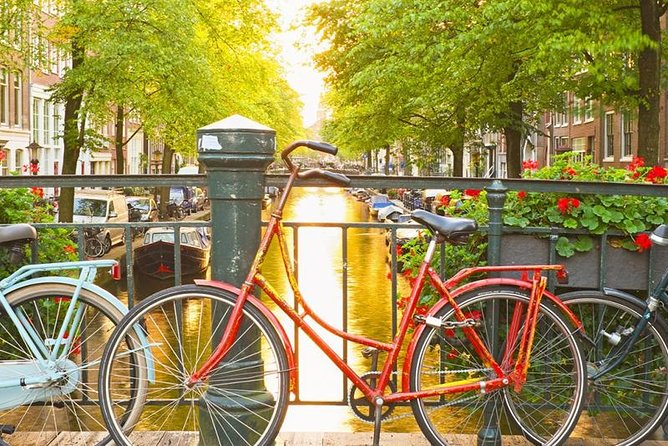
- Tower of Tears + Zeedijk + lock-bridge views, great for understanding how water shaped the city.
- Canal-house architecture stops like the Waag area and the three-canal junction building.
- Hofje courtyard calm at Begijnhof and Karthuizerhof, a welcome pause from the streets.
- End at Papeneiland, where you can reward yourself with apple pie at a café dating to 1642.
Why this Amsterdam city-center walk works (even if it’s your first day)
If Amsterdam is your first stop in the Netherlands, this kind of city-center walking tour is a smart move. In a couple hours you’ll connect the dots between the churches, the canal mansions, and the “why” behind neighborhood shapes. It’s less about checking boxes and more about building a mental map you can use all trip.
I like that the route is designed to move across key parts of old Amsterdam without making you fight the logistics alone. You also get real guidance on where to go next, which matters because Amsterdam is easy to wander… and just as easy to wander in circles.
The tour runs in all weather, rain or shine, so it’s practical for real travel days. Just dress for wet wind and bring what you need to stay comfortable for a steady walk. Your feet will thank you later.
You can also read our reviews of more walking tours in Amsterdam



Price and value: what $62.48 buys you in practice
At $62.48 per person, this isn’t a “quick intro” you can half-ignore. You’re paying for a guide to connect stories across 20 distinct stops in about 2 hours 30 minutes—time you’d otherwise spend reading signs and still missing context.
It’s also a value-friendly choice because the tour includes a lot of major city sights without charging you for everything on the spot. Some locations are specifically marked as ticket-free (like St. Nicholas Basilica and several key stops such as Dam Square and parts of the canal area). Others are marked as not included (notably Schreierstoren/Tower of Tears, and a few stops where access can be limited or admissions may not be covered).
One more value point: it’s a private tour/activity. That matters because you can ask follow-up questions and steer the guide toward what you care about. In the reviews, guides like Anita, Pedro, and Diana are praised for keeping things engaging and for handling weather without losing momentum.
Finally, gratuities are optional. You’ll likely have an easy decision at the end if your guide helped you connect the city to what you actually want to see next.
Getting there and finishing strong at Papeneiland
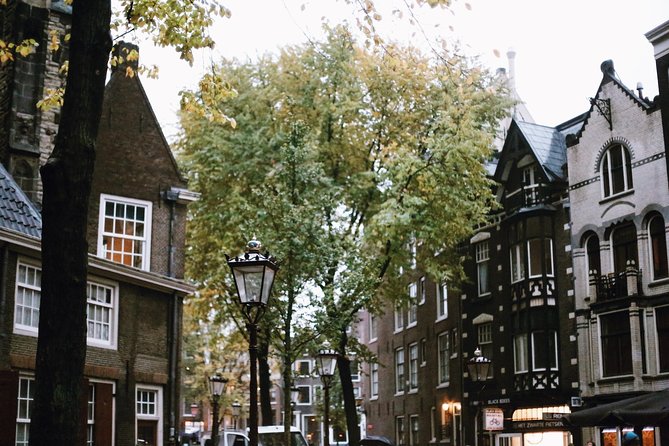
You start at Prins Hendrikkade 73, 1012 AD. It’s in the central area and close to public transport, which helps if you’re juggling a short itinerary. I’d plan to arrive a few minutes early so you’re not rushed when the group assembles.
The walk ends at Papeneiland (Prinsengracht 2, 1015 DV)—right by one of Amsterdam’s prettiest canal corners. That’s a smart finishing choice because you get a natural “trip reward” built in: Het Papeneiland, a brown café from 1642, said to serve the best apple pie in town.
This also means you’re not stuck trying to navigate across town after the tour. You can linger, grab a drink, and compare notes in a relaxed setting.
Stop-by-stop: Amsterdam’s churches, canal gates, and the water behind it all
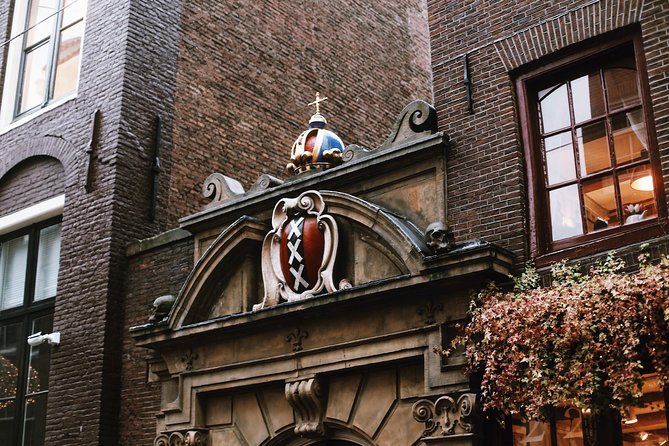
This route is packed, with many stops lasting around five minutes and a couple lasting longer. Think of it like a guided highlight walk where each stop gives you a hook, then you carry that hook into the rest of your trip.
St. Nicholas Basilica: religion after centuries of limits
You begin at St. Nicholas Basilica, Amsterdam’s primary Roman Catholic church. It was built in the late 19th century after centuries of prohibition, which makes the building feel like a turning point, not just a church. The architectural blend reflects an Amsterdam that kept changing its mind and its identity over time.
One practical note: the admission is marked as free here, which is a nice bonus if you want to look around.
You can also read our reviews of more guided tours in Amsterdam





Schreierstoren (Tower of Tears) and Zeedijk: departures and the city’s water memory
Next comes the Schreierstoren, often called the Tower of Tears. It’s tied to the medieval idea of women bidding farewell to loved ones departing by ship—small story, big emotion. It’s also a solid stop for understanding how closely Amsterdam’s life has always been connected to water and travel.
Then you stroll along Zeedijk, one of the oldest streets. It used to act as a sea dike holding back the IJ waters, and at the Kolksluis you can admire a picturesque lock bridge—exactly the kind of infrastructure that makes canals more than postcard backgrounds.
Nieuwmarkt and The Waag: where trade became city life
At Nieuwmarkt, you get a sense of how commerce shaped the old city center. It has acted as a center for trading and social life since the 17th century, and its location near the old city gate made it practical for fresh produce and shoppers.
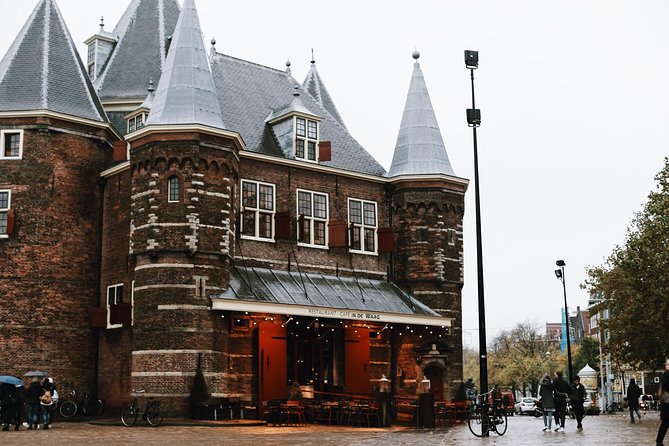
Near there you’ll also see De Waag, a 15th-century non-religious building that’s one of the oldest surviving examples. It began as a city gate and part of the walls, then served multiple roles—guildhall, museum, and even a firestation—so you’re watching Amsterdam reuse buildings as the city’s needs changed.
Trippenhuis and Oost-Indisch Huis: wealth, taxes, and the Dutch East India Company
The walk shifts into “old money” territory with Trippenhuis, described as Amsterdam’s grandest 17th-century mansion, once owned by the wealthy Trip family. Right near it is the contrast: the city’s “smallest house,” built opposite—one of those arrangements that makes you wonder how city planning and wealth worked in real life.
A short step away is the Oost-Indisch Huis courtyard, tied to the Dutch East India Company. It’s associated with the birthplace of the world’s first multinational corporation, which gives you a direct line from ornate architecture to global trade.
Then comes Kleine Trippenhuis, noted for being among the narrowest houses in Amsterdam. The idea behind its shape links back to land taxes that rewarded height over width, so you start seeing Dutch economics on the street.
Zuiderkerk and Rembrandthuis: faith, design, and an artist’s working years
At Zuiderkerk, you see Amsterdam’s first purpose-built Protestant church designed by Hendrick de Keyser. Even if you’re just catching it outside, its tower is one of those landmarks that helps you orient yourself. It also reinforces the shift in religious landscape as the city changed over time.
You’ll then pause near Museum Het Rembrandthuis, Rembrandt’s former home and studio. Rembrandt lived and worked there for nearly 20 years, so it’s not a quick name-drop stop—it’s tied to a long chapter of his life. If you’re a visual thinker, this is a good moment to picture the working routines behind the paintings.
Stopera and Huis aan De Drie Grachten: the city building its modern identity
As you move on, you’ll reach the Stopera, a complex that houses both the city hall and the Dutch National Opera and Ballet. The construction took at least 60 years, which tells you Amsterdam didn’t rush its major civic upgrades. It’s a useful stop for understanding how modern functions got layered into the old city core.
Then you’ll see Huis Aan De Drie Grachten, a rare 17th-century canal house designed at the junction of three canals. Its façades face in three directions, so the building becomes a lesson in spatial planning—Amsterdam shaping architecture around water connections.
Begijnhof and Dam Square: quiet courtyards, then the loud center of power
At Begijnhof, you step into a peaceful medieval courtyard tied to the Beguines, a community of devout women. Even from the outside of the experience zone, it’s easy to feel the shift from street noise to courtyard calm. You’ll also see one of Amsterdam’s oldest wooden houses here, which adds a tangible “oldest materials” note.
After that calm, you hit Dam Square, Amsterdam’s historic heart. It’s framed by the Royal Palace, the 15th-century New Church, and the National Monument to WWII victims. This stop is like the city’s anchor point: once you understand Dam Square, lots of Amsterdam geography starts making sense.
Herengracht and Anne Frank House area: Golden Age wealth and wartime memory
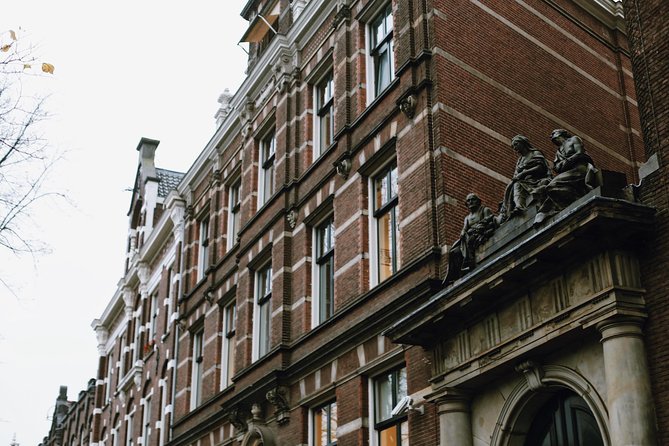
On Herengracht, you can admire the Golden Bend, lined with some of Amsterdam’s richest and most ornate canal mansions from the Dutch Golden Age. It’s a stop where you’ll want to look up and around, not just straight ahead. You’ll see the kind of wealth that comes from trade and shipping—and how it turned into architecture.
Next is a pause outside the Anne Frank House, tied to the WWII story of the young diarist hiding. Immediately nearby is the Westerkerk, noted as the tallest church tower in Amsterdam. This pairing makes the contrast hard to miss: everyday lives and historic memory right beside major landmark design.
De Drie Hendricken and Karthuizerhof: trade symbols and a calm refuge for elders
At De Drie Hendricken (Bloemgracht 87–91), you look up for quirky gable stones carved with allegories and trade emblems. It’s one of those “stop and stare” architecture moments that turns façades into storyboards.
Then you reach Coöperatieve Vereniging Karthuizerhof, described as the largest hofje in Amsterdam. It was built as almshouses around a tranquil courtyard for the city’s poor and elderly, so it’s not just pretty. It’s a window into how Amsterdam cared for people when formal social safety nets didn’t exist the way they do now.
Noorderkerk and the final canal corner at Papeneiland
Finally, you’ll see Noorderkerk, a 17th-century Protestant church for the Jordaan district. Its unusual cross-shaped floor plan reflects Reformation ideals of worship. Even if you can’t go inside, it’s a good lesson in how belief shaped building layout.
You end at Papeneiland for Het Papeneiland, the brown café from 1642. It’s a fitting finish because you get a relaxing canal view after a concentrated walk through the city’s most story-heavy streets. And yes, it’s specifically noted as a place for apple pie—so plan to treat yourself if that sounds like your kind of ending.
A realistic note on access and timing
Because of security measures at many attractions, some places can’t be visited from the inside. Also, the stop durations are short, so you won’t get a long, museum-style visit at every location. If you come ready to look, listen, and capture key points, you’ll enjoy this pace.
What makes the guide matter (and how to get the best version of this tour)
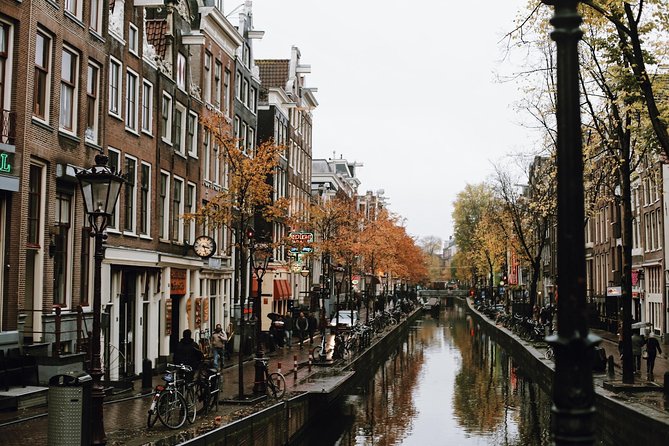
The biggest praise here isn’t just that the tour is full of sights—it’s that the guides keep it clear and lively. In particular, I pay attention to how guides like Anita, Pedro, and Diana handled questions and kept the group moving, even when weather made the walk harder.
To get the most out of your guide, I’d come with two or three themes you care about. For example: canals and engineering, religious change, trade and the Dutch East India Company, or how hofjes reflect daily life. Then ask follow-ups like how a place like Nieuwmarkt connected to the city gate, or why buildings like De Waag changed roles over time.
If you’re the type who likes to repeat a story and chase it later, this tour sets you up perfectly. You’ll leave with practical next steps for where to go and what to look for when you’re wandering on your own.
Who should book this tour (and who might prefer something else)
This works best if you want an organized orientation to Amsterdam without spending your whole day stuck reading plaques. It’s also a strong pick if you like history told through buildings and street-level details instead of a classroom lecture.
I’d also recommend it if you’re traveling with limited time. The route hits a lot of core sights in one walk, and it ends somewhere pleasant so you’re not scrambling at the end.
It might be less ideal if you’re hoping for lots of long interior visits or guided museum time. Since many stops are exterior and some access can be restricted, you’ll want separate time for deeper attractions on your own schedule.
Should you book this Amsterdam City Center & History tour?
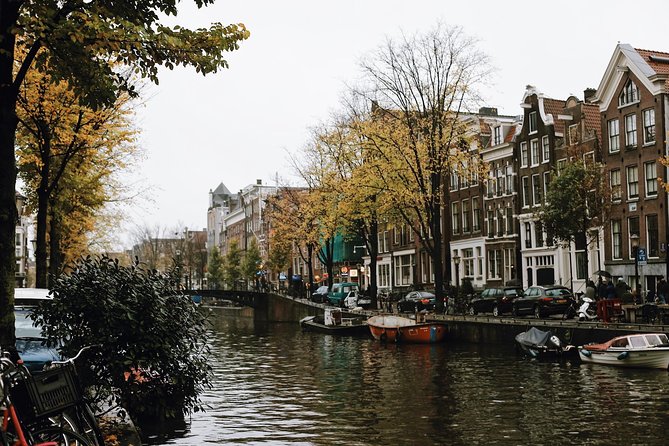
Yes, I think you should book it if you want your first days in Amsterdam to feel connected and purposeful. The price makes sense for a guided route that blends big landmarks with lesser-noticed architecture, plus hofjes and canal details that add depth fast.
If you’re comfortable with a moderate walking pace and you’d rather learn the story behind the city than spend hours inside buildings, this tour is an easy win. And finishing at Papeneiland with apple pie is a nice way to turn a history walk into a memorable meal.
FAQ

FAQ
How long is the Amsterdam City Center & History guided walking tour?
It’s about 2.5 hours.
What language is the tour offered in?
The tour is offered in English.
Where do I meet the guide, and where does the tour end?
Meet at Prins Hendrikkade 73, 1012 AD Amsterdam. The tour ends at Papeneiland, Prinsengracht 2, 1015 DV Amsterdam.
Is the tour private or shared?
This is a private tour/activity, meaning only your group participates.
Does the price include admission tickets?
Admission varies by stop. Some stops are marked free, like St. Nicholas Basilica and several central squares and canal areas. Other stops are marked as not included, such as Schreierstoren/Tower of Tears.
Are tips included in the tour price?
No. Gratuities are optional.
Does the tour run in bad weather?
Yes, it runs rain or shine.
Is there a recommended level of fitness?
A moderate physical fitness level is recommended.
What is the cancellation window?
You can cancel for a full refund up to 24 hours in advance.