REVIEW · AMSTERDAM
Amsterdam Central Walking Tour
Book on GetYourGuide →Operated by Yellow Bike Tours & Rental · Bookable on GetYourGuide
Start your Amsterdam day with a walk that feels like a secret shortcut. This Yellow Bike tour strings together canals, crooked houses, and major landmarks, with stop-by-stop stories that make the city’s layers click. I especially love the small group feel and the way the guide keeps the history human, not dusty.
One thing to plan for: it’s a winter-style walk rain or shine, so you’ll want warm layers and proper shoes for the cobbles. Also, the café break is included, but drinks aren’t—so bring cash or a card if you want something more than water.
In This Review
- Quick hits before you go
- Enter Nieuwezijds Kolk: how the tour starts
- The real value: 2 hours that hit both famous and overlooked
- From canals to courtyards: the Negen Straatjes experience
- Crooked Houses and tilted architecture: why Amsterdam leans
- Westerlijke Wallen etiquette: Red Light District rules without the awkwardness
- Anne Frank House and Jordaan: the past as a living map
- Westertoren: Amsterdam’s tallest church tower moment
- Spui and Provo: student protest history you can stand on
- Grain to beer: Brouwersgracht and the Booze Capital nickname
- Koepelkerk, Lutheran copper, and resilience after fire
- Jan Roodenpoortstoren and Torensluis: prisons and old defense walls
- Bartolotti House and the Gay monument: status, power, and rights
- The café pit stop: warm break, cold weather math
- Closing at Dam Square: wrapping up with momentum
- What to bring for winter: your comfort is the whole tour
- Who this tour is best for (and who should skip it)
- Should you book Yellow Bike’s Amsterdam Central Walking Tour?
- FAQ
- How long is the Amsterdam Central Walking Tour?
- Where does the tour start?
- What does the tour cost?
- Is a café stop included?
- What languages are the guides?
- What group size should I expect?
- What should I bring?
- Does the tour run in bad weather?
- Is the tour suitable for people with mobility needs?
Quick hits before you go
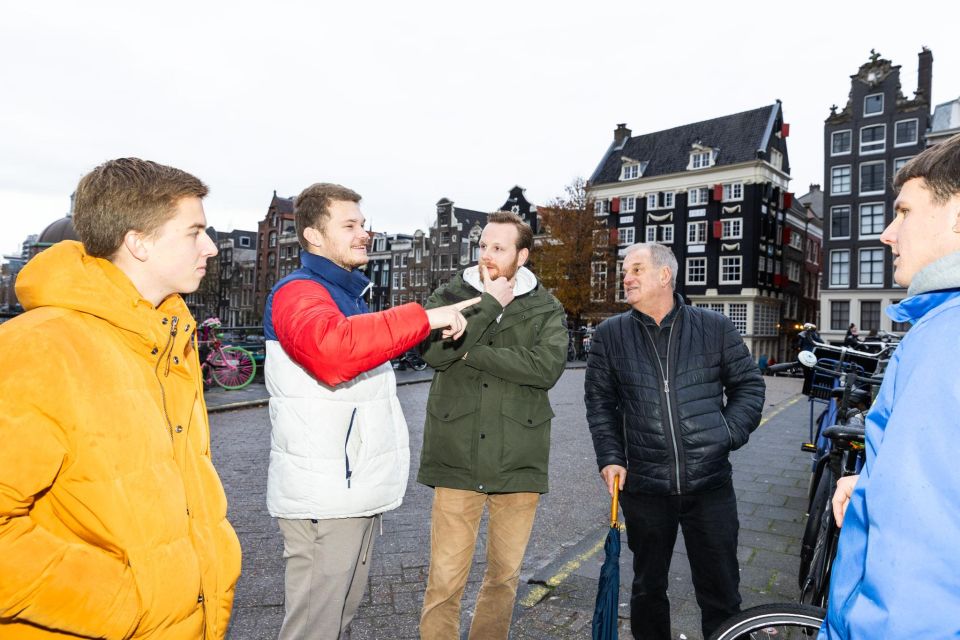
- Small groups (up to 12): you’ll get more back-and-forth than with big buses.
- Local, original Amsterdam operator: Yellow Bike is run by locals, and the guides bring current context along with old facts.
- Titled houses and the wooden-pole story: it’s the kind of detail you’ll spot after you learn why Amsterdam stands firm.
- Provo and civil resistance at Spui: the city’s activism history shows up in a very specific place.
- A guided run through the landmarks: from Anne Frank and Jordaan to Westertoren and Dam Square.
- Traditional café pit stop: a warm pause in the middle of a 2-hour stretch.
Enter Nieuwezijds Kolk: how the tour starts
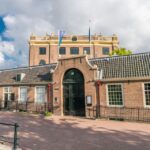
The tour begins at Nieuwezijds Kolk 29, with Yellow Bike as your clear meeting point. When you check in at the counter, you’re set up for a smooth start—plus you can leave your luggage in storage while you walk (handy if you’re arriving by train and don’t want a bag bouncing around all morning).
From the first minutes, the format is simple: you’re walking, your guide is talking, and you’re constantly given little “look for this” moments. That matters in Amsterdam, where it’s easy to get lost in pretty canals and forget to connect what you see with what it means.
Group size is capped at 12, and from the vibe I expect on a tour like this, the group is often even smaller. That can turn a short 2-hour walk into something more personal—like when Sid led what ended up feeling private, or when Willem/Willen delivered a friendly, detailed tour even when the weather was brutal.
You can also read our reviews of more walking tours in Amsterdam


The real value: 2 hours that hit both famous and overlooked
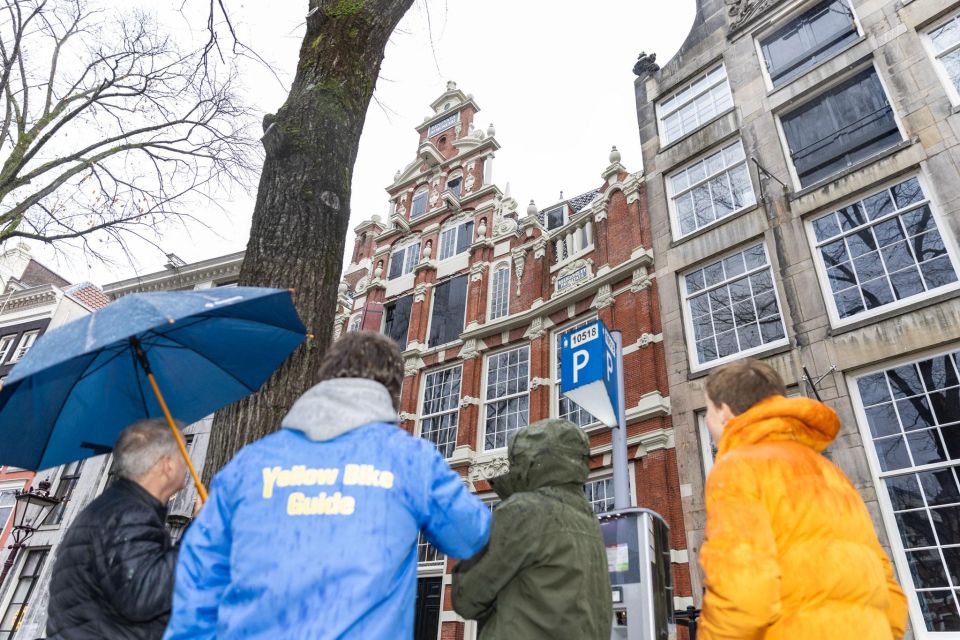
At $26 per person for a 2-hour guided walk, the cost isn’t the headline—the format is. You’re paying for interpretation. In Amsterdam, that’s where a tour pays off. You can absolutely walk these streets on your own, but without someone explaining the why behind the what, you’ll miss the connective tissue.
What makes this one feel like good value is the balance:
- You get major anchor points people come for (including Anne Frank House and Dam Square).
- You also get smaller, story-heavy stops where the city’s engineering, politics, trade, and religion show up in plain sight.
And because it’s only two hours, you’re not stuck on a long program when your feet start negotiating with your plans.
From canals to courtyards: the Negen Straatjes experience
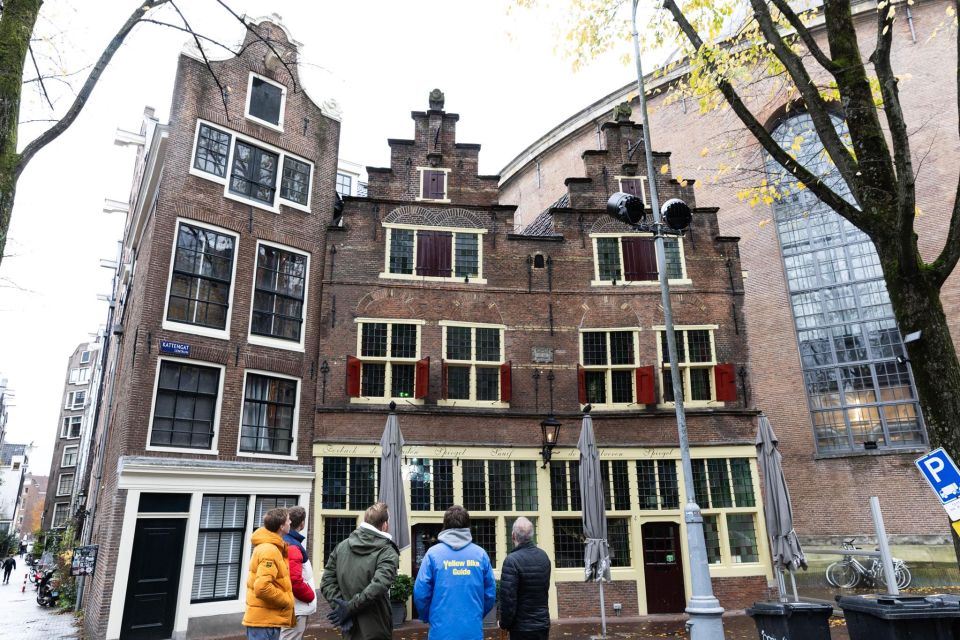
Early on, you’ll spend time in the Negen Straatjes area—those nine little streets that link canal-side charm with shopfront energy. This is a good segment to get your “Amsterdam eyes” working. Look at the bridges, the narrow facades, and how the streets breathe between the canals.
If you like architecture details, this is also a gentle warm-up: you’re not sprinting between monuments. Instead, you’re building familiarity—then the tour becomes more rewarding as the history gets more specific.
Bonus: even if you’re not in shopping mode, the neighborhood teaches you how Amsterdam’s center is designed. It’s compact, walkable, and built for wandering—so when the guide starts connecting the past to what you’re standing in front of, you’ll follow faster.
Crooked Houses and tilted architecture: why Amsterdam leans
One of the highlights is the attention to crooked or tilted houses—those iconic, photo-famous facades that make Amsterdam look like it’s playing a prank. The tour explains why: the city rests on wooden poles, and the building behavior over time gives you that leaning look.
This stop is more than a quick photo moment. It’s a lesson in Amsterdam’s relationship with water and soil. When you understand the foundation story, the whole city starts to read differently. Suddenly the canals aren’t just pretty—they’re part of a system.
And because the tour is on foot, you’ll see the “tilt” from angles you can’t easily get from a canal cruise. That’s where the detail lands.
Westerlijke Wallen etiquette: Red Light District rules without the awkwardness
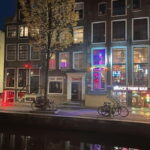
The route also includes the Westerlijke Wallen area—Amsterdam’s Red Light District. This is where the tour sets clear boundaries:
- No photos are taken
- No lingering is permitted
That’s important, because it keeps the walk respectful and helps you avoid the “stand around and stare” trap that can happen in any crowded, sensitive area.
Practical advice: bring a quiet mindset. You’re there to understand the role and history of the neighborhood, not to treat it like a theme park. If you can follow the guide’s pacing, you’ll get a better experience and a cleaner memory of what you saw.




Anne Frank House and Jordaan: the past as a living map
The tour naturally includes stops around the Anne Frank House area and the nearby Jordaan district, often described as the working-class enclave that helped shape the city’s culture. Even if you already know the basic story, having a guide connect the geography to the larger WWII narrative makes the place feel less like a checklist item and more like a map of choices and constraints.
This part of the walk is emotionally heavier, so it helps that the guide’s style keeps moving. Two hours is short enough that you don’t get trapped in one heavy segment for too long, but long enough to feel the arc of the story.
If you want a deeper visit, you can use this tour as a “get your bearings” phase, then decide later whether you want extra time inside any major site.
Westertoren: Amsterdam’s tallest church tower moment
The tour includes a look at Westertoren, Amsterdam’s tallest church tower. This stop is worth it because it doesn’t treat the tower like decoration. The guide unpacks its historical significance so you understand why it mattered—and how it fits into the skyline of a city that grew with trade, faith, and resilience.
Even in winter, towers can be a little tricky to judge at street level. Walking the route helps: you’ll get positioning as you move, and the guide can point out details you’d miss if you were just snapping one quick angle.
Spui and Provo: student protest history you can stand on
One of the most interesting storylines on the walk is Spui, tied to the Provos—a movement associated with events advocating civil resistance. The tour connects this energy to what you see around you now, so it doesn’t feel like a textbook chapter.
The fact that the walk also touches squatting history along Spuistraat gives the protest thread more texture. You start to see Amsterdam not just as canals and commerce, but as a place where people argued publicly—sometimes messily, sometimes strategically—about the city’s future.
If you’re the type who likes Amsterdam for politics and modern culture as much as for old buildings, this segment is a big reason to book.
Grain to beer: Brouwersgracht and the Booze Capital nickname
You’ll walk Brouwersgracht, and the tour explains the role of grain supply for breweries—one of the reasons Amsterdam earned its nickname as a major beer city, often described as the Booze Capital.
This is one of those practical history explanations that makes you look around differently. Once you learn that a canal wasn’t only for transport of passengers or visuals, you start noticing how trade shaped the city’s layout, wealth, and neighborhoods.
Even if you don’t care about brewing, you’ll get the bigger lesson: canals were logistics. Amsterdam’s beauty has a job.
Koepelkerk, Lutheran copper, and resilience after fire
Another strong stop is Koepelkerk, with a story tied to the copper-clad Lutheran church and a reminder of Amsterdam’s resilience after a massive fire. The point isn’t just what happened—it’s why rebuilding matters, and how the city carries those scars forward into architecture.
In a short tour, you don’t get tons of time for emotional processing, but you do get the key “why” behind the visual. That’s what keeps it from turning into a highlight reel.
Jan Roodenpoortstoren and Torensluis: prisons and old defense walls
The tour also includes Jan Roodenpoortstoren, where you learn about secrets beneath the bridge, including historic prison cells. It’s a striking idea: the city’s everyday pathways also carried confinement and punishment.
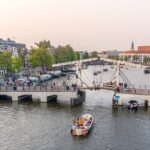
Then there’s Torensluis, described as the oldest bridge in Amsterdam and once part of the city’s defensive wall. This is classic Amsterdam layering—today’s crossings built on older strategies. You’re walking through history that has been repurposed instead of erased.
Bartolotti House and the Gay monument: status, power, and rights
You’ll see Bartolotti House, described as one of Amsterdam’s finest mansions, and you’ll learn about the history behind that elegance. It’s a window into wealth and influence—who had it, where they lived, and how buildings broadcast status.
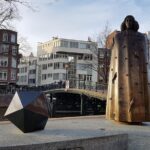
The walk also stops for the Gay monument, tied to the Dutch LGBTQ+ community’s struggles and victories, including the site of the world’s first gay marriage. Even if you’ve read about this milestone before, seeing it placed into a walking route with other civic stories makes it feel less like an isolated fact and more like part of a broader human rights storyline.
The café pit stop: warm break, cold weather math
About midway (give or take based on pacing), you’ll reach a traditional Dutch café for a break. Expect warmth, a chance to rest your feet, and a moment to regain energy.
A quick heads-up: the café stop includes the break, but drinks are not included. If you’re sensitive to cold, I’d plan for a hot drink so the break actually does its job.
This stop also helps the guide’s pacing. Two hours on cobblestones goes faster when you can reset your body once.
Closing at Dam Square: wrapping up with momentum
The tour ends at Dam Square, then you walk back to Yellow Bike at Nieuwezijds Kolk. That keeps the loop clean. You finish at one of the most central hubs, which makes it easy to connect to the rest of your day—museums, canal time, or just a long coffee.
Dam Square also works as a mental “bookmark.” By the time you get there, the earlier details (wooden poles, trade routes, protest places, and courtyard neighborhoods) feel like pieces of one map.
What to bring for winter: your comfort is the whole tour
This is a winter walk, and the tour runs rain or shine. The essentials are straightforward:
- Comfortable shoes (cobblestones are not forgiving)
- Warm clothing
- Hat, gloves, scarf
If you want the best experience, dress like you’re going to be outside a bit longer than you think you will. Two hours isn’t long on paper, but Amsterdam weather can steal warmth fast, especially when the wind works the canals.
Also, note the info about mobility: the activity is marked wheelchair accessible, but it also says it’s not suitable for people with mobility impairments. If that affects you, I’d confirm with Yellow Bike directly before booking so you don’t get stuck with an uncomfortable mismatch.
Who this tour is best for (and who should skip it)
This tour is ideal for you if:
- You want a guided orientation to Amsterdam’s center without spending all day
- You like stories that connect politics and daily life (Provo, squatting history, Red Light District etiquette)
- You enjoy architecture details like crooked houses and how foundations work
- You want a short tour with strong landmark coverage, including Anne Frank House and Jordaan areas
Skip it if:
- You can’t handle winter walking on uneven surfaces
- Two hours feels too long for your comfort needs right now
If you’re short on time but want your Amsterdam to feel meaningful, this is a solid choice.
Should you book Yellow Bike’s Amsterdam Central Walking Tour?
If you’re weighing this against a general sightseeing option, I’d book it—especially at $26 for 2 hours. You’re getting a local-guided route that mixes famous stops with specific city stories (Spui/Provos, Westertoren, Brouwersgracht trade logic, tilted-house foundations). That’s the kind of guidance that makes your self-guided wandering afterward more rewarding.
Book it if your plan includes winter weather and you’ll pack warm gear. Pass if you know cold, rain, and cobbles will wreck your day. For most people, though, this is a smart, value-packed way to understand what Amsterdam is built from: water, trade, protest, and architecture.
FAQ
How long is the Amsterdam Central Walking Tour?
It lasts 2 hours.
Where does the tour start?
The meeting point is Nieuwezijds Kolk 29, where you look for Yellow Bike and check in at the counter.
What does the tour cost?
The price is $26 per person.
Is a café stop included?
Yes. The tour includes a break at a traditional Dutch café, but drinks are not included.
What languages are the guides?
Guides speak Dutch and English.
What group size should I expect?
The tour is small, capped at a maximum of 12 participants, often smaller.
What should I bring?
Bring comfortable shoes, warm clothing, and a hat, gloves, and scarf.
Does the tour run in bad weather?
Yes. It takes place rain or shine.
Is the tour suitable for people with mobility needs?
The information provided says it is wheelchair accessible, but it also states it is not suitable for people with mobility impairments. If mobility is a concern, confirm details with Yellow Bike before booking.