REVIEW · AMSTERDAM
1 Hour Private Amsterdam Rickshaw Tour
Book on Viator →Operated by BlackfoXXX Amsterdam explorer · Bookable on Viator
One hour in Amsterdam can feel like a speed run. This private rickshaw tour is a smart way to get your bearings fast while still seeing the places most people come for. I like that it’s private (just your group) and built around quick stops that make sense on a short timeline. The best part is the stress-free hotel pickup and drop-off, so you spend less time figuring out routes.
There’s also a lot to like about the ride itself: WiFi on board and a guide who can explain what you’re passing, not just point. You’ll cover major landmarks without stacking up tram or foot time. The only real watch-out is that it’s a rickshaw, so it’s not wheelchair accessible and it’s not recommended if you’re dealing with pregnancy or serious heart or medical issues.
In This Review
- Key points to know before you ride
- Why this 1-hour Amsterdam rickshaw tour makes sense
- Price and what you’re really paying for
- Pickup that saves you from the Amsterdam puzzle
- The rickshaw ride: private pace, WiFi, and practical comfort
- Stop by stop: how the route teaches you the city fast
- Dam Square: the center of civic Amsterdam, with street life
- Nieuwmarkt: historic gateway vibes and the Waag
- Rembrandtplein: a major square with nightlife gravity
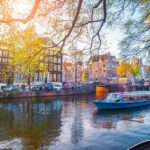
- Magere Brug: one of Amsterdam’s best Amstel views
- Museumplein: big-name museums and open space
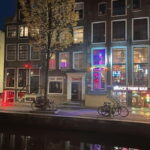
- De Wallen (Red Light District): what you’ll actually see during the day
- Anne Frank House area: the meaning behind the canal streets
- The guides: professionalism, flexibility, and that local sense of timing
- Weather and comfort: plan for rain, wind, and street heat
- Who should book this, and who might want a different format
- Tips to get the most out of your 1-hour Amsterdam rickshaw
- Should you book this 1-hour private Amsterdam rickshaw tour?
- FAQ
- Is this tour private?
- How many people can ride in one rickshaw?
- Is hotel pickup included?
- Where does the tour end?
- What’s the duration?
- What language is the tour offered in?
- Is WiFi provided during the ride?
- What if the weather is bad?
- Is it wheelchair accessible?
Key points to know before you ride
- Private ride for up to 2 people (plus small kids in the weight limits), so the pace is yours.
- Hotel pickup and drop-off keeps the hour simple, even if you’re arriving by cruise.
- A tight route that mixes postcard canals with places people always ask about, like De Wallen.
- Stops are mostly quick looks at outdoor areas, designed for orientation rather than museum deep time.
- WiFi on board means you can handle tickets, messages, and maps without burning your phone battery.
- Weather matters since it needs good weather to run.
Why this 1-hour Amsterdam rickshaw tour makes sense
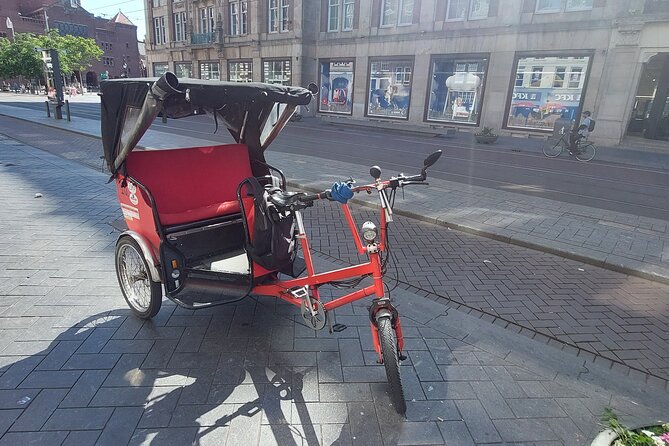
Amsterdam is beautiful, but it can also be a maze. In a city of canals, narrow streets, and sudden detours, a rickshaw gives you two things at once: movement through the core and a guide who can explain what you’re seeing while you’re there.
The biggest value for me is time. In one hour, you’re not just watching the city slide by; you’re hitting a set of high-interest areas in an order that helps you understand how the center fits together. That’s what turns the ride into more than a novelty.
The second reason I’m into it is comfort. You get an actual driver/guide who handles the route, and you don’t have to negotiate parking, crossings, or which tram line is fastest. Add hotel pickup and you remove one of the most annoying parts of planning in Amsterdam.
You can also read our reviews of more private tours in Amsterdam


Price and what you’re really paying for
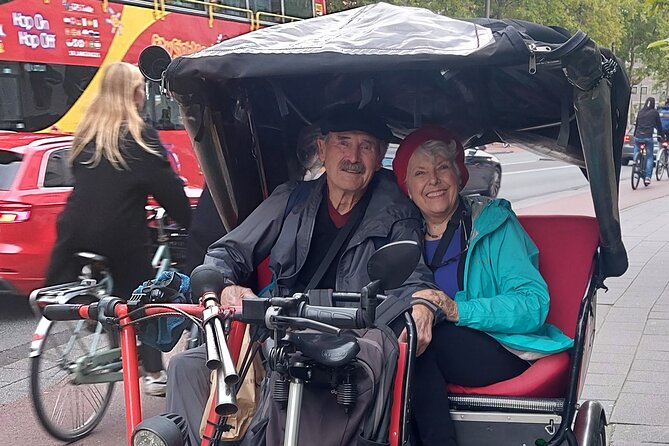
It’s priced at $120.41 per group for up to 2 people, for about an hour. That sounds like a lot if you’re thinking per person like a museum ticket. But if you split it between two, it often lands in a more reasonable “you’re paying for convenience plus local guiding” category.
Here’s what that price buys you that you can’t easily replace:
- A private guide/driver for the full hour, not a big group tour where you’re always waiting.
- Hotel pickup and drop-off, including options near major cruise docks like Passenger terminal Amsterdam (PTA) and the De Ruyterkade piers.
- A route that hits several top areas quickly, including canal views from bridges like Magere Brug.
If you’re solo, you’ll still get the private experience, but the math is tougher. If you’re two (or a small family that fits the limits), it can feel like a good deal for what you cover.
Pickup that saves you from the Amsterdam puzzle
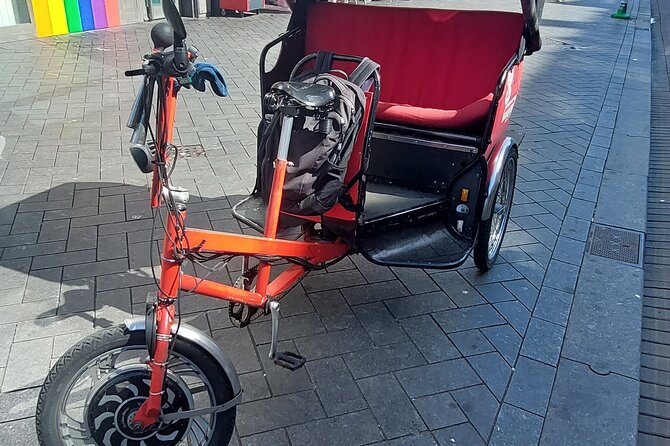
The tour includes traveler pickup, and the provider specifically notes the easiest approach for people staying in central hotels: pick you up at your hotel. You just need to tell them which hotel you’re using.
If you’re arriving by cruise, they also point you to common docking zones:
- Passenger terminal Amsterdam (PTA) for most sea cruises
- de Ruyterkade Oost for many river cruises (like Viking)
- De Ruyterkade West for some river cruises
That matters because in Amsterdam, a small mismatch can waste time. If you show up at the wrong meeting corner, you can lose 20 minutes and stress out. This setup is designed to prevent that.
The rickshaw ride: private pace, WiFi, and practical comfort
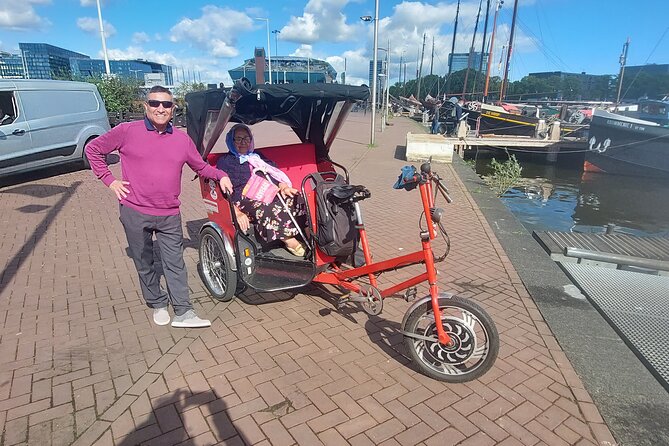
This is a private tour/activity, and it’s designed for a small group. The rickshaw max is 2 adults with a total weight up to 500 pounds (230 kg), or 2 adults plus up to 2 small children under 9, as long as total weight stays within the same limit.
A few practical notes from the provided details:
- It’s not wheelchair accessible
- It’s not recommended for pregnant travelers
- No heart problems or serious medical conditions
- Service animals are allowed
- Infants must sit on laps
- It’s near public transportation, in case you need a backup plan
You’ll also get WiFi on board, which is handy for last-minute mobile tickets, maps, or just sending a quick message without draining your phone.
Stop by stop: how the route teaches you the city fast
This itinerary is built like a quick orientation loop. You won’t spend long at every spot, but you’ll get enough context to understand what each area represents and why people care about it.
You can also read our reviews of more tours and experiences in Amsterdam



Dam Square: the center of civic Amsterdam, with street life
Your first major stop is Dam Square. It’s one of those places you can stand in for five minutes and instantly feel the layers: old, modern, and very much lived-in by crowds.
What you’ll learn there:
- The square traces back to the 13th century, when a dam was built around the Amstel to help prevent flooding from the Zuiderzee sea.
- In the 1960s, Dam Square was known for its hippies and street culture.
- Today it’s a top tourist stop with lots of entertainment, plus the famous pigeon energy.
Seasonal details help you picture what’s happening right now. In spring, there may be a carnival or even a colorful ferris wheel experience. In summer, mimers and other street performers show up to surprise passersby.
Drawback to consider: Dam Square is a magnet. Even with a rickshaw, you may feel the crowd pressure when you pause or slow down near the center.
Nieuwmarkt: historic gateway vibes and the Waag
Next up is Nieuwmarkt, a neighborhood area with historic architectural highlights. You’ll pass through the middle of it and get a quick explanation about the former 15th-century eastern entrance gateway to the city.
The key landmark mentioned here is the Waag. Even if you don’t go inside, learning this “gateway” context changes how you read the street layout. You start to notice how the city’s growth shaped the roads you’re riding along now.
Why it’s worth the stop: Nieuwmarkt acts like a bridge between the most tourist-heavy squares and the canal streets that feel more woven into daily life.
Possible drawback: The tour is short, so this is a passing look rather than a long walk-through. If you love architecture and want time to photograph details up close, you may want a second trip on your own.
Rembrandtplein: a major square with nightlife gravity
You’ll also pass by Rembrandtplein. It’s described as a central square with a statue of the Dutch painter Rembrandt, surrounded by restaurants, night clubs, and bars.
The rickshaw format makes this easy: you see the square from the outside and move on before it turns into a long detour. The guide’s explanation is the value here—what the square represents, and how it fits into the city’s social geography.
Consideration: If you’re visiting during evening hours, this area can feel lively and crowded. During those times, you might get less quiet time for viewing than you’d hope.
Magere Brug: one of Amsterdam’s best Amstel views
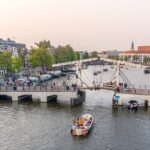
Then comes a classic: Magere Brug, a wide wooden draw bridge over the Amstel River. This is the kind of stop where the guide’s talk is great, but the real payoff is the view.
The route notes that the views around this part of the Amstel River are among the best in all Amsterdam. From a rickshaw, you’re positioned to appreciate the water line, the bridge structure, and the way the canals frame buildings.
Why I like this stop: It’s the “postcard moment,” but you get it without needing to spend hours hunting the right angle. In one hour, that matters.
Museumplein: big-name museums and open space
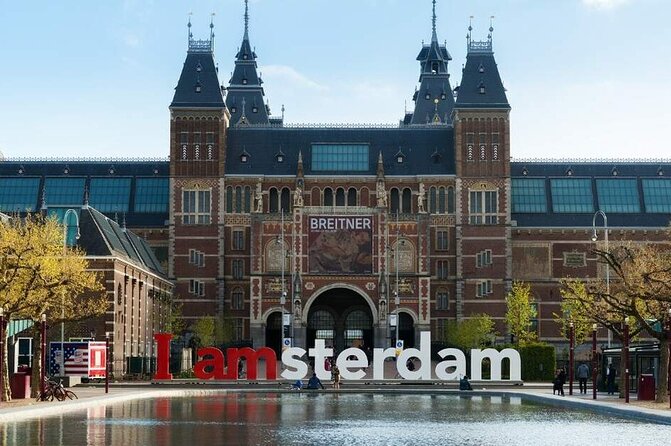
Next is Museumplein, an impressive square surrounded by some of Amsterdam’s most important museums. You’re not going to become a museum scholar in 60 minutes, but you’ll understand the “big institution” zone of the city.
This stop also helps you orient yourself geographically. Once you’ve seen Museumplein, you’ll find it easier to navigate other cultural areas later.
Possible drawback: Museumplein is more open and “destination” oriented. If you’re the kind of person who wants only old streets and quiet canals, you might find this part less atmospheric than others. Still, it’s useful for orientation.
De Wallen (Red Light District): what you’ll actually see during the day
A big chunk of Amsterdam’s public curiosity is the Red Light District, known as De Wallen. The tour includes time passing by this area, and it’s worth approaching it with the right mindset.
Here’s the context given in the itinerary:
- It’s widely known for sex work visible from windows, which is described as being behind closed doors elsewhere but visible here.
- The area includes live sex shows, sex shops, brothels, and strip clubs.
- It’s described as having improved safety over time, especially during daytime.
- Pickpockets are still a general concern in busy tourist areas, even if it’s relatively safe to walk through in the day.
The itinerary also notes adult entertainment specifics. You won’t be told to do anything. Instead, you get the explanation so you understand what the neighborhood is and why it’s so discussed worldwide. The adult shops and adult entertainment do not allow minors, and the area itself has no such age restriction for walking through.
My practical advice: During your pass-by time, keep your head up, move with purpose, and avoid lingering. You’ll get the context without turning it into an uncomfortable experience.
Anne Frank House area: the meaning behind the canal streets
The last area is the Anne Frank House (Anne Frank Huis), located on the Prinsengracht canal near the Westerkerk. Even when a tour doesn’t include time for a full visit inside, the setting matters because this place isn’t just a photo stop.
The provided details explain:
- During World War II, Anne Frank hid with her family and four others in the Secret Annex (Achterhuis).
- She didn’t survive the war, but her diary was published in 1947.
- The Anne Frank Foundation was set up later to protect the property from developers.
- The museum opened on 3 May 1960 and has permanent exhibition space, plus additional exhibitions about persecution and discrimination.
In a 1-hour rickshaw format, what you can realistically get is an exterior look and an understanding of why the location carries so much weight.
Consideration: If you’re hoping for deep museum time, this won’t replace that. But for many people, it’s a powerful way to make sure the story is present before you decide what to do next.
The guides: professionalism, flexibility, and that local sense of timing
One of the most praised aspects is the guide quality. Names like Lambros and Dido show up in the review details, with comments about professionalism, knowledge, and being flexible.
What that means for your hour:
- You’re not stuck reading a script. The guide can explain based on what you’re noticing.
- You may have room to adjust things like pickup and drop-off points with day-of convenience.
- The stops come with explanations that connect the dots between streets, squares, and waterways.
This is exactly what you want from a short private tour. A 60-minute ride can easily become a checklist. With the right guide, it turns into a “now I get Amsterdam” experience.
Weather and comfort: plan for rain, wind, and street heat
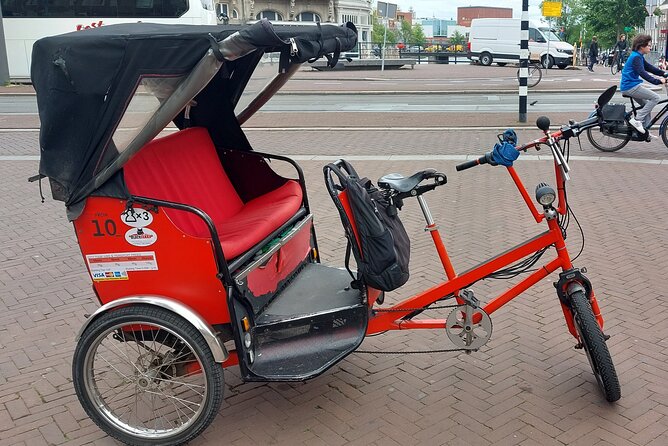
The tour needs good weather. That’s stated clearly: if it’s canceled due to poor weather, you’ll be offered a different date or a full refund.
Practical meaning: bring a plan for Amsterdam’s quick changes. Even if it looks fine, you might get wind off the canals or sudden showers. Layers help. A small umbrella can be useful if you don’t mind moving carefully around traffic and crowd areas.
Also remember: it’s a rickshaw. You’re exposed enough that weather will matter.
Who should book this, and who might want a different format
This tour fits best if you:
- Want a short, high-impact introduction to central Amsterdam
- Prefer a private experience over group logistics
- Like mixing big landmarks (Dam Square, Museumplein) with iconic Amsterdam views (Magere Brug)
- Need hotel pickup and don’t want to spend your precious first morning figuring out transport
It may not be the best fit if you:
- Want long time for indoor museum visits in this same hour
- Need wheelchair access
- Have health limitations listed as not recommended for pregnancy or serious medical conditions
Tips to get the most out of your 1-hour Amsterdam rickshaw
If you want this hour to feel worth it, do a little prep:
- Tell the provider exactly where you want pickup if you’re not using a central hotel. They can suggest meeting points if needed, and you’ll avoid confusion.
- Decide what you care about most before you start: canals and bridges, historic squares, or De Wallen context. Even with flexibility, the hour stays short.
- If you’re sensitive to crowds, aim for a time of day when Dam Square and De Wallen are more manageable for you.
- Have your questions ready. This is the kind of tour where one good question can turn a stop into real understanding.
Should you book this 1-hour private Amsterdam rickshaw tour?
I’d book it if you want a practical Amsterdam orientation with the comfort of hotel pickup and a route that hits the essentials without wasting time. It’s especially good value when you’re traveling with someone and splitting the $120.41 per group cost.
I would pass or look for another option if you need wheelchair access, have health concerns that match the not recommended notes, or if your main goal is museum entry time. This ride is built for sights and storytelling on the move, not for staying inside.
If you want a smooth first day plan that leaves you energized to explore on your own afterward, this is a very solid pick.
FAQ
Is this tour private?
Yes. It’s listed as a private tour/activity, and only your group participates.
How many people can ride in one rickshaw?
The maximum per rickshaw is 2 adults up to a total weight of 500 pounds (230 kilograms), or 2 adults plus 2 small children up to 9 years old with the same total weight limit.
Is hotel pickup included?
Yes. Traveler pickup is offered, and hotel pickup is described as available for hotels in and around the center of Amsterdam.
Where does the tour end?
It returns to the original departure point, so the activity ends back at the meeting point.
What’s the duration?
It’s listed as approximately 1 hour.
What language is the tour offered in?
The tour is offered in English.
Is WiFi provided during the ride?
Yes. WiFi is included on board.
What if the weather is bad?
The experience requires good weather. If it’s canceled due to poor weather, you’ll be offered a different date or a full refund.
Is it wheelchair accessible?
No. The information provided says it is not wheelchair accessible.