REVIEW · AMSTERDAM
Amsterdam 1-Hour Canal Cruise With Live Guide
Book on Viator →Operated by Captain Jack Amsterdam · Bookable on Viator
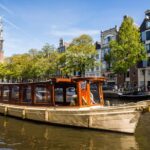
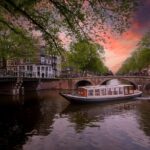
Electric boats, quiet canals, one hour of stories. This luxury canal cruise in Amsterdam lets you take in the canal ring and major landmarks without the walking grind, while a live guide ties the sights to what made the city tick. You start and end at the same spot on the Prinsengracht, and you get plenty of front-row views from an open-air deck when conditions allow.
I love the cushioned seating and the included blankets (and umbrella) for chilly trips. I also like the live commentary that turns famous scenes into something you can actually picture, from houseboats and bridges to the big-name museums along the water.
One possible drawback: sound can be an issue in rare cases. If the captain’s radio is kept loud for safety, you may struggle to hear the guide clearly from your seat.
In This Review
- Key things to know before you go
- Why this 1-hour canal cruise is the smart move
- Boat comfort: open-air views, blankets, and winter heat
- Price and value: what $26.59 really buys
- Where you start: boarding at Prinsengracht 261a
- The big picture you’ll hear: Grachtengordel and Amsterdam’s canal logic
- Stop-by-stop: what the guide points out along the way
- Anne Frank area: from the Prinsengracht to the story behind it
- The iconic wooden bridge: Magere Brug
- Meeting the museum front: Rijksmuseum from the water
- Jordaan and Prinsengracht: why the neighborhood grew around the canals
- How the canals connect to everyday life: houseboat museum
- Boutique streets and the small-side Amsterdam vibe
- Leidseplein area: bars, music, and nightlife energy
- Spiegelgracht: a canal run with galleries and art shops
- Duifkerk: a church with a layered past
- The Amstel: how Amsterdam started and why the river matters
- Westerkerk and Carré: Protestant church and neo-Renaissance theater
- Hermitage Amsterdam and the Stopera area: culture by the water
- Bridges and churches: Blauwbrug and Zuiderkerk
- Museums the guide names as you go: Moco, Icebar, Foam, Cat Cabinet
- Markets and the old city edge: Noordermarkt, Bloemenmarkt, Waag area
- Waterlooplein and the flea market vibe
- Jewish history along the way: Jewish Historical Museum and Resistance Museum
- Practical pop culture stops: Melkweg, DeLaMar, Stadsschouwburg
- The Amstel area squares and churches: Amstelveld, Amstelkerk, Kleine Komedie
- More canal houses and house museums: Museum Van Loon and Willet-Holthuysen
- De Pijp and other neighborhood flavor: Albert Cuyp Market mention
- The smallest-house and other fun facts stops
- Final orientation moments: bridges, canals, and the inner ring logic
- Who should book this cruise
- Should you book it? The quick call
- FAQ
- How long is the canal cruise?
- What is the price per person?
- Where do I meet for the tour?
- Do I need a printed ticket?
- Is the boat open-air or heated in winter?
- Is alcohol included?
Key things to know before you go
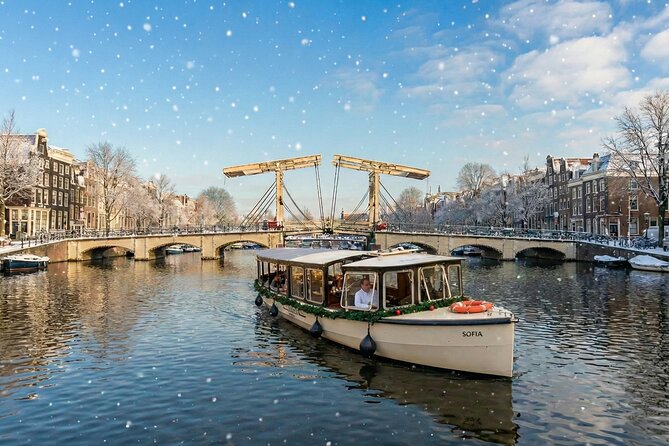
- Electric-powered boat that stays quiet compared with older canal boats
- Blankets, cushioned seats, and umbrellas included for comfort
- Heated closed boat in winter when the weather turns
- Small group size (max 30) helps the cruise feel more personal
- Live guide stories that explain what you’re seeing as you glide along
- Onboard bar is available, but alcohol is not included in the price
Why this 1-hour canal cruise is the smart move
Amsterdam can be overwhelming fast. Big museum names, long streets, and canals everywhere. This cruise works because it compresses the city into one smooth hour, with a guide who gives you the “why” behind what you’re seeing, not just a list of locations.
The boat itself is electric-powered, which matters more than you’d think. It keeps things calmer on the water and makes it easier to enjoy the visuals and the guide’s narration. The crew also keeps the mood light in the way that helps you actually remember details.
And because it’s only about an hour, it fits in almost any plan: a first-day orientation, a post-museum decompression, or even an easy add-on on a day when you already did a walking tour.
You can also read our reviews of more boat tours in Amsterdam
Boat comfort: open-air views, blankets, and winter heat
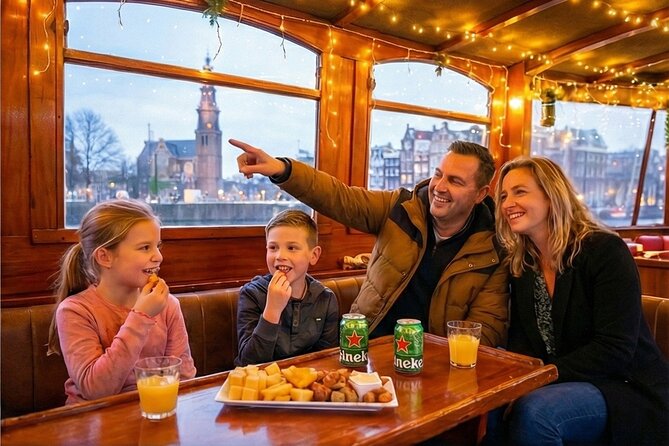
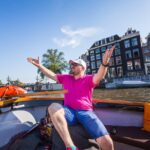
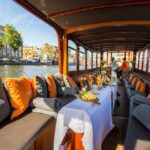
This is built for comfort on the water. You’ll ride on a spacious open-air deck with cushioned seats, and blankets are included for cooler outings. If you’re on a winter date, the setup changes: they use a closed and heated boat, so you’re not stuck shivering while trying to enjoy the canals.
That blanket detail is not a throwaway. In Amsterdam, the wind off the water can flip a pleasant day into a chilly one fast. The fact that blankets (plus an umbrella) are part of what you get means you don’t have to guess whether you packed enough layers.
Also, the experience is designed for conversation. The boat is small enough (max 30) that it doesn’t feel like you’re trapped behind a wall of people. Several comments highlight how easy it is to ask questions and have a real back-and-forth with the crew.
Price and value: what $26.59 really buys
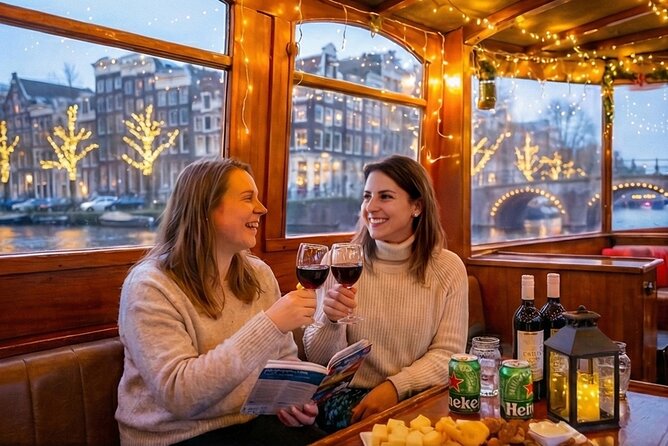
At $26.59 per person for about an hour, you’re paying for three things: time saved, comfort, and guided context. One hour is short, so the value depends on the quality of the guide and how much of Amsterdam they can make click.
Here’s what you get for the price:
- Luxury electric boat experience
- Cushioned seats
- Blankets and umbrella
- All fees and taxes
- A live guide with commentary
What you don’t get included:
- Alcohol or snacks (there’s a bar onboard where you can buy drinks)
- Food is not part of the ticket price
If your goal is to see a lot fast and still learn something real, this is good value. If your goal is a long, stop-everywhere history lecture, this won’t replace a museum day or an all-afternoon walking tour. Think of it as a guided “canal map you can feel” rather than a full deep dive.
Where you start: boarding at Prinsengracht 261a
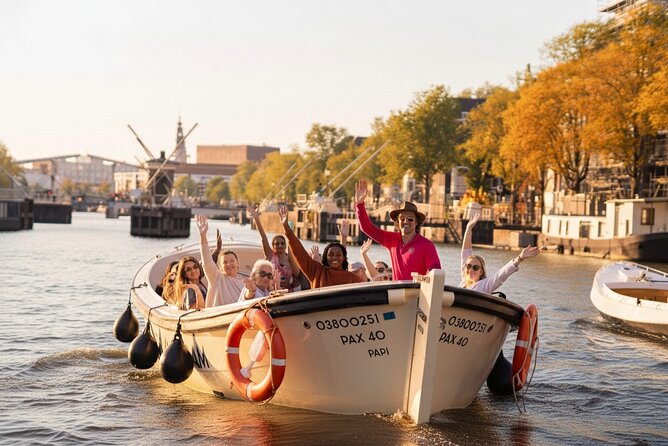
Your meeting point is Prinsengracht 261a, 1016 GV Amsterdam. The tour ends back at the same point, so you don’t have to figure out how to get across town after a boat ride.
In practice, that starting location is helpful because it anchors you in the most important “home base” area for the canal story. From there, you’re well positioned for the sights the guide talks about next: canal rings, bridges, and the Museumplein zone around the big museum cluster.
One timing note: departures can run late on occasion. If you’re connecting to another activity on the other side of Amsterdam, build in a buffer. It’s not constant, but it’s enough that you’ll feel better if you plan like a local: leave room.
The big picture you’ll hear: Grachtengordel and Amsterdam’s canal logic
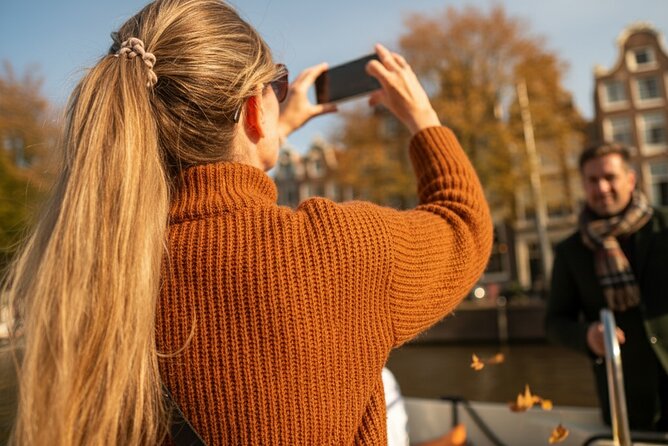
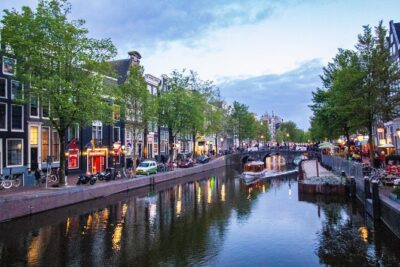
As you cruise, the guide brings up the Grachtengordel, the famous canal ring area. You’ll hear about how the main canals—Herengracht, Prinsengracht, and Keizersgracht—were dug in the 17th century during the Dutch Golden Age. These canals form concentric belts around the city, and the area’s monumental buildings helped shape why Amsterdam later earned its nickname as the Venice of the North.
That context matters. Without it, you just see pretty water and handsome facades. With it, you start noticing how the city is arranged—how the canals work like a system, not random scenery.
The guide also connects the canals to famous names and neighborhoods: Prinsengracht and the Jordaan, Spiegelgracht and the art shops, and the Amstel edges where commerce and culture overlap. It’s the difference between watching a slideshow and learning the map.
You can also read our reviews of more guided tours in Amsterdam


Stop-by-stop: what the guide points out along the way
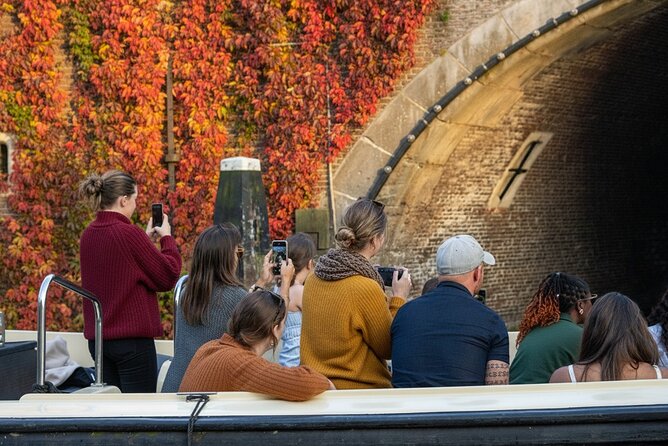
Below is what you should expect the guide to call out as you move through the waterways. Some stops are “you’ll pass right by” views; others are “the guide zooms in on what you’re looking at from here.”
Anne Frank area: from the Prinsengracht to the story behind it
You’ll start with the museum where Anne Frank and her family hid from the Nazis. Even if you’ve visited before or you’re only passingly familiar, the guide’s framing helps connect the house location to the wider canal neighborhood on the Prinsengracht.
Anne Frank is one of Amsterdam’s best-known historical figures, and the commentary typically ties her diary to the reality of how her family lived in hiding for more than two years, then how she was eventually deported in 1945 and died at 15. Standing on the water route makes the story feel close to everyday Amsterdam, not like something sealed behind museum walls.
The iconic wooden bridge: Magere Brug
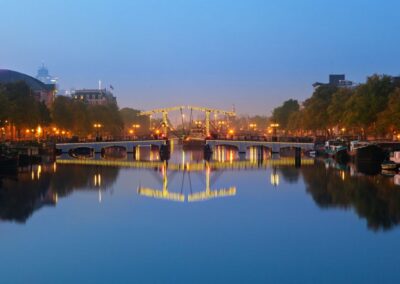
You’ll also hear about the romantic wooden bridge that Amsterdam visitors instantly recognize. The common callout here is Magere Brug, known in English as the Skinny Bridge. The guide explains that it’s a drawbridge and that it was once narrow enough that two pedestrians couldn’t easily pass each other. Later, a wider bridge replaced the narrow original.
Even if you don’t spend long staring, this is the kind of place where the guide’s details help you read the bridge as part of Amsterdam’s practical problem-solving, not just a photo spot.
Meeting the museum front: Rijksmuseum from the water
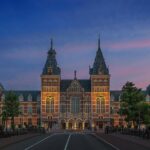
You’ll get a view/dock right in front of the Rijksmuseum, including a nod to Rembrandt and his Night Watch. It’s a smart moment because you get to see the museum as a building you’d otherwise only approach from a square. From the canal side, the scale and placement feel different.
This is also where the guide can connect museum art to the city that paid for it. The canal ring era helped fund the boom that later shaped Amsterdam’s cultural output.
Jordaan and Prinsengracht: why the neighborhood grew around the canals
The cruise spends time on the neighborhoods around the canal ring. The Jordaan shows up as a key starting and ending area, with the guide connecting canal names and local history. You’ll hear how the area’s identity links back to stories about the naming of Prinsengracht and the Jordaan tradition.
If you like city history that doesn’t sound like a textbook, this is one of the better parts of the cruise. The guide talks about the logic behind the canal belt and how the city expanded over time.
How the canals connect to everyday life: houseboat museum
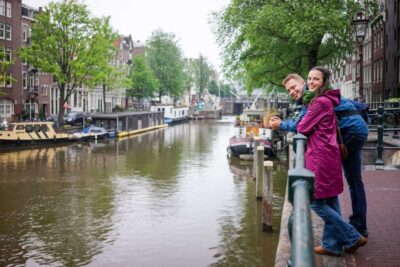
One of the most enjoyable parts for me is the look at houseboats via the houseboat museum along the Prinsengracht. The guide frames it as a window into how locals live on the water, not just how tourists imagine living on canals.
If you’re traveling with kids, this stop tends to land well because it’s visual and instantly understandable: real homes, real daily life, on the water.
Boutique streets and the small-side Amsterdam vibe
As the boat glides, the guide points out the kind of shopping and dining that is more local than chain-heavy. This includes small boutiques, local restaurants, and vintage shops in the areas you pass.
This section is less about specific architecture and more about helping you choose where to wander after the cruise. You’ll leave with a sense of where the city feels more personal.
Leidseplein area: bars, music, and nightlife energy
You’ll hear about an entertainment zone where Amsterdam does music, drinks, and performances. The guide ties it to where venues and popular hangouts cluster, which helps you understand why this part of town is loud when others are quiet.
If your plan includes evening plans, this cruise works like a preview: you’ll recognize where you’ll want to go later.
Spiegelgracht: a canal run with galleries and art shops
The guide brings up Spiegelgracht, including its role connecting the Prinsengracht with other nearby streets and running into the Nieuwe Spiegelstraat area. You’ll hear this is tied to galleries and antique shops.
This matters because it gives you a route idea. If you want to turn your cruise into a short walk afterward, this kind of canal link tells you where to head.
Duifkerk: a church with a layered past
You’ll also hear about Duifkerk, including the 17th-century hiding church story called Het Vrededuifje and how the current church’s restoration brought original murals back under layers of paint. That’s a strong reminder of how Amsterdam buildings keep getting new chapters while holding old ones underneath.
The Amstel: how Amsterdam started and why the river matters
The guide treats the Amstel as the big starting point. Amsterdam’s founding connects to the river, with fishermen building a dam that became Amsterdam. The guide also links Amstel to beer naming, connecting place to daily life.
You’ll hear about church and theater buildings along the Amstel corridor too, which turns the river from scenery into a spine of the city.
Westerkerk and Carré: Protestant church and neo-Renaissance theater
The Westerkerk is called out as a Reformed church near the Jordaan, positioned between the Prinsengracht and Keizersgracht. Then the cruise commentary shifts toward the Royal Theatre Carré, a neo-Renaissance building near the Amstel known for musicals, cabaret, and pop concerts.
This is a good example of how the cruise stitches together different Amsterdam flavors—religion, culture, performance—within one hour.
Hermitage Amsterdam and the Stopera area: culture by the water
You’ll hear about Hermitage Amsterdam, a branch museum on the Amstel river in a building from 1681. Along the route, the guide also points out the Stopera area and connections to the Dutch National Opera.
Bridges and churches: Blauwbrug and Zuiderkerk
You’ll pass by and hear about Blauwbrug (Blue bridge), which links areas near Rembrandtplein and Waterlooplein. There’s also a mention of Zuiderkerk, tied to Protestant worship in the Jordaan era-adjacent expansion and associated with how Amsterdam grew.
Museums the guide names as you go: Moco, Icebar, Foam, Cat Cabinet
Not every museum is a “look at it from the water and you’re done” moment, but the guide calls out places like Moco (modern and street art focus), Foam (photography), and even the Cat Cabinet (art devoted to cats). You also get mention of the Amsterdam Icebar, including its constant -10 °C ice setting.
These parts are more about helping you decide what to do after you get your feet back on the ground. If you’re the type who likes niche museums and quirky experiences, this cruise helps you bookmark.
Markets and the old city edge: Noordermarkt, Bloemenmarkt, Waag area
You’ll hear about:
- Noordermarkt tradition at the Noorderkerk area
- Bloemenmarkt and the tulip bulb stalls
- De Waag, tied to the Nieuwmarkt and its history as a city gate building
The guide’s market notes are practical. They tell you where you can wander later and what you’ll likely find there—especially if you’re looking for souvenirs that feel distinctly Dutch.
Waterlooplein and the flea market vibe
The cruise includes mention of Waterlooplein, described as the oldest flea market in the Netherlands, with hundreds of stalls and a long-standing schedule. If you’re there on the right days, this is the kind of place where you can lose time in the best way.
Jewish history along the way: Jewish Historical Museum and Resistance Museum
You’ll hear about the Jewish Historical Museum and also the Resistance Museum (Verzetsmuseum). The guide connects these to World War II occupation and the Dutch resistance story.
This isn’t the kind of stop meant to replace heavier museum time, but it does give you orientation. You’ll know where these stories live and can plan a deeper visit when you want it.
Practical pop culture stops: Melkweg, DeLaMar, Stadsschouwburg
The guide calls out places like:
- Melkweg, a pop venue and cultural center in a former sugar refinery/milk factory
- DeLaMar Theater, near Leidseplein
- Stadsschouwburg on Leidseplein area
If you want to match the Amsterdam you see by day with the Amsterdam you hear at night, these names help you plan.
The Amstel area squares and churches: Amstelveld, Amstelkerk, Kleine Komedie
You’ll also hear about Amstelveld and the Amstelkerk, plus Kleine Komedie, described as one of the oldest theaters in Amsterdam and focused on cabaret-style performances.
More canal houses and house museums: Museum Van Loon and Willet-Holthuysen
You’ll get commentary on canal-house museums like Museum Van Loon, and the Willet-Holthuysen Museum, which is known for period rooms and a look at life in a chic canal house across the 18th and 19th centuries.
This is where the guide’s canal context really helps. You start seeing these buildings as part of the canal economy, not isolated “pretty architecture.”
De Pijp and other neighborhood flavor: Albert Cuyp Market mention
You’ll hear about De Pijp as an area with eastern eateries and cafes, plus a mention of Albert Cuyp Market and Dutch specialties like herring and syrup waffles.
Even if you don’t stop there immediately, this gives your day structure: after the cruise, you’ll know where to go for food and neighborhood energy.
The smallest-house and other fun facts stops
The guide also calls out the Smallest house in Amsterdam, listed as a national heritage site, plus details like how narrow it is. It’s the right kind of fun during a one-hour tour: quick, memorable, and very Amsterdam.
Final orientation moments: bridges, canals, and the inner ring logic
Near the end, the guide tends to circle back to the canal system itself: the Singel (inner canal that used to serve as a moat) and the way different waterways connect parts of the city. Those moments help your brain create a simple mental map before you head off on your own.
Who should book this cruise
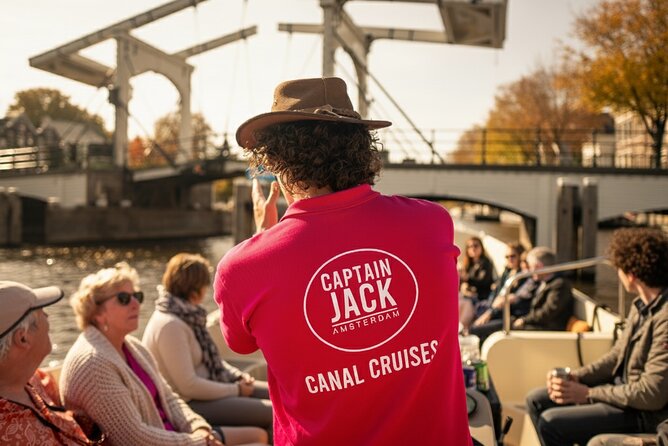
Book it if you want:
- A one-hour overview that actually makes the city easier to navigate afterward
- Comfort-first sightseeing with blankets and cushioned seats
- A live guide who turns canals into stories you can use
This also works well for mixed groups: adults who want context and families who want a relaxed, visually fun ride. The smaller boat size helps it feel less like cattle and more like a real outing.
If you’re the type who needs total quiet to focus, or you’re sensitive to crowds and audio, I’d plan to choose a seat where you can hear clearly and bring light ear protection just in case. The radio issue is rare, but it’s real.
Should you book it? The quick call
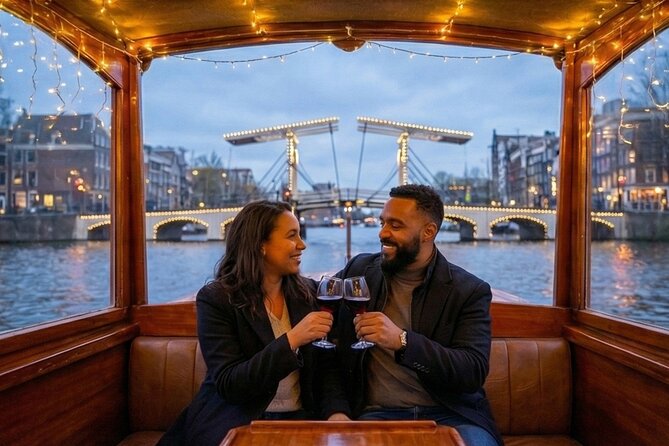
I’d book this cruise if you want to get your bearings fast and learn what makes Amsterdam’s canals tick—without spending half a day commuting between sights. The electric boat, included blankets, and small-group feel are the big wins, and the live guide storytelling is a clear reason people rate it so highly.
Skip it only if you’re expecting a long, museum-level history lesson with lots of time on land. This is a smooth, comfortable hour on the water. Use it as your Amsterdam foundation, then build the rest of your day around what the guide makes you care about.
FAQ
How long is the canal cruise?
The cruise lasts about 1 hour.
What is the price per person?
The price is $26.59 per person.
Where do I meet for the tour?
You meet at Prinsengracht 261a, 1016 GV Amsterdam, Netherlands. The tour ends back at the meeting point.
Do I need a printed ticket?
No. The tour uses a mobile ticket.
Is the boat open-air or heated in winter?
It’s generally an open-air boat with comfort items like blankets. In winter time, they use a closed and heated boat.
Is alcohol included?
No. Alcoholic beverages are not included, though there is a bar onboard where you can buy drinks.