REVIEW · AMSTERDAM
Walking Tour about Golden Age Architecture, private local guide
Book on Viator →Operated by Artsy Tours · Bookable on Viator
Amsterdam’s canal belt has secrets you can read. This private 1.5-hour walk, led by Anna, connects the look of Golden Age buildings to the trade, politics, and engineering that shaped them. You’ll move from Dam Square to the Westerkerk with a route built to show how 17th-century wealth still shows up in brick, windows, façades, and even street-level details.
I especially like how the tour points out architectural clues you’d otherwise overlook. You’ll learn what features meant back then, from town-hall power at the Royal Palace Amsterdam to canal houses tied to maritime wealth. I also like the one-on-one feel of a private guide, which makes it easier to ask questions as you go and to pause for photos.
One thing to consider: this is not a casual stroll. It’s about 1.5 hours of walking and standing, and it’s not recommended if you use a walker or have trouble walking for that long since mobility aids aren’t provided.
In This Review
- Key highlights worth your time
- Golden Age Architecture in Amsterdam: what this private walk helps you see
- Dam Square: where power and prosperity set the stage
- Royal Palace Amsterdam: a town hall origin and the clay-ground engineering story
- House Bartolotti and De Dolphijn: red brick wealth and the symbols traders used
- Torensluis and the crooked-houses effect: baroque façades on soft ground
- Ronde Lutherse Kerk: a Renaissance dome moment in the middle of the route
- Prinsengracht warehouses: hoisting beams, steep gables, and practical design
- Jordaan and the gevelstenen: reading the street like a text
- Westerkerk: spire height, Calvinist simplicity, and Rembrandt’s final resting link
- Price and pacing: what $73.59 buys you in real value
- Should you book this Golden Age architecture walk?
- FAQ
- How long is the walking tour?
- What does it cost?
- Is the tour private?
- What language is the tour offered in?
- Where does the tour start and end?
- Which places are included on the route?
- Are there entrance fees?
- Is it suitable if I use a walker or have mobility issues?
- Can I cancel for a full refund?
- Final call
Key highlights worth your time
- Anna’s street-level explanations make Golden Age architecture feel practical, not just pretty
- Dam Square to Westerkerk is a tight loop that packs in major canal-belt stops
- Façades with meaning: from gevellstenen (facade stones) to mercantile design trends
- Engineering stories you usually skip, including building on clay and marshy ground
- Real building materials and functions: red brick, sandstone carvings, and hoisting beams
Golden Age Architecture in Amsterdam: what this private walk helps you see
Amsterdam can look like a postcard from any angle. But once you know what you’re looking at, the city changes. This tour is built around that shift: you go from landmark to landmark, while your guide explains why each building looks the way it does.
What makes this one practical is the focus. Instead of treating the canal belt like a photo gallery, you’re learning how the buildings worked—socially, economically, and physically. You start with the big picture of the Dutch Golden Age and end with a church landmark that ties architecture to living history in the city.
This is also a good way to get your bearings early in a trip. If you’re staying in central Amsterdam, you’ll likely want a “translator” for the streets first. A private guide like Anna is exactly that.
You can also read our reviews of more walking tours in Amsterdam



Dam Square: where power and prosperity set the stage
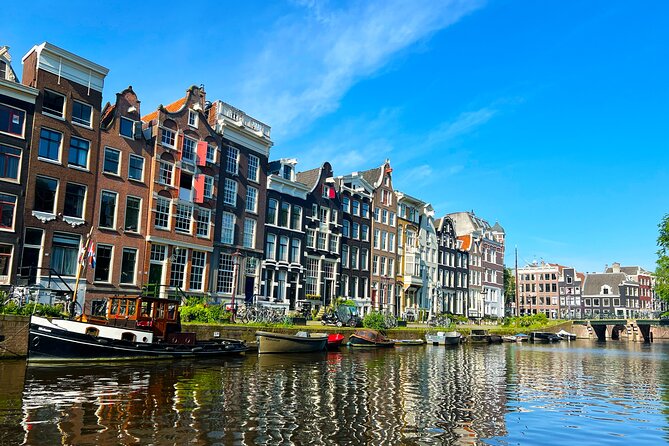
Your tour kicks off at Dam Square, and it’s a smart start. It’s the kind of place where Amsterdam’s big story begins—because it sits at the heart of the city and pulls together civic life, government presence, and major public space.
From there, the Golden Age thread becomes clear. In the 17th century, Amsterdam rose as a global trade hub, and that wealth shows up in the architecture you’ll see on the canal belt. Instead of just naming styles, the guide frames the era like a cause-and-effect chain: trade brought money, money brought building, and building followed what the city needed and could manage.
If you’ve been staring at canals and gables for hours, Dam Square can also feel like a reset button. It gives you context so later stops make more sense.
Royal Palace Amsterdam: a town hall origin and the clay-ground engineering story
Next up is the Royal Palace Amsterdam, and the contrast is fascinating. The building wasn’t always a royal residence—it began as the city’s town hall during the Dutch Golden Age. That matters, because it changes the mood from ceremonial to political and commercial.
You’ll also get a clear explanation of the Dutch Neoclassical look that defines the palace today. The guide doesn’t just point out style; you’ll hear about materials and construction choices that helped create its grand presence.
The most memorable part for a lot of architecture lovers is the engineering behind it. Amsterdam’s ground can be challenging, and you’ll learn how builders dealt with clay and marshy conditions. It turns the palace from a pretty façade into a real achievement with real constraints.
If you like when a tour explains how buildings actually get built, this stop delivers.
House Bartolotti and De Dolphijn: red brick wealth and the symbols traders used
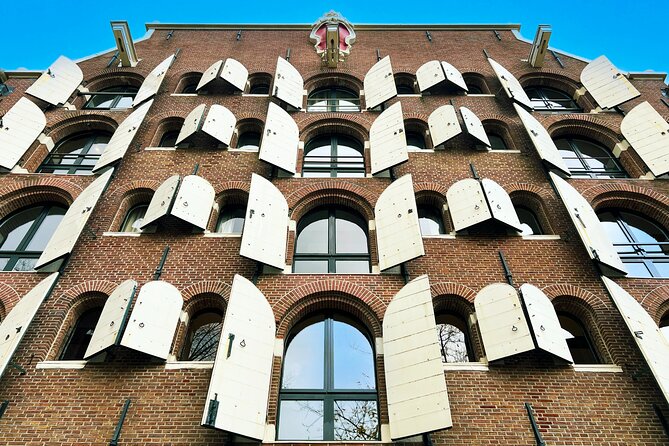
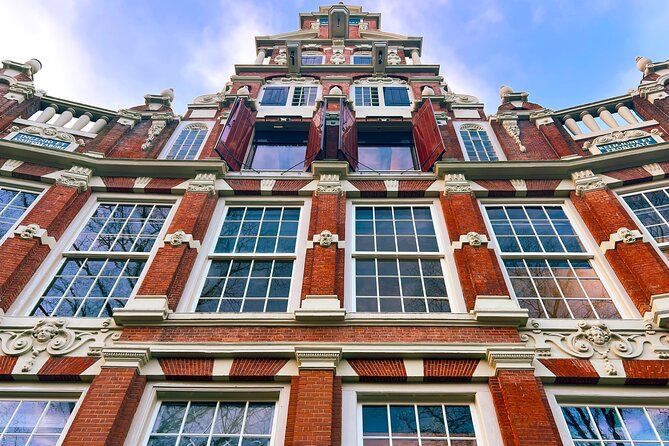
The route continues into the canal-belt world of merchant homes, where status shows up in small and medium-sized details. House Bartolotti is a strong example. You’ll see the striking red brick, large windows, and ornate sandstone sculptural elements that make the façade feel like a sales pitch for a wealthy life.
You’ll also connect the design to ownership and trade networks. Bartolotti’s trading ties with Italy help explain why the architecture leans into a baroque feel rather than staying plain.
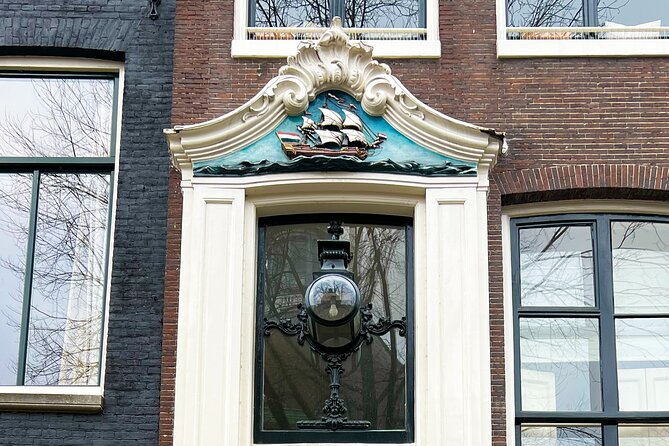
Then you’ll look at De Dolphijn, where the building’s name points straight to its symbolism. The dolphin references a wealth symbol tied to Amsterdam’s maritime trade during the Golden Age. This is the kind of detail that’s easy to miss if you’re not told to look.
De Dolphijn also carries an extra layer of cultural fame through its former owner: Frans Banning Cocq, the captain immortalized in Rembrandt’s The Night Watch. That connection makes the architecture feel less abstract and more like part of the same web of stories.
Practical takeaway: when you see a carved detail, a nickname, or a symbol, don’t treat it like decoration. In Amsterdam’s Golden Age buildings, those elements often signal money, profession, and identity.
Torensluis and the crooked-houses effect: baroque façades on soft ground
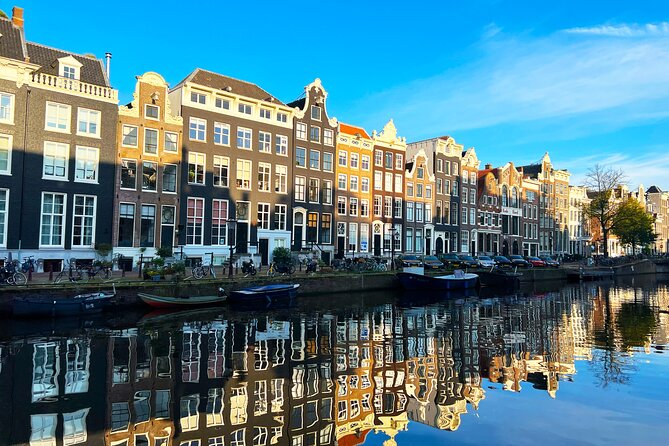
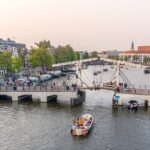
Torensluis is one of those spots where Amsterdam’s engineering quirks become visible. From the bridge, you get a great view of four distinct façade designs associated with the mercantile class during the Golden Age. You’ll learn how baroque style was adapted locally—so it doesn’t feel like a foreign style pasted onto Dutch streets.
What makes this stop extra fun is the talk about crooked houses. Amsterdam’s soft, marshy ground can cause buildings to lean in unusual ways. That means some “imperfections” are not random. They can be part of how the city has physically responded over centuries.
This is also where the tour’s value shows for people who think they’ve already seen everything. A regular walk might register as charming and uneven. With a guide, you start reading the leaning and the façade variety as a pattern.
If you want photos, aim for a moment when the light hits façades clearly. From a bridge viewpoint, it’s easier to compare styles side by side.
You can also read our reviews of more guided tours in Amsterdam




Ronde Lutherse Kerk: a Renaissance dome moment in the middle of the route
After the mercantile canal-house stops, you’ll hit Ronde Lutherse Kerk. Even with limited time, it’s a useful pause in the architecture story because domes were a high point during the Renaissance period.
This is not the stop where you’ll learn the entire domed-architecture thesis of Europe. It’s more like a signpost. It helps you notice that Amsterdam wasn’t only about canal warehouses and civic bric-a-brac. It also absorbed design ideas from different periods, and it used them in visible ways.
If you’re the type who likes variety—different forms, different construction choices—this little detour is a helpful breath before you get into the warehouse world.
Prinsengracht warehouses: hoisting beams, steep gables, and practical design
Then comes Prinsengracht, and it’s one of the strongest “wow” sections of the tour—because these buildings still look like they were built for work. The warehouses along Prinsengracht are classic Golden Age examples tied to 17th-century trade.
You’ll learn about the functional design choices: tall, steeply pitched gables help with water and snow shedding, while big windows allowed light for storage and working spaces. But the detail that makes the biggest impression is the wooden hoisting beams on the roof. These were used to lift heavy cargo from ships docked along the canal.
That’s the kind of information that turns a façade into a machine you can picture in your mind. Instead of “pretty canal warehouses,” you start thinking in terms of logistics, labor, and daily operations.
You’ll also notice how the exteriors stay fairly simple. The clean lines and minimal ornamentation match their utilitarian purpose. At the same time, their scale signals merchant power—big operation, big money, serious trade.
When you walk away from this stop, you’ll likely start seeing similar design clues everywhere on the canal belt.
Jordaan and the gevelstenen: reading the street like a text
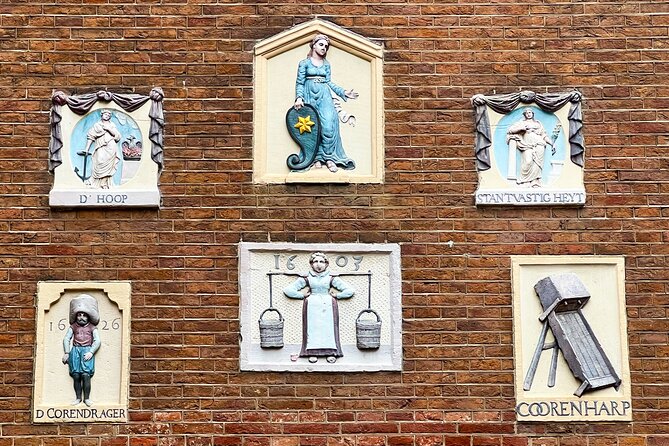
The Jordaan section is where the tour becomes extra rewarding for people who love small details. In the 17th century, the Jordaan was connected to lower- and middle-class life, with craftsmen and laborers shaping the neighborhood’s residential-and-commercial mix.
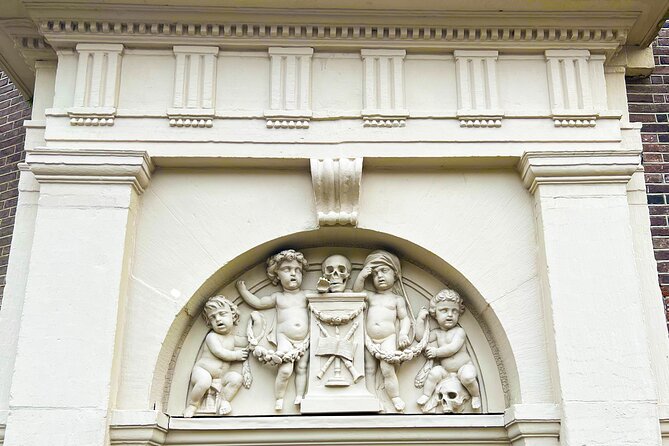
You’ll walk through a part of Amsterdam defined by narrow canals and tight rows of houses. The guide then shifts you into a specific skill: spotting gevelstenen, which are façade stones—small decorative plaques embedded in building façades.
These stones can tell you what the building was used for and sometimes who the owner was or what profession they practiced. Many have intricate carvings, which means you’re not just looking at a building—you’re also reading a story that was built into street level.
This stop is also great because it slows down the pace in a useful way. It gives you time to scan, compare, and ask questions. If you tend to walk through cities too fast, this is the section that fixes that habit.
Westerkerk: spire height, Calvinist simplicity, and Rembrandt’s final resting link
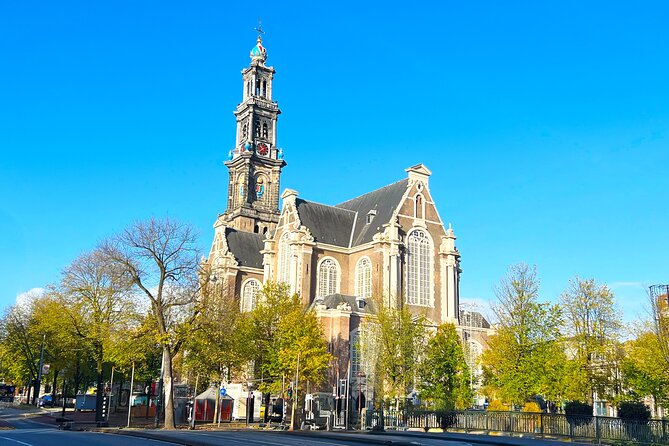
The finish near the Westerkerk is a strong way to close. Westerkerk is one of Amsterdam’s most important landmarks, and the guide connects multiple threads here.
First, it was built as a Calvinist church for the growing city. That helps you understand the interior feel—large and airy, with simpler, elegant design choices typical of Calvinist worship spaces.
You’ll also hear a key historical detail: Rembrandt van Rijn is buried there. That’s a big anchor for a lot of visitors, and it gives the church an emotional weight beyond architecture.
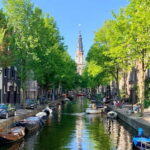
Then there’s the tower. The spire was completed in 1638 and rises 85 meters above the Jordaan district. It’s crowned with an imperial crown symbol tied to Amsterdam’s status since the 15th century. You’ll also learn about the clock chimes—linked to what Anne Frank described in her diary.
It’s a memorable finale because it connects architecture to personal memory and local identity. One minute you’re thinking about stone and design; the next minute you’re thinking about sound, time, and people moving through the city for centuries.
And since the tour ends near the church by the Anne Frank House area, it’s convenient if you plan to continue sightseeing right after.
Price and pacing: what $73.59 buys you in real value
At $73.59 per person for about 1 hour 30 minutes, this is priced like a serious guided experience, not a quick group walk. The big value isn’t just the time. It’s the private guide and the way the route is structured to maximize what you learn per minute.
You’re getting architecture and engineering context, plus lots of specific building features: red brick and sandstone at Huis Bartolotti, the dolphin symbolism at De Dolphijn, crooked-house causes near Torensluis, hoisting beams on Prinsengracht warehouses, and the gevelstenen plaques in the Jordaan.
Admission is free for the listed stops, which helps keep the cost focused on the guidance rather than ticket math. One small practical note: bottled water isn’t included, so if you’re doing the walk on a warm day, bring your own.
Pacing is generally suited to most people who can handle walking and standing for the full 1.5 hours. It’s not recommended for visitors who use a walker, and mobility aids aren’t provided. If you’re worried about stamina, this is the part where you should be honest with yourself. This tour’s strength is its continuity, and that depends on keeping moving.
Should you book this Golden Age architecture walk?
Book it if you want Amsterdam’s canal belt to make sense fast. If you love architecture but hate aimless wandering, a private guide like Anna helps you read the city instead of just looking at it. This tour is also a great fit if you’re the type who likes to ask questions and get real answers without feeling rushed.
Skip it (or adjust plans) if walking 1.5 hours is hard for you. Also, if you only want a broad “see the highlights” loop, you might find this too detail-forward. But if you want the stories behind façades, symbols, and construction choices, this is exactly the kind of experience that turns Golden Age buildings into something you can actually understand.
FAQ
How long is the walking tour?
The tour lasts about 1 hour 30 minutes.
What does it cost?
The price is $73.59 per person.
Is the tour private?
Yes. It’s a private tour, and only your group participates.
What language is the tour offered in?
It’s offered in English.
Where does the tour start and end?
It starts at the Royal Palace Amsterdam at Nieuwezijds Voorburgwal 147, 1012 RJ Amsterdam, Netherlands, and ends near the Westerkerk at Prinsengracht 279, 1016 DL Amsterdam, Netherlands.
Which places are included on the route?
You’ll visit Dam Square, the Royal Palace Amsterdam, Huis Bartolotti, Torensluis, De Dolphijn, Ronde Lutherse Kerk, Prinsengracht, Jordaan, and end at Westerkerk.
Are there entrance fees?
Admission tickets for the listed stops are free.
Is it suitable if I use a walker or have mobility issues?
It’s not recommended for participants who use a walker, and it’s not recommended for those who have trouble walking and standing for 1.5 hours. Mobility aids are not available.
Can I cancel for a full refund?
Yes. You can cancel for a full refund up to 24 hours in advance. Cancellation within 24 hours isn’t refundable.
Final call
If your goal is to understand Amsterdam’s Golden Age architecture in a single, well-paced walk, this is a strong booking. Get comfortable shoes, bring your own water, and plan on using your eyes—because Anna’s way of pointing out details is what makes the city click.