REVIEW · AMSTERDAM
Private Amsterdam Red Light District tour with food tastings
Book on Viator →Operated by Trigger Tours · Bookable on Viator
Red lights and wooden buildings in one walk. What makes this tour worth it is the tight private format plus real-life context, not just “look, it’s that street.” I love how the guide weaves together Red Light District history with practical answers to your questions, and I also like that you get food tastings along the way instead of treating snacks as an afterthought.
You’ll pass key old-town landmarks too, including the area by the Dam and stops tied to Amsterdam’s foundation story. One thing to consider: this neighborhood can feel intense or uncomfortable for some people, and the tour doesn’t dodge the topics that made it famous.
In This Review
- Key Highlights You’ll Notice Fast
- Why This Private Red Light District Tour Feels Smarter Than Wandering
- Getting the Timing Right: What “About 2 Hours” Means on the Ground
- First Stop: The Red Light District, History, Prostitution, and Coffeeshop Culture
- Dam Area Context: Amsterdam’s City-on-Trees Foundation Story
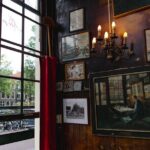
- Pub The Ape (Int Aepjen): Wooden Amsterdam from Around 1540
- Waag: The Old Gate Role and the Guilds Inside It
- Smallest House of Amsterdam: VOC Storage to Long-Term Living
- The Condom Shop Stop Since 1987: Modern Sexual Health in Plain Sight
- Food Tastings: How Snacks Fit Into the Story
- Passing Old Church and Chinatown: Two More Layers of Amsterdam
- Price and Value: Is $121.52 Worth It?
- Who This Tour Suits Best
- Should You Book This Private Red Light District + Food Tastings Tour?
- FAQ
- How long is the Amsterdam Red Light District private tour with food tastings?
- What is the price per person?
- Is this tour private or shared?
- What language is the tour offered in?
- Where do we meet for the tour?
- Does the tour include food tastings?
- Is there an admission ticket included for the main stop?
- Is free cancellation available?
- Can I use a mobile ticket and bring a service animal?
Key Highlights You’ll Notice Fast
- Private guide with room to customize so the walk matches what you want to know
- Food tastings built into the route, timed so you’re not rushed
- Stops tied to Amsterdam’s construction story, like the city-on-trees foundation details near the Dam
- Old wooden Amsterdam survival, including Pub The Ape (Int Aepjen) from around 1540
- A look at the Waag’s role as an old city gate turned guild space
- A modern final stop at a condom shop that’s been operating since 1987
Why This Private Red Light District Tour Feels Smarter Than Wandering
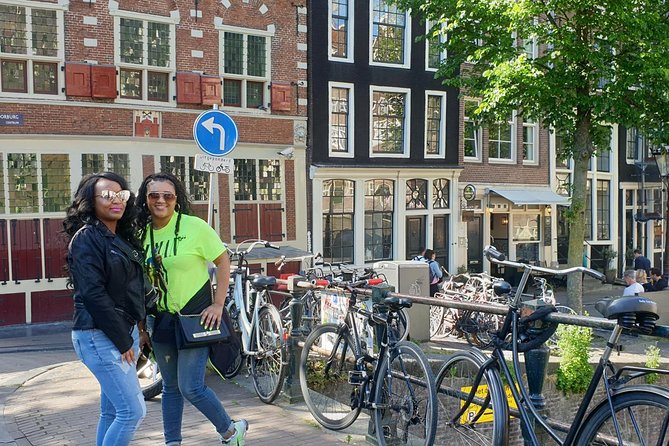
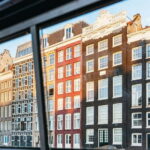
Amsterdam’s Red Light District is one of those places where it’s easy to see the surface but miss the meaning. This tour solves that problem with a guide who can explain what you’re looking at, how the area changed over time, and why certain buildings and traditions are still here.
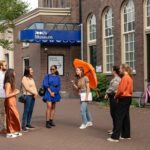
Because it’s private, you’re not stuck listening to a one-size-fits-all script. The guide can adjust the emphasis depending on your interests and your comfort level. If you’re the curious type, you’ll love how the explanations stay focused and practical. If you’d rather keep it lighter, the pacing helps you steer the experience.
Also, the guide setup tends to be excellent. The group reviews name guides like Aaron, Sander, and Tony, and they’re described as giving lots of information, answering questions, and keeping a walk pace that makes sense. That matters in a neighborhood where people naturally slow down—or get pulled in different directions by what they see.
You can also read our reviews of more food & drink experiences in Amsterdam


Getting the Timing Right: What “About 2 Hours” Means on the Ground
This is an approximately 2-hour tour, and that’s a sweet spot. Long enough to cover multiple landmarks and still stop for food tastings. Short enough that you’re not dragging your feet after the first half hour.
In practice, you can expect a walking route with several stops. There’s time for questions, and the guide controls the pace so it’s not just a hurried march. If you’re visiting for the first time, that pacing helps you get your bearings fast and understand where you are without feeling lost.
And since it’s private, the pace can flex a bit based on your group. That’s especially useful in a compact area like this, where you may want slightly more time at one stop and slightly less at another.
First Stop: The Red Light District, History, Prostitution, and Coffeeshop Culture
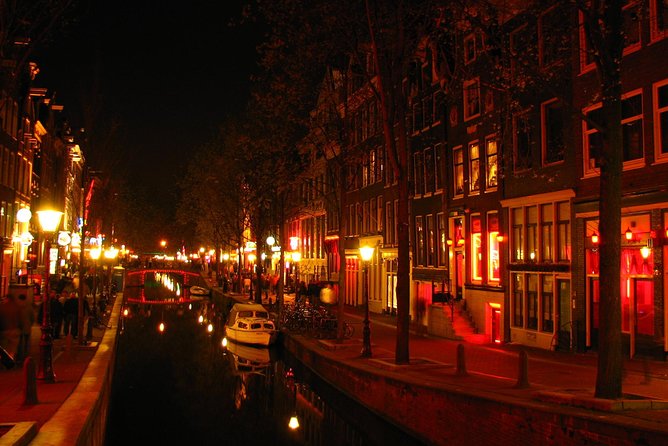
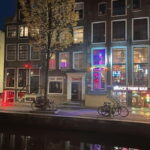
The tour begins by heading into the Red Light District itself with your private guide. This is where you’ll learn the “why” behind what you’re seeing—especially around prostitution and the coffeeshop culture that Amsterdam is famous for.
What I like about this start is that it avoids the common mistake of treating the neighborhood like a single photo spot. Instead, you’re looking at it as a real district with layers: how it’s been shaped by policy and commerce, and why Amsterdam’s approach developed the way it did. Expect a mix of factual context and direct answers to your questions.
Because the guide handles the explanations, you won’t have to guess what’s allowed, what’s tradition, and what’s just visual noise. And if you have any concerns about how to behave, a good guide can help you sort out common sense boundaries quickly.
Possible drawback: if you’re sensitive to the topics of sex work and adult culture, this part of Amsterdam can feel personal. A private guide can help, but you should still go in knowing the tour covers those subjects directly.
Dam Area Context: Amsterdam’s City-on-Trees Foundation Story
One of the more surprising parts of this tour happens as you move toward the Dam area, where you’ll hear the “city built on trees” explanation. Amsterdam’s soil is described as a thick layer of fen and clay. In plain terms: the buildings needed support, so old Amsterdam relied on wooden piles driven deep into clay, peat, and water until they reach a layer of solid sand.
That might sound like a nerdy detail, but it’s actually a huge way to understand why Amsterdam looks the way it does. When you hear how the city was engineered, the neighborhood stops feeling random. You start noticing that the architecture and street layout grew from the reality of the ground beneath it.
You’ll also learn that this is part of the broader old-town area tied into the Red Light District. That’s a key point: you’re not just looking at modern entertainment. You’re walking through an area that’s among the oldest parts of the city, which means the guide can connect older urban development with what came later.
Pub The Ape (Int Aepjen): Wooden Amsterdam from Around 1540
At one of the stop points you’ll visit Pub The Ape, called Int Aepjen in Dutch. The details here are what make it memorable: it’s built around 1540, and it’s one of only two remaining wooden buildings in Amsterdam.
There’s also a big historical turning point tied to it. After a major fire in 1452, government rules pushed toward brick facades. So when you stand in a surviving wooden structure, you’re literally seeing what didn’t get rebuilt into brick.
Even if you’re not the type who gets excited about architecture for its own sake, I think you’ll appreciate this stop. It gives you a physical anchor in the story. You can connect the neighborhood’s “adult culture” headlines with older city rules, older construction choices, and why some buildings survived when others didn’t.
You can also read our reviews of more tours and experiences in Amsterdam






Waag: The Old Gate Role and the Guilds Inside It
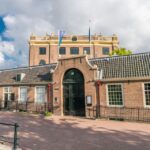
Another stop centers on the Waag. This building used to be one of Amsterdam’s city gates and defensive wall structures, built around the 1400s. The guide also explains that it’s considered one of the older buildings in Amsterdam—the second oldest, in the information you’ll get.
Then comes the twist: later on, it wasn’t just a gate. It became a space for guilds and craftsman’s organizations. Craftspeople’s groups settled within the Waag and around the square.
Why I think this matters on a tour like this: it stops the Red Light District from feeling like a sealed-off “only for one kind of visit” place. Instead, you see Amsterdam as a working city where defense, trade, and crafts all shared space with later social and commercial developments.
If you like places that explain how cities functioned, this is one of the stronger stops.
Smallest House of Amsterdam: VOC Storage to Long-Term Living
You’ll also hear about the smallest house of Amsterdam, built around the 1700s. In this stop, the guide covers two uses across time: first, it served as storage for the VOC trading company, and later people lived there for a very long time.
This is one of those details that makes you look twice. It’s easy to assume a city’s old buildings were mostly grand and monumental. But the smallest house story reminds you that real life in old Amsterdam included tight spaces, storage needs, and long periods of residence—even in buildings that were never meant to feel spacious.
The practical value here is that your brain starts building connections between trade, housing, and the city’s growth. You’ll likely carry that sense of “Amsterdam as a system” into the rest of your day.
The Condom Shop Stop Since 1987: Modern Sexual Health in Plain Sight
The tour includes a stop described as the world’s first condom shop specialized for condoms, operating since 1987. The guide also explains that you can get size-customized condoms and special types.
This is a very modern contrast to the older street history around you. It’s not about shock value. It’s about how the neighborhood’s adult-related culture connects with services, norms, and public attitudes over time.
You don’t have to be a shopper here. Just knowing the shop exists—and that it’s been in place since the late 1980s—helps you understand that the area isn’t only about past events. It’s part of a continuing story of how Amsterdam handles adult commerce and sexual health topics.
Food Tastings: How Snacks Fit Into the Story
Food tastings are part of this tour, and that’s where it becomes more than a lecture. The guide brings you to tasting spots as you walk, so you’re eating while you’re getting the context that makes those bites more interesting.
Here’s the practical advantage: in a district where you may be distracted by visuals, food gives you a grounded moment. It also helps you experience Amsterdam in the way locals do—snack-sized, stop-and-go, and tied to the neighborhood’s everyday life.
One limitation to note: the information provided doesn’t specify the exact dishes or menu items. So if you’re expecting a detailed list of specific foods, you’ll want to ask the tour operator (or your guide) what’s included for your date.
Passing Old Church and Chinatown: Two More Layers of Amsterdam
As you move through the area, the highlights mention landmarks you pass, including the Old Church and Chinatown. Even though these are not the “centerpieces” of the adult-culture conversation, they add perspective.
The Old Church reference helps frame the area as part of a broader historic city grid—not just a themed district. Chinatown adds another layer of cultural change and neighborhood variety, reminding you that Amsterdam’s center is always mixing communities and traditions.
The big win here is balance. You don’t only get one lens on the Red Light District. You get a route that hints at why Amsterdam stays interesting even when you think you already know what to expect.
Price and Value: Is $121.52 Worth It?
At $121.52 per person for roughly 2 hours, this is not a budget “grab-and-go” activity. But it’s also not priced like a once-in-a-lifetime luxury museum tour.
What you’re paying for is the private guide time, the customization option, the built-in food tastings, and the fact that your guide is handling complicated, potentially awkward topics with context. In a place like the Red Light District, guide expertise reduces guesswork. It can also help you avoid awkward missteps and get clearer answers instead of wandering around confused.
You also get a mobile ticket and group discounts, which can help make the cost more reasonable if you’re traveling with friends. And because it’s offered in English, you won’t lose meaning in translation.
My take: this price feels fair if you want a guided framework for what you’re seeing. If you only want photos and you already know the basics, you could DIY it. But if you want the “what does this mean” part—this tour is built for that.
Who This Tour Suits Best
This tour fits well if you:
- want a first-timer-friendly introduction to the Red Light District with history and cultural context
- care about city details, not only nightlife visuals
- like having food tastings instead of ending with an expensive meal somewhere else
- appreciate a guide who can answer questions and keep a good walk pace, like the guides named in the reviews: Aaron, Sander, and Tony
It might be less ideal if you:
- are extremely uncomfortable with discussions involving prostitution or adult culture
- dislike walking through areas where the subject matter is clearly visible
Should You Book This Private Red Light District + Food Tastings Tour?
If you’re weighing whether to do this or just wander, I’d lean yes—as long as you’re okay with adult-subject context and you want a guided education style rather than random browsing.
Book it if you want:
- a private guide you can ask questions to
- a route that pairs history with food tastings
- stops that connect the Red Light District to older Amsterdam landmarks like the Dam area, the Waag, Pub The Ape, and the smallest house story
Skip it if you only want casual sightseeing and you’d rather keep things light and PG. For everyone else, this is a smart way to turn a famous neighborhood into something you actually understand.
FAQ
How long is the Amsterdam Red Light District private tour with food tastings?
The tour lasts about 2 hours.
What is the price per person?
It costs $121.52 per person.
Is this tour private or shared?
It’s a private tour, meaning only your group participates.
What language is the tour offered in?
The tour is offered in English.
Where do we meet for the tour?
The start point is ParkBee Parking NH Collection Amsterdam Barbizon Palace, Prins Hendrikkade 59, 1012 AD Amsterdam, Netherlands.
Does the tour include food tastings?
Yes. The route includes stops where you can sample food tastings.
Is there an admission ticket included for the main stop?
The tour information lists admission ticket as free.
Is free cancellation available?
Yes, free cancellation is offered up to 24 hours in advance for a full refund.
Can I use a mobile ticket and bring a service animal?
Yes, the tour uses a mobile ticket, and service animals are allowed. The meeting point is also near public transportation.