REVIEW · AMSTERDAM
Amsterdam: Small-group Guided Walking Tour (French/English)
Book on GetYourGuide →Operated by Voyage & Souvenir Amsterdam Tours · Bookable on GetYourGuide
Amsterdam’s stories start at the water. On this French/English small-group walking tour, you cover Amsterdam’s core sights with a local guide who turns street corners into history, from the city’s rise as a trading hub to the human stories you’ll remember long after you leave. Dam Square, the Jordaan, and the canal belt all show up in a smart, time-efficient route.
I love two things most. First, you get a strong sense of the center fast, bouncing between major landmarks and side streets in a way that helps you understand where you are. Second, you come away with practical guidance for food and sightseeing, including follow-up links from the guide, so your next hours in Amsterdam feel less like guesswork.
One possible drawback: this is a walking tour with quick photo stops, so if you want long, slow time sitting in front of views, you may wish you had booked extra free time.
In This Review
- Key highlights worth your attention
- Getting oriented fast: meeting at Pancakes Amsterdam at the IJ
- From Amsterdam Centraal to the Dancing Houses: quick stops that build the big picture
- Zeedijk Street to Ons’ Lieve Heer op Solder: Amsterdam’s layers in one walk
- Oude Kerk, Burgwallen, and Chinatown: the everyday Amsterdam detour
- Trade power on foot: De Waag, VOC stories, and the Narrowest House
- Dam Square and the Royal Palace: civic heart with a monarchy backdrop
- The 400-year canal belt on foot: Grachtengordel and the view logic
- Anne Frank House area and Westerkerk: history with human gravity
- The Jordaan: secret gardens, hidden courtyards, and a neighborhood mood
- Why the $33 price feels fair (and what makes it different)
- Timing, comfort, and language choice: making the most of the 2–3 hour window
- Who should book this walking tour
- Should you book this Amsterdam walking tour?
- FAQ
- Where does the tour meet?
- How long is the walking tour?
- What languages are available?
- What should I bring?
- Is the tour wheelchair accessible?
- Is food or drinks included?
- What happens if I need to cancel?
Key highlights worth your attention
- A small-group feel with Q&A: you can ask questions and get direct answers as you go
- Chris’s storytelling style: friendly, funny, and built to connect landmarks to everyday life
- Major sights, plus “in-between” stops: Dam Square, churches, the canal belt, and the Jordaan
- Trade-era Amsterdam to the present: VOC-era themes show up alongside modern city life
- Useful post-tour links: you get recommendations you can actually use right away
- Photo-stop pacing: good for orientation in 2–3 hours, not ideal for deep museum time
Getting oriented fast: meeting at Pancakes Amsterdam at the IJ
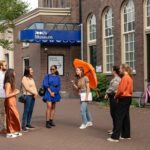
The tour starts behind Amsterdam Centraal, where the white-and-blue ferries run toward Amsterdam North. You’re looking for Pancakes Amsterdam at the IJ, near the water, by the big letter D ferry stop sign next to the bike lane. It’s an easy meeting point if you arrive by train and want to transition immediately into walking.
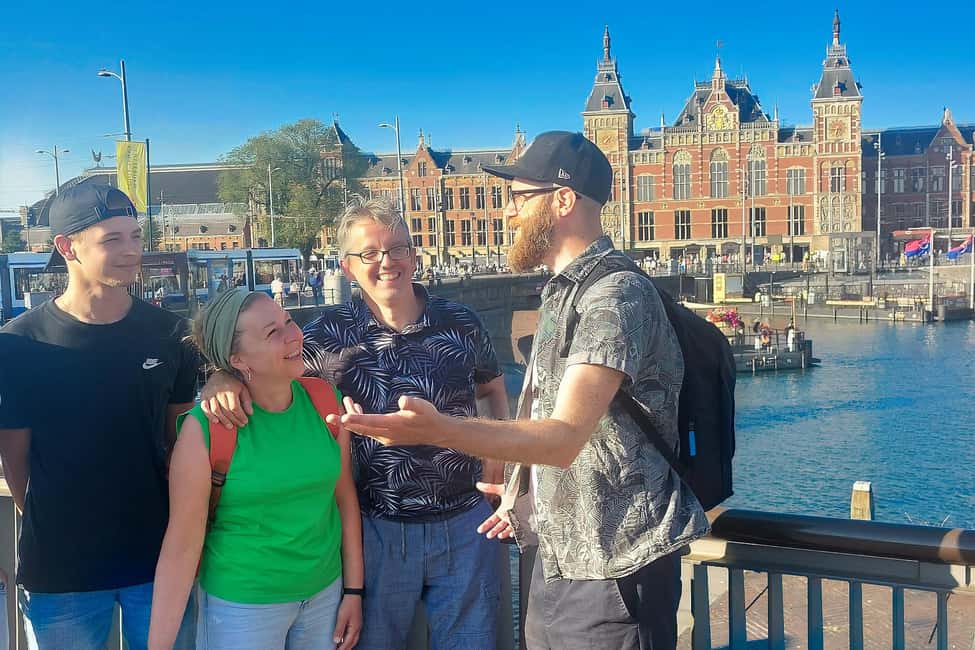
The guide is easy to spot too—Chris wears glasses, has a beard, and often shows up with a baseball hat. That matters more than it sounds. Amsterdam has a lot of groups, and the smoother the meetup, the better the start.
Bring comfortable shoes, plus an umbrella and a bottle of water. Two to three hours in Amsterdam can turn into more walking than you expect, especially when you’re also squeezing in short photo stops. If the weather is wet or windy, you’ll be glad you came prepared.
You can also read our reviews of more walking tours in Amsterdam
From Amsterdam Centraal to the Dancing Houses: quick stops that build the big picture
Right away, you’ll step into the Central-area rhythm with a short photo stop at Amsterdam Centraal Station. It’s a practical first moment: you’re in the right zone, you get your bearings, and you’ll understand the direction the walk will take.
Then comes a series of iconic-but-accessible landmarks that work like an orientation tool. You’ll pause at the Dancing Houses, then head to the Basilica of Saint Nicholas. These are brief stops, but they’re useful. The guide uses them to set up themes you’ll keep hearing: how Amsterdam’s architecture and canals shaped daily life, and how the city evolved from a small river-side place into a major European trading hub.
A key thing I like about this part of the walk is that it’s not just “look at a building.” It’s “look at the building and hear why it’s here.” That connection is what makes the later stops (canals, Jordaan, VOC-era stories) land better.
Practical note: since you’re moving constantly, try to pace your photos. Grab the shot during the stop, then listen—because the story you hear while you’re standing there is the part you can’t recreate later.
Zeedijk Street to Ons’ Lieve Heer op Solder: Amsterdam’s layers in one walk
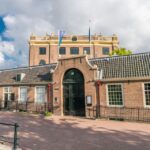
Next you’ll pass through Zeedijk Street, then get to the unusual stop at Ons’ Lieve Heer op Solder (Our Lord in the Attic Museum). The wording in the name tells you what makes it special: a church space tied to attic-scale concealment. Even if you don’t go inside during the tour, the stop is designed to highlight the way Amsterdam’s buildings reflect shifting social and religious life.
You’ll also see stops that feel like Amsterdam’s “real streets,” not just postcards. For example, Basilica of Saint Nicholas, Zeedijk, and later areas like Burgwallen Oude Zijde help break the tour up so it doesn’t feel like you’re only marching between big-ticket monuments.
This portion is also where the guide’s approach shines. You’ll get stories that connect the city’s past and present—like the contrast between the Golden Age canal houses and the modern multicultural vibe you see as you walk. The tour keeps reminding you that Amsterdam isn’t frozen in time. It’s a living city that keeps reshaping itself.
If your mind tends to wander when you’re outdoors, try to pick one theme to listen for. I’d choose the city’s evolution—from river settlement to trading hub—because it ties Zeedijk, canal belt stories, and the Jordaan together into one coherent narrative.
Oude Kerk, Burgwallen, and Chinatown: the everyday Amsterdam detour
After Ons’ Lieve Heer op Solder, the walk shifts into a section that feels like the old center still has its pulse. You’ll hit Oude Kerk, then continue through areas like Burgwallen Oude Zijde and Amsterdam Chinatown.
These stops can be quick, but they do a lot for you. Older churches anchor the past; street areas help you see how different parts of the city sit side by side; and Chinatown gives you a sense that Amsterdam’s identity isn’t only about 17th-century wealth. The guide tends to frame these transitions in a practical way—how the city’s trade history helped shape where communities lived and how the city grew.
This is also a good stretch for asking questions. The reviews I read emphasized that Chris answers queries directly and keeps things interactive. If you’re curious about daily life—what people actually eat, how neighborhoods work, where visitors tend to misunderstand things—this is a strong time to ask.
Drawback to keep in mind here: because the stops are designed as photo breaks, you won’t get to “linger” at each location. If you’re the type who likes to step into every doorway, you’ll still love the tour, but you’ll want follow-up time on your own afterward.
Trade power on foot: De Waag, VOC stories, and the Narrowest House
Now the walk leans into Amsterdam’s money-making brain. You’ll pause at De Waag Restaurant, then a stop tied to the VOC / Dutch East India Company. That theme—trade and global connections—shows up again and again across the tour, because it’s one of the biggest reasons Amsterdam looks the way it does.
Then you’ll see the Narrowest House in Europe. Names like that are built for photos, but on this walk it’s also a reminder that the city’s wealth and commerce were expressed in how buildings were squeezed, designed, and reused.
This trade-focused stretch is valuable because it gives you a lens. When you later see canal houses and historic façades, you’ll understand them as more than decoration. You’ll see them as evidence of how Amsterdam made its living—then watched its fortunes rise, shift, and ripple into culture.
Also, keep an eye on the guide’s pacing here. People who loved the tour repeatedly said it felt “well-paced” and not rushed into a blur. That balance is hard on walking tours, but it’s what makes a short 2–3 hour window feel productive.
You can also read our reviews of more guided tours in Amsterdam



Dam Square and the Royal Palace: civic heart with a monarchy backdrop
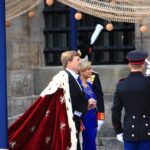
A big centerpiece arrives next: Dam Square, followed by the Royal Palace, Amsterdam. Even if you’ve seen pictures of this area, the tour framing helps. Dam Square isn’t just a wide open plaza—it’s a symbolic hub where the city’s civic life comes together, and the guide ties it back to Amsterdam’s broader story.
You’ll also get a photo stop at Magna Plaza, which might feel like a modern contrast, but that’s the point. Amsterdam keeps layering new life onto historic ground. The tour doesn’t treat the past as a museum piece. It shows how Amsterdam’s modern shopping and public spaces coexist with older narratives you’re learning on the walk.
Then you move toward Torensluis Bridge and the start of the canal focus that makes Amsterdam famous. If you’re trying to understand the canal belt as a whole, these bridge-and-building moments are where it starts to click in your head.
Tip: if you’re traveling with friends who want “one main landmark photo,” aim to get it at Dam Square and then spend the rest of that stretch listening. The story you learn here makes the later UNESCO-style canal context easier to follow.
The 400-year canal belt on foot: Grachtengordel and the view logic
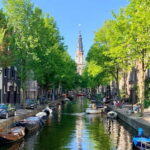
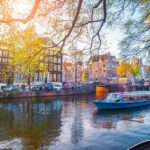
One of the tour’s core promises is time-efficient canal exploration, and the guide delivers it through Grachtengordel and nearby stops. The canal belt is part of a UNESCO World Heritage context, and the tour ties the canals to Amsterdam’s long-term growth and architectural style.
Here’s what I think you’ll like: you don’t just get a single “best view.” You get a walking sequence where the guide points your attention at how canals shape movement, neighborhoods, and the way the city presents itself.
Photo stops at Torensluis Bridge and then Grachtengordel give you a sense of structure. You start to recognize patterns: where the canals “pull” you visually, how the historic buildings face the water, and why Amsterdam’s canal belt has such strong identity even from short distances.
One caution: if you’re expecting long time beside water, you’ll be better served with this tour as your orientation layer, then add a slower canal walk later. Think of this tour as the map and the story; your independent time becomes the sightseeing “after the lightbulb moment.”
Anne Frank House area and Westerkerk: history with human gravity
At Anne Frank House, you’ll have a photo stop while the guide connects this part of Amsterdam to the personal story that people worldwide associate with the city. This isn’t presented as a trivia moment—it’s treated as part of Amsterdam’s moral and human history.
Then you head to Westerkerk. Again, the stop is short, but it fits the tour’s rhythm: faith and community landmarks show up right beside trade and civic centers. That blend is one reason the walk feels more “Amsterdam” and less like a checklist.
If you’re someone who tends to compartmentalize history, this stretch can break that habit. You’re learning about global commerce and Dutch cultural milestones, but you’re also reminded that Amsterdam’s story includes lives affected by war and persecution. The guide’s tone helps you keep both in view without turning either into a lecture.
Practical tip: if you want to go inside the Anne Frank House or other museums, plan separate time. This tour focuses on the walk and context, not long ticketed entry time.
The Jordaan: secret gardens, hidden courtyards, and a neighborhood mood
The final stretch leans into atmosphere with the Jordaan. You’ll stop there and spend enough time to absorb why this neighborhood is so loved: it’s made for wandering, with courtyards and that quieter side of Amsterdam that doesn’t always show up on rushed photo routes.
The guide also weaves in the “in-between” experiences the tour is known for, including hidden courtyards and secret gardens. Even if you only get a quick look at them during photo stops, the guide’s commentary helps you know what you’re seeing—and why it matters for how Amsterdam feels.
This neighborhood-style ending is smart. After big squares, major canals, and major institutions, you finish where you can let the city’s scale and texture sink in.
One more practical plus: because the guide gives recommendations, your Jordaan time after the tour can be more intentional—where to grab a bite, where to browse, and what areas you might want to revisit when your feet are no longer on a schedule.
Why the $33 price feels fair (and what makes it different)
At $33 per person for 2–3 hours, you’re not just paying for “seeing stuff.” You’re paying for someone to connect it. In a city where it’s easy to collect photos without understanding the place, that connection is where value comes from.
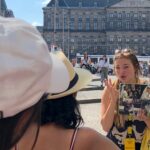
The standout element is the guide’s approach. Chris shows up friendly and welcoming, with humor that keeps the walk from getting heavy. He answers questions, keeps things interactive, and shares a lot of details—even small ones—so the tour feels tailored to your curiosity instead of a script.
A second value layer: personalized tips. You’ll get guidance on where to dine, shop, and sightsee, plus food suggestions such as bitterballen. What I like is that the recommendations don’t sound like generic internet lists. They come bundled with follow-up links you can check after the tour. One practical review detail: if you ask about an area you haven’t visited yet, the guide may help you with the route and what to do there next.
If you’re the type who wants a first-day framework, this tour works. It helps you understand why Amsterdam looks the way it does, so your later choices feel grounded, not random.
Timing, comfort, and language choice: making the most of the 2–3 hour window
This walk is designed for momentum. You’ll be on your feet most of the time, with repeated photo stops. That’s great if you want to cover a lot and still feel you’ve “learned the city.” It’s less ideal if you prefer slow, extended time at each site.
Language options are English or French. If your group mixes languages, you’ll still get guided narration in the selected language, which keeps the experience coherent instead of chaotic.
Be ready for weather changes. Bring the umbrella, wear weather-appropriate clothing, and keep water handy. Amsterdam can shift quickly between drizzle and sun, and walking makes that change matter.
Finally, the tour route can be adjusted to match interests or avoid construction or unforeseen issues. That’s not a downside by default. It often means the guide is prioritizing what’s practical for your time rather than forcing you through a closed area.
Who should book this walking tour
Book this if:
- You want an orientation walk in a limited time window
- You enjoy stories tied to landmarks—Dam Square, canal belt context, VOC-era trade themes, and Anne Frank-related history
- You like getting food and sightseeing recommendations you can use right after the tour
- You prefer a small-group setting where questions are welcome
Skip it (or pair it differently) if:
- You want to spend lots of time inside museums during the same session
- You dislike walking tours with frequent photo stops
- You’re looking for long, slow canal-side lounging as the main event
Should you book this Amsterdam walking tour?
Yes, if you want the smartest first step into the city center. At $33, the value comes from the guide’s ability to connect major landmarks to Amsterdam’s bigger story, plus the practical recommendations and follow-up links that help you plan the rest of your day.
If you’re already confident navigating Amsterdam and you only need a few “must-see” photos, you might not get full value. But for first-timers and return visitors who want a fresh angle—especially through trade-era context, the canal belt, and a Jordaan finish—this is a strong pick.
FAQ
Where does the tour meet?
You meet behind Amsterdam Centraal, where the white and blue ferries depart for Amsterdam North, next to Pancakes Amsterdam at the IJ near the water and by a big D ferry stop sign next to the bike lane.
How long is the walking tour?
It runs for about 2 to 3 hours.
What languages are available?
The guide offers the tour in English or French.
What should I bring?
Bring comfortable shoes, an umbrella, water, and weather-appropriate clothing.
Is the tour wheelchair accessible?
Yes, it’s listed as wheelchair accessible.
Is food or drinks included?
No. Drinks and food are not included.
What happens if I need to cancel?
You can cancel up to 24 hours in advance for a full refund.