REVIEW · AMSTERDAM
Amsterdam: Red Light District & City Tour (Private tour)
Book on Viator →Operated by Amsterdamliebe · Bookable on Viator
Red lights can teach you a lot here.
This private, 2-hour walk links big landmarks on Dam Square with the stories people usually skip, then gives you a clearer read on what you’re actually seeing in the red light area. I like that the pace stays easy to follow and that you get a mobile ticket so the start feels smooth.
Two things I really like: you get a tight mix of history and today’s street-level reality, and the guide keeps answering the questions that most first-timers are afraid to ask. Expect plain-language Q&A about the legal status of sex work, how the window system is regulated, and how costs work, all while you’re moving between real city locations.
One thing to consider: the subject matter is naturally sensitive, so even with a respectful approach, the sights may feel intense for some people. Also, it’s quick—about 2 hours—so you’ll get context and direction, not a slow, museum-style experience.
In This Review
- Key highlights to know before you go
- Why this private red light district tour feels worth the money
- Starting at Dam Square: the orientation that saves you hours later
- National Monument and the Royal Palace: how power shapes a city
- Oude Kerk and Warmoesstraat: oldest church to LGBTQ+ street life
- Beurs van Berlage and trade-era Amsterdam: the money behind the streets
- Damrak Q&A: what legality and regulation actually mean on the ground
- Amsterdam Centraal: picture time, plus a reality check
- Chinatown and Jolly Joker: why Amsterdam’s nightlife has more than one story
- Nieuwmarkt and De Waag: finish strong, then keep exploring your way
- How to get the most from a 2-hour walk (without rushing)
- Who should book this and who should think twice
- Quick reality check on value: what you’re paying for
- Should you book this Amsterdam Red Light District & City Tour?
- FAQ
- How long is the Amsterdam Red Light District & City Tour?
- Is this a private tour, and how many people can be in my group?
- What language is the tour offered in?
- Are there admission fees for the stops?
- Where does the tour start and end?
- What’s the cancellation policy?
Key highlights to know before you go
- Private group up to 4: more time for your questions, and you can set the tempo.
- Dam Square through Centraal: you connect royal-era monuments with the canals and the sex-work district.
- Direct answers about sex work: legality, window regulation, and pricing—handled in a straightforward way.
- LGBTQ+ and coffee-shop history on the same route: Warmoesstraat and Jolly Joker give you more than one slice of Amsterdam.
- Free entry stops: key landmarks are part of the walk without paid add-ons at each stop.
- A 70s peep show + tips after: you leave with a plan for what to do next in the area.
Why this private red light district tour feels worth the money
Amsterdam can be easy to over-plan and hard to understand. This tour works because it doesn’t just point at sights—it helps you connect them: from the early city center, to trade-era buildings, to the street-level reality of modern Amsterdam.
For price, it’s listed at $264.35 per group (up to 4). If you’re traveling as a small group and fill all 4 spots, that’s about $66 per person—which is usually in the range of other well-run private neighborhood tours. If it’s just 2 of you, it’s closer to $132 per person, so I’d only do it solo or as a duo if you strongly value having a guide you can question constantly.
The booking rhythm also suggests popularity: it’s commonly reserved about 53 days in advance. If your dates are firm, I’d book early so you don’t end up with a less convenient time window.
You can also read our reviews of more city tours in Amsterdam



Starting at Dam Square: the orientation that saves you hours later
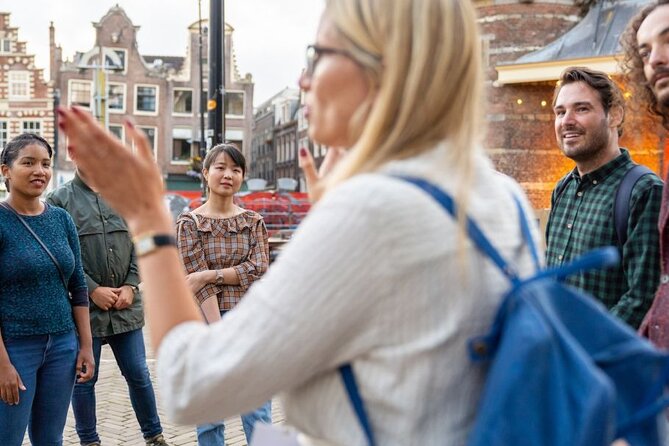
The tour begins on Dam, at the National Monument. This spot is more than a photo stop—it anchors the story of Amsterdam’s early identity right where the city’s major paths meet.
From there, you quickly shift from monuments into living streets. That matters because the red light district can feel like a random patchwork if you don’t have a map in your head. This start gives you landmarks to “attach” new information to as you walk.
If you’re the type who likes to understand before judging, this opening is a good match. You’ll feel less like you’re stumbling into a tourist zone and more like you’re following a guided route through the city’s evolution.
National Monument and the Royal Palace: how power shapes a city
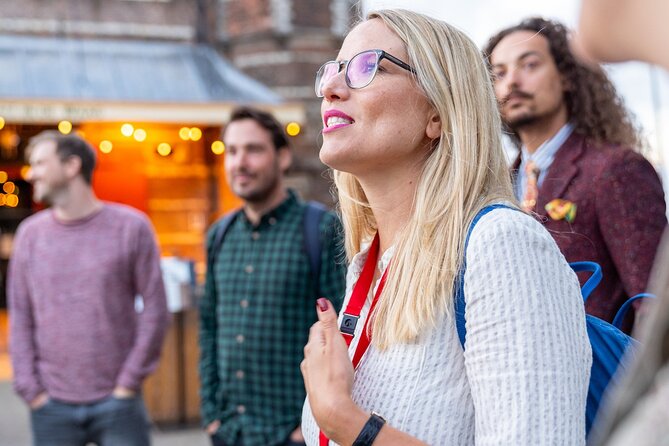
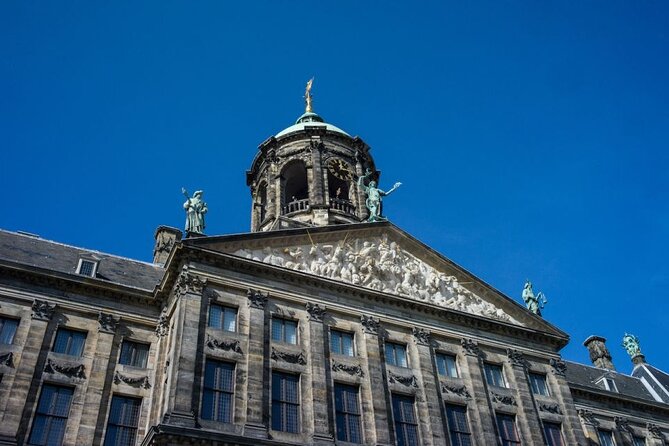
At Royal Palace Amsterdam, you get the Netherlands’ royal thread—why monarchy exists in today’s life, not just in old portraits. It’s the kind of context that helps you interpret how Amsterdam can be both formal and freewheeling in the same day.
What I like about these two early stops is that they set up a contrast. You’re seeing how the city displays authority and heritage, and then you’re walking toward an area that’s often discussed in sharper terms. That contrast keeps the tour grounded rather than sensational.
Admission for these stops is listed as free, which helps keep your experience budget-friendly even if you later choose to visit paid sites on your own.
Oude Kerk and Warmoesstraat: oldest church to LGBTQ+ street life
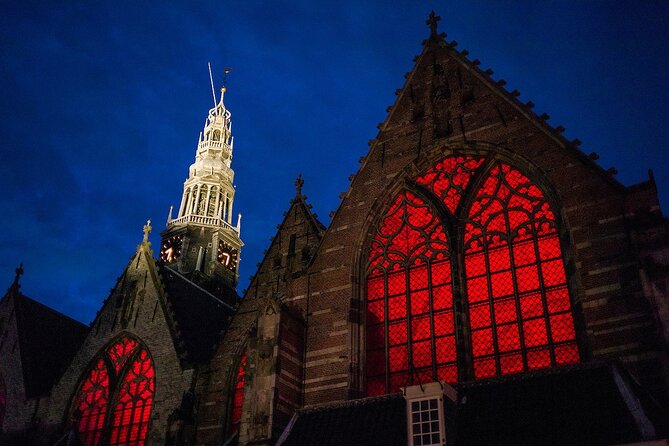
Next up is the Oude Kerk—the oldest church in the city. You’ll connect it to the origins of the area people associate with Amsterdam’s sex-work history, and you’ll also learn how that connection ties back to the oldest religious landmark.
Then the tour moves to Warmoesstraat, known for the LGBTQ+ scene. This is where the tour becomes more than “red light district = one thing.” Warmoesstraat brings in gay bars and LGBTQ+ energy, showing you that this neighborhood has multiple layers, not a single headline.
A practical tip: this section is the time to pay close attention to what your guide emphasizes. When you understand that the district includes more than one community and more than one kind of night life, you’ll read the streets with better balance.
Beurs van Berlage and trade-era Amsterdam: the money behind the streets
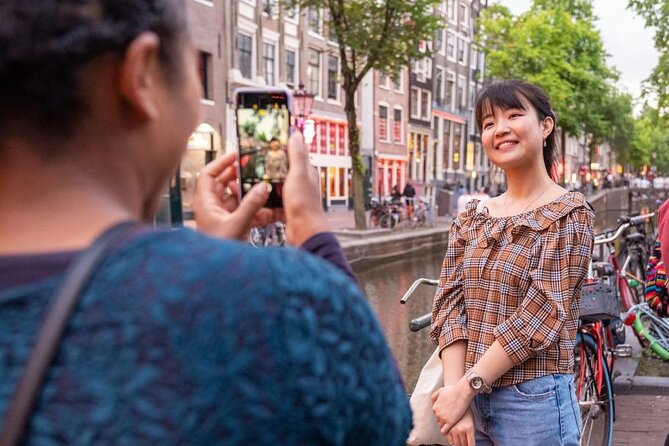
At Beurs van Berlage, you get a look at Amsterdam’s trade history and how it became one of the richest cities during the “Golden Age.” This stop matters because the red light district isn’t floating in isolation—it’s part of the same historic city that grew through commerce.
I appreciate that the tour doesn’t treat wealth as a background detail. It helps you see why certain neighborhoods developed where they did, and why canals and trade routes still shape movement today.
It also gives you a pause point. After the church and LGBTQ+ context, this is a “city systems” moment—architecture, economics, and why the past still influences where people gather.
You can also read our reviews of more private tours in Amsterdam




Damrak Q&A: what legality and regulation actually mean on the ground
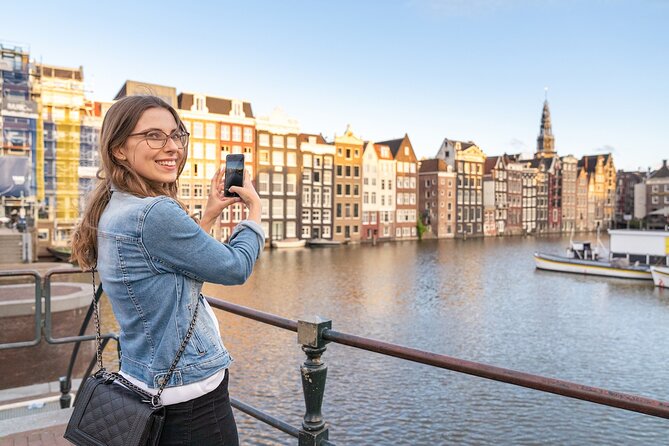
Damrak is where the tour becomes especially useful for first-timers. It’s the stop where your guide focuses on the questions people often circle around but don’t know how to phrase.
You’ll get answers about things like:
- Is sex work in the red light district legal?
- How much different services cost
- How the window system is regulated and what it costs
This kind of information is valuable because the internet usually gives you one of two extremes: moral panic or tourist cliché. A guide-led explanation helps you understand the rules and the business mechanics without turning the topic into gossip.
Also, the tour encourages a critical perspective. That’s important. Seeing a window scene is one thing. Understanding the human and legal context behind it is where your takeaway becomes more than photos.
Amsterdam Centraal: picture time, plus a reality check
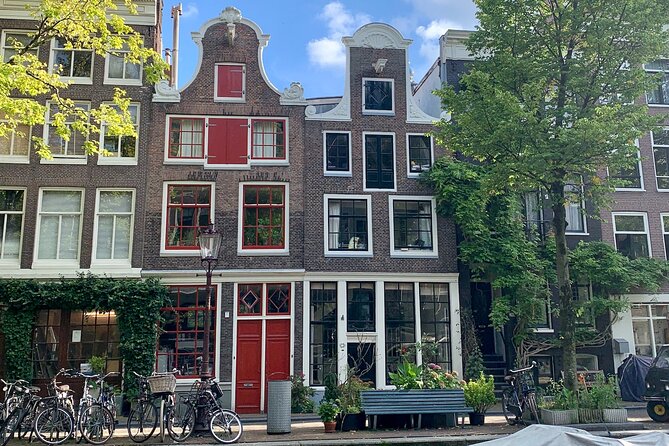
At Amsterdam Centraal, you’ll take a picture at one of the most picturesque city backdrops, and you’ll get another layer of interpretation. The message here is clear: you can enjoy the place while still recognizing the darker sides of sex work and the unique situation Amsterdam has.
I like this kind of built-in correction. It stops the tour from becoming either purely judgmental or purely voyeuristic. You’ll leave with language and context to think about what you saw after the walk ends.
This stop also helps you transition. From here, the tour shifts away from the densest sex-work corridor into broader neighborhoods and different parts of Amsterdam life.
Chinatown and Jolly Joker: why Amsterdam’s nightlife has more than one story
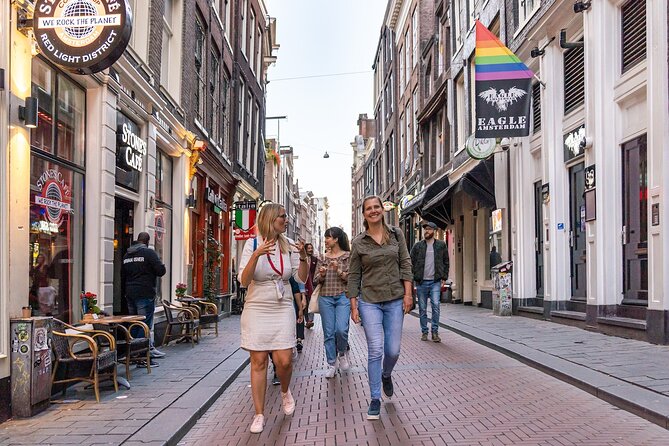
Next is Chinatown, described as Europe’s oldest Chinatown. Even with a short stop, it signals something useful: Amsterdam is multi-cultural, and the city’s night life and street scenes aren’t limited to a single theme.
Then you’ll visit Jolly Joker, where you learn about the history and politics of coffee shops in Amsterdam. This is another area that people talk about a lot—but often without real context.
Your guide’s angle here is both historical and critical, including how coffee-shop culture evolved over the years and how mass tourism can change the way these spaces function. If you’re trying to understand Amsterdam beyond the stereotypes, this stop does a lot of work.
Practical note: coffee shops and sex-work streets are different topics, but they’re connected by how laws, tourists, and local policies shape what you see. Putting them in one route helps you compare systems instead of treating each street as an isolated curiosity.
Nieuwmarkt and De Waag: finish strong, then keep exploring your way
The tour wraps at Nieuwmarkt, at the area around De Waag. You’ll learn about the building and get insider information and personal tips from your guide for making the most of the red light district after the walk.
This is also where you can visit a 70s peep show. It’s presented as part of the experience, and it fits the tour’s theme: the district has entertainment history too, not just controversy.
After the tour, you’re encouraged to enjoy the area at your own pace using what you learned. That matters because the best use of a guided walk is often what you do next: fewer wrong turns, less misunderstanding, and more confidence in what you want to see.
If you’d rather end back at Dam Square, the guide can’t quite change the whole city for you—but the tour notes that you can walk back with your guide. That’s handy if you want one final reset back toward your hotel area.
How to get the most from a 2-hour walk (without rushing)
Because this experience is around 2 hours and includes about 10 stops, you should treat it like a guided primer. You’re not meant to linger at every corner the way you would on a free self-guided night.
Here’s how to make it pay off:
- Ask your main questions early, especially about legality and costs, since the Q&A is spread across key stops.
- Keep your phone handy, because the route includes photo-worthy landmarks like Amsterdam Centraal.
- Plan a little time afterward on your own. The tour is designed to give you direction, not a full schedule for every minute.
Also, since it’s a private tour/activity, it’s only your group. That’s a real advantage in this topic area—less noise, more room to understand at your own speed.
Who should book this and who should think twice
This tour is a good fit if you:
- Want a private guide and the ability to ask direct questions
- Prefer a respectful, context-first approach rather than random roaming
- Like structured routes that still leave room to explore afterward
- Are curious about multiple parts of Amsterdam’s street culture (LGBTQ+ areas, coffee-shop history, and historical city center)
It might not be the best match if you:
- Are uncomfortable with a sensitive subject and prefer purely cultural landmarks
- Want long time in one place instead of a compact “see-and-understand” circuit
Quick reality check on value: what you’re paying for
The headline price can feel steep at first glance, but here’s what you’re actually buying:
- A private group up to 4
- A structured route across major landmarks and neighborhood transitions
- Guidance that answers practical, high-interest questions about sex work regulation and costs
- Free entry stops, so you’re not paying museum-style fees at each point
- A finish with tips for the district and time to continue on your own
If your group is small, the cost per person rises. But if you’re trying to understand Amsterdam fast—without stepping into confusion—this is the kind of guided context that can feel like good value.
Should you book this Amsterdam Red Light District & City Tour?
I think you should book it if you want more than a basic sightseeing walk and you like getting straight answers in a city that’s easy to misread. The mix of Dam Square landmarks, Oude Kerk, Warmoesstraat, trade history at Beurs van Berlage, the practical Q&A at Damrak, and the finishing touches at Nieuwmarkt makes it a smart way to connect Amsterdam’s past and present.
Skip it if you want to avoid the topic entirely or if you’re only looking for lighter nightlife photos. This tour is designed to help you understand what you’re seeing, including the complicated parts.
FAQ
How long is the Amsterdam Red Light District & City Tour?
It runs for about 2 hours.
Is this a private tour, and how many people can be in my group?
Yes. It’s a private tour/activity, and it’s priced for up to 4 people per group.
What language is the tour offered in?
The tour is offered in English.
Are there admission fees for the stops?
The stops listed on the route show free admission.
Where does the tour start and end?
It starts at National Monument, Dam, 1012 JS Amsterdam, and ends at Restaurant-Café In de Waag, Nieuwmarkt 4, 1012 CR Amsterdam.
What’s the cancellation policy?
You can cancel for free up to 24 hours in advance for a full refund. If you cancel less than 24 hours before the start time, the amount paid won’t be refunded.