REVIEW · AMSTERDAM
Amsterdam Red Light District and City Center Walking Tour
Book on Viator →Operated by Trigger Tours · Bookable on Viator
Neon windows meet real city facts. This short night tour is interesting because it mixes De Wallen context with classic Amsterdam landmarks in one smooth walk. I also like the expert guide-led pacing, which helps you understand what you’re seeing without getting lost or turning everything into gossip. One possible drawback: you’re walking through an active adult district at night, so you’ll need a level head and a willingness to talk about grown-up rules and history.
It’s a small-group format (up to 16 people), and it’s designed to get you oriented quickly in the Dutch capital. You’ll start at Geldersekade 2 and end back there, with multiple start times so you can plug it into your evening plans. If you’re short on time but want real perspective, this is the kind of tour that makes the city feel less confusing fast.
In This Review
- Key Points That Make This Tour Worth Your Evening
- De Wallen After Dark: Why This Walk Works Better at Night
- Where You Meet (Geldersekade 2) and How the 2-Hour Pace Fits Real Travel
- De Wallen, De Wallen: Narrow Streets, Rules, and Coffeeshop Culture
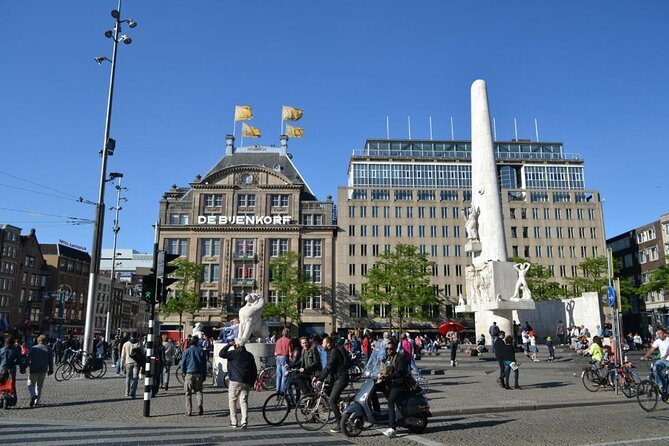
- The Dam and Amsterdam’s Wooden-Pile Foundation: The City Built on Trees
- Old Town Layers Inside the Red Light Area: Why Age Matters Here
- Pub ‘t Aepjen (Int Aepjen): 1540 Wood and the Big Fire Turning Point
- The Waag: From City Gate to Guild Powerhouse
- The Smallest House of Amsterdam: VOC Storage to Long-Term Living
- A Condom-Focused Shop Since 1987: Practical Modernity in the Mix
- How the Guide Style Keeps This Tour Comfortable (Even When It’s Uncomfortable)
- Is It Worth $31.24? Value for a 2-Hour Night Walk With Real Context
- Who This Tour Suits Best (And Who Should Skip It)
- Should You Book This Red Light District and City Center Walking Tour?
- FAQ
- How long is the tour?
- What is the meeting point?
- Is the tour offered in English?
- How much does it cost?
- Is there a group size limit?
- Does the tour include admission tickets?
- Is a mobile ticket used?
- Are there multiple start times?
- Is it suitable for people with limited mobility?
- Are service animals allowed?
- Is cancellation free?
Key Points That Make This Tour Worth Your Evening
- De Wallen at night, with explanations instead of pure gawking
- Old Amsterdam stops that connect the area to the city’s roots
- Small group size (max 16) keeps questions easy
- Adult subject matter handled with rules and context, not just shock
- Stop variety goes from the Waag to a VOC-era smallest house to a condom-focused shop
De Wallen After Dark: Why This Walk Works Better at Night
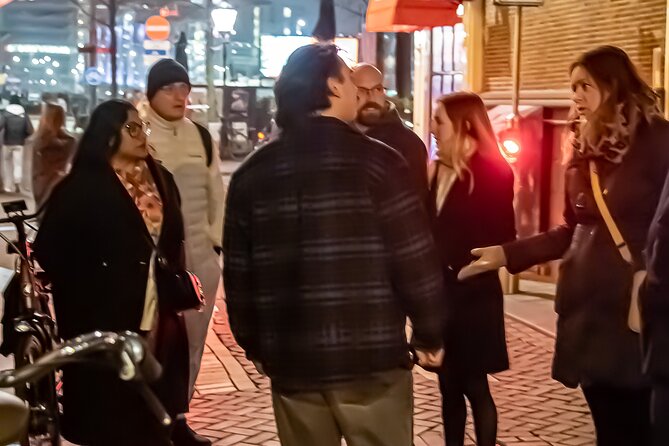
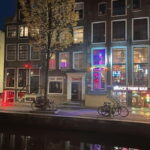
Amsterdam’s Red Light District, De Wallen, is the kind of place where your first instinct is to stare and wonder. A daytime wander can feel like a street-view blur. At night, the district’s rhythms are clearer, the streets feel more like a living neighborhood, and the visual details line up with the guide’s explanations. That matters, because the point here isn’t to be scandal-tourists. It’s to understand what the rules are, how the district functions, and why it looks the way it does.
This tour is also a useful “first-week in Amsterdam” move. You don’t just see De Wallen; you also get surrounding context by linking the district to older parts of the city. That makes the rest of your trip more coherent, because you start noticing how Amsterdam grew—literally—on wooden foundations and through historic structures that still stand.
And yes, it’s an adult-focused area. The good part is that you’re not left to figure it out on your own. The guide leads you through the narrow streets and explains the wider ecosystem, including the coffeeshop culture and the sex work industry, in a way that keeps the conversation grounded.
You can also read our reviews of more walking tours in Amsterdam



Where You Meet (Geldersekade 2) and How the 2-Hour Pace Fits Real Travel
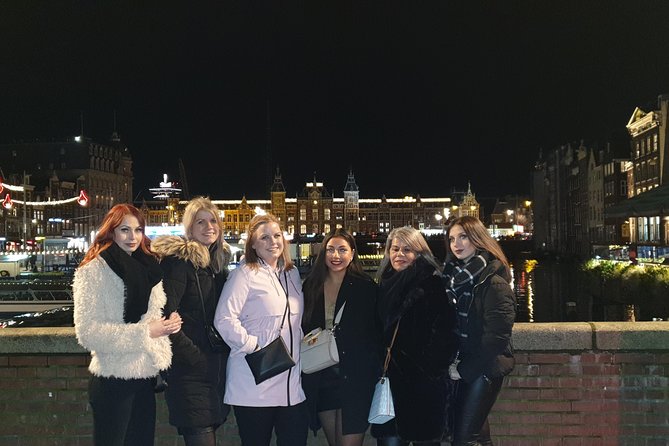
The tour meets at Geldersekade 2, 1012 BH Amsterdam, and it ends back at the same spot. That simple loop is practical. It means you don’t have to plan extra transport or worry about getting back to a tram line if your evening runs long.
Duration is about 2 hours. That’s a sweet spot for a neighborhood walk like this. Long enough for the guide to cover the key stories and landmark stops, short enough that you’re not stuck outside your comfort zone for hours.
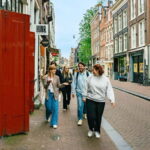
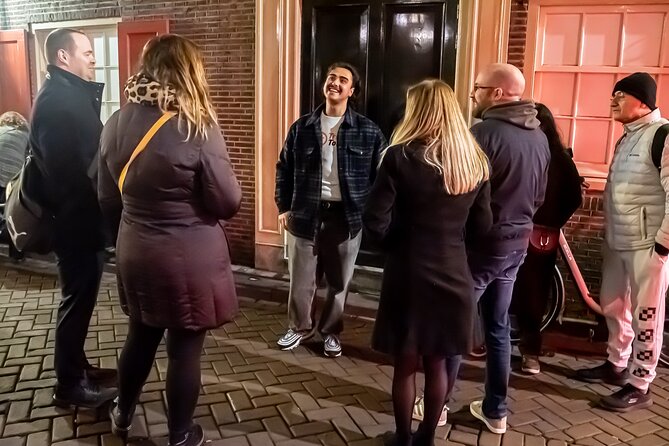
The group size cap is 16 travelers, which is small by city-tour standards. It usually means you can hear the guide, ask questions, and stay aware of the group—especially helpful on crowded sidewalks in a nightlife area.
Also, it’s offered in English, with a mobile ticket. If you like not hunting for paper tickets while you’re trying to find a meetup point, that’s a real comfort.
De Wallen, De Wallen: Narrow Streets, Rules, and Coffeeshop Culture
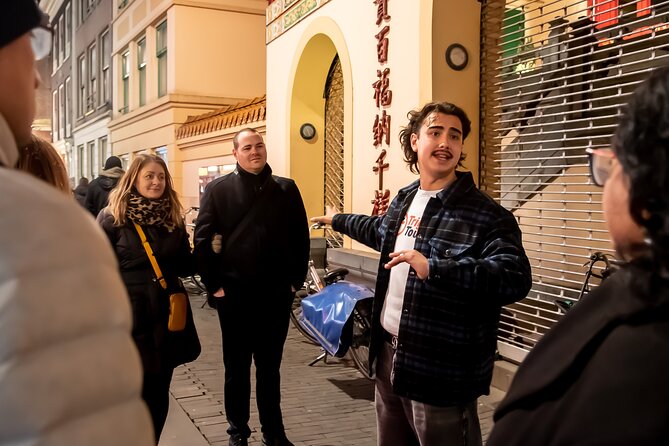
Your walk begins with the Red Light District itself: De Wallen. The big value here is not just seeing the window scene—it’s learning the real stories behind how the district works. The guide points out narrow streets and explains the relationship between coffeeshop culture and the sex work industry, so the neighborhood stops feeling like random chaos and starts feeling like a regulated part of Amsterdam’s urban life.
You’ll also get guidance on how to look responsibly. This is an area where impulse can turn into disrespect quickly. A good guide helps you keep your attention on the history and the human systems behind what’s visible from the sidewalk.
One small consideration: the tour is designed for the night atmosphere. So even if you’re curious and respectful, you should still expect an evening sensory mix—crowds, music from nearby venues, and lots of people moving through the same narrow streets. If you prefer quiet walking tours with no nightlife energy, this may not be your ideal evening.
The Dam and Amsterdam’s Wooden-Pile Foundation: The City Built on Trees
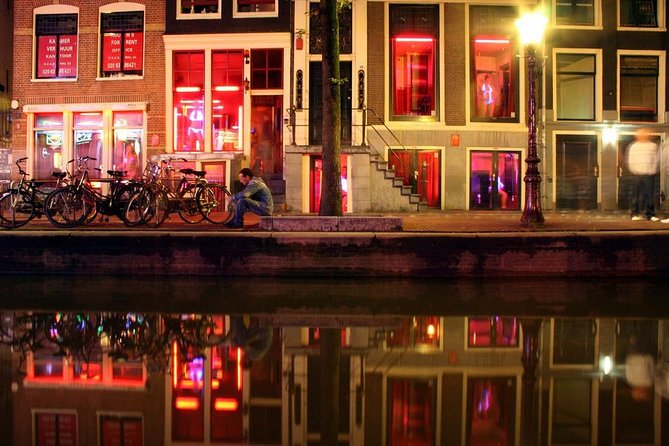
After De Wallen, you shift from modern street life to the kind of Amsterdam trivia that actually changes how you understand the city underfoot. A key stop is the Dam, explained as part of Amsterdam’s story of building on difficult soil.
Amsterdam sits on a thick layer of fen and clay. Because of that, many buildings were built on wooden poles driven down into deeper sand layers—about 11 meters down—until they reach more solid ground. That’s where the nickname idea of the city being built on trees comes from: wood isn’t decoration here; it’s engineering.
Why does this matter on a tour like this? Because it keeps you connected to Amsterdam as a place that solves tough problems. The city didn’t just “happen” to become charming. It grew by adapting to waterlogged ground and using technology that was practical for its time.
It’s also a nice mental reset. After adult-night intensity, you suddenly get a grounded city fact: structures are literally held up by wood that’s been doing its job for centuries.
Old Town Layers Inside the Red Light Area: Why Age Matters Here
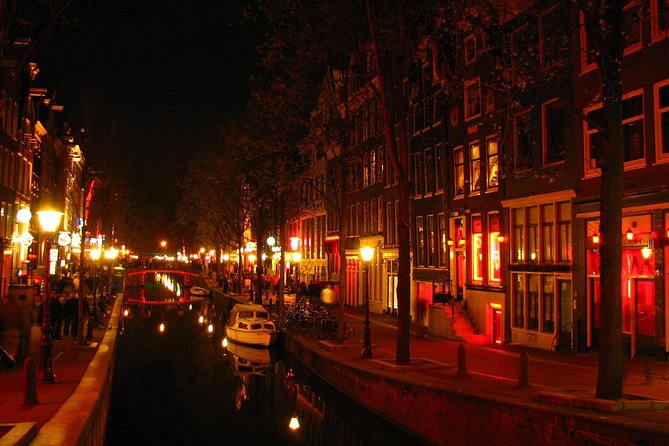
The tour also points out that this district connects to the oldest part of the city. In practical terms, that means you’re not just walking through a nightlife corridor. You’re moving through an area that has been part of Amsterdam’s urban story for a long time, which is why you’ll see history threaded through modern functions.
Old streets shape everything: where buildings sit, how narrow lanes remain, and why certain landmarks are positioned the way they are. When your guide explains that you’re standing in an area tied to Amsterdam’s earlier urban core, the whole district starts to feel less like an isolated attraction and more like a piece of the city’s continuing footprint.
You can also read our reviews of more city tours in Amsterdam






Pub ‘t Aepjen (Int Aepjen): 1540 Wood and the Big Fire Turning Point
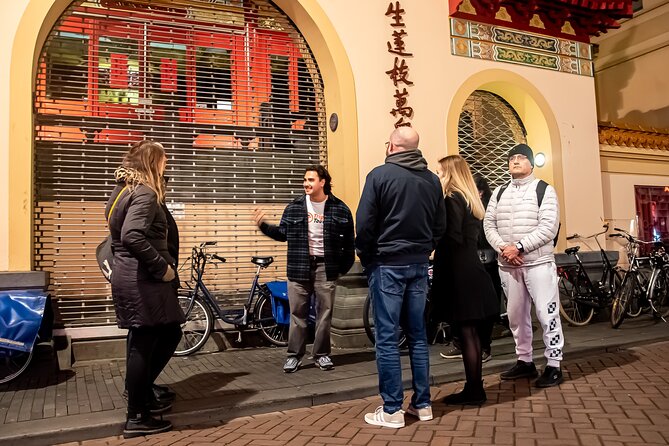
One of the most memorable stops is Pub The Ape, also known as Int Aepjen. The standout detail is the building itself. It was built around 1540, and it’s described as one of two remaining wooden buildings left in Amsterdam.
That “two remaining” detail is the reason this stop lands. Amsterdam is famous for brick façades, canals, and controlled urban aesthetics. But in the past, fire changed building rules. The big fire in 1452 is part of the explanation, including the government decision that buildings should have brick facades after that point.
So when you see a wooden structure here, it’s not just architecture for architecture’s sake. It’s a survivor from a different era of building culture. On this tour, the guide helps you read that survival as a story about safety, regulation, and how cities rewrite their look after disaster.
Practical note: wooden buildings can feel cozier and more intimate than the surrounding streets. You might notice how the scale feels different, even as you remain in the same active district zone.
The Waag: From City Gate to Guild Powerhouse
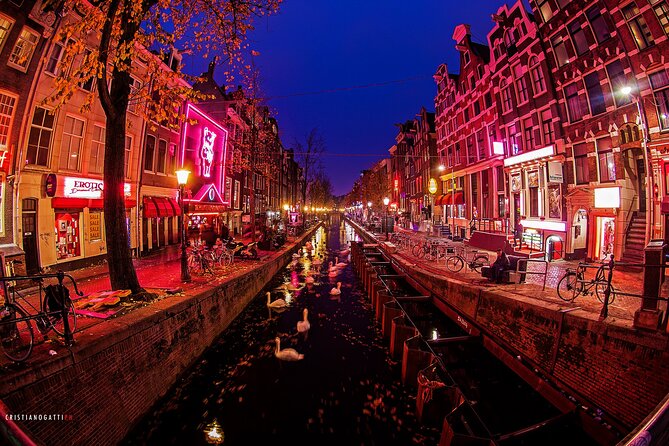
Next comes the Waag, once one of Amsterdam’s city gates and part of the defensive wall. It was built around the 1400s and is described as the second oldest building in Amsterdam.
That’s the kind of fact that turns a stop from “photo opportunity” into “how the city used to protect itself.” City gates weren’t just entrances; they were control points. They also helped shape how people and goods moved.
Later, the Waag’s role changed. The tour explains it was used as a guild space, meaning craftsman organizations gathered within the building and around the square. That’s a direct link between Amsterdam’s protection and its production. The city didn’t only defend trade—it organized the people who made things for trade.
Why I like this stop on a Red Light District walk: it prevents the experience from becoming one-note. De Wallen is heavy on contemporary culture. The Waag brings in the city’s older “how society organizes” story.
The Smallest House of Amsterdam: VOC Storage to Long-Term Living
Another fascinating stop is the smallest house of Amsterdam, built around the 1700s. The guide shares that it was first used as storage for the VOC trading company, and later people lived in it for a very long time.
Even without going into deep economics, the image is powerful. A tiny structure tied to VOC-era commerce hints at how packed and pragmatic life could be in the earlier city. Then the fact that it later became a long-term residence shows how residents adapted to space constraints.
This stop is a great reminder that “tourist Amsterdam” isn’t the whole story. The city’s historic footprint includes strict limits, tight spaces, and the ability to make those limits livable.
A Condom-Focused Shop Since 1987: Practical Modernity in the Mix
One of the more surprising stops is described as the world’s first condom shop special for condoms, in place since 1987. The tour notes that you can get size customized condoms and different kinds of special condoms.
On paper, that sounds like a punchline. On the walk, it actually works as a lesson about how adult topics get handled publicly in a modern city: not with denial, but with products, specialization, and practical choices.
This also helps explain why the tour includes more than just adult-night sights. Amsterdam tends to treat even uncomfortable topics with a mix of directness and regulation. Seeing a specialized shop within the context of the district’s broader system reinforces that point.
How the Guide Style Keeps This Tour Comfortable (Even When It’s Uncomfortable)
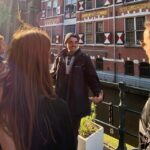
Small-group walking tours live or die by their guide. Here, you’ll see signs of guides who keep track of people and make sure everyone can ask questions. For example, guides like Robin, Gio, and Aaron are described as friendly, attentive to the group, and good at handling questions while keeping the walk moving.
Aaron is specifically noted for keeping a strong sense of group control and making eye contact so people feel included. Gio is mentioned for making sure the experience ends in a memorable way, not just a stop-and-go lecture. Robin comes up as friendly and helpful, the kind of guide who makes you feel like you’re being guided, not judged.
That approach matters on tours like this, because De Wallen isn’t just sightseeing. You need a human filter between you and the most awkward parts of the setting—especially if you’re new to the topic or just want respectful clarity.
Is It Worth $31.24? Value for a 2-Hour Night Walk With Real Context
$31.24 isn’t cheap for a walking tour, but it can still be fair value if you compare it to what you’d otherwise pay to get context. The tour’s price buys you three things that matter in Amsterdam:
First, time and direction. Two hours is short, and De Wallen can be confusing if you don’t know what to pay attention to. You’re paying for the guide’s ability to point you at the important details fast.
Second, interpretation. The stops are not random. The tour connects De Wallen to the Dam’s wooden-pile foundation story, the Waag’s defensive-and-guild past, and even the tiny VOC-related house. That turns a quick evening walk into an educational arc.
Third, group management. With a maximum of 16 people, you’re less likely to get steamrolled by crowds or miss explanations because the group spreads out. And because it’s led by an expert guide, you’re not left to stitch the story together yourself from signage and assumptions.
If you want a “quick orientation + meaningful stories” combo, this pricing makes sense. If you’re only after casual window-level sightseeing and prefer to read on your own, you might decide it’s not for you.
Who This Tour Suits Best (And Who Should Skip It)
This tour makes the most sense if you fit one or more of these profiles:
- You want a short, guided introduction to Amsterdam that includes De Wallen context and nearby city landmarks.
- You like learning the “why” behind what you see: rules, buildings, and how older Amsterdam shaped what’s around you.
- You’re comfortable with adult topics and want explanations that keep things respectful.
It’s also noted as not recommended for travelers with limited mobility. That’s common for older-city walking routes with uneven surfaces and crowded sidewalks, and you should plan accordingly.
Should You Book This Red Light District and City Center Walking Tour?
I’d book this if you want your first Amsterdam nights to come with context, not confusion. The tour’s mix—De Wallen at night plus stops like the Waag, the Dam’s wooden-pile story, the smallest VOC-related house, and the condom shop since 1987—helps you see the area as part of Amsterdam’s long city timeline.
Pass on it if you need a calm, squeaky-clean experience with zero adult discussion. And if mobility is an issue, you’ll likely be happier with a different format.
If you do book: pick a start time that doesn’t leave you rushed afterward. Two hours goes fast, and you’ll probably want time to process what you learned before you jump into your next plan.
FAQ
How long is the tour?
It runs for about 2 hours.
What is the meeting point?
The tour starts at Geldersekade 2, 1012 BH Amsterdam, Netherlands, and ends back at the same point.
Is the tour offered in English?
Yes, it’s offered in English.
How much does it cost?
The price is $31.24 per person.
Is there a group size limit?
Yes. The maximum group size is 16 travelers.
Does the tour include admission tickets?
The tour includes stops with free admission noted for at least the Red Light District portion.
Is a mobile ticket used?
Yes, it uses a mobile ticket.
Are there multiple start times?
Yes, the tour offers multiple start times to match your schedule.
Is it suitable for people with limited mobility?
It is not recommended for travelers with limited mobility.
Are service animals allowed?
Yes, service animals are allowed.
Is cancellation free?
Free cancellation is available. You can cancel up to 24 hours in advance for a full refund.