REVIEW · AMSTERDAM
Amsterdam: Historic Tram Ride on Heritage Line to Amstelveen
Book on GetYourGuide →Operated by Electrische Museumtramlijn Amsterdam · Bookable on GetYourGuide
A punched ticket makes this tram special. This is a roundtrip on the historic Lijn 30 heritage line from Haarlemmermeerstation to Amstelveen, with a real conductor on board who blows the whistle, rings the bell, and gives your ticket a punch. The tram and track are kept authentic, including a route that’s over 100 years old.
What I like most is the old-school feel: you’re not just riding past scenery, you’re joining the routine—ticket in, punch delivered, stops announced. The other big win is that you can shape the ride yourself: hop off to stretch your legs around the Amsterdam Forest, lake Bosbaan, Heemtuinen wildlife garden, or the redbrick Old Village.
One thing to consider: the tram line itself can feel a bit light on major sights between stops, so your enjoyment may depend on whether you’re up for nature-side breaks rather than constant city landmarks.
In This Review
- Key highlights in quick hits
- A 100-Year-Old Tram Ride on Lijn 30
- Where You Start at Haarlemmermeerstation Tramshop
- The Best Part: Ticket Punching With a Conductor
- Ride Experience: Sounds, Crossings, and the Old-Tram Rhythm
- The Stops That Let You Choose Your Own Pace
- Olympic Stadion
- Amsterdam Forest
- Lake Bosbaan
- Heemtuinen Wildlife Garden
- The Old Village in Amstelveen (redbrick buildings)
- How the 1-Hour Duration Really Feels
- Price and Value: Why $9 Can Make Sense
- Who Should Book This Historic Tram Line
- Should You Book the Historic Lijn 30 Tram to Amstelveen?
- FAQ
- FAQ
- How long is the Amsterdam historic tram ride to Amstelveen?
- What’s included in the ticket price?
- Where do I exchange my ticket before boarding?
- What stops are included on the ride to Amstelveen?
- Can I choose to get off at the stops?
- Are food and drinks allowed on the tram?
- Is smoking allowed?
- Is the ride suitable for wheelchair users or people with mobility impairments?
- Is this tram ride a good idea if I have motion sickness?
- Is free cancellation available?
Key highlights in quick hits
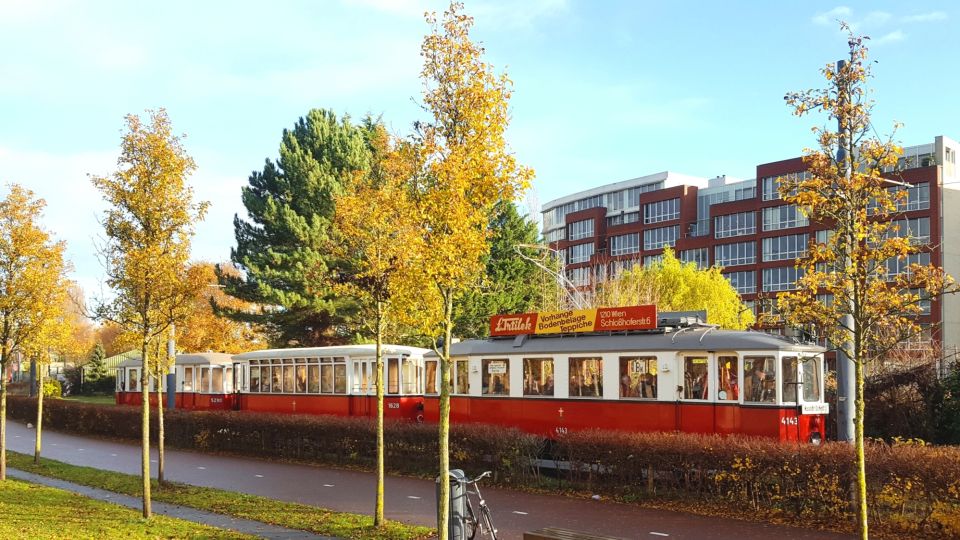
- Conductors punch your ticket, with whistle and bell for a proper heritage-tram send-off
- Historic Lijn 30 heritage line on a track that’s more than 100 years old
- Choice of get-off points in Amstelveen, including Olympic Stadion and lake Bosbaan
- Old-tram details up close, from crossings secured with red flags to the tram’s restored look
- Roundtrip return to Haarlemmermeerstation, so you can plan without logistics stress
A 100-Year-Old Tram Ride on Lijn 30
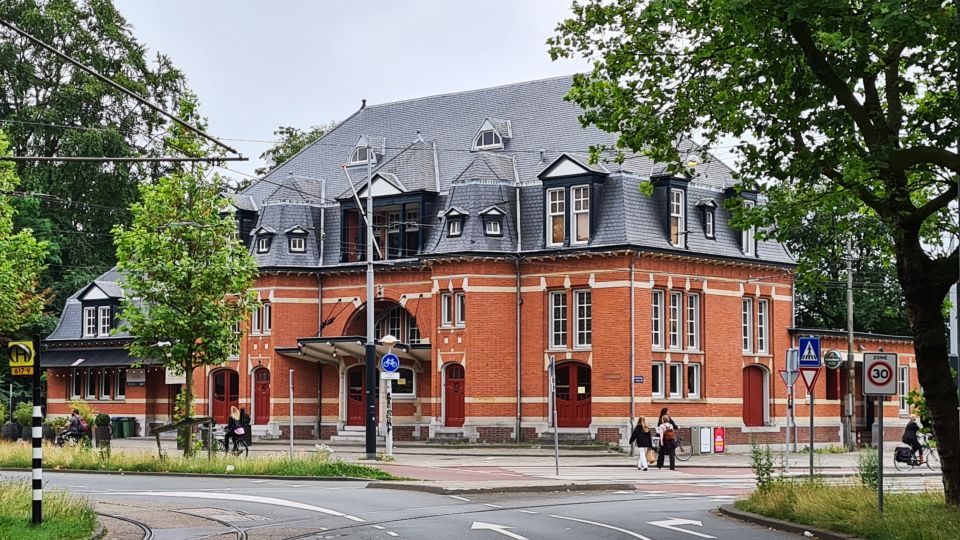
This tram experience is built around one simple idea: slow down and enjoy a heritage ride the way it used to work. You’ll board the old-fashioned Lijn 30 heritage tram for a roundtrip to Amstelveen and back, following a track with more than a century of service behind it.
The value here isn’t just the transport. It’s the atmosphere. The sounds matter—the conductor’s whistle and the bell ring are part of the choreography, not background noise. Even little operational moments, like crossings being secured with red flags, make the whole thing feel grounded in real tram practice rather than museum cosplay.
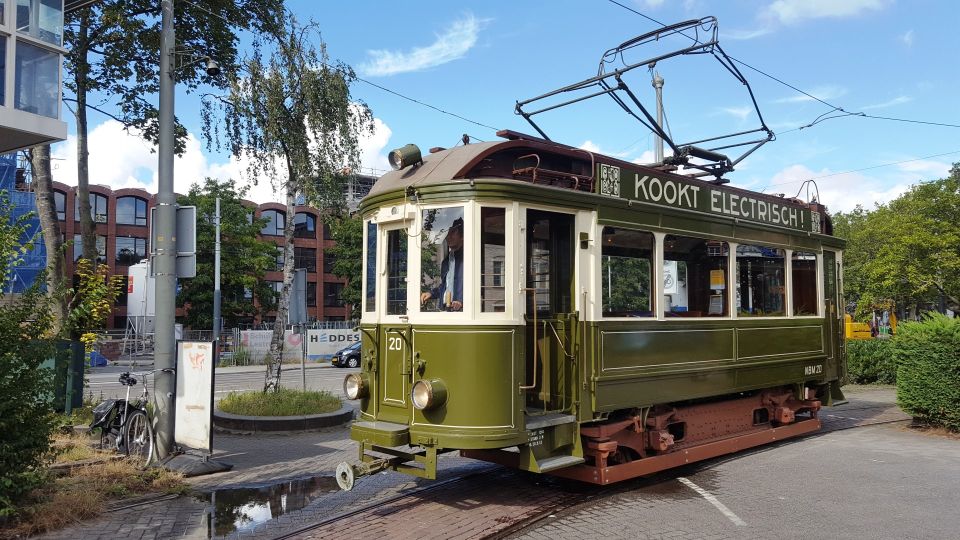
It also helps that the tram cars are fully restored and maintained to keep things authentic. You get that classic tram feel: a vehicle that looks like it belongs to another era, running on a line that still respects the original approach.
You can also read our reviews of more historical tours in Amsterdam



Where You Start at Haarlemmermeerstation Tramshop
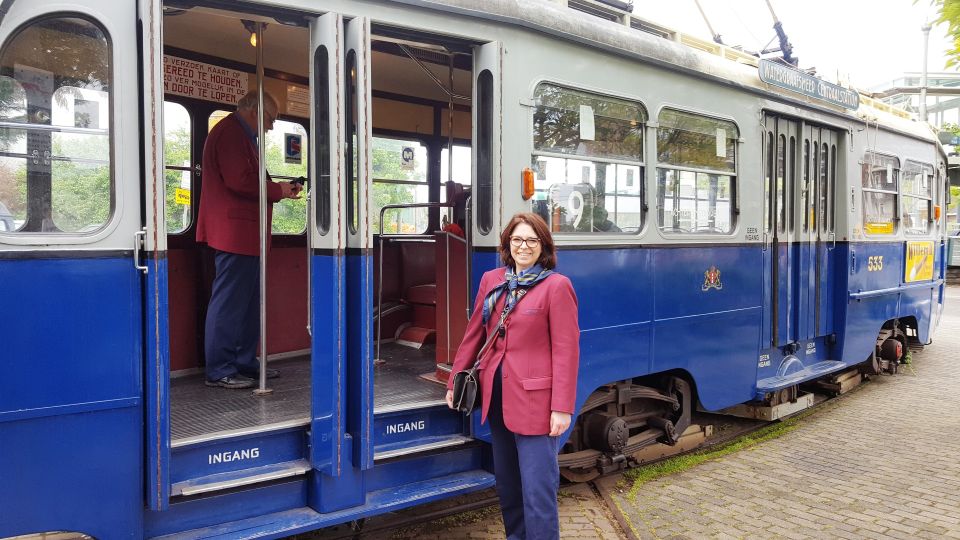
Your ride starts at Haarlemmermeerstation, but the first step is not walking straight to a platform and guessing. Exchange your ticket in the Tramshop at the station, and then you’ll be guided from there to the trams.
This is one of those small things that can make a trip feel smooth. When you know where to go and you’re walked to the correct tram, you’re less likely to waste time hunting for the right vehicle—especially when you’re dealing with a heritage setup where the boarding process may differ from modern trams.
The activity ends back at the meeting point, meaning your planning stays clean: you’re not signing up for a one-way adventure. You’ll return to Haarlemmermeerstation, so you can fit this into a day without needing a separate return plan.
The Best Part: Ticket Punching With a Conductor
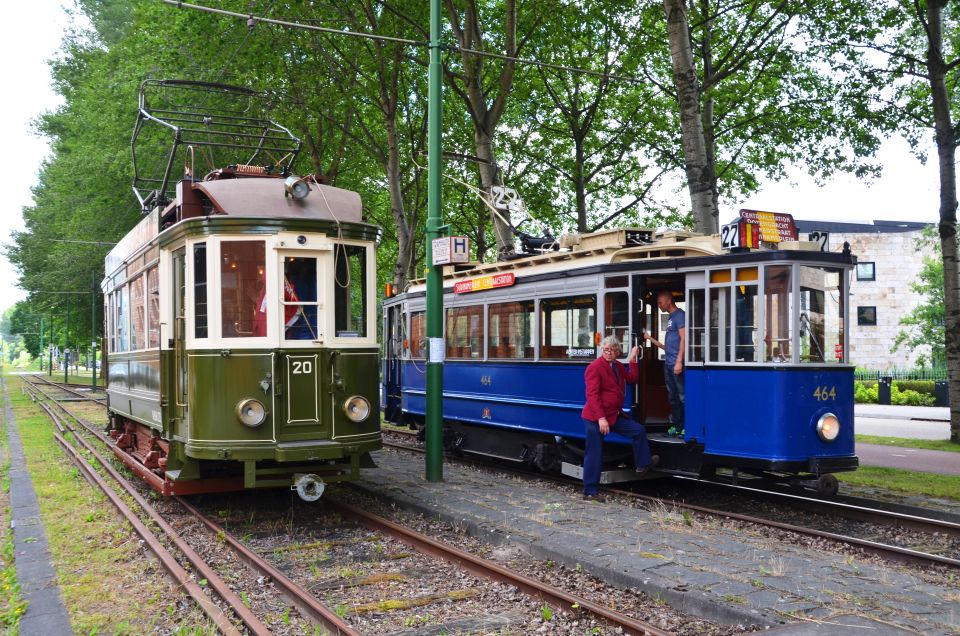
If you only take one reason from this review, take this: the ticket-punching ritual is the heart of the ride. You’ll board the heritage tram, and the conductor punches your ticket in a way that feels intentionally old-school.
You’ll also hear departures and readiness cues. When the conductor blows the whistle and rings the bell, it’s not just for drama—it signals that they’re ready for the driver to move on. Stops are called out too, so you’re not totally stuck guessing where you are.
This whole setup is surprisingly satisfying, even if you’re not a tram-nerd. It’s interactive in a way that modern transit rarely is. You’re participating in the experience, not just passively moving through it.
One practical note: food and drinks aren’t allowed in the vehicle. That doesn’t ruin the ride, but it does mean you should treat this as transportation plus a short scenic break, and plan snacks before or after.
Ride Experience: Sounds, Crossings, and the Old-Tram Rhythm
Once you’re rolling, the tram has a real character. You’ll notice the hum and the classic tram rhythm, helped by the restored vehicle and the heritage track. The ride isn’t trying to be silent or frictionless. It feels like tram travel should feel.
Crossings are one of the more fun operational details. At crossings, you’ll see how they’re secured with red flags. It’s the kind of thing you might normally ignore, but on this line it becomes part of the experience because you’re riding on a heritage system that keeps those procedures visible.
At the terminal, the tram is prepared for the return journey. In other words, you’re not just turning around and disappearing—you’ll see the practical side of how the day keeps moving.
Also, be ready for a small logistical reality at the terminus: you might temporarily have to exit the vehicle, or you might need to change vehicles all together. That’s not a dealbreaker, but it’s smart to keep your day flexible around a calm, heritage-style flow rather than expecting everything to be identical to a modern line.
The Stops That Let You Choose Your Own Pace
This is a roundtrip, but the stops in Amstelveen give you options. You can stay on the tram for the full loop, or you can get off when you want to stretch your legs and switch the pace from rolling to walking.
Here are the key get-off points the tram stops at:






Olympic Stadion
This stop is a good fit if you want a more built-environment moment during the ride. If you’re the type who likes to break up transit with a recognizable stop, Olympic Stadion gives you that.
The trade-off is that it’s not described as a long, guided sightseeing block. You’re still in a choose-your-own-walk situation, so you’ll want to decide quickly what you’d like to do once you get off.
Amsterdam Forest
The Amsterdam Forest stop is where the vibe shifts toward outdoor calm. This is the kind of stop that makes sense if you’re tired of sitting inside and you want a breath of fresh air.
A heads-up: the experience is described as allowing you to get off to enjoy the area, not that you’ll have a specific guided hike. If you want a longer walk, wear shoes you’re comfortable with and give yourself enough time in the moment.
Lake Bosbaan
Lake Bosbaan is another outdoorsy stop and a strong reason to book this if you prefer nature-side views to constant city sights. Even with limited time off the tram, a lakeside pause can reset the day.
Again, it’s on you to decide how long you stay. But if your ideal Amsterdam moment includes water and a slower tempo, this stop plays right into it.
Heemtuinen Wildlife Garden
This stop is a nice choice when you want something a little more specific than just grass and trees. Heemtuinen is named as a wildlife garden, which suggests a more focused look at natural surroundings.
If you’re traveling with family or you simply like quiet nature breaks, this tends to be the kind of stop that feels worth hopping off for, even if it’s brief.
The Old Village in Amstelveen (redbrick buildings)
The Old Village stop rounds out the day with a more town-focused look. It’s called out for the redbrick buildings, which gives you an easy visual target when you step off.
This is the best place to go if you want a change of scenery that still feels like you’re in the Netherlands, not just passing through.
How the 1-Hour Duration Really Feels
The scheduled duration is 1 hour, but what that means for your time depends on how you use the stops. Because you have a roundtrip and multiple named stopping points, the tram portion is doing the heavy lifting—your get-off time is likely best treated as a short break rather than an extended visit.
That’s why I suggest you plan your expectations around micro-exploring:
- If you want to maximize walking, pick one stop and commit.
- If you want the full heritage-tram feel, stay on board and enjoy the ride plus the sounds and announcements.
If you’re prone to motion sickness, consider that the ride is described as not suitable for people with motion sickness. That’s a helpful warning because heritage trams can have a different feel than modern vehicles.
Also, this activity is not suitable for people with mobility impairments, and wheelchair users are not suitable. If you’re pushing a stroller, note that non-folding strollers aren’t allowed. Keep that in mind so you don’t get stuck at boarding time with equipment constraints.
Price and Value: Why $9 Can Make Sense
At $9 per person, this isn’t a huge budget line in an Amsterdam day. But the value depends on what you want from the trip.
If you just want a cheaper ride into Amstelveen, you could find other options. This one is different because you’re paying for the conductor interaction and the heritage experience: ticket punching, whistle and bell cues, restored tram and historic track, and visible heritage tram operations like the red-flag crossings.
So the price works best if you enjoy:
- classic transport experiences
- hands-on rituals (ticket punching)
- nature-side pauses in a calmer neighborhood setting
If you’re chasing nonstop sightseeing, the route between major viewpoints may feel less satisfying. The tram itself can be the main attraction.
My best advice: treat this as an activity, not just transit. When you do, the ticket feels like fair value for what you get.
Who Should Book This Historic Tram Line
This is a great fit if you like:
- classic tram travel and old-fashioned procedures
- short outdoor breaks around Amsterdam Forest, lake Bosbaan, or Heemtuinen
- a rail experience where the ride itself is part of the fun
It’s also a solid choice for people who want a structured, easy-to-find starting point at Haarlemmermeerstation and a roundtrip back without extra planning.
Skip it if:
- you have mobility constraints that conflict with not-suitable-for-wheelchair guidance
- you deal with motion sickness
- you want food and drinks included on board (they aren’t allowed)
- you’re expecting major landmark sightseeing at every stop
Should You Book the Historic Lijn 30 Tram to Amstelveen?
Book it if you want the classic tram experience—especially the ticket-punching moment with the conductor, the whistle and bell, and the sense of riding on an old, working heritage line. The outdoorsy stop options in Amstelveen give you a way to balance the ride with a breather, even if you only choose one spot to get off.
Skip it if your goal is constant city sightseeing. The tram line can feel more like a pleasant transit-and-pause day than a highlight-reel tour.
FAQ
FAQ
How long is the Amsterdam historic tram ride to Amstelveen?
The duration is listed as 1 hour. You’ll need to check availability to see the starting times.
What’s included in the ticket price?
Your ticket includes a return trip from Haarlemmermeerstation in Amsterdam to Amstelveen.
Where do I exchange my ticket before boarding?
Exchange your ticket at the Tramshop in Haarlemmermeerstation. You’ll then be guided from there to the trams.
What stops are included on the ride to Amstelveen?
The tram stops at Olympic Stadion, Amsterdam Forest, lake Bosbaan, Heemtuinen wildlife garden, and the redbrick buildings in the Old Village.
Can I choose to get off at the stops?
Yes. Stops are called out so you can decide whether you want to get off to enjoy the area.
Are food and drinks allowed on the tram?
No. Food and drinks aren’t allowed in the vehicle.
Is smoking allowed?
No. Smoking isn’t allowed in the vehicle.
Is the ride suitable for wheelchair users or people with mobility impairments?
No. The activity is not suitable for people with mobility impairments, and wheelchair users are not suitable. Non-folding wheelchairs are also not allowed.
Is this tram ride a good idea if I have motion sickness?
It’s not suitable for people with motion sickness.
Is free cancellation available?
Yes. You can cancel up to 24 hours in advance for a full refund.