REVIEW · AMSTERDAM
5 hrs Golden Age Amsterdam Private Walking Tour With Local Guide
Book on Viator →Bookable on Viator
Amsterdam clicks into place in five guided hours. In a small group (up to 4) with guide Aleks/Aleksandar, you start at Centraal Station and trace the city’s arc from medieval walls and the Begijnhof to De Wallen, with stops paced so you can actually take it in. I also love the focus on practical details, like how key buildings stand on thousands of wooden poles.
One thing to plan for: several big interiors are not included, and Anne Frank House tickets must be booked online at least 6 weeks ahead. If you’re hoping for only outside viewing, you may feel the extra fees for Royal Palace, Westerkerk, Nieuwe Kerk, Ons’ Lieve Heer op Solder, and Anne Frank House are more than you want.
In This Review
- Key highlights worth knowing
- A five-hour Golden Age route that gets you oriented fast
- Private means you can ask questions, pause, and stay human
- Centraal Station, St. Nicholas Basilica, and the Weeping Tower link to Henry Hudson
- From the smallest house to the Waag: canals, guild power, and narrow-city living
- Secret church on a roof, plus a Chinatown temple in the same afternoon
- De Wallen and Dam Square: Amsterdam’s contrasts, explained with rules of the road
- Begijnhof: a calm courtyard with Beguines, hidden churches, and a 1345 legend
- Munt Tower, Rembrandt’s Night Watch 3D, and the flower market break
- Anne Frank House, Westerkerk, and Jodenbuurt: moving sites with real planning needs
- Price and ticket totals: what $540.69 really buys
- Should you book this private Amsterdam walking tour?
- FAQ
- How long is the tour?
- What is the maximum group size?
- Where does the tour start and end?
- Is pickup available?
- How much does the tour cost?
- Are entrance fees included?
- Which attractions have entrance fees that are not included?
- Do I need to book Anne Frank House tickets in advance?
- When does the tour run?
- What is the cancellation cutoff for a full refund?
Key highlights worth knowing
- Small group, big city coverage: up to 4 people for about 5 hours, starting and ending back at Amsterdam Centraal
- Guide Aleks, tailored talk: he adjusts how he explains things for kids and adults, and he speaks English plus Slovak and languages of the former Yugoslav republics
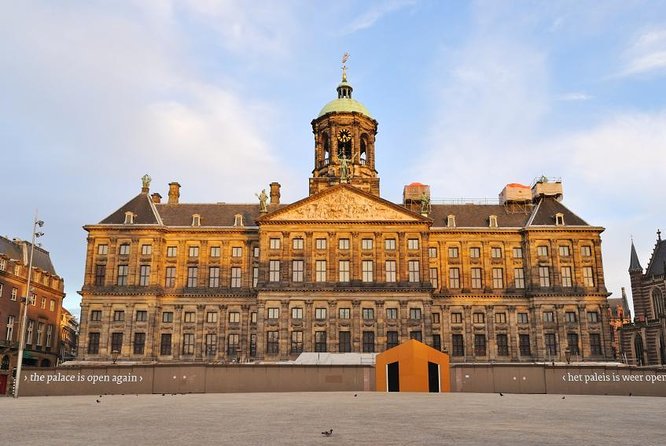
- Engineering you can see: Centraal Station and the Royal Palace both sit on 6,059 and 13,659 wooden poles, respectively
- Amsterdam’s contrasts, with context: De Wallen gets a moderated discussion and Dam Square gets the political and civic meaning
- Two “secret” layers of Amsterdam: an attic secret church museum plus the Begijnhof’s secluded storybook courtyard
- Pay-for-entry moments are clear up front: Anne Frank House, Royal Palace, Westerkerk, Nieuwe Kerk, and Ons’ Lieve Heer op Solder are the main ticket asks
A five-hour Golden Age route that gets you oriented fast
If Amsterdam is new to you, this kind of private walking tour is ideal. You’re not just ticking off famous names. You’re getting the logic of the city: how water and poles made building possible, how trade and guilds shaped civic buildings, and how religion and politics left physical marks you can still see.
I like that the route spans very different neighborhoods without feeling random. In one afternoon you can go from Centraal’s 19th-century grand scale to the quieter Begijnhof courtyard, and from the medieval Weeping Tower area to Dam Square’s monument-heavy center. It’s a strong “first map in your head” day.
The pace is also built for first-day energy. Many stops are short (often 5–15 minutes), so you keep moving, but you still get enough time for photos and for the guide to connect the dots. And because it’s private, you can ask follow-ups instead of losing your chance in a crowd.
You can also read our reviews of more walking tours in Amsterdam



Private means you can ask questions, pause, and stay human
This tour is capped at a maximum of 4 people, which changes the feel right away. You’re not waiting for people to catch up, and the guide can actually respond to what you care about: canals, churches, architecture, or the darker edges of the city.
You meet at Amsterdam Centraal (Stationsplein, 1012 AB) and the tour ends back at the same meeting point. Pickup is offered, which helps if you’re staying outside the center or you just don’t want to cross the city before the tour even starts.
The star here is the guide. Aleks/Aleksandar doesn’t just recite facts. He’s comfortable working with different ages and learning styles. In families, he’s known for keeping kids engaged instead of talking over them, even turning explanations into quick questions. He also speaks multiple languages, including English and Slovak, which matters if you want clear answers fast.
Centraal Station, St. Nicholas Basilica, and the Weeping Tower link to Henry Hudson
The tour starts with Amsterdam’s biggest “welcome sign”: Centraal Station. You get the building context early—its central role as a hub, plus the engineering detail that it was set up on 6,059 wooden poles. The station’s Dutch neoclassical look (from the second half of the 19th century) is the kind of contrast that helps you understand Amsterdam. This is a city that modernized hard while still relying on older infrastructure know-how.
From there you head to St. Nicholas Basilica, the biggest Catholic temple in the Netherlands, dating from the second half of the 19th century. It’s a good stop because it’s not subtle: you’ll see Catholic architecture as a strong presence in a mostly Protestant-coded cultural memory. If you’re curious how different faiths shaped the city, this gives you a starting point.
Then comes the Weeping Tower. This area once belonged to the medieval wall around Amsterdam (15th century), and it’s tied to a major story: Henry Hudson setting sail from this location on his journey toward Northern America. You’re not just looking at a name on a map. You’re hearing how Amsterdam connects to global exploration and trade routes, years before the modern city took its current form.
All three of these stops are listed with free admission, so you’re not burning ticket budget just to get your bearings.
From the smallest house to the Waag: canals, guild power, and narrow-city living
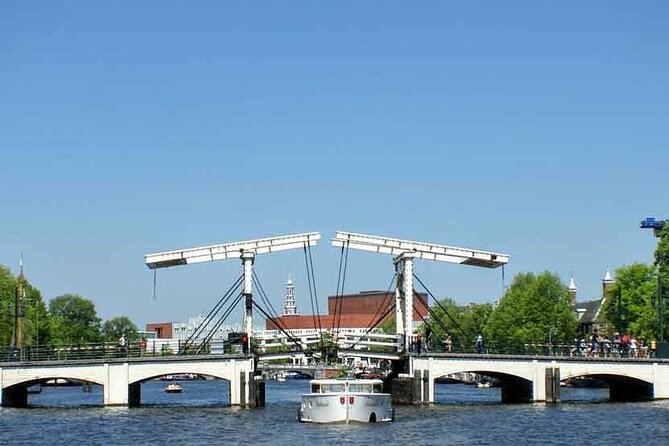
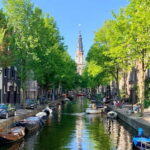
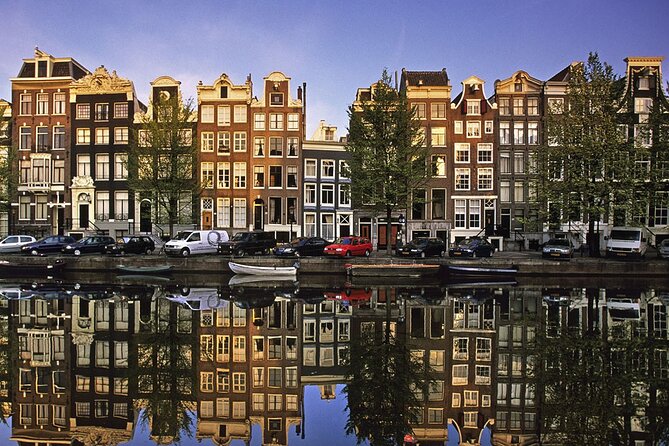
Amsterdam’s canal story gets real at Het Kleinste Huis van Amsterdam (the smallest house in Amsterdam). It’s located at canal Singel, and the guide focuses on what makes it meaningful: not just the “smallest” trivia, but the canal system itself—what the grachten were for, how they worked, and how they need maintenance.
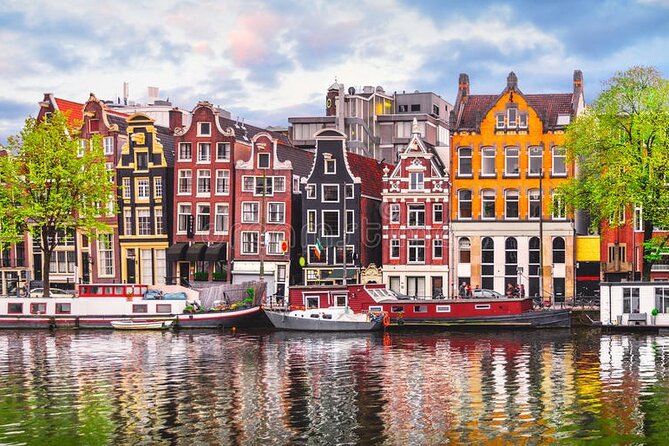
This stop also sets you up for what you’ll notice elsewhere: narrow, tall, and slightly leaning houses and the way bridges shape street-level movement. Even if you don’t go inside every building later, you’ll start reading the city’s geometry like a message.
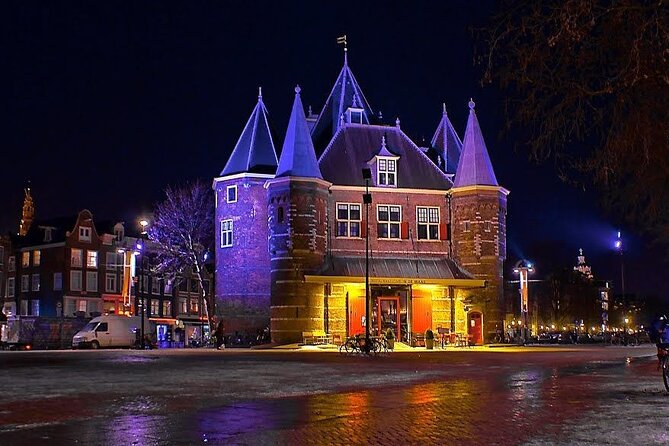
Next you’ll hit De Waag (the Waag), often described as a city weigh-building—also a customs house and headquarters for several guilds. It dates from the beginning of the 15th century and it once served as one of the gates to the inner part of Amsterdam.
Why it matters: guilds and weigh-houses weren’t decorative. They were how Amsterdam processed goods, regulated trade, and protected business interests. That’s the Amsterdam “why” behind a lot of what you’ll see: buildings connected to commerce were built to last, and their roles were embedded into the city layout.
These are stop-to-stop explanations that you can’t replicate as easily if you’re just wandering alone, because you’ll miss what each building used to do.
Secret church on a roof, plus a Chinatown temple in the same afternoon
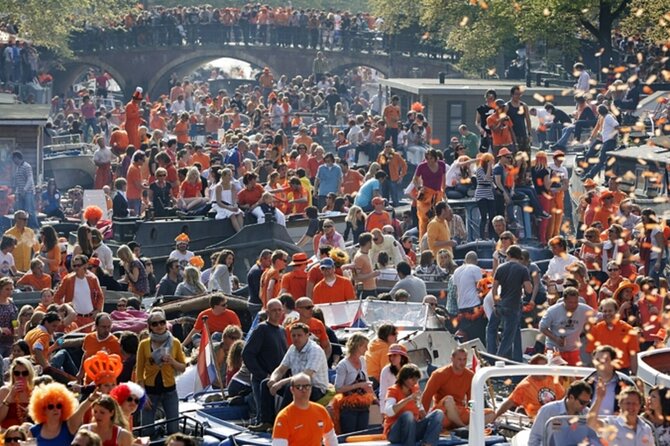
One of the most memorable contrasts on the route is Ons’ Lieve Heer op Solder, the Our Lord in the Attic Museum. It’s known as Amsterdam’s most famous secret church. The site was restored and now works as a museum, which means you get a real explanation for how religious life could adapt to pressure.
Important for planning: entrance is not included, and there’s a ticket fee (listed as €16.50 per person). The stop is short on the schedule (around 5 minutes), so if you’re the type who likes to read every label, you’ll want to mentally treat it as an orientation visit. It’s still valuable, because the guide context helps you understand what you’re seeing, even in limited time.
Then the route swings to Fo Guang Shan, a Buddhist traditional temple in the center of Amsterdam’s Chinatown. It’s listed as the second biggest temple of its kind in Europe, and it’s a refreshing reminder that Amsterdam isn’t a single-story city. You’ll experience a different kind of spiritual architecture and see how immigration and culture layered onto the old center over time.
This temple stop is marked with free admission, so it’s a great “no ticket stress” moment before the more emotionally charged sections later.
You can also read our reviews of more guided tours in Amsterdam





De Wallen and Dam Square: Amsterdam’s contrasts, explained with rules of the road
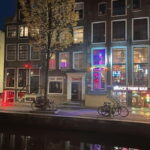
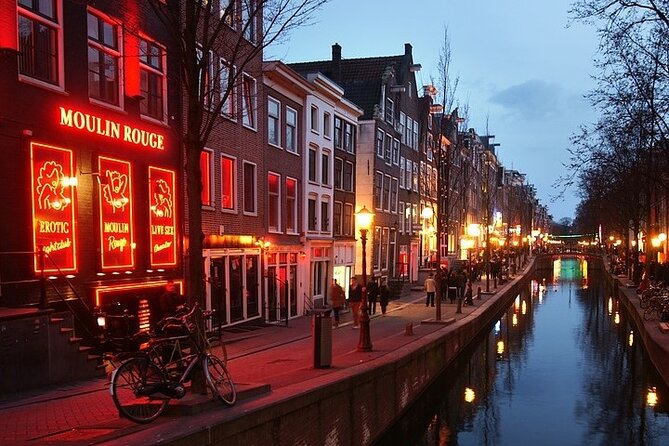
The Red Light District (De Wallen) is approached with a specific goal: not shock value, but context. You’ll get about 30 minutes of moderated talk about prostitution and drug policy in the Netherlands, including the guide’s practical framing of what’s allowed versus what crosses the line.
This is one of those parts where a private guide really earns their pay. You can ask questions in a respectful setting, and the discussion stays grounded instead of turning into chaos. Still, this section may feel heavy or awkward depending on your comfort level. If you’re traveling with teens, or you prefer lighter topics, it’s worth communicating that early so your guide can pace your exposure.
After the Red Light District you’ll head to Dam Square, Amsterdam’s central and oldest square and often described as the birthplace of the city. The surroundings do the heavy lifting here: you’ll see the Royal Palace area, the New Church context, the National Monument, and big modern landmarks like Madame Tussauds, Magna Plaza, and Hotel Krasnopolski.
Dam Square is where Amsterdam shifts from intimate stories to civic scale. The city wants you to feel the public power.
Right after that, the tour covers Royal Palace Amsterdam. This former City Hall (mid-17th century) is one of the official royal residences, and it also sits on 13,659 wooden poles. Entrance is not included (listed as €10 per person), so you’ll mainly get the exterior and the historical framing as you pass.
Then comes the National Monument, a WWII remembrance stand that is 22 meters high and commemorates casualties from World War II and subsequent armed conflicts (the stand dates to 1956). It’s a strong pause point—Amsterdam turns quieter when you’re standing in front of a memorial built for that purpose.
Nieuwe Kerk follows. It was erected initially in the 15th century, and it’s still used for weddings and coronations of Dutch royals. Entrance is not included (listed as €10 per person), so plan to let the guide’s explanation do the work if you’re not going inside.
Begijnhof: a calm courtyard with Beguines, hidden churches, and a 1345 legend
Begijnhof is one of the best “exhale stops” in the whole route. The courtyard is hidden and dedicated to the Beguines, described as a semi-closed sisters order similar to nuns. You’ll also hear about another secret Catholic church in the area.
The place is famous for more than just romance. You’ll learn that it includes the oldest wooden house in Amsterdam and a section called the English Church. The guide also shares a legend tied to Cornelia Arens and the Miracle of Amsterdam from 1345.
Why I think this stop works so well on a guided walk: the Begijnhof doesn’t read like a big monument from outside. You need the story to understand why it matters. Once you have that, you notice details you’d otherwise rush past, like the sense of enclosure and how the architecture supports a lived, protected community life.
Admission is listed as free for this stop, which is another win. The courtyard atmosphere is the value here, not what you pay.
Munt Tower, Rembrandt’s Night Watch 3D, and the flower market break
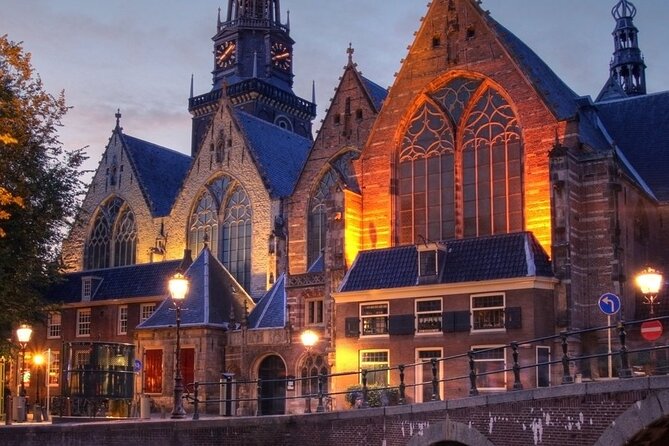
As you continue, the tour returns to the “Amsterdam runs on water, money, and art” theme.
Munt Tower (Munttoren) is brief but meaningful. It was erected in the 15th century at the meeting point of river Amstel and one of the oldest canals in Amsterdam, Singel. It served as one of the main gates to the medieval city and was a minting place where coins were minted during the 17th century.
Next you’ll get Rembrandt Monument. This stop honors Rembrandt van Rijn and includes a 3D exposure of his masterpiece The Night Watch. It’s also where you’ll hear trivia about the painting and his private life. Even if you’re not a hardcore art person, a 3D presentation can help you connect the painting to your own eyes instead of treating it like a distant museum object.
Then there’s time for the flower and garden accessories market. This is positioned as the biggest and most famous in the city, and it’s a good opportunity if you like tulip bulbs and want to browse different kinds of flowers. If you buy bulbs, just remember you’ll be carrying them for the rest of your day.
Another architectural texture stop is Sint Luciënsteeg, which includes the city orphanage (Burgerweeshuis) from 1580. The street is noted for stone gables and stone tablets referencing house identities across medieval ages. It’s the kind of stop that makes you slow down, because the walls start telling you personal stories instead of just “here’s a building.”
Anne Frank House, Westerkerk, and Jodenbuurt: moving sites with real planning needs
This part of the tour is where Amsterdam’s past becomes personal and emotional.
Anne Frank House is included on the route, but entrance is not included. There’s an explicit planning note: tickets can be booked only online, and you must book at least 6 weeks in advance. That matters a lot here. If you show up hoping to figure it out last minute, you can end up missing the experience entirely.
The tour allocates about 15 minutes for this stop, so treat it as a guided timeline moment. You’ll get the essentials, but the full experience usually depends on your own pace inside.
Nearby is Westerkerk. This church dates to 1631 and is described as the third oldest church (after South and North). It has a leaning tower and was intentionally built for Protestant believers. You’ll also hear about Beatrix’s wedding location there, plus the (never precisely proven) claim that Rembrandt van Rijn was buried nearby.
Entrance is not included, listed as €7 per person, so again, you’re relying on the guide’s context if you don’t go inside.
Then you get the Amstel view—an easy visual break after the heavy sites. You’ll look over the river and surrounding buildings with access to viewpoints and famous bridge names, including the Blue Bridge and Skinny Bridge.
Finally, the tour reaches Jodenbuurt, also known as Plantage, Amsterdam’s Jewish Quarter. From the end of the 16th century until WWII, many Jews lived there, and you’ll hear about important buildings through centuries plus Holocaust monuments and memorials. The stop is listed as 30 minutes, so it’s not rushed, and it gives the route an important arc from personal story to community story.
Price and ticket totals: what $540.69 really buys
This tour is priced at $540.69 per group, up to 4 people. If you book with a full group of 4, that’s about $135 per person for a guided afternoon that covers a huge range of Amsterdam landmarks.
What makes this better value than a basic walking tour is the combination of private pacing and the number of high-impact stops. You’re not spending the whole day trapped between ticket lines and long transfers, because many stops are marked as admission free for the walk-up viewing.
That said, some interior highlights are not included, with the following listed fees:
- Royal Palace Amsterdam: €10 per person
- Westerkerk: €7 per person
- Old Center: €13.50 per person
- Our Lord in the Attic Museum Ons’ Lieve Heer op Solder: €16.50 per person
- Anne Frank House: €16 per person
- Nieuwe Kerk: €10 per person
If you chose every one of those paid interiors, you could be adding about €73 per person on top of the tour price. Your real cost depends on which of those sites you care about most.
Also, remember the tour includes pickup offered, but the meeting point is Amsterdam Centraal and the tour ends there too. So you’re mostly paying for guide time and route design, not transportation.
Should you book this private Amsterdam walking tour?
Yes, if you’re a first-timer or you want a guided “city logic” day. The route is built for orientation: medieval walls and canal meaning early, civic Amsterdam in the middle, and emotional WWII sites near the end.
Book it if you value a guide who can tailor explanations to different ages, and who can handle tough topics like De Wallen with clear, moderated context. It’s also a strong fit for small groups who want conversation instead of headset listening.
I’d skip or adjust your expectations if you dislike planning ticketed entrances. Anne Frank House needs online tickets booked at least 6 weeks ahead, and multiple churches/palaces are not included. If you want a slower day spent only inside museums, you might want a different format with longer time at fewer sites.
FAQ
How long is the tour?
The tour is approximately 5 hours.
What is the maximum group size?
The maximum group size is 4 people.
Where does the tour start and end?
It starts at Amsterdam Centraal railway station (Stationsplein, 1012 AB Amsterdam) and ends back at the same meeting point.
Is pickup available?
Yes, pickup is offered.
How much does the tour cost?
It costs $540.69 per group (up to 4).
Are entrance fees included?
Some stops are listed as admission ticket free, but several major interiors are not included. You’ll pay separate entrance fees for the not-included sites.
Which attractions have entrance fees that are not included?
Royal Palace Amsterdam (€10), Westerkerk (€7), Old Center (€13.50), Our Lord in the Attic Museum Ons’ Lieve Heer op Solder (€16.50), Anne Frank House (€16), and Nieuwe Kerk (€10).
Do I need to book Anne Frank House tickets in advance?
Yes. Tickets are possible to book only online and at least 6 weeks in advance.
When does the tour run?
The opening hours listed show Monday from 11:00 AM to 5:00 PM.
What is the cancellation cutoff for a full refund?
You can cancel up to 24 hours in advance of the experience for a full refund.