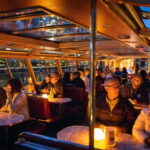
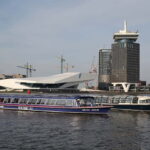
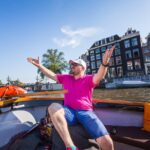
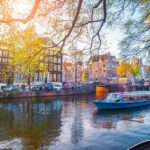
Amsterdam looks different from the water. This private canal cruise glides through some of the best-known Amsterdam canals on a small, historic boat, guided by an art historian who puts the city’s architecture and art in context as you float. You get a tight group setup (up to 10), plus coffee and other beverages to make the whole thing feel easy and personal.
I particularly love the way the guide connects landmarks to stories, from the Prinsengracht areas to the Rembrandt corner and the “rich traders of the 17th century” along the Herengracht. I also like the comfort factor: the boat is small enough to feel intimate, and you get a real break from street noise while everything rolls past quietly.
One possible drawback: this is a cruise, so you’re mostly seeing sights from the water rather than getting out and walking neighborhoods at each stop. If you’re hoping for frequent on-foot exploring, you’ll need to plan that separately after the boat ride.
In This Review
- Key things to love about this private canal cruise
- Getting on board at H’ART Museum (Hermitage Amsterdam)
- The canal loop: Spiegelgracht and Prinsengracht to Amstelveld
- From Skinny Bridge to Amstel locks: the engineering story
- 17th-century wealth on Herengracht (and why it matters)
- The Seven Bridges route and the Jordaan neighborhood
- Anne Frank House view from the water
- Coffee, beverages, and the guide you’ll actually talk to
- Price and value for a group up to 10
- Weather matters more than you think
- Who this private canal cruise is best for
- Should you book this private Amsterdam canal cruise?
- FAQ
- How long is the private canal cruise?
- Is the tour only offered in English?
- What’s the group size for this private tour?
- What’s included during the cruise?
- Where does the tour start and end?
- What canals and landmarks are part of the route?
- Is a baby stroller allowed?
- What happens if the weather is bad?
Key things to love about this private canal cruise
- A personal art historian guide who explains what you’re seeing in plain language
- Small group on a historic boat for a calmer, more “local” feel
- Classic Amsterdam route flow from Prinsengracht into the Amstel River
- Iconic photo stops including the Skinny Bridge and the Amstel locks
- Canal-house wealth meets everyday life with stops like Herengracht and the Jordaan
- Coffee and drinks included so you can focus on the scenery, not the search
Getting on board at H’ART Museum (Hermitage Amsterdam)
The meeting point is H’ART Museum (Hermitage Amsterdam) at Amstel 51, right in a convenient spot near transit. That matters because Amsterdam can be a bit chaotic on foot; starting where the tour is already organized helps you avoid the “where do we actually meet?” scramble.
Once you’re on the boat, the experience shifts immediately. You’re not stuck at a crowded pier or pressed shoulder-to-shoulder with strangers. You’re in a small private setup, and that changes the whole vibe: the guide can actually react to your questions, not just deliver a script.
Plan on staying relaxed with timing. The ride is about 1 hour 30 minutes to 2 hours, long enough to cover a lot of ground, short enough that it doesn’t feel like a half-day commitment.
You can also read our reviews of more boat tours in Amsterdam
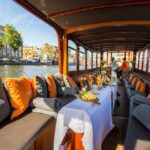
The canal loop: Spiegelgracht and Prinsengracht to Amstelveld
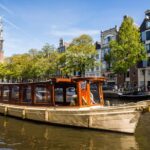
This cruise gives you a clean “Amsterdam canal greatest hits” sequence, and it starts by heading into Spiegelgracht and then Prinsengracht. These are the kinds of waterways where the city’s canal-house design shows up clearly from the water, and that’s when the guide’s context makes the visuals click.
On the Prinsengracht stretch, you’ll pass Amstelveld and the houseboat area. This is useful because Amsterdam isn’t only museums and galleries; the canals also show everyday living patterns that shaped how people used the waterfront. Even if you’ve seen canal photos before, the houseboat area and the waterfront proportions tend to look different when you’re actually moving past them.
Then the route heads down toward the Amstel. Turning left in the river is a big “story change” point on the cruise: you’re switching from the classic canal network into the river system that feeds key landmarks. The guide’s job here is helpful because it keeps the trip from feeling like just a scenic slideshow.
Practical tip: keep your phone/camera ready, but also look up. From the boat, the best views often come in quick bursts as the boat changes direction.
From Skinny Bridge to Amstel locks: the engineering story
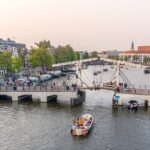
One of the most recognizable moments on this itinerary is the Skinny Bridge. Seeing it from the water gives you a more accurate sense of how narrow that crossing feels in context, because the river frames it directly. It’s also a good “reset” point: after the canal approach, the bridge and river geometry make everything feel more grounded.
Next you’ll see the Amstel locks. Locks are one of those Amsterdam features that sound technical, but they’re also part of the city’s survival logic—controlling water levels and keeping navigation possible. Since the cruise includes a guide with an art historian background, you’re more likely to get the why behind these structures instead of a quick “here it is” photo stop.
After the locks, the cruise continues to the Rembrandt corner, where you’ll learn that Rembrandt spent the first years of his life in Amsterdam. This is a strong choice for a canal cruise route because it ties art and place together without turning the trip into a museum day.
I like that the itinerary doesn’t treat “history” as a lecture. It’s integrated into what you’re passing, so you can connect names to settings as the boat moves.
17th-century wealth on Herengracht (and why it matters)
The cruise turns toward Herengracht, often described as the canal of the Lords. The big value here isn’t just seeing a pretty canal façade. It’s understanding what that wealth physically looked like—how trade and power showed up in building scale, frontage, and the feel of the waterway.
The route specifically includes a stop framed around how the rich traders of the 17th century lived. That’s important because Amsterdam’s canal system was not only romantic scenery; it was tied to commerce and status. Watching these stretches from the water makes it easier to notice patterns you might miss if you walk one street at a time.
There’s also a segment that references the dancing houses. You’ll pass them as part of the flow, and that kind of curiosity point is perfect on a private cruise. It keeps the story from becoming only serious architecture talk.
If you tend to get bored with scripted tours, this part is a win. The guide can slow down when something unusual appears—like the “dancing houses”—and speed up when you’re back on the more straightforward canal-lord stretches.
The Seven Bridges route and the Jordaan neighborhood
Next up: Keizersgracht and then the famous seven bridges area in Reguliersgracht. This section works well because the cruise moves like a loop of viewpoints. Even if you’ve already heard of the seven bridges, the angle from the boat changes the effect. You’re not just looking at a landmark—you’re seeing how the waterways cut the city and connect neighborhoods.
Then the cruise heads into the Jordaan. This is one of those Amsterdam neighborhoods you may have already heard about, but from the canal you can get a different sense of scale and layout. The canal route makes the Jordaan feel like part of the city’s living fabric, not just a name on a map.
Since this is a private tour with a small group, you can ask practical questions that change how you’ll explore later. For example, I love using a ride like this to get a quick sense of where you’d want to walk after lunch—where streets are close to the water, where bridges create easy crossings, and where the vibe feels most like what you want to spend time on.
At this stage, the cruise also starts moving back toward where it began, so you’re not stuck “waiting for the end.” It feels like a continuous storyline rather than disconnected sightseeing blocks.
You can also read our reviews of more private tours in Amsterdam
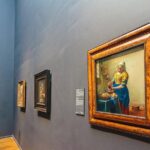



Anne Frank House view from the water
The itinerary includes a stop labeled Anne Frank House. On a boat cruise, that usually means you’ll see the area from the water as you pass through the route near it.
This is still worthwhile even if you’ve already seen photos. From the canal, you get a sense of how tightly the neighborhood sits around the waterways. That’s useful context if you plan to visit the house later on foot, because you’ll already have an internal map of the surroundings.
One gentle reminder: since this is a cruise, you’re not spending time inside or entering the house during the ride. If that’s your priority, you’ll need a separate plan.
Coffee, beverages, and the guide you’ll actually talk to
The included refreshments are part of what makes this tour feel “special but not stressful.” You’ll get coffee and/or tea, bottled water, and alcoholic beverages during the cruise. That’s not just a perk—it helps you settle in and enjoy the ride without feeling like you need to spend money or hustle for drinks.
The biggest differentiator, though, is the guide. You’re with a professional art historian guide, and the tone from the trip info points to a style that’s friendly and entertaining, not stiff. In a private format, that matters because you can get explanations tailored to what you’re curious about—art, architecture, or the human stories behind the names.
For your experience, this guide factor changes how you interpret canal houses. You start noticing details instead of treating everything as postcard wallpaper. Even when you don’t catch every detail, you’ll walk away with a mental storyline of Amsterdam’s waterways.
And yes, it’s also a nice break from street-level chaos. On a day when crowds make everything feel loud, a canal cruise can feel like someone lowered the volume.
Price and value for a group up to 10
The price is $599.50 per group, up to 10 people. That setup is the key to the value: it’s not priced like an individual ticket where you pay the premium no matter what. If you can fill the group with friends or family, the cost-per-person can work out much more sensibly than public cruise options.
Even if you’re not at 10 people, the private structure is still doing something practical. You avoid the fixed “mass tour” feel. You get a guide who can slow down, and you’re not competing with other groups for the best moments to hear what’s happening.
What you’re really buying is time in the canals with a guide who turns scenery into understanding. If you want a tour that helps you see Amsterdam as a connected place (not isolated sights), this format tends to justify the price. If you’re only after photos and don’t care about the story, then you might feel the cost is higher than the experience you wanted.
Duration is another part of value. With 1.5 to 2 hours, it’s long enough to feel like you did something meaningful, but short enough that you can still plan dinner and a walk afterward.
Weather matters more than you think
This experience requires good weather. Amsterdam can change quickly, and when it’s cold or rainy, being out on open water can be less fun even if the boat stays comfortable. The good news is that if it’s canceled due to poor weather, you’ll be offered another date or a full refund.
My advice: if you’re flexible, choose a day when forecasts look stable. And if you don’t like getting wet, dress for the water, not for the street. A canal breeze can feel different than you expect.
Who this private canal cruise is best for
This is a strong fit if you want:
- A private, small-group Amsterdam experience without street crowd pressure
- A guide-led tour where you care about architecture and names like Rembrandt and Anne Frank
- A calm first-or-mid-trip activity that helps you orient yourself for the rest of your day
- Couples, families, and small groups who can share the group price and enjoy the included drinks
It’s less ideal if you want to:
- Get out frequently and walk from stop to stop
- Spend long hours in one museum site during the same outing
- Do lots of hands-on activities (this one is about the boat ride and the views)
Should you book this private Amsterdam canal cruise?
If you like guided context and you want a calmer, more personal Amsterdam experience, I think this is a book-worthy option. The route hits major canal landmarks—Prinsengracht, Herengracht, Keizersgracht, the Skinny Bridge, the Amstel locks, and the Jordaan—and the art historian angle helps you turn what you see into something you remember.
The strongest reason to choose it is simple: you get the canals plus story, in a format that feels made for conversation. If your group can take advantage of the up-to-10 setup, it also becomes an easier value call.
My one caution is weather and expectations. Bring rain-friendly clothing just in case, and go in knowing you’ll be seeing most things from the water rather than walking every neighborhood on the itinerary.
FAQ
How long is the private canal cruise?
The tour runs about 1 hour 30 minutes to 2 hours.
Is the tour only offered in English?
Yes. The experience is offered in English.
What’s the group size for this private tour?
It’s a private tour/activity where only your group participates. The price is for a group up to 10.
What’s included during the cruise?
Included items are a professional art historian guide, bottled water, coffee and/or tea, and alcoholic beverages.
Where does the tour start and end?
It starts at H’ART Museum (Hermitage Amsterdam), Amstel 51, 1018 EJ Amsterdam and ends back at the meeting point.
What canals and landmarks are part of the route?
The cruise includes stretches through Spiegelgracht and Prinsengracht, then the Amstel area with stops such as the Skinny Bridge, Amstel locks, Rembrandt corner, Herengracht, Keizersgracht, the seven bridges area, and the Jordaan, with a stop listed for Anne Frank House.
Is a baby stroller allowed?
No. The experience states no baby stroller.
What happens if the weather is bad?
The tour requires good weather. If it’s canceled due to poor weather, you’ll be offered a different date or a full refund.