REVIEW · AMSTERDAM
Amsterdam: Traditional Dutch Syrup Waffle Making Workshop
Book on GetYourGuide →Operated by We Are Amsterdam · Bookable on GetYourGuide
Caramel air hits the moment you step in. I love the hands-on traditional stroopwafel making, especially the precision of the syrup-and-iron technique, and I also love that you leave with XL stroopwafels (one to eat there and one to take home). One consideration: it isn’t suitable for wheelchair users, and if you’re seated toward the back, you may struggle to hear the instructor’s guidance.
In about 45 minutes, you’ll learn why stroopwafels became a Dutch icon (they’re traced back to the 18th century) and how to get that crisp-golden outside with a soft, sticky center. It’s a fun, beginner-friendly class with real instruction, clear pacing, and hosts who keep the energy high while teaching you how the sweet works.
In This Review
- Key Points Worth Knowing Before You Go
- First Stop: The Workshop Door Behind Albert Cuyp Market
- The 45-Minute Flow: History, Apron On, and Straight Into Making
- Learning the Stroopwafel Technique: The Iron and the Warm Syrup Matter
- The Sweet Pause: Coffee or Tea and a Chance to Chat
- What You Actually Get: XL Stroopwafels, Take-Home One, and a Certificate
- Price Check: Why $23 Often Feels Fair in Amsterdam
- Practical Tips That Make the Workshop Smoother
- Should You Book the Amsterdam Stroopwafel Workshop?
- FAQ
- How long is the Amsterdam traditional stroopwafel workshop?
- What is included in the price?
- Is the workshop taught in English?
- Can I take one stroopwafel home?
- Where do I meet for the workshop?
- Is this experience suitable for wheelchair users?
- Is free cancellation available?
Key Points Worth Knowing Before You Go
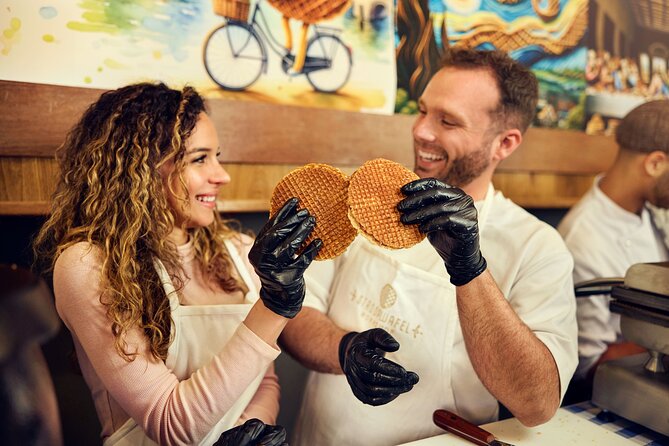
- You make XL stroopwafels from scratch and get one to eat on-site plus another to take home
- Traditional waffle irons and syrup technique are the core of the workshop, not just decoration
- Coffee or tea is built into the break, so you can actually pause and talk with others
- Instructors teach in English and keep a steady, step-by-step pace (names like Vince, Lisa, Franziska, Jay, Julia, and Roza show up in prior sessions)
- You get a stroopwafel-making certificate, plus a few extra small touches noted by many participants
First Stop: The Workshop Door Behind Albert Cuyp Market

The workshop takes place in North Holland, right in the heart of Amsterdam, and the meeting point puts you near one of the city’s best food-watching spots: Albert Cuyp Market. The door opens 5 minutes before your scheduled start time, so you’re not left standing around in the cold for long.
Here’s the practical part: arrive 10 minutes early if you can. You’ll have time to orient yourself in the market area, and you won’t feel rushed when you find the workshop building. The workshop is in the building behind the market stands, which can be easy to miss at first glance—especially when stalls are active. If you do get turned around, the voucher includes a phone number for quick help.
Parking can also be a time sink here. If you’re driving, plan to arrive earlier rather than later because finding a spot near the market area can be challenging. For most people, public transport plus a short walk is the calmer approach.
This location choice matters. You’re not going to some out-of-the-way studio where stroopwafel making feels like an island experience. You start in a real Amsterdam food district, and that context makes the workshop feel more like Dutch everyday culture and less like a themed show.
You can also read our reviews of more tours and experiences in Amsterdam


The 45-Minute Flow: History, Apron On, and Straight Into Making
This class is short by design—45 minutes—so you don’t spend your trip stuck in a long lesson. The session starts with an introduction from your instructor, including the history of stroopwafel going back to the 18th century. You get just enough background to understand why the waffle design and syrup filling became such a lasting hit.
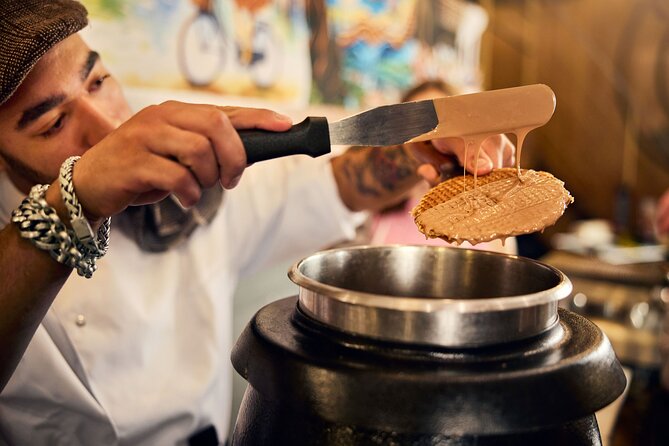
Then it’s straight to work. You’ll put on an apron, gather around, and watch a demonstration of the process. The workshop focuses on how to create the right texture: thin waffle layers, the correct handling of warm syrup, and the cooking steps needed for that golden, crisp feel.
What I like about this format is that it respects your time while still teaching you real technique. You aren’t just tasting and leaving. You’re learning a sequence: mix and roll, cook on the traditional iron, assemble with the warm caramel syrup (the stroop), and let things cool enough to handle properly.
Also, the pace tends to be intentional. In prior sessions, people highlighted that the instructors make time for individuals and keep the group moving without rushing. One small warning that comes up: if the group is larger, there can be some waiting time for the waffle-making irons, since the equipment isn’t unlimited. Even then, the session is still structured so you get your turn and end up eating what you made.
Learning the Stroopwafel Technique: The Iron and the Warm Syrup Matter
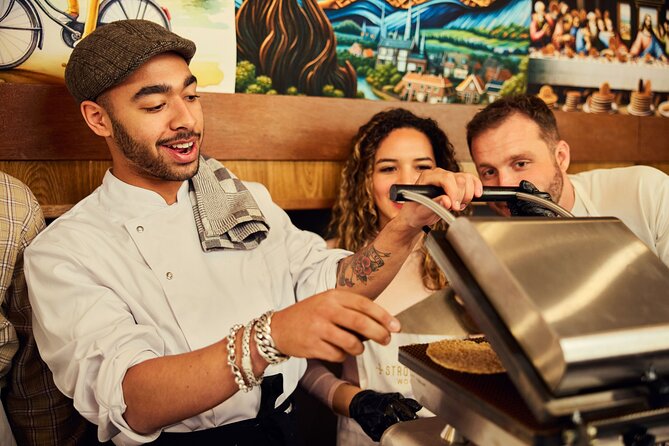
The heart of the workshop is the traditional method. You’ll learn how the dough is rolled and cooked on the traditional iron, then how the stroop (warm, gooey caramel filling) is placed between the thin waffle layers.
This is where the class feels more valuable than a simple dessert activity. Stroopwafel is easy to buy—but making it correctly requires a few details you can’t easily guess. That’s what your instructor handles: how to cook so the waffle is crisp enough, and how to manage the syrup while it’s warm so it spreads and seals the layers the way it should.
The result is the reason people keep coming back to this workshop style. When you take your first bite, you’re tasting that balance: crisp yet tender waffle with a center that’s sweet, sticky, and properly integrated. And because you made it yourself, you notice what worked—texture, thickness, syrup distribution—and you understand the method, not just the outcome.
Instructors are a big part of this. Names that repeatedly appear in previous sessions include Vince, Lisa, Franziska, Jay, Julia, and Roza, and the common thread is confident, friendly coaching. People also mention humor and a welcoming vibe—so even if you consider yourself a kitchen novice, you’re likely to feel supported at each step.
One more practical tip: wear what you don’t mind getting a little dough on. Aprons help, but cooking is still cooking. If you’re going after this class to another stop in Amsterdam, you’ll appreciate having a quick-change plan for yourself or at least comfortable clothes that can handle a bit of mess.
The Sweet Pause: Coffee or Tea and a Chance to Chat

You get a break while your stroopwafels cool down. During this time, you’ll enjoy coffee or tea, and you can mingle with fellow participants. This matters because it turns the class into a shared experience instead of a constant production line.
The cool-down period isn’t just a pause; it’s part of learning how the waffle behaves. If you move too fast, the syrup and layers don’t settle properly. If you wait the right amount, the stroopwafel firms up enough to handle—still gooey inside, but not a hot caramel mess.
This is also when the atmosphere softens. Several people mention that instructors actively keep the session upbeat and make it feel social. It’s a good fit for couples and families because you can talk, laugh, and compare what you did—without needing to be overly skilled.
If you’re a solo traveler, this is one of those rare food activities where you don’t feel like you’re doing everything alone. You’re working side-by-side and then sharing a drink while you wait for the results.
What You Actually Get: XL Stroopwafels, Take-Home One, and a Certificate

Your workshop includes 2 XL stroopwafels. You’ll eat one during the workshop, and you’ll pack up one to take home. This is a strong value point because you’re not limited to a single sample. You’re leaving with something real you can snack on later—on the tram, at your hotel, or the next time you want a quick Dutch treat.
You also get:
- The instructor
- Apron and supplies
- Coffee or tea
- A stroopwafel-making certificate
That certificate seems small, but it lands well because it marks the difference between tasting and learning. You’re not just buying sweetness; you’re leaving with a skill-based memory. Some people also mention extra small branded touches like stickers or a bag, which adds to the fun without changing the core experience.
Food note: the workshop is set up so you’re not expected to buy additional snacks. Extra food and drinks aren’t included, so if you’re hungry after, you’ll want to plan a next stop—but you won’t leave unsatisfied during the class itself.






Price Check: Why $23 Often Feels Fair in Amsterdam

At $23 per person, this workshop sits in the “treat yourself” range for Amsterdam. The trick is what you get for that money: you make XL stroopwafels from scratch, you get a hot drink, and you go home with one more large waffle plus a certificate.
To judge value in Amsterdam, I compare it to buying stroopwafels as finished products. If you’ve been pricing XL waffles around the city, you’ll notice single waffles can cost about as much as one workshop component. Here, you’re essentially paying for two XL waffles and the skill instruction that gets you there.
Time also matters. 45 minutes is long enough to feel like a real activity, but short enough that it doesn’t wreck a day of sightseeing. For many people, that means the workshop slots nicely between museum time, canal wandering, and dinner planning.
So yes, it’s a sweet spend. But it’s not just paying for dessert. You’re paying for the process, the equipment, and the guided technique that makes the end result taste right.
Practical Tips That Make the Workshop Smoother
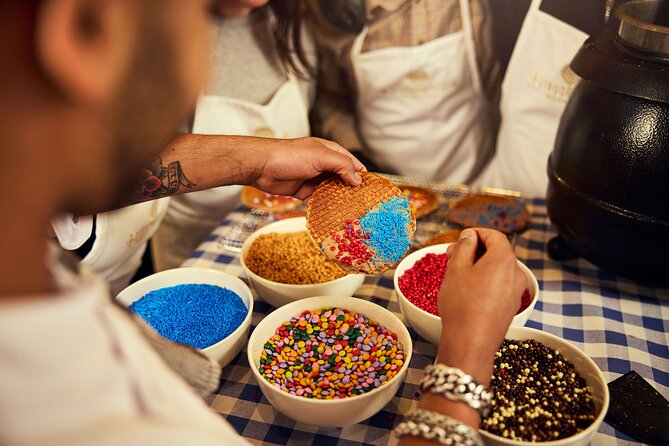
A few things will help you get the most out of your session:
- Arrive early enough to find the right door. The workshop is behind the market stands, and signage can be tricky when the market is active.
- Expect a short, focused class. You’ll move quickly from intro to hands-on making, then a cool-down break with coffee or tea.
- Plan for possible waiting on the iron. If your group is large, there may be brief pauses for equipment, since the waffle makers aren’t endless.
- Sit where you can hear instructions. Some people have said it’s harder to hear from the back. If seating is flexible, pick the clearest view.
- Wear comfy clothes. Dough and syrup are part of the experience, even with aprons.
Accessibility note: the workshop is not suitable for wheelchair users, so it’s best to plan an alternative if mobility is a concern.
Who is this for? Pretty much anyone who wants a hands-on food activity. Previous sessions have included families and even teenagers, and people have called it good for all ages. Couples like it because it feels social without being awkward. Solo travelers like it because you’re actively making something and then sharing the results.
Should You Book the Amsterdam Stroopwafel Workshop?
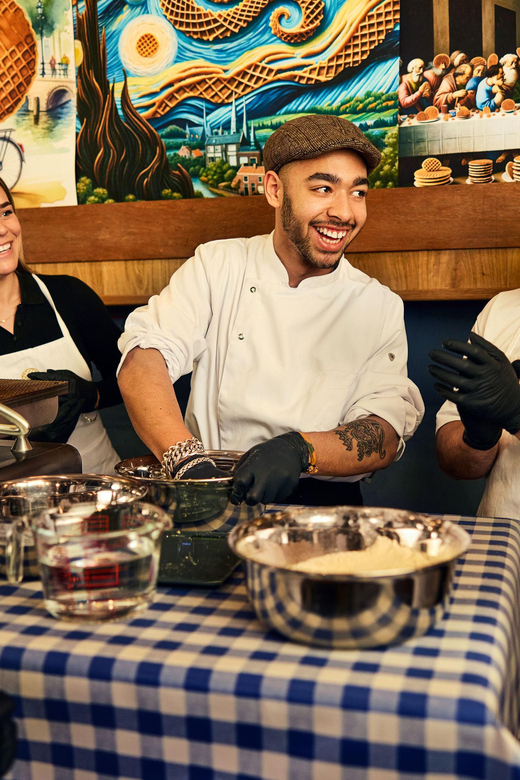
If your goal is to eat an iconic Dutch treat, you can do that anywhere. If your goal is to understand why stroopwafels taste the way they do—and to leave with two XL waffles including one for later—this workshop is a strong choice.
Book it if you want:
- A hands-on Dutch cooking experience in a short time window
- Real technique with the traditional iron and warm syrup method
- A fun, friendly teaching style from instructors such as Vince, Lisa, Jay, Julia, Franziska, and Roza
- A simple win for value: coffee or tea + two XL stroopwafels + a certificate
Skip it if you need wheelchair accessibility, or if you’re very sensitive to not hearing details from the back of a room. In those cases, you may want to consider another Dutch-food experience with a different setup.
If you fall into the first group, you’re likely to have an enjoyable, practical memory that’s genuinely more than just eating something sweet.
FAQ

How long is the Amsterdam traditional stroopwafel workshop?
The workshop lasts 45 minutes.
What is included in the price?
The price includes an instructor, 2 XL stroopwafels (one eaten during the workshop and one taken home), coffee or tea, an apron and supplies, and a stroopwafel-making certificate.
Is the workshop taught in English?
Yes, the workshop is taught in English.
Can I take one stroopwafel home?
Yes. You’ll enjoy one XL stroopwafel during the workshop and pack up one XL stroopwafel to take home.
Where do I meet for the workshop?
The meeting point is the workshop door that opens 5 minutes before the start time. The workshop is in the building behind Albert Cuyp Market stands. If you cannot find it, the voucher includes a phone number for help.
Is this experience suitable for wheelchair users?
No. The workshop is not suitable for wheelchair users.
Is free cancellation available?
Yes. You can cancel up to 24 hours in advance for a full refund.