REVIEW · AMSTERDAM
Amsterdam: Red Light District guided tour (TOP RATED)
Book on Viator →Operated by Trigger Tours · Bookable on Viator
A walk through De Wallen changes fast. This small-group tour pairs the famous sights of Amsterdam’s Red Light District with a local, law-and-history lens, so the area makes sense instead of feeling random. Small-group size helps keep a relaxed pace, and you get time for real questions while still moving through the streets efficiently.
I also like how the tour focuses on context: how the district grew, how rules work, and how Amsterdam tries to balance tolerance with order. If you want a single word of caution, it is mobility—this is not the best fit if you have limited mobility, since you’ll be walking and navigating busy sidewalks and streets.
In This Review
- Key highlights before you go
- Why De Wallen Works Better with a Guide Than Alone
- The Damrak Meeting Point and the 2-Hour Pace
- What You’ll See on the De Wallen Walking Segment
- Stop 1: The Dam Area and the City Built on Wooden Poles
- Pub The Ape and the Old Wood Buildings After the 1452 Fire
- Waag: The Gate That Became a Guild Hub
- The Smallest House and the VOC Connection
- The Condom Shop Since 1987: From Trade to Modern Sex Commerce
- Price and Value: What $34.17 Buys You
- Respect, Rules, and the Tone You Should Expect
- Which Guides You Might Get: Ben, Robin, Andrea, Aarre, Catherine
- Quick Planning Tips That Actually Help
- Should You Book This Red Light District Tour or Skip It?
- FAQ
- How long is the Amsterdam Red Light District guided tour?
- Where does the tour start and end?
- Is the tour in English?
- Is food included?
- How large is the group?
- Is the tour suitable for limited mobility?
Key highlights before you go
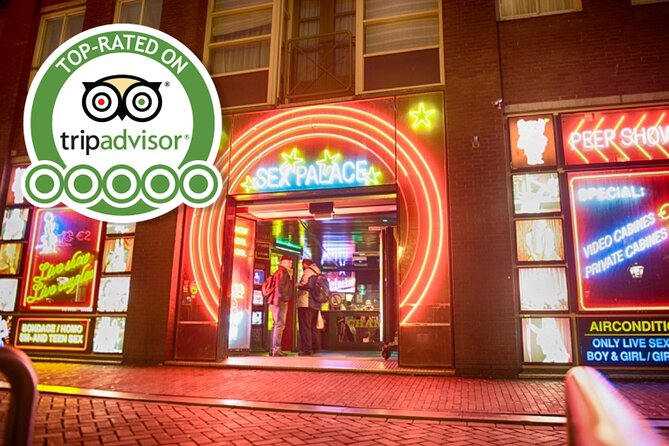
- De Wallen with context: See the sights, but also learn the history and current situation behind them.
- Old Town landmarks in the mix: You’ll connect the district to earlier Amsterdam, including the Dam area and the VOC era.
- A guide who keeps it respectful: The tone is handled with care, including reminders about how to behave.
- Max 15 people: Small enough to hear well and feel less rushed while you’re on foot.
- Practical Amsterdam notes: You’ll get tips that go beyond red lights, like what to watch for in the city’s traffic flow.
Why De Wallen Works Better with a Guide Than Alone

Amsterdam’s Red Light District can feel like two different places at once: famous and theatrical on the street level, but also governed by real rules and local attitudes. With a guide, you’re not just looking at windows and neon. You’re learning why the district exists in this specific shape, and how Amsterdam tries to manage it.
What I like most is that you get “the why.” You’ll hear about history and the current situation, then you can look at what’s in front of you with better understanding. That’s the difference between staring and seeing.
Also, this tour keeps the tone grounded. You’re not sent in for shock value. Instead, you’re taught how to stay respectful toward the people who work there, and you’re encouraged to ask questions when something doesn’t add up.
You can also read our reviews of more guided tours in Amsterdam



The Damrak Meeting Point and the 2-Hour Pace
The tour starts and ends at Damrak (near Damrak 1012 Amsterdam). That’s handy if you’re already using the central area as your home base, since you can usually reach it easily by tram or foot.
The walk runs about 2 hours. Expect steady walking and frequent stops for explanations. This matters because De Wallen is a maze of narrow streets, and without a guide you can spend a lot of time just finding your way rather than understanding what you’re seeing.
For timing, keep in mind the tour needs good weather. If the forecast looks grim, it’s worth considering an alternate date so you don’t get a miserable, slippery evening with less enjoyment.
What You’ll See on the De Wallen Walking Segment
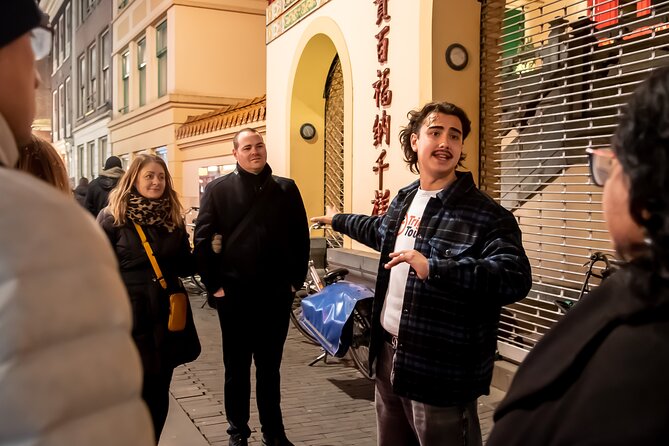
The tour’s heart is the walk through De Wallen, Amsterdam’s Red Light District. You’ll be guided down narrow streets where you can take in the main sights of the area. The goal isn’t to rush past. It’s to slow you down just enough to notice details and learn the story behind them.
You’ll also get an explanation of the district’s history and where things stand now. That includes how the area developed over time and how Amsterdam approaches regulation instead of pretending it doesn’t exist. This kind of context helps you read the streets the way locals do.
One more practical piece: Amsterdam bicycles are fast, and the guide will remind you to watch for traffic. That matters here more than in some other neighborhoods, because the sidewalks can get crowded.
Finally, you’ll feel the benefit of a small group. With a maximum of 15 people, questions don’t get lost and your guide can check in with everyone instead of talking to a blur of faces.
Stop 1: The Dam Area and the City Built on Wooden Poles
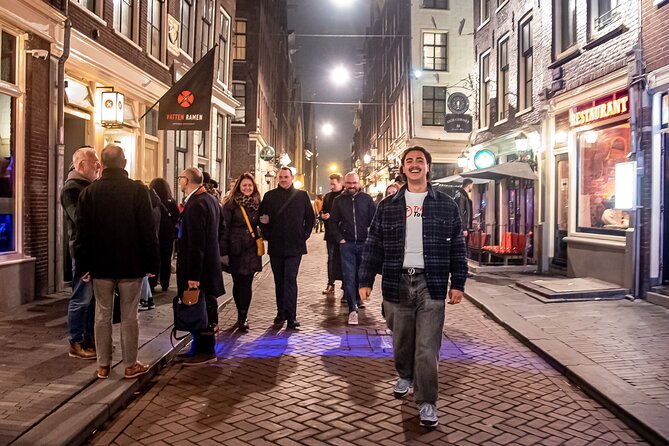
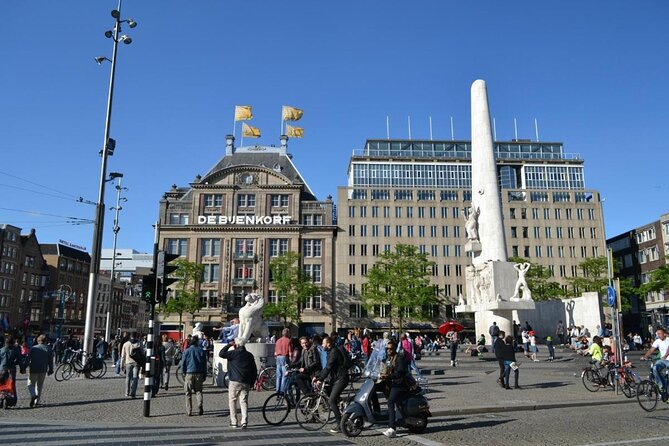
After the De Wallen segment, the route connects you to older Amsterdam through landmarks like the Dam area. Here, the tour shifts from sex commerce and nightlife back to engineering and survival—how Amsterdam was built on soil that doesn’t behave like solid ground.
The key idea is the city’s foundation system. Amsterdam’s ground includes thick layers of fen and clay. Houses were built on wooden piles driven down until they reach a more stable layer of sand at roughly 11 meters deep. You get the “why” behind the look of the city: this is a place that learned to build by fighting the earth.
Why it’s worth your attention: it keeps you from thinking of De Wallen as an isolated pocket of modern life. Instead, you see it inside a city that has always been shaped by tough building conditions and clever solutions.
Pub The Ape and the Old Wood Buildings After the 1452 Fire
One of the most fascinating stops is Pub The Ape (Int Aepjen). The tour points out that this pub was built around 1540, and it’s one of only two remaining wooden buildings in Amsterdam.
That detail matters because Amsterdam changed its building rules after a major fire in 1452. After that point, the government decided buildings should have brick facades. So when you see an old wooden structure that survived, it becomes a living reminder of how much the city has rebuilt—and regulated—over centuries.
As you walk through the Red Light District area, this kind of stop gives you a different kind of “wow.” It’s not just the famous sights that carry weight here. The neighborhood also sits beside stubborn historical survivors.




Waag: The Gate That Became a Guild Hub
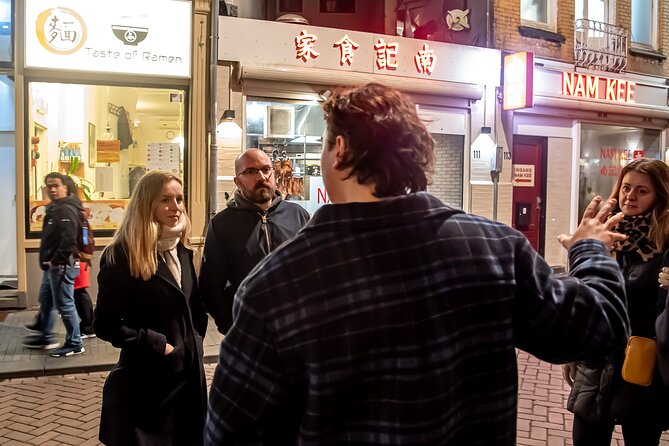
Another stop is the Waag, which the tour describes as a former city gate built around the 1400s and the second oldest building in Amsterdam. Later on, it wasn’t just a pass-through structure. It was used by guilds and craftsman organizations.
In other words, this is a building tied to Amsterdam’s trade and labor history, not just its nightlife reputation. You’ll learn how guilds and craftspeople gathered in and around the Waag area, turning a defensive structure into an economic and social one.
Why it matters for your understanding of De Wallen: it anchors the district in a larger Amsterdam story. This city didn’t become what it is by accident. It organized commerce, work, and community institutions—and those same patterns echo through today’s streets.
The Smallest House and the VOC Connection
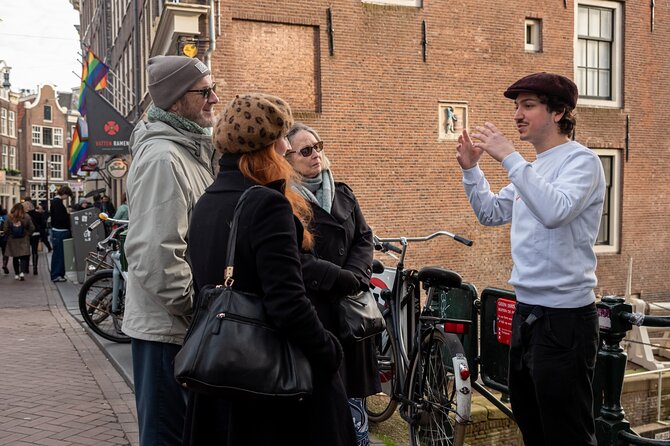
The tour also includes Amsterdam’s smallest house, built around the 1700s. The backstory here is VOC-related: it was first used as storage for the VOC trading company, and later people lived in it for a very long time.
This stop is a great reminder that Amsterdam’s “big ideas” often started with small spaces. It also helps you connect the city’s wealth-making past with how neighborhoods evolved. Trade and global commerce don’t just affect money. They affect housing, building layouts, and who lived where.
As you keep walking, the tour helps you see the city as layered. De Wallen might be the headline, but the route keeps showing how older Amsterdam formed the groundwork for modern life.
The Condom Shop Since 1987: From Trade to Modern Sex Commerce
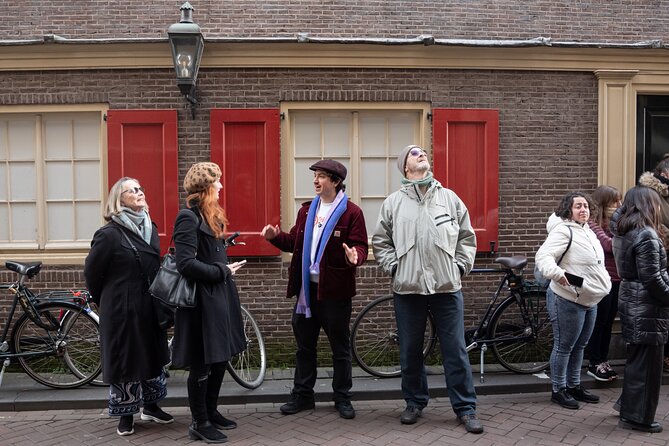
One of the most eye-opening stops is the world’s first condom shop specializing in condoms. The tour notes it has been in place since 1987 and even mentions options like customized sizes and special condom types.
This isn’t just a quirky fact. It’s a window into how Amsterdam treats sex-related commerce as a regulated, visible part of the city rather than a purely hidden one. You see how the district’s economy and public attitudes have evolved into something structured.
For a lot of first-timers, this is the moment the tour delivers its strongest payoff: you realize you’re not just observing an underground scene. You’re seeing a slice of how Amsterdam normalizes certain realities while still trying to manage them carefully.
Price and Value: What $34.17 Buys You
At about $34.17 per person for roughly 2 hours, the value here comes from the guide and the format. This isn’t an attraction with a stack of paid museum tickets. It’s a guided walk that adds interpretation to a place people often misunderstand.
You’re also getting a local guide, and the walking plan includes multiple historic stops along the way. Admission isn’t a factor for the main De Wallen segment since it’s listed as free. So your money goes mostly into skilled explanation and efficient routing—how to look at what you’re seeing and not feel lost.
Small-group size (maximum 15) is a practical value too. You’ll hear better, move more smoothly, and you’re more likely to get answers instead of just listening for crowd-level facts.
Respect, Rules, and the Tone You Should Expect
This is a tour about adult commerce in a place that lives in real streets with real laws. That means the guide keeps things respectful. The conversation is handled with dignity toward the workers in the Red Light District, and you’ll get guidance on how to behave.
You should also come ready for normal street-life reality. This is not a staged show. It’s a neighborhood people live and work in, and the streets can be active. The bicycle traffic reminder is part of that—Amsterdam moves fast, and you’ll want your footing and your attention.
If you’re sensitive about the subject matter, the key is that the tour focuses on laws, history, and how the district operates. It’s not presented as a grab-and-go spectacle.
Which Guides You Might Get: Ben, Robin, Andrea, Aarre, Catherine
A nice thing about this style of tour is that the guide becomes part of the story you hear. Names that stand out in the experience include Ben, Robin, Andrea, Aarre, and Catherine.
What connects these guides is the way they handle the balance: humor and energy on one hand, and respectful, clear explanations on the other. If you’re the type who asks questions, you’ll likely feel the guide making space for them, instead of treating the group like a lecture.
Even if you don’t know the guide’s name ahead of time, you can still expect the same general approach: street-level visibility paired with history and rules.
Quick Planning Tips That Actually Help
A few things make the experience go better.
Wear shoes you can walk in for the full 2 hours. The area involves lots of turning corners and short distances that feel longer once you’re weaving through crowds.
Dress for cold or wet weather if you’re going in the evening. The tour is marked as requiring good weather, but if conditions are borderline, you’ll be happier prepared.
Bring a curious mindset, not a checklist. The tour works best when you’re open to how Amsterdam explains its own tolerance and its own boundaries—through laws, history, and local perspectives.
Should You Book This Red Light District Tour or Skip It?
Book it if you’re a first-timer in Amsterdam and you want the fastest path to understanding De Wallen. This tour is designed to help you get your bearings and interpret what you’re seeing, while also connecting the neighborhood to older Amsterdam landmarks like the Waag, the smallest house, and the wooden-pole foundation story.
Skip it if limited mobility is a concern for you, since this is a walking-focused route through a busy area. Also skip if you strongly prefer avoiding adult-content topics altogether, even when they’re discussed with respect and context.
If you do book, choose a time that matches your comfort level. One practical suggestion from the experience style is that evening can feel more alive, but only if the weather is decent and you’re ready for night-street movement.
In short: this is a good value walk for people who want real context, not just street sights—and it’s especially strong when you want to ask questions and leave with a clearer picture of how Amsterdam thinks about rules, history, and everyday life.
FAQ
How long is the Amsterdam Red Light District guided tour?
It runs for about 2 hours.
Where does the tour start and end?
It starts and ends at Damrak, 1012 Amsterdam, Netherlands.
Is the tour in English?
Yes, the tour is offered in English.
Is food included?
No. Food and drinks are not included.
How large is the group?
The tour has a maximum of 15 travelers.
Is the tour suitable for limited mobility?
It is not recommended for travelers with limited mobility. The tour also requires good weather.