REVIEW · AMSTERDAM
Amsterdam: Private Guided City Tour by Pedicab
Book on GetYourGuide →Operated by a Pedicab in Amsterdam · Bookable on GetYourGuide
Pedicabs let you see Amsterdam without burning your legs. This private tour rolls through the city’s canalside center and gets you into smaller streets and bridges cars and buses can’t reach. Two things I really like: the guide-led stops for photos and questions, and the way the route turns into a fast orientation of how Amsterdam developed.
One thing to consider: if the weather is rough, the tour may not be practical, and it isn’t set up for wheelchair users or for anyone over 243 lbs / 110 kg.
In This Review
- Quick Take: What a Pedicab Tour Gets You That Walking Can’t
- Key Points You’ll Feel from the Start
- Why Amsterdam Works So Well by Pedicab
- The Route: From Damrak to the Canal Ring, with Stops That Make Sense
- Historical Center: Your Orientation Moment
- Newmarket and the Neighborhood Energy
- Chinatown: A Cultural Contrast Without the Long Detour
- IJ Bay: The Water-Lane Perspective
- Damrak and Dam Square: Amsterdam’s Main Crossroads
- Munttoren: A Landmark That Helps You Anchor the Map
- Flower Market: Color and Photo Ops in a Small Space
- Rembrand Square and Rembrandt House: Art Nearby, Stories Attached
- Old Jewish Quarter: Reading the City with Care
- Canal Ring Highlights: Herengracht, Keizergracht, Prinsengracht
- Museum Quarter and the Jordaan: Two Very Different Sides of Amsterdam
- Guides, Language, and the Little Things That Make a Difference
- Price and Value: Is $118 for 2 People a Good Deal?
- When You Should Skip or Adjust Your Plan
- Who This Pedicab Tour Suits Best
- Should You Book This Private Pedicab Tour?
- FAQ
- How long is the Amsterdam private pedicab tour?
- What sights and areas does the tour cover?
- Is the tour private or shared?
- Do you offer hotel pickup in Amsterdam?
- What languages is the live guide available in?
- Is the tour cancellable if plans change?
- Is a speaker or audio device provided for hearing needs?
- When might the tour not be possible?
- Who should not book this pedicab tour?
Quick Take: What a Pedicab Tour Gets You That Walking Can’t

I like this experience best when I want a first-day feel for a big city. You’re seated, you glide through bike-and-canal country, and your guide’s narration helps you connect the dots between neighborhoods instead of just ticking off landmarks.
Because it’s private, your guide can keep adjusting for the time you have and the sites you care about. Guides mentioned in this tour’s history include Alphonso, Guido, Bobby, Kristian, and Bram—many guests highlight their friendly delivery and their skill at navigating Amsterdam’s bike lanes and traffic.
Key Points You’ll Feel from the Start

Small streets and bridge access that bigger vehicles can’t do
Photo-and-story stops built into the ride, not tacked on at the end
Easy orientation in 1 to 2 hours for first-time visits
Guides in several languages: Italian, English, Spanish, German
Hotel pickup in central Amsterdam is available within a specific area limit
You can also read our reviews of more guided tours in Amsterdam



Why Amsterdam Works So Well by Pedicab
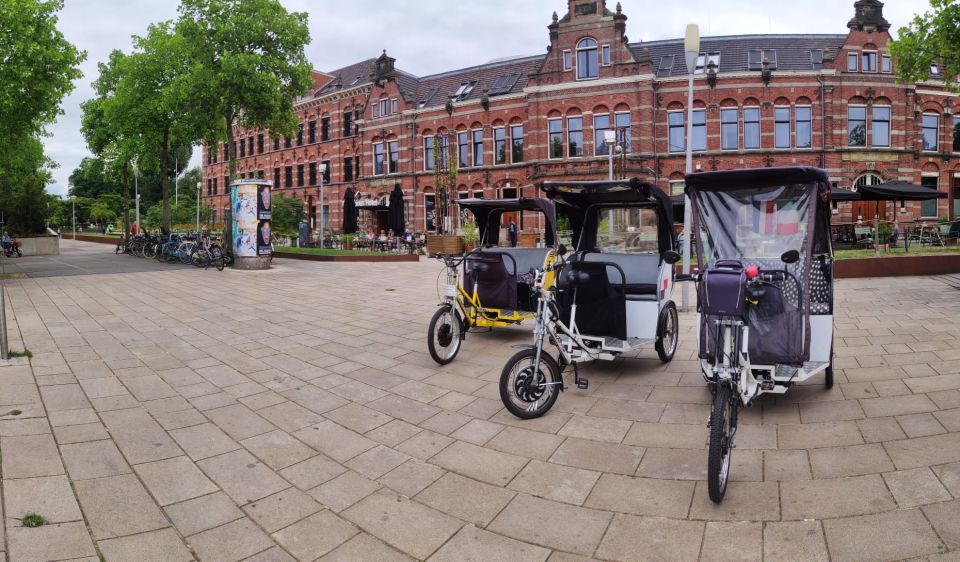
Amsterdam is a city of tight lanes, canals, and bike routes. That’s great for walking, but it can also feel like work when you’re arriving with jet lag, heavy bags, or just limited time. A pedicab cuts through that problem.
You still get the sights up close, but you don’t need to “power through” hills, long distances, or nonstop street crossings. Plus, the vehicle can slip into areas that are awkward or impossible for buses. That matters because the best parts of Amsterdam are often the parts that don’t look “main road” from a map.
The Route: From Damrak to the Canal Ring, with Stops That Make Sense

This tour is built around a classic loop through the historical center and the areas most people want to understand quickly. The total time is 1–2 hours, so think of it as a guided overview with picture windows, not a full-day study.
Here’s how the ride typically unfolds, with what each area tends to offer and what you should watch for.
Historical Center: Your Orientation Moment
You start with the historical core, which is the best place to begin if you want context. The guide’s job here is to help you understand what you’re seeing before you turn your attention to specific buildings.
What I’d pay attention to: street layout, canal edges, and how the city “funnels” movement toward major squares. Even if you don’t memorize dates, you’ll start noticing patterns—where power and trade clustered, and why some streets feel busier than others.
Newmarket and the Neighborhood Energy
Next you move toward Newmarket, a spot that often feels lively because it’s tied to city commerce and everyday life. This kind of stop is useful because it breaks the tour out of only-looking-at-monuments mode.
Practical tip: if you want a specific photo angle, ask early. Photo stops happen along the route, but earlier requests are easier to build into the flow.
You can also read our reviews of more city tours in Amsterdam





Chinatown: A Cultural Contrast Without the Long Detour
Then comes Chinatown, offering a noticeable change in vibe and streetscape. It’s a good reminder that Amsterdam isn’t only canals and museums—it’s also a layered city with distinct community pockets.
If you’re the type who enjoys how immigration and local culture reshape neighborhoods, this stop gives you that feel without turning your day into a scavenger hunt.
IJ Bay: The Water-Lane Perspective
The IJ bay portion helps you see how Amsterdam relates to its wider waterways. Canal neighborhoods are intimate; the IJ adds scale. It’s also a visual palate cleanser after dense streets and square-hopping.
Look for the way the guide connects city growth with water routes. Even simple explanations here help the rest of the route click.
Damrak and Dam Square: Amsterdam’s Main Crossroads
You’ll pass Damrak and Dam Square, and this is where Amsterdam’s “center of gravity” becomes obvious. Dam Square is a showpiece, but Damrak is the working spine that feeds it.
Photo advice: if you’re aiming for classic skyline shots, ask the guide where the best view angle typically is. Because the ride is private, you can often get a quick adjustment rather than getting stuck with a bad spot.
Munttoren: A Landmark That Helps You Anchor the Map
The Munttoren stop is one of those “small but useful” landmarks. It’s the kind of structure that gives you a reference point while you move across the canal-side maze.
I like this kind of stop because it makes later streets easier to follow. When you can mentally place a tower, you stop feeling lost.
Flower Market: Color and Photo Ops in a Small Space
Next up is the Flower market, one of Amsterdam’s most photogenic stops. This is where you’ll want to slow down for images and details—especially if you like street-level color.
One consideration: flower areas can feel tight. The pedicab ride keeps things comfortable, but if you want extra photos up close, just be ready for short standstill moments.
Rembrand Square and Rembrandt House: Art Nearby, Stories Attached
You then hit Rembrand Square and the area around the Rembrandt house. These stops work well because they connect Amsterdam’s art world to real streets, not just museum walls.
Even if you’re not an art-nerd, the guided narration can help you understand why these places matter to the city’s identity. It’s also a good pause point before the tour shifts into the quieter canal-ring streets.
Old Jewish Quarter: Reading the City with Care
The Old Jewish quarter stop adds a serious layer to the tour. It’s the kind of area where the guide’s explanation matters, since the meaning of streets goes beyond architecture.
If you prefer respectful pace, this is where you’ll likely benefit from asking questions. The private format makes it easier to ask without feeling rushed.
Canal Ring Highlights: Herengracht, Keizergracht, Prinsengracht
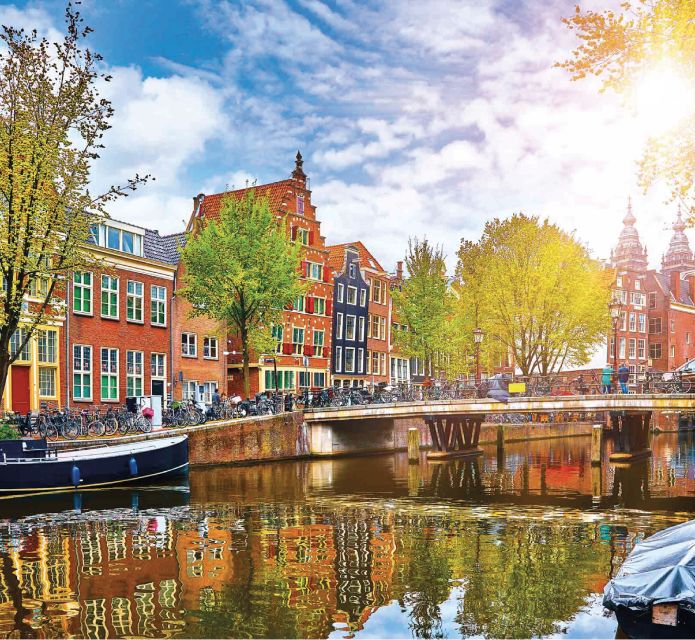
The ride along Herengracht, Keizergracht, and Prinsengracht is often the emotional “middle” of the trip. These are the famous canal streets where Amsterdam looks postcard-perfect—but the guide helps you see them as a system.
Why this part is valuable: the canals aren’t just pretty. They reflect how wealth, trade, and city planning shaped neighborhoods. When you pass multiple canals in sequence, you start noticing differences rather than treating them as one long stretch of water.
Photo tip: try for quick shots that include both the canal edge and a bit of the street. You’ll get a more Amsterdam-shaped photo than a zoomed-in crop.
Museum Quarter and the Jordaan: Two Very Different Sides of Amsterdam
After the canal-ring feel, you head toward the museum quarter. Even if you don’t go inside, this gives you a sense of the city’s cultural magnetism.
Then the tour often ends up in or near the Jordaan, a neighborhood many people love for its charm and human scale. This is a great place to feel the city as lived-in rather than staged.
If you’re tired near the end of the ride, this is still a good moment for it. You’re not forced into a museum timeline—you’re simply moving through neighborhoods with context.
Guides, Language, and the Little Things That Make a Difference
This is a guided private group tour, with live narration offered in Italian, English, Spanish, and German. That’s a practical win if you want real explanations rather than just reading plaques later.
From the strong guest feedback patterns, guides like Alphonso, Guido, Bobby, Kristian, and Bram tend to be praised for:
- Friendly, patient communication
- Careful pedicab driving
- Clear storytelling that helps you understand what you’re seeing
- Being willing to stop for photos
- Making the route work even when timing gets weird (like flight delays)
One practical note from a hearing-focused comment: if you’re hard of hearing, it’s smart to ask the company ahead of time whether there’s a way to improve audio. Amsterdam street noise can be loud, and you want to catch the guide’s main points.
Price and Value: Is $118 for 2 People a Good Deal?
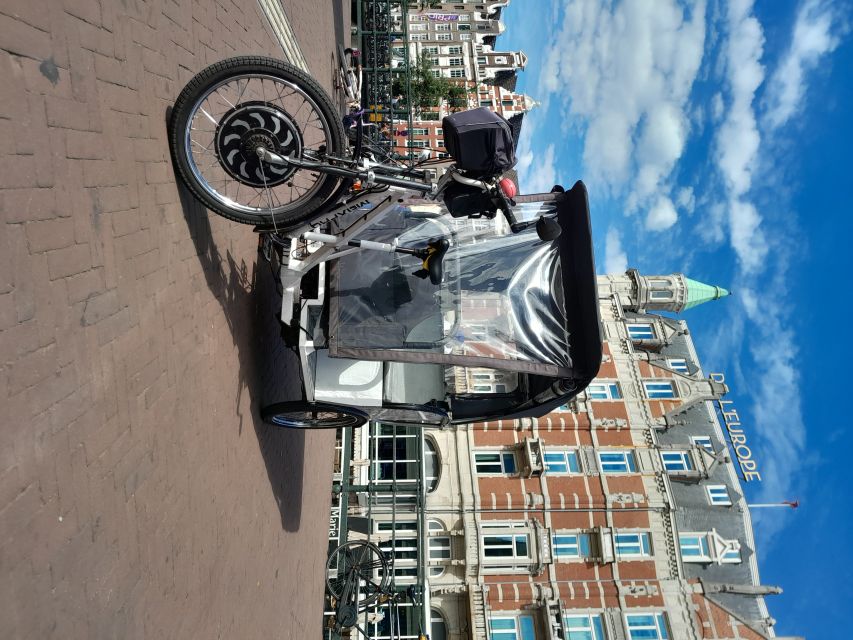
The price is $118 per group for up to 2, and the duration is 1–2 hours. That’s not the cheapest way to tour Amsterdam, but it often pencils out when you think about what you’re buying.
You’re paying for:
- Private pacing (your questions, your photo stops)
- Access through areas buses can’t cover easily
- Reduced walking (helpful if someone in your group has mobility limits)
- A guide who can give context while you’re moving
If you’re traveling as a couple, the per-person cost can feel reasonable because you’re not splitting the value across a larger group. And if it’s your arrival-day orientation, this tour can save you time later. Knowing where things are tends to make the rest of your trip smoother.
One caution: a small number of comments mention uncertainty about value versus price. That usually comes down to expectation—if you want a deep museum-level lecture or a very long route, you might find 1–2 hours short. If you want a smart overview with stops, it tends to land well.
When You Should Skip or Adjust Your Plan
A pedicab tour is a great fit in good conditions. It might not be practical during bad weather, so I’d treat it like a “choose your weather day” activity rather than a fixed-must-do.
Also, it’s not suitable for:
- Wheelchair users
- People over 243 lbs / 110 kg
If either applies, I’d look for a different format that matches your needs.
Who This Pedicab Tour Suits Best

This tour is ideal for:
- Couples and small groups who want a guided overview fast
- First-time visitors who want their bearings
- Anyone who wants photos without rushing
- People who can’t or don’t want to walk long distances
It’s also a strong option if you want to see “big-name Amsterdam” plus a few neighborhood contrasts in one tidy loop. You’ll leave with a mental map, not just a list of landmarks.
Should You Book This Private Pedicab Tour?
Yes, if you want a comfortable, private way to get oriented and you like stories that connect neighborhoods. It’s especially worth it when you’re short on time and you want the city’s canal-and-center vibe without grinding through lots of walking.
Hold off or re-think timing if:
- Bad weather is likely
- Someone in your group needs wheelchair accessibility
- You’re expecting a very long, all-day itinerary
If your goal is a relaxed first impression with meaningful stops and guide-led context, this one fits the bill.
FAQ
How long is the Amsterdam private pedicab tour?
It runs 1–2 hours, depending on availability and the starting time you choose.
What sights and areas does the tour cover?
The route includes Amsterdam’s historical center, Newmarket, Chinatown, IJ bay, Damrak and Dam Square, Munttoren, Flower market, Rembrand Square, Rembrandt house, the Old Jewish quarter, Herengracht, Keizergracht, Prinsengracht, the Museum quarter, and the Jordaan.
Is the tour private or shared?
It’s a private group experience.
Do you offer hotel pickup in Amsterdam?
Hotel pickup is optional and available for hotels within the city center limit (Nassauke–Stadhourderskade). You should ask during reservation to confirm the hotel position and pickup possibilities.
What languages is the live guide available in?
The guide offers live narration in Italian, English, Spanish, and German.
Is the tour cancellable if plans change?
Yes. It offers free cancellation up to 24 hours in advance for a full refund.
Is a speaker or audio device provided for hearing needs?
The tour includes live guiding, and if you are hard of hearing you may want to check with the provider ahead of time about whether any speaker or ear piece is available.
When might the tour not be possible?
The tour might not be practical during bad weather conditions.
Who should not book this pedicab tour?
It isn’t suitable for wheelchair users or for people over 243 lbs / 110 kg.