REVIEW · AMSTERDAM
Amsterdam Pedicab City Tour (2 hours)
Book on Viator →Operated by Bram de Haan · Bookable on Viator
Amsterdam in 2 hours is enough. This private pedicab city tour is built for quick orientation, with a local guide and minimal walking. I like that you zip between neighborhoods on two wheels, so you see more than you would on foot, and you get undivided attention the whole time.
My favorite part is how the route pairs famous landmarks with “why this place matters” context. Bram de Haan shares old maps and photos to show how Amsterdam changed, and he builds in time for stops when you want pictures or extra explanation. That blend of sights plus clear storytelling makes the city feel less random.
One thing to consider: it’s short stops by design, so if you’re hoping for lots of museum time or long on-foot exploring, you’ll feel a bit time-crunched. Also, the experience is weather-dependent, so you’ll want to dress for rain or chill.
In This Review
- Key things you’ll notice on this ride
- A private 2-hour pedicab tour that actually helps you understand Amsterdam
- Meet Bram de Haan, the guide who brings the past into focus
- Dam Square, Zeedijk, and Chinatown: the old-center heart in quick hits
- Nieuwmarkt to Montelbaanstoren: city gates and ship-watchers
- A small drawback worth knowing
- Rembrandt’s neighborhood and the Jewish quarter: architecture, memory, and reflection
- Holocaust Names Monument and the H’ART Museum pass-by
- A balanced expectation
- Magere Brug and the Canal Ring: where the postcard views fit real geography
- Photo tip that fits the pace
- Museumplein, the bicycle tunnel, and Pierre Cuypers’ backside view
- Price and value: what $237.65 buys you (and when it’s worth it)
- Who this tour suits best
- Practical tips so the ride feels easy, not stressful
- Should you book the Amsterdam Pedicab City Tour?
Key things you’ll notice on this ride
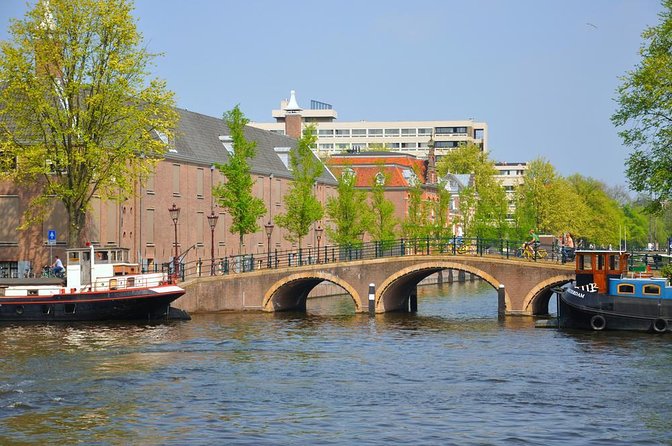
- Pickup at your hotel (look for the blue pedicab)
- Private, up to 2 people per ride for a calmer pace than group tours
- Old photos + maps to compare then and now
- Rain plan including waterproof protection mentioned in real rides
- Canal Ring and Museumplein views without spending the whole day walking
- Free entrance at most stops, with museum entry options handled separately
A private 2-hour pedicab tour that actually helps you understand Amsterdam
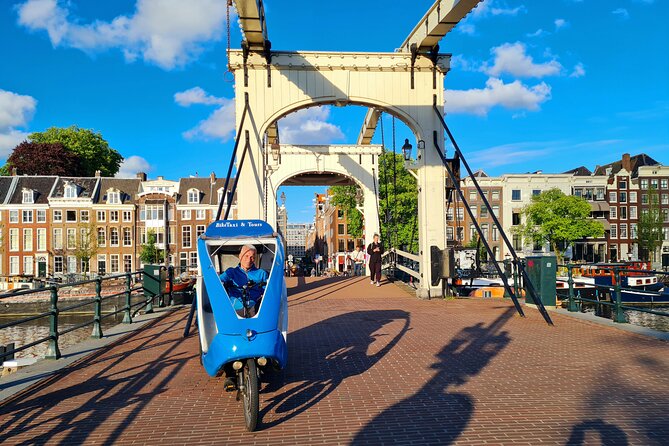
This isn’t just a drive-by highlights reel. The point of the Amsterdam pedicab city tour is orientation: you get the main geometry of the city fast—squares, canals, bridges, and the older neighborhoods—then you leave with a better mental map of what you’re looking at.
The ride is private for your group (up to 2 passengers). That matters because Amsterdam can feel like a maze when you first arrive. With the pedicab, you can ask questions without worrying about slowing down a big group. You also get a guide who can tune the pace to you—pull over for photos, linger when something grabs your eye, and keep moving when you want the next view.
And yes, it’s pedal-powered. You’re still out in the street air, but you’re not battling long distances or heavy walking in a city where the vibe is often best seen at street level.
You can also read our reviews of more city tours in Amsterdam



Meet Bram de Haan, the guide who brings the past into focus
Bram de Haan runs the tour and has a knack for turning buildings and streets into stories. In real rides, he arrives prepared with materials like old maps and photo albums, including images that help you compare how Amsterdam looked then versus now. That approach makes the city feel less like a list of landmarks and more like a place with momentum—growth, rebuilding, and change over centuries.
That’s a big reason people rate this so highly: the guide’s explanations land because they’re paired with visual references, not just facts.
Dam Square, Zeedijk, and Chinatown: the old-center heart in quick hits
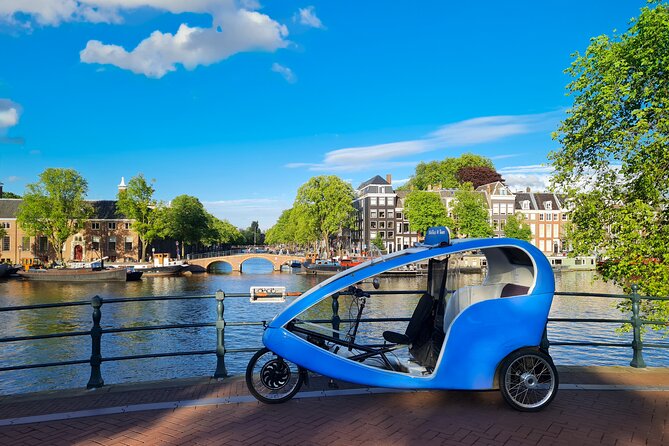
Stop 1: Dam Square
Dam Square is Amsterdam’s central starting point, anchored by major landmarks like the Royal Palace, the New Church, and the National Monument. The moment you reach it, the scale of the old center clicks. Even if you’ve seen photos, being there helps you understand where everything fans out from. This stop is short, so it works best as a first “anchor” before you move into smaller streets.
Practical note: since it’s a main square, it can be busy. The pedicab keeps you from spending extra time weaving through crowds.
Stop 2: Zeedijk
Zeedijk is one of the oldest dikes around the old center. You’ll also notice the street’s character, especially around the historic café area people remember for its old interior vibe. The tour also teases a darker secret tied to the street—so you’re not just looking at pretty facades; you’re learning what happened here.
Stop 3: Chinatown
Amsterdam’s Chinatown is noted for being one of the older Chinese communities on the European mainland. You’ll pass places like restaurants, supermarkets, and a Chinese temple. The benefit of seeing it from a pedicab is that the neighborhoods feel connected rather than isolated stops on a map.
If you’re the type who likes food and street-life textures, this segment gives you that without turning your day into a walking marathon.
Nieuwmarkt to Montelbaanstoren: city gates and ship-watchers
Stop 4: Nieuwmarkt
Nieuwmarkt Square is tied to one of the most important old entrances into the city—the citygate that once marked Amsterdam when it was walled and fortified. That makes the square feel like a historical threshold, not just a location for photos. The guide’s context helps you notice how the street grid and surrounding architecture relate to the city’s earlier boundaries.
Stop 5: Montelbaanstoren
The Montelbaanstoren is an old watch tower connected to the defense line for ships in the early 1500s. Here’s why it’s a smart stop on a pedicab tour: you can take it in quickly, then get back on the route with a clearer sense of Amsterdam’s relationship to waterways. From the area, you also get a good look toward de oude Waal with houseboats and canal-house backdrops.
A small drawback worth knowing
These are fast stops. That’s normal for a 2-hour format. If you want to read plaques or take your time on foot, plan to do that on a second visit later—or ask the guide for an extra minute if time allows.
You can also read our reviews of more tours and experiences in Amsterdam






Rembrandt’s neighborhood and the Jewish quarter: architecture, memory, and reflection
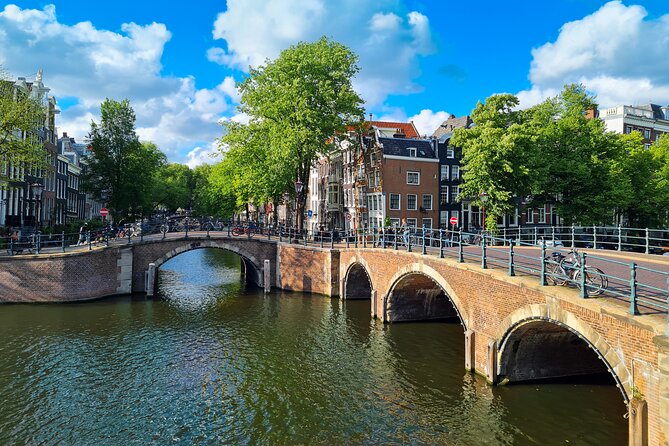
Stop 6: Rembrandt House Museum (outside only)
You’ll see the original Rembrandt house from the outside. Entry into the museum isn’t included, but seeing the place where he lived gives you a real-world anchor. If Rembrandt is a big part of your Amsterdam interest, treat this as a preview and decide whether you want museum time afterward.
Stop 7: Jodenbuurt
This part of the tour focuses on what survived of the old Jewish quarter after the Second World War. You’ll pass interesting buildings, synagogues, and streets that connect to the neighborhood that once formed a key part of the historic Jewish community in central Amsterdam.
This stop hits best if you’re willing to slow down mentally. The value isn’t just the architecture; it’s the way your guide ties place to people.
Stop 8: Portuguese Synagogue of Amsterdam (outside only)
The Portuguese Synagogue is the largest synagogue and among the early synagogues that Jewish people were allowed to build in Western Europe (built in 1675). On this tour, you look at the outside and also see other synagogues opposite it, which now relate to the Jewish museum area.
Again, it’s not museum-entry time, but it is a strong orientation to the historic religious geography of the area.
If you care about Jewish history in Amsterdam, this midsection is one of the tour’s most meaningful runs.
Holocaust Names Monument and the H’ART Museum pass-by
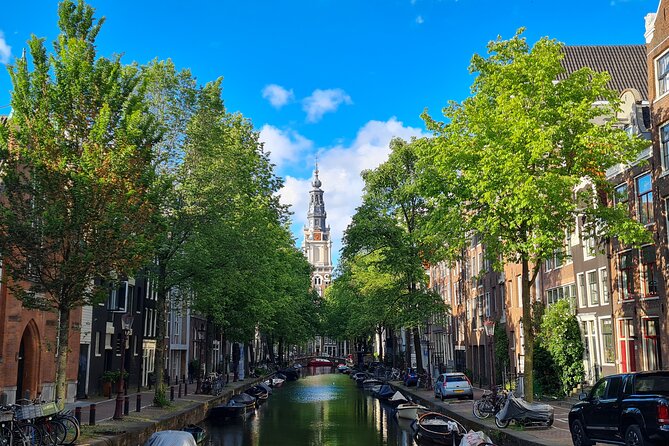
Stop 9: National Holocaust Names Monument
You’ll pass by the Holocaust Names Monument, featuring 102,000 brick stones with names that remind you of Dutch Jewish victims of WWII. It’s brief, but the impact is real because the monument is designed for focused reading and memory.
Stop 10: H’ART Museum (pass-by)
You’ll also pass the H’ART Museum, connected to a former large widow house care house built in the 17th century. Today it’s part of the Russian Hermitage Museum network (as described on the tour).
Why include it? It shows how buildings in Amsterdam can take on new roles without disappearing. The pedicab ride keeps you moving, but the guide’s framing helps you notice the continuity.
A balanced expectation
This route includes heavy subject matter. If you’re sensitive to that, it’s smart to know this comes up mid-tour, around when you’re already warmed up and ready to hear more. If you need a breather, you can ask the guide for a short pause for fresh air and quiet.
Magere Brug and the Canal Ring: where the postcard views fit real geography
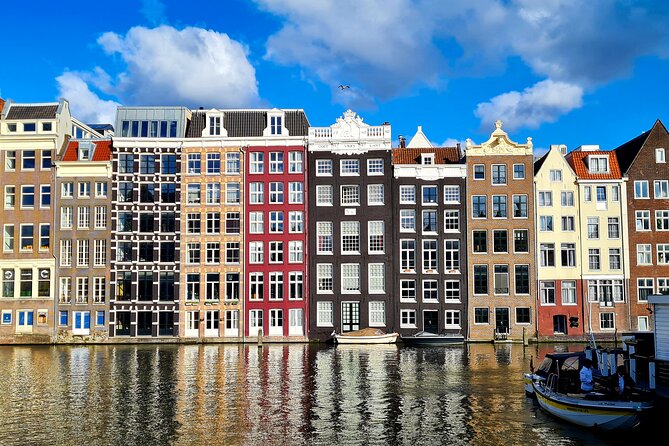
Stop 11: Magere Brug
Magere Brug is one of Amsterdam’s most iconic thin bridges. It’s known for lighting up at night with lots of small bulbs, and you’ll get a good view over the Amstel as well. Even in daylight, this is one of the best places for that classic Amsterdam feeling: bridges, water, and layered building views.
Stop 12: Canal Ring (Grachtengordel)
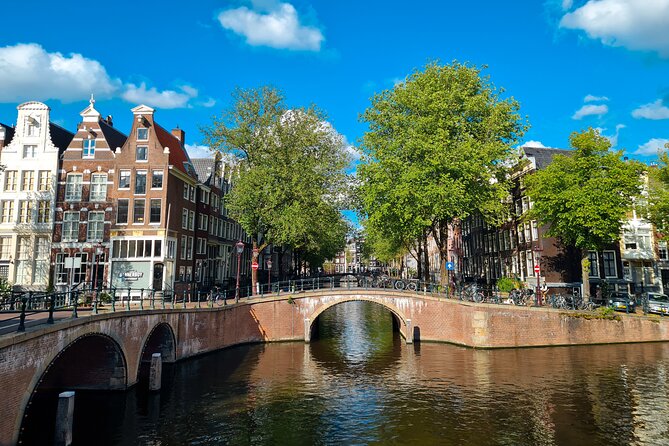
Then you hit the heart of the canal district—the 17th-century expansion area with the famous half-circle layout around the center. This is where the typical canal houses show up, many originally homes of successful merchants. One of the tour’s useful angles is that while the houses share common traits, they’re not identical; differences can hint at eras and styles.
On a pedicab, you experience the canal belt as a system. You’re not only looking; you’re traveling through the shapes that define the city.
Photo tip that fits the pace
Because stops are short, aim for photos when your guide has positioned the pedicab for best angles. If you wait too long to shoot, you’ll end up with fewer pictures than you wanted. The route is designed to keep you moving, not to linger for long sessions.
Museumplein, the bicycle tunnel, and Pierre Cuypers’ backside view
Stop 13: Museumplein
Museumplein is a big open square with major institutions around it. On one side is the Rijksmuseum, and you’ll also see the Concertgebouw classical music hall. The area is near other museums too, including Van Gogh and more contemporary options. During this stop, you’ll get views plus guidance on what’s worth noticing if you’re planning future museum visits.
A key moment comes next: you pass through the famous bicycle tunnel under the Rijksmuseum. It’s a great reminder of how Amsterdam works at street level—pedestrians, cyclists, and everyday flow. The tour also notes that you might hear classical music from street artists in the tunnel, which makes the ride feel more alive than a static sight list.
Finally, you roll toward the back view of the museum, completed in 1885 and designed by the Catholic architect Pierre Cuypers. This is a smart end-point because it changes the way you see the building. You’re not only seeing what’s most photographed; you’re getting another angle that makes the architecture feel more dimensional.
Price and value: what $237.65 buys you (and when it’s worth it)

The tour costs $237.65 per group, up to 2 people, for about 2 hours. That’s not cheap, but it’s private, and the format is designed to buy you time and context.
Here’s where the value shows up:
- You avoid long walks across multiple neighborhoods.
- You get a route that covers high-impact locations in a single loop.
- You receive personal explanations and photo-based context from Bram de Haan.
- Most stops are listed as free (so you’re not dealing with a bunch of paid entrances during the ride). One exception is that Rembrandt House Museum entry is not included, even though you do see it from outside.
Who this tour suits best
You’ll probably love this if:
- You want an efficient first-day orientation.
- You prefer a calm, private pace over group logistics.
- You enjoy history when it’s tied to real streets and visual proof (maps/photos).
- You want canal and museum-area views without spending the whole day walking.
If you’re the type who wants to spend hours inside buildings, you might treat this as your “setup tour” and then plan separate museum visits later.
Practical tips so the ride feels easy, not stressful
Pickup is straightforward: you wait in front of your hotel and look for the blue pedicab. The tour also notes it’s near public transportation, which is helpful if you want an easy rendezvous.
A few practical details to keep in mind:
- Bring light layers. Even in warmer months, Amsterdam weather can shift fast.
- Weather matters. The tour states it needs good weather, and the practical rain approach comes up in real rides (including waterproof protection).
- There’s a weight limit: maximum total passenger weight is 210 kg.
- One pedicab per timeslot is available, so plan to arrive on time for pickup.
Also, since most stops are quick, go into it with one goal: get your bearings and learn what you’re seeing. Save deep museum time for later if that’s your style.
Should you book the Amsterdam Pedicab City Tour?
Book it if you want a short, high-value first look at Amsterdam’s big themes: central squares, the canal ring, historic neighborhoods, and museum-area views—without turning your day into a walkathon. The private setup and Bram de Haan’s photo-and-map style explanations are the difference-makers.
Skip or swap it for something else if you want lots of indoor time, long stays at each stop, or you’re traveling during a stretch where you expect bad weather. The tour is designed around moving smoothly and seeing a lot in a limited window—so if you want a slow, museum-heavy itinerary, you might feel rushed.
If you’re doing Amsterdam for the first time and you want a guide who helps it all make sense quickly, this is a very solid choice.