REVIEW · AMSTERDAM
Amsterdam Open Boat Sightseeing Canal Cruise
Book on Viator →Operated by Blue Boat Company · Bookable on Viator
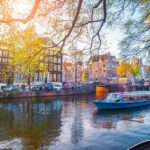
Open-top canals beat any street view. This 75-minute cruise from the water is a fast, fun way to orient yourself in Amsterdam, with sights timed to look good from the canal side and narration in English.
I like that it’s an open boat, so you get fewer visual blocks than many covered tours. I also like the small group setup and captain commentary, which helps the trip feel personal without turning into a huge bus tour. One thing to consider: on busier departures, the guide can be hard to hear, especially if the boat feels crowded or if there’s no mic.
If you want quick context for first-time Amsterdam, this kind of cruise does the job. You’ll pass big landmark zones and the canal district’s classic architecture, and you’ll get a sense of how Amsterdam fits together—water first, streets second.
In This Review
- Key highlights worth planning for
- Price and logistics: what you’re paying for on the canals
- From the Blue Boat dock to open-air views
- Westerkerk and the UNESCO Canal Ring: your first canal “aha”
- Amstel Hotel: why a landmark hotel belongs on a canal cruise
- NEMO Science Museum and the art belt: science and culture at water level
- Amsterdam Centraal and A’DAM LOOKOUT: big-city drama without the crowds
- Captain commentary, sound levels, and how to hear the story
- Open boat comfort: rain gear and glare tactics
- Value check: is $23.40 a good deal?
- Who should book this open boat cruise?
- FAQ
- FAQ
- How long is the Amsterdam Open Boat Sightseeing Canal Cruise?
- How much does it cost?
- What language is the tour offered in?
- Is there an admission ticket required for the cruise itself?
- Are food and drinks included?
- Where do I meet the boat?
- What happens if the weather is bad?
- How large is the group?
- Can I cancel and get a refund?
- Should you book this open boat cruise?
Key highlights worth planning for
- Open-top viewing for closer angles and more sky in your photos
- Up to 10 people for a calmer feel than the larger canal boats
- Personal commentary from the captain, usually in English
- UNESCO Canal District sights around the Singel, Herengracht, Keizersgracht, and Prinsengracht
- Narrow-channel capability for water views you often miss on bigger boats
- Weather plan: if conditions are too bad, you’re switched to a regular canal cruise
Price and logistics: what you’re paying for on the canals
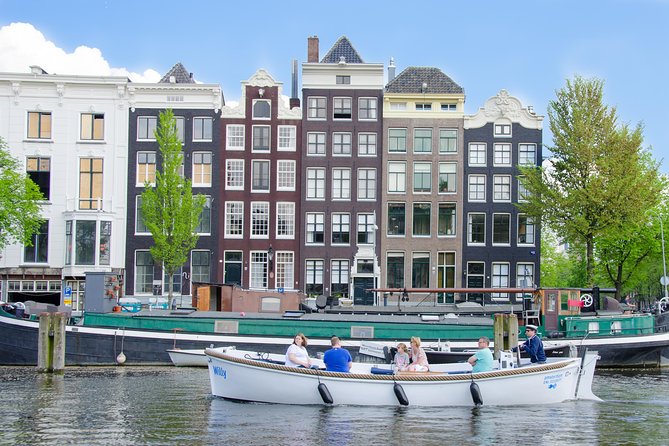
At $23.40 per person, this isn’t a budget “just-get-on” ride. It’s priced like a quality city experience: short duration (about 1 hour 15 minutes), guided narration, and an open-boat format that’s often the difference between seeing Amsterdam and just passing through it.
That duration matters. Ninety minutes is long enough to get real perspective, but short enough to fit into a tight itinerary—say, between museums or after you check into your hotel. Also, since this type of cruise runs multiple times during the day and is commonly booked about a week ahead, booking earlier can save you from the most popular departure slots.
You’ll meet at Blue Boat Company, Stadhouderskade 501, 1071 ZD Amsterdam, and the cruise ends back at the same dock. It’s worth aiming to arrive a bit early, because if the schedule gets disrupted (often because of weather), delays can happen and you don’t want to be the person rushing from the metro entrance at the last second.
You can also read our reviews of more boat tours in Amsterdam
From the Blue Boat dock to open-air views
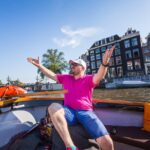
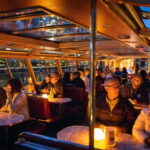
The big promise here is simple: see the city from the water without the metal-and-glass barriers you get on covered boats. An open top boat also gives you a better sense of canal width and canal life—you notice houseboats, dock activity, and those tight canal turns that make Amsterdam’s canal network feel so human-scale.
This is a small-group cruise (max 10 travelers). That usually means:
- you can spot the captain’s cue points more easily
- fewer people means less audio fighting in the background
- you’re more likely to get attention if you ask a quick question
The narration is provided by the captain, and it’s offered in English. That’s a big deal on Amsterdam canal tours—some boats run bilingual scripts, some feel like a phone-recorded playlist, and some guides speak softly. With this format, you’ll get more of the “why is this here?” context, not just “here is a canal, enjoy.”
Westerkerk and the UNESCO Canal Ring: your first canal “aha”
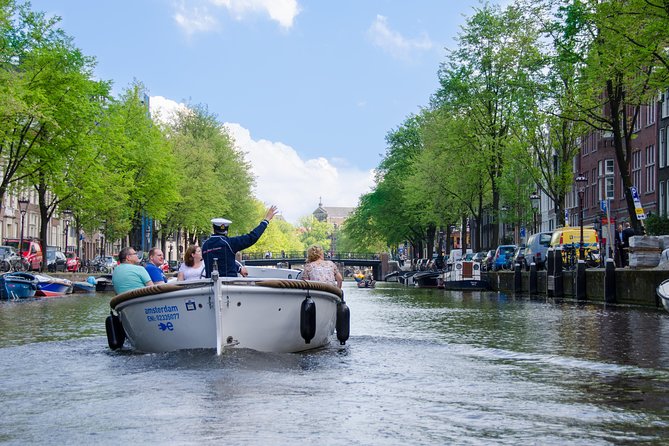
Your cruise starts by orienting you with big city icons and then settles into Amsterdam’s canal DNA. One of the standout sights is the Westerkerk, a Renaissance-style church built between 1620 and 1631. It was designed by Hendrick de Keyser, and his resting place is right there in the church he designed earlier (the Zuiderkerk). After him, his son Pieter de Keyser finished and completed the Westerkerk, with inauguration on June 8, 1631.
From the water, the church’s scale reads differently than it does on a sidewalk. You get a cleaner line of sight and a sense of how the church anchors the neighborhood visually. It’s also a good moment to start “reading” Amsterdam: what looks like a quiet building from street level becomes a landmark that helps you track where you are in the city.
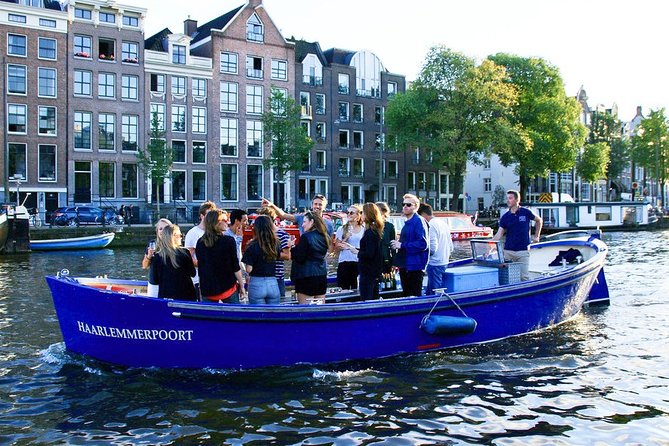
Then comes the real star: the Grachtengordel, Amsterdam’s Canal District, which was added to the UNESCO World Heritage List in August 2010. You’re looking at a historic core built around the four main canals: Singel, Herengracht, Keizersgracht, and Prinsengracht. From Brouwersgracht, the canals generally run in parallel and gradually lead southeast into the Amstel.
What I find valuable about this section is that the cruise doesn’t just show pretty facades. You get a sense of how the canal system works as a whole. You’ll also notice how the canal houses largely date to the Dutch Golden Age of the 17th century, but many buildings have been restored or rebuilt over time. That mix of styles is part of the story of living cities—Amsterdam kept using the same water corridors even as taste and architecture changed.
Amstel Hotel: why a landmark hotel belongs on a canal cruise
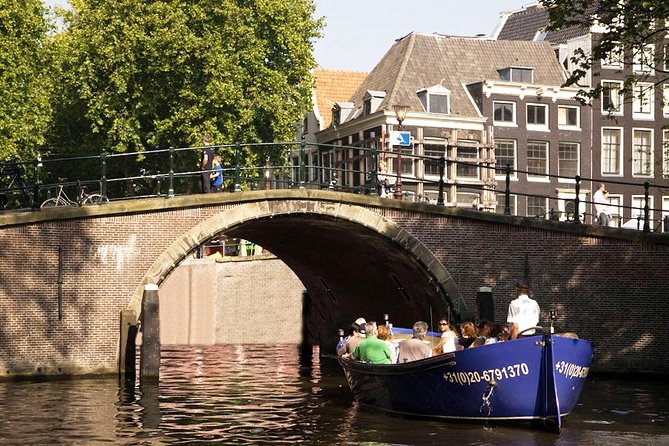
At some point you’ll pass the InterContinental Amstel Amsterdam Hotel, often just called the Amstel Hotel, located on the east bank of the river Amstel. Even if you don’t plan to stay in a place like this, it’s a useful sight because it shows how Amsterdam’s “water address” still signals importance.
A few facts to keep in mind while you spot it:
- In 2007, it was the only hotel in the Netherlands on the World’s Best Hotels list and ranked 90th.
- The building was sold in 2006 to Morgan Stanley.
- It was bought in 2011 by Lebanese businessman Toufic Aboukhater.
- In 2014, Qatar-based Katara Hospitality acquired it, and it’s still operated by InterContinental Hotels Group.
From the water, the view angle tends to make the hotel feel more integrated into the city than it does when you’re standing in a lobby or walking a street. You’re seeing how the Amstel functions as a real connector, not just a backdrop.
Practical tip: if you like architecture details, keep your eyes moving. Don’t lock onto the hotel only—scan the canal edge too. That’s where you often see the most everyday Amsterdam stuff: docks, mooring points, and the human scale that makes these “postcard views” believable.
NEMO Science Museum and the art belt: science and culture at water level
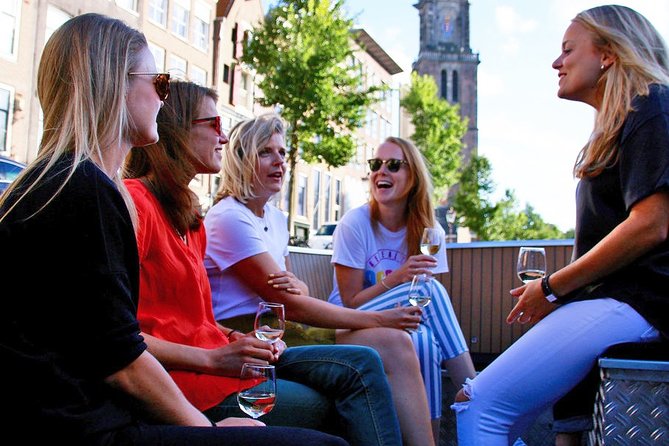
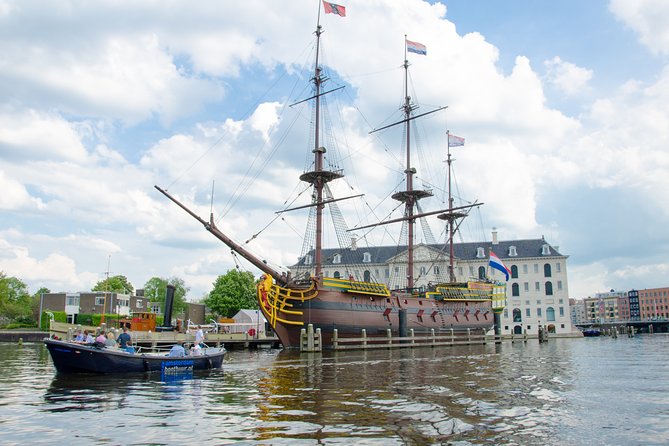
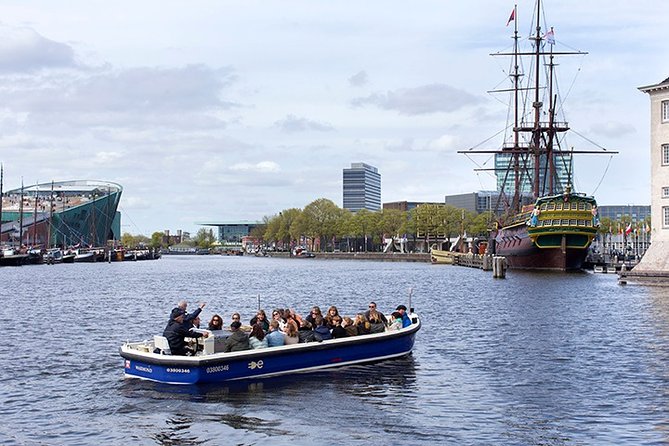
You also get sights around the museum-focused stretch—starting with NEMO Science Museum. NEMO isn’t presented like a quiet temple of exhibits. It’s described as an interactive, informal learning space where people see, hear, and experience how science and technology connect to daily life. It works closely with science and education fields, and it holds a significant historical collection.
Even if you don’t hop off to enter, passing NEMO is helpful. It reminds you that this city isn’t only canals and bicycles. Amsterdam invests in modern learning and public engagement, and the canal-side views show how that energy sits right in the middle of the city.
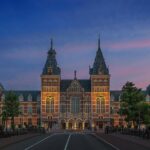
Then you’ll move into the art-world heavyweight zone: the Rijksmuseum. This is the iconic museum at the heart of Amsterdam, with more than 8,000 works spanning Dutch and European history. Expect famous names like Rembrandt, Vermeer, and Van Gogh.
From the canal, the Rijksmuseum reads as a landmark you can “frame.” It’s the kind of sight that makes you understand why tourists flock to it—but it also works as a reminder that you can appreciate a museum without standing in line immediately. If you’re on a tight schedule, this cruise can help you decide which museum day you want most.
The value here is pacing. You see the big cultural anchors from the water first, then you can choose whether to spend time inside later. It reduces the risk of picking the wrong museum based only on photos and opening hours.

Amsterdam Centraal and A’DAM LOOKOUT: big-city drama without the crowds
Two of the most recognizable “Amsterdam energy” spots show up here too.
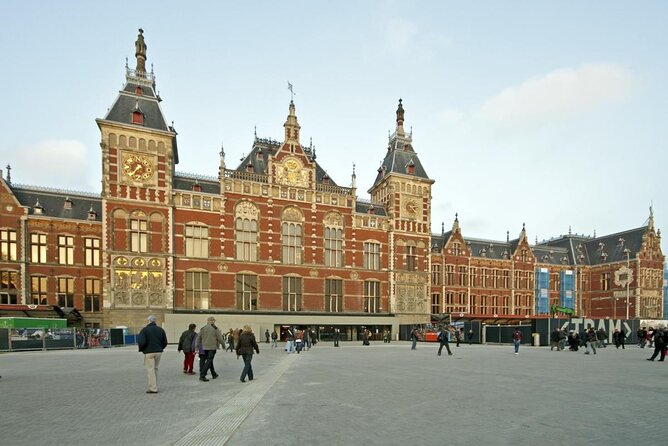
First, Amsterdam Centraal. This station was designed by Pierre Cuypers, who’s also known for the design of the Rijksmuseum. There’s a belief that Cuypers focused mostly on the station’s decoration, leaving the structural design to railway engineers. That detail matters because it explains why the station looks so expressive even though it’s fundamentally an engineering machine.
Second, you’ll look toward A’DAM LOOKOUT, the observation deck on top of the A’DAM Tower in Amsterdam North. The view is described as panoramic: you can see the historic center, the port area, the polder regions, and the canal system that belongs to UNESCO. A’DAM LOOKOUT also includes a state-of-the-art interactive exhibition and a free audio tour about Amsterdam’s history and culture.
From a cruise boat, this part is basically landmark spotting at speed. It’s not the same as going up into the tower, but it helps you understand Amsterdam’s shape: where the historic center sits, where the water opens up toward the port, and how wide the geography really is.
If you’re the type who likes “future planning,” jot down these tower and station landmarks. They become visual reference points for the rest of your days.
Captain commentary, sound levels, and how to hear the story
This is one area where expectations matter.
The cruise includes personal commentary from the captain. In the best moments, you’ll get clear explanations that make the sights feel less random. You also benefit from the “small group” format, which often helps everyone stay engaged instead of tuning out.
That said, hearing can be inconsistent. Some boats can get crowded, and at least some situations have involved guides speaking softly without a mic. Here’s how you can protect your experience:
- Pick a spot where you have a direct line to the captain’s voice.
- If you’re sensitive to sound issues, bring a pair of earplugs.
- If the boat is full, don’t assume you’ll hear every word at all times. Focus on the big visual moments too.
Also, if you plan to ask a question, do it quickly. With small-group tours, short questions tend to land better than long monologues that compete with the route narration.
Open boat comfort: rain gear and glare tactics
Amsterdam weather can turn. The good news is that the operator has a plan: if conditions are too bad to sail as scheduled, you’ll be transferred to a regular canal cruise.
That doesn’t mean you should ignore comfort. An open top boat means you’ll feel the air. Pack accordingly:
- a light rain layer you can pull on fast
- shoes that handle wet decks
- sunglasses or a cap, since glare is real on bright days
One simple strategy: schedule earlier if you’re glare-averse. When the sun angle is high, it can wash out reflections and make photos harder. An earlier departure often gives clearer sight lines and more comfortable lighting.
On a calm day, the open boat also creates a gentle, quiet kind of sightseeing. You’ll hear water movement and the city around you more than you would on covered boats.
Value check: is $23.40 a good deal?
For many first-time visitors, this is the best money you can spend because it compresses multiple benefits:
- you get to see the canal district from the water
- you learn what you’re looking at through captain commentary
- you avoid the “museum commitment” problem (you don’t have to decide in advance)
This price is especially reasonable when you compare it to the cost of separate museum tickets or long public transit hops just to catch a few landmark views.
Also, because the cruise is about 75 minutes, you can treat it like an investment in orientation. If your first day in Amsterdam feels chaotic, this smooths it out fast.
The only caveat on value: if you’re expecting lots of stop-and-stare detail or step-off time, this won’t be that kind of tour. It’s a moving viewpoint. The payoff is perspective, not wandering time.
Who should book this open boat cruise?
This is a great fit if you:
- want an efficient first-day orientation
- love canal views and want the closest angles possible
- prefer smaller groups over crowded mega-boats
- plan to visit museums later and want to understand where they sit in the city
It might not be ideal if you:
- struggle with hearing spoken narration in noisy or crowded conditions
- want guaranteed loud, mic-amplified commentary
- need a very controlled, sheltered environment from wind or rain
FAQ
FAQ
How long is the Amsterdam Open Boat Sightseeing Canal Cruise?
The cruise is about 1 hour 15 minutes.
How much does it cost?
It’s priced at $23.40 per person.
What language is the tour offered in?
The experience is offered in English.
Is there an admission ticket required for the cruise itself?
The activity includes the admission ticket for the cruise experience (the tour info notes ticket included as part of the stop details).
Are food and drinks included?
No. Food and drinks are not included.
Where do I meet the boat?
You meet at Blue Boat Company, Stadhouderskade 501, 1071 ZD Amsterdam.
What happens if the weather is bad?
If the weather is too bad to make the cruise, you’ll be transferred to a regular canal cruise.
How large is the group?
The tour has a maximum of 10 travelers.
Can I cancel and get a refund?
The information includes both a note that it’s non-refundable and a policy that you can cancel up to 24 hours in advance for a full refund. Check the exact terms shown during booking for your departure.
Should you book this open boat cruise?
Yes, if you want a quick, classic Amsterdam move that shows you the city from its best angle: the water. The open-top format plus captain commentary is a strong combo for the price, and the small group size keeps it from feeling like a cattle-car canal tour.
Book it early in your trip, ideally on a time when you’ll feel comfortable outside. If you’re picky about hearing every word, choose a less-crowded departure and arrive early so you can pick a good spot. For most visitors, this is one of the simplest ways to turn Amsterdam’s map into a mental picture you can keep using all week.